
When to Replace Roof Tiles: A Southern California Homeowner’s Guide (2026)
Why is your "lifetime" tile roof leaking after only twenty years? It's a common frustration for homeowners across Riverside and San Diego who were told their roofs would last half a century. You see a leak, you worry about the upcoming rainy season, and you naturally fear a massive replacement bill. We understand that anxiety. Most people assume that a few broken pieces require a total overhaul, but cracked roof tile repair is often just one part of a much larger picture involving your roof’s underlayment.
At UEC Roofing, we've completed over 2,000 projects from our base in Lake Elsinore, helping neighbors throughout Orange, Riverside, and San Diego Counties understand their real options. You'll learn how to identify critical warning signs of failure and discover why a full replacement might not be your only choice. We'll walk you through the benefits of a lift and relay, explain the impact of the 2026 Class A fire ratings, and help you make an educated decision for your home’s long-term stability. Our goal is to provide the clarity you need to protect your family and your investment with confidence.
Key Takeaways
- Understand why Southern California tile roofs often leak after 20 years even when the tiles themselves appear to be in good condition.
- Learn how timely cracked roof tile repair protects the critical underlayment from UV damage and moisture intrusion.
- Discover the "Lift and Relay" method as a cost-effective alternative to full replacement that preserves your original high-quality tiles.
- Identify the five critical warning signs that indicate your roof requires immediate professional attention before the next rainy season.
- Establish a preventative maintenance schedule to ensure your roofing system meets the latest 2026 fire safety and energy efficiency standards.
Understanding Tile Roof Lifespan in the Southern California Climate
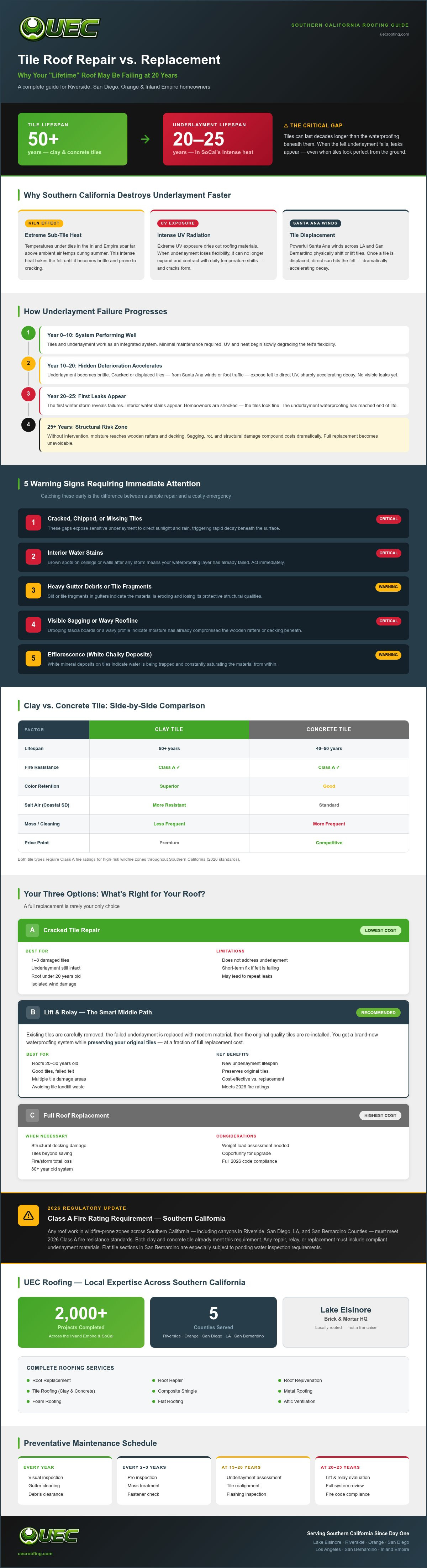
Southern California homeowners often choose tile for its classic aesthetic and legendary durability. In cities like Lake Elsinore and throughout the Inland Empire, it's common to see clay and concrete tiles that have survived for over 50 years. However, a roof is a complex system, not just a single layer of material. While the tiles themselves are nearly indestructible, the organic felt underlayment beneath them has a much shorter lifespan. In our region, this waterproofing layer typically lasts only 20 to 25 years.
The intense heat of the Inland Empire creates a "kiln effect" under your roof. During the summer, temperatures under the tiles can soar far higher than the ambient air temperature. Heat kills underlayment. It bakes the felt until it becomes brittle and prone to cracking. Homeowners in Riverside and San Diego often discover leaks during the first winter storm, even if the tiles look perfect from the ground. Your roof's health depends on what's happening underneath the surface. Don't wait for leaks.
Clay vs. Concrete Tiles: Does Material Matter?
Choosing between different roof tile materials involves more than just picking a color. Traditional clay tiles offer superior color retention and natural air circulation. Modern concrete tiles provide excellent durability at a competitive price point. Both materials offer the Class A fire resistance ratings required for high-risk zones in Southern California. In older Orange County neighborhoods, weight is a significant factor. If a home wasn't originally engineered for the heavy load of tile, the structural integrity could be at risk. Key considerations include:
- Durability: Clay is generally more resistant to salt air in coastal San Diego.
- Fire Resistance: Both provide essential protection in wildfire-prone canyons.
- Maintenance: Concrete may require more frequent cleaning to prevent moss growth.
The Impact of SoCal Weather Patterns
Our local weather puts unique stress on roofing systems. Extreme UV exposure is the primary culprit for drying out roofing materials. When the underlayment loses its flexibility, it can no longer expand and contract with temperature shifts. The powerful Santa Ana winds in Los Angeles and San Bernardino can also physically shift or lift tiles. Once a tile is out of place, the sun directly hits the felt, accelerating its decay. This often leads to a situation where cracked roof tile repair becomes an urgent necessity to prevent water from reaching the wooden deck. If you ignore these small gaps, the next heavy downpour will find its way into your living room. Timely cracked roof tile repair is the most effective way to extend the life of your underlayment and avoid a premature full replacement.
5 Warning Signs Your Tile Roof Needs Immediate Attention
Monitoring your roof in Lake Elsinore or Riverside is about more than just curb appeal. It is about protecting your home's structural core. While tile is durable, it is not invincible. Catching these five warning signs early can be the difference between a simple maintenance task and an expensive emergency. Look for these indicators during your next visual inspection:
- Cracked, chipped, or missing tiles: These gaps expose the sensitive underlayment to direct sunlight and rain.
- Interior water stains: Brown spots on ceilings or walls after a storm in San Diego or Orange County mean your waterproofing has failed.
- Gutter debris: Heavy silt or tile fragments in your gutters suggest the material is eroding and losing its protective qualities.
- Visible sagging: Drooping fascia boards or a wavy roofline indicate that moisture has compromised the wooden rafters or decking.
- Efflorescence: White, chalky mineral deposits on your tiles suggest that water is being trapped and constantly saturating the material.
Visible Tile Damage vs. Structural Issues
A single broken piece often requires a straightforward cracked roof tile repair to restore the protective shell. However, systemic issues are harder to spot. Slipped tiles often occur due to high winds or failing fasteners. These create channels where water bypasses the tile entirely. Flat tile sections in San Bernardino are particularly prone to ponding water. If water sits for too long, it will eventually seep through the underlayment. If you notice several tiles out of alignment, it is wise to schedule a professional evaluation to check for hidden damage before the next rainy season.
Interior Red Flags You Should Not Ignore
The attic is your roof’s early warning system. Before a leak reaches your living room ceiling, it leaves clues in the crawlspace. Look for dark streaks on rafters or damp insulation. These are often caused by poor attic ventilation, which traps heat and rots the roof deck from the inside out. Mold or mildew smells in upper-level rooms in Los Angeles homes are another indicator of persistent moisture. Ignoring these interior signs leads to wood rot and compromised air quality. Addressing these issues early ensures your roof remains a stable investment for your family and property value.
Underlayment: Why Your Roof Fails Even if Tiles Are Fine
Homeowners often view their roof tiles as the primary line of defense against water. In reality, tiles act as a durable watershed or "armor" that protects the underlying system. The true waterproof seal of your home is the underlayment, typically made of asphalt-saturated organic felt. While your tiles can withstand decades of sun in the Inland Empire, the felt beneath them has a biological expiration date. When this layer fails, water finds a direct path to your wooden roof deck, regardless of how good the tiles look from the street.
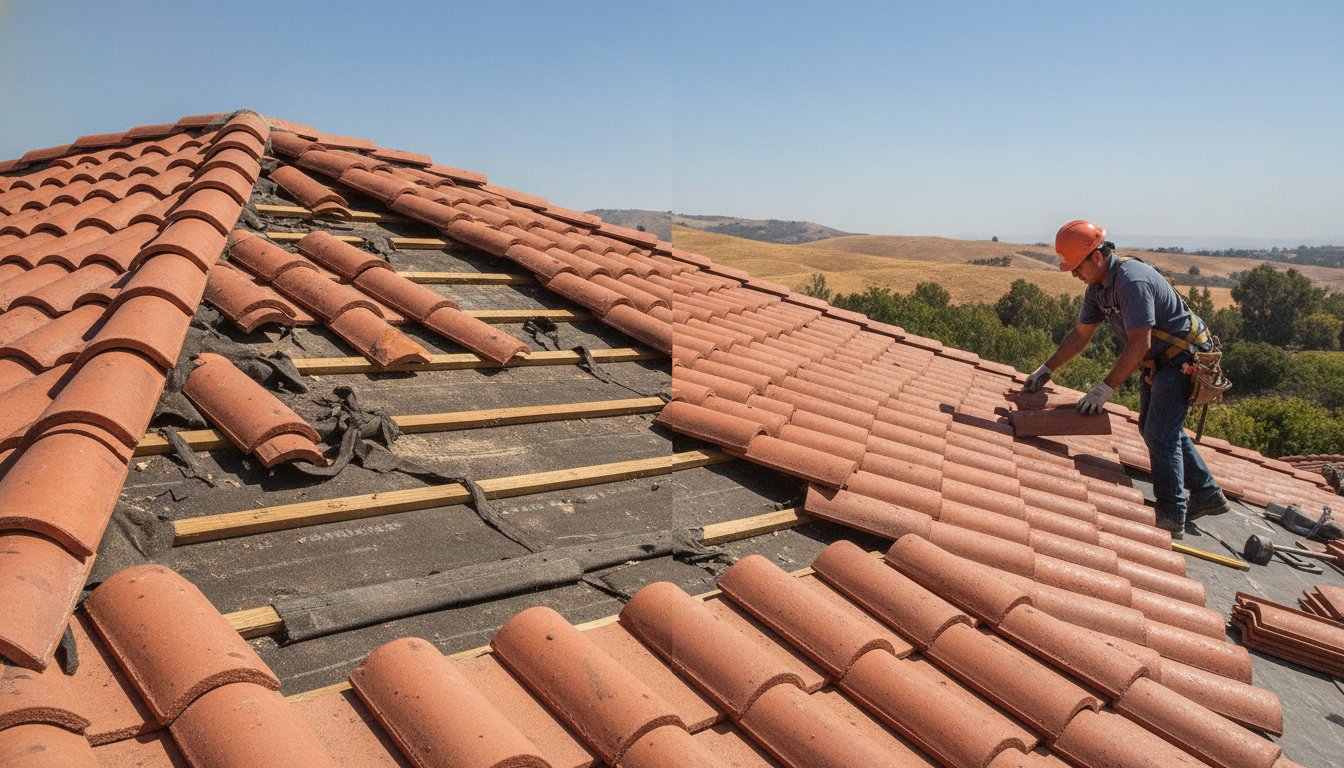
This reality is why felt replacement is the most common mid-life service for tile roofs in Southern California. Rather than investing in an entirely new roof, many homeowners opt for a specialized process known as a lift and relay. During this service, we carefully remove your existing tiles, strip away the failed underlayment, and install a superior waterproof barrier. We then reinstall your original tiles. For many, the lift and relay roofing service provides a cost-effective alternative to a complete tear-off, leveraging the 50-year lifespan of your clay or concrete materials. While a localized cracked roof tile repair can stop UV rays from hitting the felt, it cannot rejuvenate underlayment that has already reached the end of its functional life.
The Science of Organic Felt Degradation
Traditional 30lb or 40lb organic felt is made of paper or rags saturated with asphalt. Over time, the intense heat trapped between the tile and the roof deck bakes the oils out of the felt. This causes the material to become brittle and develop a pattern of cracks known as "alligatoring." Once the felt loses its flexibility, it can no longer bridge the small gaps in your roof deck. Moisture becomes trapped in the space between the tile and the felt, creating a humid environment that accelerates rot. Felt failure is the #1 cause of tile roof leaks in Lake Elsinore.
Modern Synthetic Underlayment Options
Technology has advanced significantly since most Riverside and San Diego homes were built. Modern synthetic underlayments offer a more resilient solution for the extreme temperatures of Southern California. Unlike asphalt felt, synthetics are made from woven polymers that do not rot, crack, or become brittle under high heat. These high-temp underlayments are specifically designed for the "kiln effect" common in Inland Empire roofing systems. Choosing a high-quality synthetic barrier during a lift and relay extends the time between major repairs and provides a more reliable seal. This upgrade ensures that even if you need a future cracked roof tile repair due to wind or debris, your home remains dry and protected.
Repair, Rejuvenate, or Replace? Making the Best Investment
Deciding between a simple fix and a total overhaul is a major challenge for homeowners in Riverside and San Bernardino. It doesn't have to be a guessing game. We use a clear framework based on the age of your system and the extent of the damage. If less than five percent of your roof shows damage, a targeted cracked roof tile repair is usually all you need to maintain your home's seal. However, if the tiles are over 50 years old or exhibit widespread crumbling, replacement is the only responsible way to ensure fire resistance and structural safety. For those in the middle, exploring roof rejuvenation vs replacement offers a way to extend the life of your investment without the high cost of a new build.
Our philosophy is simple: we act as your roofer for life. This means we never push for a full replacement when a repair will suffice. With over 2,000 successful projects across Southern California, our reputation in Lake Elsinore is built on honesty. We prioritize your home’s stability over quick sales. If your underlayment is still pliable, we'll tell you. If a lift and relay is the better long-term value, we'll guide you through that process. Integrity is the foundation of every roof we touch.
When a Roof Tune-Up is Sufficient
Many older Temecula properties benefit from a proactive roof tune up rather than waiting for a disaster. This service is ideal if your roof is 15 to 20 years old and has minor issues like slipped tiles or clogged valleys. Preventative maintenance before the winter rain season prevents small leaks from becoming structural nightmares. An annual inspection identifies cracked roof tile repair needs early, protecting the underlayment from UV degradation. It's a small investment that prevents the rapid decay often seen in neglected Inland Empire roofing systems.
Calculating Long-Term ROI for Tile Roofs
A well-maintained tile roof is a powerful asset during a home appraisal in Orange County or Los Angeles. Buyers prioritize the security of a Class A fire-rated assembly, especially with the updated 2026 building codes. Modern systems also offer significant energy efficiency gains. Proper attic ventilation and "cool roof" materials can lower your cooling costs during blistering San Diego summers. Conversely, delaying a necessary roof leak repair leads to hidden costs like wood rot and mold remediation. If you're unsure which path is right for your property, request a professional inspection for a transparent assessment of your roof’s health.
Professional Inspection: Protecting Your Southern California Home
Maintaining your roof’s integrity requires more than just a quick glance from the driveway. For tile systems in Riverside and San Diego, we recommend a professional inspection every two to three years. Our team has successfully completed over 2,000 projects across Southern California, operating from our brick-and-mortar location in Lake Elsinore. This local experience allows us to identify regional vulnerabilities that outsiders often miss, especially in aging neighborhoods across Orange County. We treat every evaluation with the seriousness your investment deserves.
DIY inspections are particularly hazardous on tile roofs. Beyond the risk of a personal fall, walking on tiles without specialized training often causes more damage than it identifies. Clay and concrete pieces are fragile under point-load pressure. Tile surfaces are also notoriously slippery, especially when dust or moss is present. A homeowner attempting to check for a cracked roof tile repair might inadvertently break several more tiles, compromising the system further. Professional evaluators use specific techniques to navigate the roof safely while protecting your property. Don't risk your safety.
What a Professional Roofer Looks For
A comprehensive evaluation goes beyond the surface. We scrutinize the flashing around chimneys and vents, which are the most frequent entry points for water. We also inspect the valleys where water flow is most concentrated during heavy Los Angeles rains. Attic health is equally important. We evaluate insulation levels and ventilation to ensure heat isn't baking your underlayment from below. This thorough approach identifies small issues before they become expensive structural failures. During a UEC Roofing evaluation, we provide a transparent, detailed report of our findings. We don't use high-pressure tactics. Instead, we offer education on the current state of your roof assembly.
Choosing a Trusted Local Contractor
Finding the right partner is critical for long-term stability. You should prioritize a residential roofing contractor in Southern California who understands our unique environment. Be wary of storm chasers who appear after a heavy Inland Empire windstorm with suspiciously low quotes. These companies often lack the specialized knowledge of San Bernardino building codes or the proper licensing to guarantee their work. A local expert treats your home with respect and focuses on doing the job right the first time. We ensure every cracked roof tile repair meets the highest professional standards. Our goal is to empower you with the facts so you can make an informed decision for your family.
Securing Your Home’s Future with Expert Tile Care
Your tile roof is a critical investment designed to protect your family and property value for decades. Understanding that the underlayment often fails before the tiles themselves empowers you to make smarter, cost-effective decisions. Whether you need a simple cracked roof tile repair to stop UV damage or a comprehensive lift and relay to refresh your waterproofing, early intervention is the key to longevity. Proactive maintenance ensures your home meets the strict 2026 fire safety and energy efficiency standards required across Southern California.
UEC Roofing is your trusted local partner with over 2,000 successful roofing projects completed across Riverside, San Diego, and Orange Counties. We're expert specialists in tile, metal, and flat roofing systems who prioritize education over aggressive sales. Our team is dedicated to being your roofer for life, providing the honest guidance you need to navigate regional weather challenges. Contact UEC Roofing today for a professional tile roof inspection and protect your Southern California home. We look forward to helping you maintain a safe and stable home for years to come.
Frequently Asked Questions
How many years does a tile roof last in Southern California?
A tile roof in Southern California typically lasts 50 years or more, but the underlayment has a shorter lifespan. While clay and concrete tiles are durable, the organic felt beneath them often requires attention after 20 to 25 years. Intense UV exposure in Menifee and Temecula bakes the oils out of the waterproofing layer. Regular maintenance and timely cracked roof tile repair can help preserve the system's integrity for the long term.
Can you walk on a tile roof to inspect it yourself?
You should avoid walking on your tile roof for a personal inspection. Tiles are remarkably fragile under point-load pressure and can easily crack under your weight. They are also notoriously slippery, especially when covered in fine dust common in Lake Elsinore. A professional has the specialized training and equipment to navigate the surface safely. DIY attempts often result in more broken tiles and potential physical injury.
Is it better to repair or replace a tile roof if it starts leaking?
The choice to repair or replace depends on the age of your underlayment and the extent of the damage. If your roof is less than 20 years old and the leak is localized, a targeted repair is often sufficient. However, if the felt has become brittle across the entire surface, a lift and relay or full replacement is a better investment. We prioritize education to help you choose the most stable long-term solution.
What factors influence the cost to replace a tile roof in San Diego?
Several variables influence the investment required for a new roof in San Diego. These include the square footage of your home, the roof's pitch, and the specific tile material you select. Local labor rates and the 2026 California building codes for "cool roof" materials also play a significant role. Additionally, homes in high-risk fire zones must meet Class A fire-rated assembly requirements, which can affect the overall project scope.
How do I know if my roof underlayment is failing?
You can identify failing underlayment by looking for specific red flags in your attic or on the roof surface. Brittle, cracked felt that looks like alligator skin is a clear sign of failure. Interior water stains on your ceiling after a Moreno Valley rainstorm also suggest the waterproof seal is compromised. If you see slipped tiles or persistent leaks despite performing cracked roof tile repair, your underlying felt has likely reached its biological expiration date.
Does homeowners insurance cover tile roof replacement?
Homeowners insurance typically covers damage caused by sudden, accidental events like severe windstorms or falling debris. It generally does not cover replacement due to standard wear and tear, age, or lack of maintenance. Policies vary significantly across Orange and San Diego Counties. It's best to review your specific coverage details with your agent to understand what is included for your tile roofing system before a problem arises.
What is a lift and relay and is it cheaper than a new roof?
A lift and relay is a specialized service where we remove your existing tiles, replace the failed underlayment, and then reinstall the original tiles. This process is generally more cost-effective than a full replacement because it leverages the 50-year durability of your clay or concrete materials. It provides a brand-new waterproof seal without the expense of purchasing new tiles, making it a popular choice for homeowners in Corona and Anaheim.
How often should I have my tile roof inspected in Riverside?
We recommend scheduling a professional inspection every two to three years for tile roofs in Riverside. This frequency allows our team to catch minor issues like debris buildup in valleys or slipped tiles before they lead to structural damage. Regular evaluations are especially important as your roof approaches the 20-year mark. Proactive care is the most reliable way to extend the life of your investment and ensure your home remains dry.