
Essential Tile Roof Maintenance Tips for Southern California Homeowners
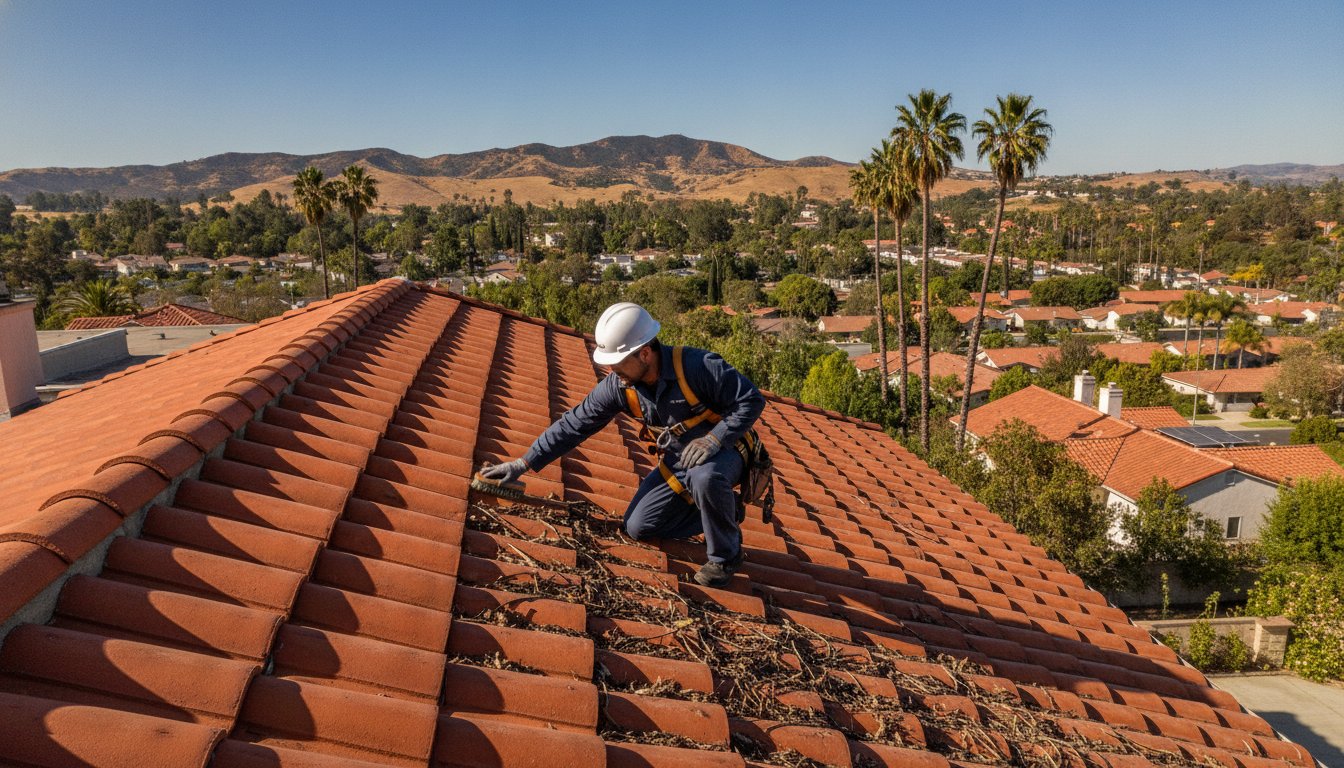
Did you know that an inefficient roof can increase your home cooling costs by as much as 25% during a typical Southern California summer? While your clay or concrete tiles look like a permanent shield, they're actually part of a complex dual-layer system where the visible surface protects the critical waterproofing beneath. Many homeowners in Lake Elsinore and the Inland Empire rely on proactive tile roof maintenance tips to avoid the high cost of a full replacement. It's a valid concern. With intense UV damage and Santa Ana winds frequently exceeding 60 miles per hour across Riverside and San Diego Counties, your roof faces constant environmental stress.
We believe that your roof is a critical investment for your family's safety and property value. In this guide, you'll discover expert-approved strategies designed to extend the life of your system and prevent expensive failures. We'll walk you through a clear seasonal checklist, explain how to spot hidden debris buildup, and help you understand the difference between a simple repair and a specialized lift and relay service. By the end, you'll have the professional knowledge needed to maintain your roof's integrity through quality craftsmanship and enjoy true peace of mind during atmospheric river events and beyond.
Key Takeaways
- Understand why clay and concrete tiles are designed to shed water rather than act as a waterproof barrier, protecting the critical underlayment beneath.
- Learn how to identify "water dams" caused by debris and why bird stops are vital for protecting your roof's interior from local wildlife.
- Discover why walking on your tiles is the leading cause of new leaks and how to safely inspect your property from the ground.
- Master a 2026 seasonal checklist featuring expert tile roof maintenance tips to safeguard your Southern California home before the rainy season begins.
- Explore the Lift and Relay process to see how reusing your existing tiles can save you thousands while providing a modern, code-compliant upgrade.
Understanding the Southern California Tile Roof System
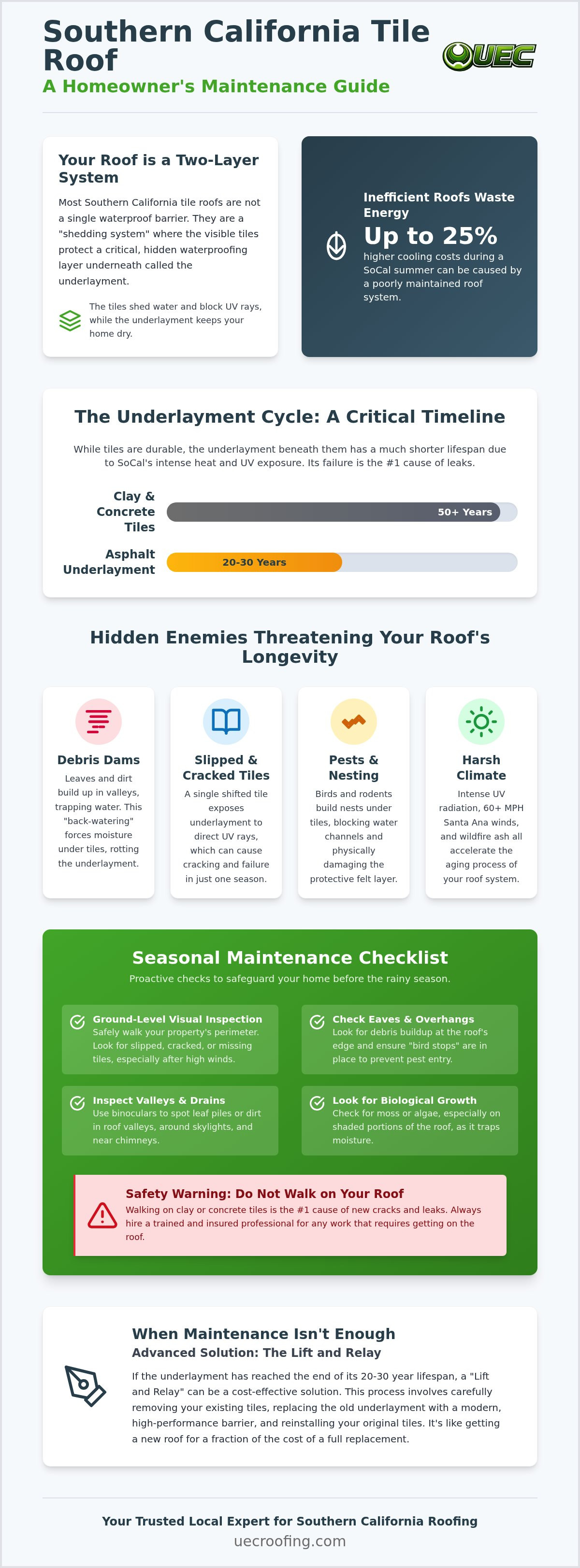
Most homeowners in the Inland Empire view their tile roof as a solid, waterproof lid. In reality, it's a "shedding" system. The tiles act as the first line of defense, designed to shed water away while serving as a heavy-duty UV and impact shield. They protect the delicate materials underneath from Southern California's relentless sun. However, the tiles themselves aren't what keep your attic dry. That job belongs to the secondary layer hidden beneath.
Our regional climate creates unique challenges for these systems. Intense UV radiation in areas like Lake Elsinore bakes the roof daily. This is often followed by Santa Ana winds that can reach 60 miles per hour, putting immense pressure on tile fasteners. When the heavy rain cycles of an atmospheric river hit, any weakness in the shedding layer allows water to reach the sensitive underlayment. Following effective tile roof maintenance tips helps you identify these vulnerabilities before they lead to interior damage.
Clay vs. Concrete Tiles: Maintenance Differences
Clay tiles are prized for their color longevity but are naturally brittle. They often crack under the weight of an inexperienced person walking on them. Concrete tiles are more durable against impact but are highly porous. Over time, they can absorb moisture and support organic growth. Using professional roof cleaning methods is essential for concrete tiles in Riverside County to prevent moss and algae from trapping water against the roof surface. Both materials require specific inspection techniques to ensure the interlocking channels remain clear of debris.
The Critical Role of the Underlayment (Felt)
While tiles can last 50 years or more, the asphalt-saturated felt underlayment has a shorter lifespan. In the heat of Southern California, we typically see a 20-30 year "underlayment cycle." High attic temperatures cause this felt to become brittle, lose its elasticity, and eventually crack. Once the felt loses its integrity, water that gets past the tiles has a direct path into your home. Felt failure is the primary cause of SoCal roof leaks. Regular tile roof maintenance tips focus on preserving this layer by ensuring tiles are properly seated and debris is cleared from valleys.
The Hidden Enemies of Tile Roof Longevity
While your roof might look perfect from the street, hidden threats often lurk beneath the surface. Debris accumulation in valleys and behind chimneys creates "water dams." These obstructions force water to back up and flow underneath the tiles. This "back-watering" puts immediate pressure on the underlayment, which isn't designed for standing water. Over time, this constant moisture weakens the felt, leading to internal leaks that go unnoticed until the ceiling stains appear.
The "Slipped Tile" syndrome is a major concern for homeowners in San Bernardino and Riverside Counties. A single tile that has shifted due to wind or age exposes the underlying felt to direct UV radiation. In our climate, the sun can bake and crack exposed underlayment in just one season. What starts as a simple loose tile can quickly escalate into a repair costing $10,000 or more. Consistent tile roof maintenance tips emphasize visual checks from the ground to spot these gaps early.
Bird and rodent nesting is another silent killer of roof systems. These animals find the gaps under tiles perfect for shelter, but their presence blocks drainage and damages the felt. Installing "bird stops" at the eave line is a critical maintenance step to keep these pests out. If you suspect your roof is already compromised, a professional Lift and Relay roofing service can restore your home's protection.
Debris Dams and Valley Blockages
Leaves and pine needles are common in canyon-adjacent areas of Orange and San Diego Counties. They trap moisture against the underlayment, which accelerates rot and mold growth. For homes near heavy vegetation, we recommend a professional cleaning at least twice a year to ensure valleys remain clear. It's often much safer and more cost-effective to schedule a professional inspection than to deal with the structural damage caused by hidden blockages.
Biological Growth and Wildfire Ash
Wildfire ash is a unique environmental stressor in Southern California. It settles into the pores of concrete tiles and clogs the interlocking drainage channels. This prevents the roof from shedding water efficiently during heavy rain. Moss and lichen also hold moisture, keeping the felt damp long after a storm passes. Maintaining a clean roof is a key part of fire safety and roof maintenance, as accumulated dry debris provides fuel for wind-blown embers during fire season.
DIY Maintenance vs. Professional Roof Tune-Ups
Every homeowner wants to save money. However, with tile roofs, the DIY approach often costs more in the long run. The Golden Rule of tile roofing is simple: never walk on your own roof. While it's tempting to climb up and clear a few leaves, the risk of creating new leaks is incredibly high. Tiles are designed to support weight only in specific areas. Stepping in the wrong spot can cause immediate failure.
Investing in regular maintenance is a smart financial move. Spending a few hundred dollars on professional care can save you $30,000 or more on a premature full roof replacement. For families in Lake Elsinore and across the Inland Empire, this proactive approach provides peace of mind. You get the benefit of expert tile roof maintenance tips put into action by specialists who have completed over 2,000 successful projects. It's about protecting your investment and ensuring your roof remains a reliable shield for decades to come.
The Danger of Amateur Foot Traffic
Professionals use a technique called "walking the battens." This requires specific training to distribute weight across the strongest points of the roof structure. Amateur foot traffic often results in hairline cracks that aren't visible from a distance. These cracks allow water to seep through during the next rain, saturating the felt underlayment. Beyond the physical damage, DIY roofing work can have serious liability and insurance implications. If you cause damage or suffer an injury, your homeowner's policy might not cover the costs of uncertified repairs.
What Happens During a UEC Roofing Tune-Up?
A professional roof tune-up is a comprehensive health check for your home. Unlike a quick DIY glance, our team performs a detailed inspection of all flashings, valleys, and roof penetrations. We don't just look for broken tiles; we identify the root causes of potential leaks. Our process includes:
- Clearing debris dams that trap moisture in valleys.
- Replacing individual broken or chipped tiles.
- Securing slipped tiles to prevent UV damage to the felt.
- Checking attic ventilation to ensure heat isn't baking your underlayment from below.
This systematic approach ensures every component of your roof works together. By following professional tile roof maintenance tips, we catch minor issues before they turn into emergencies. Our goal is to be your roofer for life by providing transparent, ethical service that prioritizes the longevity of your home.
The Ultimate Tile Roof Maintenance Checklist for 2026
Maintaining a tile roof in Southern California requires a schedule that aligns with our unique weather patterns. While national guides often suggest spring inspections, local experts know that the most critical window for tile roof maintenance tips is September and October. This pre-rainy season period allows you to address vulnerabilities before the first atmospheric river arrives. Waiting until December often means competing for emergency repair slots when leaks are already active. A proactive approach is the only way to ensure your investment remains secure through the winter.
Visual Ground Inspection Guide
You don't need a ladder to perform a basic safety check. Grab a pair of binoculars and walk your property line in Riverside or Orange County. Look for "crooked" tiles that have shifted out of alignment or visible gaps in the ridge caps. These are primary entry points for water. Check your gutters and the ground around your home for small, orange or gray shards. Finding broken tile pieces often indicates impact damage or fatigue that requires professional attention. Look at your eaves and fascia boards; dark water stains or peeling paint here are early warning signs that water is already getting past the tile layer.
Seasonal Tasks for Inland Empire Homeowners
Our region's environment presents specific challenges that require consistent oversight. Managing overhanging tree branches is essential. During Santa Ana wind events, these branches can strike tiles or drop heavy debris that clogs your drainage valleys. You should also verify that your bird stops and eave closures are intact. These components prevent local wildlife from nesting and damaging the underlayment. In Lake Elsinore and surrounding areas, keeping these entry points sealed is a year-round priority.
Another vital task is ensuring your attic vents are clear. In the intense heat of San Bernardino and Los Angeles Counties, poor ventilation can "cook" the underlayment from the inside out. This causes the felt to become brittle and fail years ahead of its expected lifespan. By following these tile roof maintenance tips, you ensure water exits the roof system immediately through clear gutters and downspouts. After any high-wind event, perform a quick post-storm assessment to ensure no tiles have slipped or lifted during the gusts.
If you notice any of these red flags during your walk-around, it's time to speak with a professional Roofing contractor to secure your home before the next storm hits.
Advanced Solutions: When Maintenance Isn’t Enough
Sometimes, even the most diligent application of tile roof maintenance tips cannot overcome the natural aging process of your home's waterproofing layer. If you're experiencing multiple active leaks or widespread underlayment failure, your roof has likely moved beyond the scope of a simple tune-up. This is particularly common in older homes throughout Riverside and San Diego Counties where the original felt has reached the end of its 20 to 30 year cycle. In these cases, we look toward more advanced restoration strategies.
One such option is roof rejuvenation. This specialized treatment can buy you an extra decade of protection by restoring the flexibility and water-shedding capabilities of your existing system. It's a proactive way to avoid a premature full replacement while keeping your investment secure. We focus on providing options that prioritize your property value and long-term stability.
The Lift and Relay Advantage
The "gold standard" for a 25 year old Southern California tile roof is the Lift and Relay roofing service. This process involves carefully removing your existing tiles and setting them aside. We then strip away the failed underlayment and install a modern, high-grade waterproofing barrier. Finally, we re-install your original tiles. It's a methodical approach that addresses the root cause of leaks without wasting durable materials.
Reusing your existing tiles is the most sustainable and cost-effective choice for homeowners in the Inland Empire. Since quality clay and concrete tiles can last 50 years or more, there's no reason to pay for new materials if yours are still structurally sound. When you compare the cost of this service to a full new roof installation, the savings are substantial. You get a code-compliant, leak-free system without the waste of unnecessary new materials.
Choosing a Local Expert in Southern California
Your roof is a critical investment. Entrusting it to a team with a deep understanding of regional building codes and weather stressors is vital. UEC Roofing maintains a brick-and-mortar presence in Lake Elsinore, serving as a stable part of our local community. Our track record of over 2,000 successful projects across Orange, Los Angeles, and San Bernardino Counties ensures that we understand the specific needs of your neighborhood.
We take immense pride in being your "roofer for life." We don't use high-pressure tactics. Instead, we focus on craftsmanship and reliability to protect your family. If your roof is showing signs of age, don't wait for the next storm to cause interior damage. Schedule your professional tile roof inspection with UEC Roofing today to explore the best long-term solution for your home.
Securing Your Home’s Future with Expert Care
Your tile roof is one of the most significant investments you'll make in your property. Understanding that tiles act as a shedding system rather than a waterproof barrier is the first step in long-term protection. By focusing on the health of your underlayment and clearing debris before the rainy season, you can avoid the stress of unexpected leaks. Applying these tile roof maintenance tips consistently will help you maximize the life of your system and preserve your home's value for decades.
With over 2,000 successful roofing projects completed across Southern California, UEC Roofing is your trusted local partner. We specialize in advanced solutions like Tile Lift and Relay and rejuvenation, ensuring your home stays dry without unnecessary full replacements. As a local Lake Elsinore business, we take pride in serving our neighbors throughout Riverside, San Diego, and Orange Counties. Don't wait for a storm to test your roof's integrity. Contact UEC Roofing for a Professional Tile Roof Inspection today. We're here to provide the peace of mind you deserve.
Frequently Asked Questions
How often should a tile roof be inspected in Southern California?
You should have your tile roof inspected at least once every year. In Southern California, the ideal time for this is in September or October, right before the rainy season begins. Regular inspections help identify slipped tiles or debris dams before they lead to interior leaks. It's also wise to perform a visual ground check after high-wind Santa Ana events in Riverside and Orange Counties to ensure no tiles have shifted.
Can I pressure wash my tile roof to remove moss or dirt?
We strongly advise against pressure washing your tile roof. High-pressure water can strip the protective finish off concrete tiles and force moisture deep into the underlayment. This often leads to premature felt failure and internal water damage. Instead, professionals use specialized roof cleaning methods that safely remove organic growth without compromising the integrity of the system. Keeping your roof clean is a vital part of effective tile roof maintenance tips.
Why is my tile roof leaking if none of the tiles are broken?
A leak often occurs because the underlying felt has reached the end of its lifespan. While your clay or concrete tiles may look perfect, the asphalt-saturated underlayment beneath them is the actual waterproof barrier. Over time, heat and age cause this material to become brittle and crack. If water gets past the tiles through a small gap or debris blockage, it will seep through these cracks and into your home's structure.
How much does a typical tile roof tune-up cost in Riverside County?
The cost of a professional roof tune-up in Riverside County varies based on your home's square footage and the extent of the necessary maintenance. A comprehensive service typically covers debris removal, flashing inspections, and the securing of loose tiles. Because we prioritize transparent and ethical standards, we provide specific project assessments rather than generic estimates. Contacting a local roofing contractor is the best way to get an accurate quote for your property's unique requirements.
Is it normal for roof tiles to slip or move over time?
It is common for tiles to shift slightly over several decades. Factors like Santa Ana winds, seismic activity, and the natural expansion of the roof deck can cause individual pieces to move. In some cases, the fasteners holding the tiles in place may corrode or fail. Slipped tiles are a serious issue because they expose the vulnerable underlayment to direct UV damage. Catching these shifts early is a key benefit of routine inspections.
What is the average lifespan of the felt underlayment beneath the tiles?
In the intense heat of Southern California, the average lifespan of felt underlayment is typically between 20 and 30 years. High attic temperatures and UV exposure eventually dry out the asphalt, leading to felt failure. While the tiles themselves might last 50 years or more, the underlayment is the component that usually dictates when a significant repair, such as a lift and relay, becomes necessary for your home in Lake Elsinore or Menifee.
Can broken roof tiles be repaired, or must they be replaced?
Broken or cracked tiles should generally be replaced rather than repaired with adhesives or sealants. While some minor hairline cracks can be sealed temporarily, a full tile replacement is the only way to ensure long-term stability. Replacing individual tiles is a standard part of a professional roof tune-up. This ensures the water-shedding layer remains intact and protects the critical waterproofing felt from environmental damage and debris accumulation throughout the Inland Empire.
How do I know if I need a lift and relay or a full roof replacement?
You likely need a lift and relay if your tiles are structurally sound but your underlayment is failing. This service is the gold standard for roofs in San Diego and Riverside Counties that are 25 years old. If the tiles themselves are crumbling, severely porous, or aesthetically outdated, a full new roof installation might be necessary. A professional inspection will determine which solution best protects your family while respecting your budget and long-term investment.