
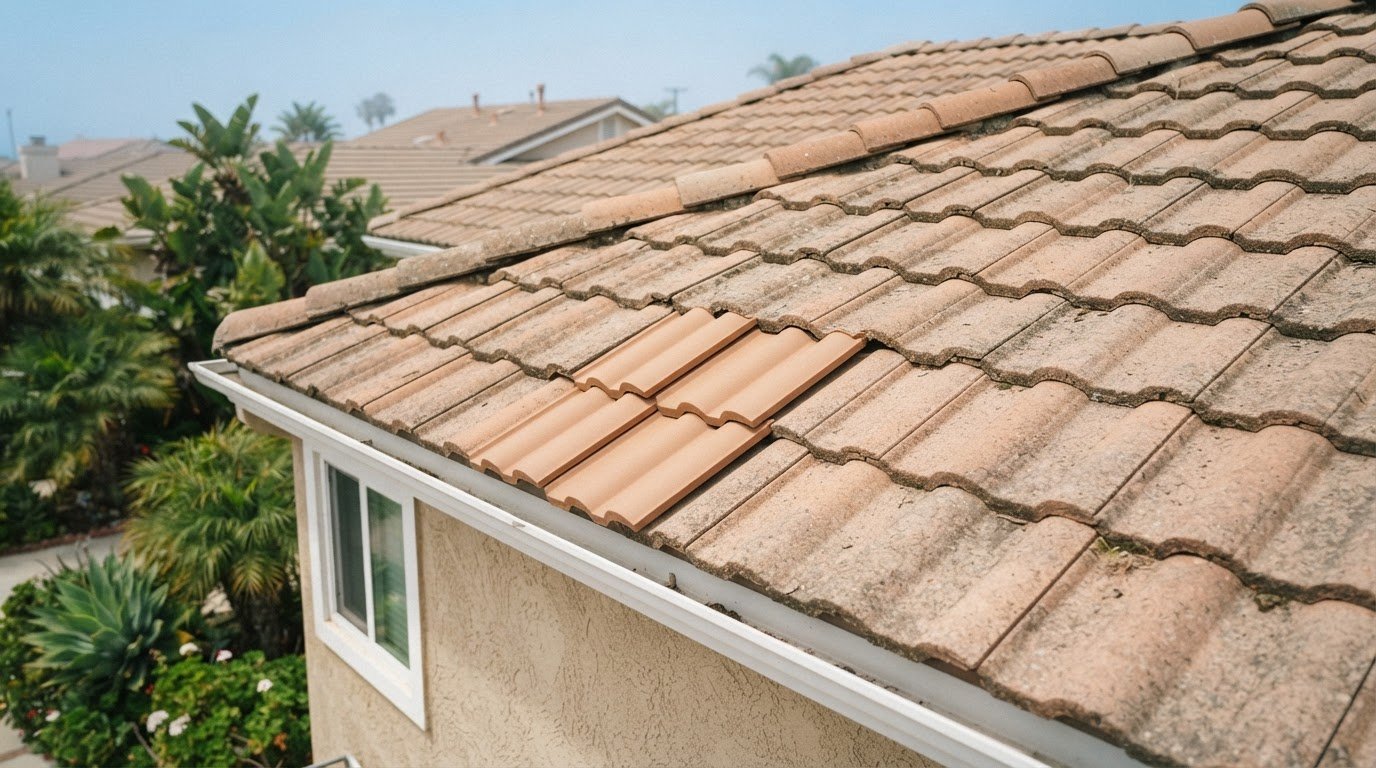
A damaged roof tile may call for a small repair or a broader roofing project. For homeowners considering tile replacement in Huntington Beach, the scope depends on how many tiles are affected, whether suitable replacement tiles can be found, and whether the underlying felt needs attention. UEC Roofing provides pricing after a quote request based on the work required.
It’s reasonable to want a clear estimate and confidence that the repair will hold up. This guide explains what can affect the scope and cost, how to assess a local roofing contractor’s experience and approach, and what to expect when tiles are damaged or discontinued. You’ll also learn when replacing individual tiles may be suitable and when a broader repair, such as lift and relay, may be the better fit. Understanding those distinctions can help you make a sound decision for your roof and property.
Key Takeaways
- Understand why replacement costs depend on the scope of work and the condition of the roof beneath the tiles.
- Learn which details can help you assess a contractor’s experience and proposed approach.
- See how the extent of cracking or chipping can shape the repair plan.
- Find out what can affect the search for a close match when a tile is discontinued.
- Explore what to expect from professional tile replacement and when a broader roofing service may be appropriate.
Local tile contractor reviews and ratings
For roof repairs in Huntington Beach, the key material decision is choosing a replacement tile that suits the existing roof. UEC Roofing installs tile using an Eagle Roofing product. The right replacement depends on the roof’s existing profile, placement, and appearance, so the assessment should start with the tiles already in place.
Customer reviews can help homeowners understand how local installers communicate and complete projects. An overall rating alone offers little detail without a clear, named source and information about the work being rated. Read comments that describe a specific job, such as replacing loose pool tiles or completing a bathroom upgrade, rather than relying only on a star score.
Look for concrete descriptions of the project and its outcome. A useful review might explain whether the installer kept grout lines consistent, addressed the surface beneath the old tile, and communicated changes to the work plan. If several reviews mention the same strength or concern, that pattern is more informative than one brief comment.
Use a focused approach when reading reviews. First, look for feedback about work similar to yours, such as roof tile replacement or leak repair. Then note whether the review describes the original problem and the completed work. Finally, consider how the company handled questions or concerns. These details give you a clearer picture of the customer’s experience.
Pool tile failure in Huntington Beach has local causes. The coastal marine layer, hard municipal water, and natural ground settling put stress on pool tile. Calcium deposits at the waterline can also push tiles off the wall. Poorly bedded pool tile typically starts falling off within 8 to 15 years, so recurring failures may point to conditions affecting more than one tile.
Keep pool waterline concerns separate from roof tile issues when assessing installer experience. For a pool, ask whether the review describes waterline work and surrounding grout. For roof work, look for comments about roof tile replacement and the condition of the roofing layers beneath damaged pieces. Reviews should relate to the same type of project, not merely use the broad phrase “tile installation.”
- Prioritize detailed feedback about work that matches your project.
- Look for specific comments on communication, workmanship, and handling concerns.
- Distinguish pool tile experience from roof tile work when reading reviews.
Huntington Beach, California homeowners gave ceramic tile service professionals an average rating of 4.7 out of 5. Treat that figure as a broad starting point, not a guarantee that a particular contractor is right for a pool, bathroom, or other tile project. It does not show by itself what work reviewers hired someone to do, whether the comments refer to ceramic tile, or how concerns were resolved.
Before choosing an installer, compare reviews that describe a similar scope and look for details about preparation, tile placement, grout, cleanup, and communication. Give more weight to comments that explain the work and its result than to brief praise without context. If a review is unclear about the project type, use it cautiously and ask the contractor questions that address your own installation or repair needs.
Contractor experience and service details
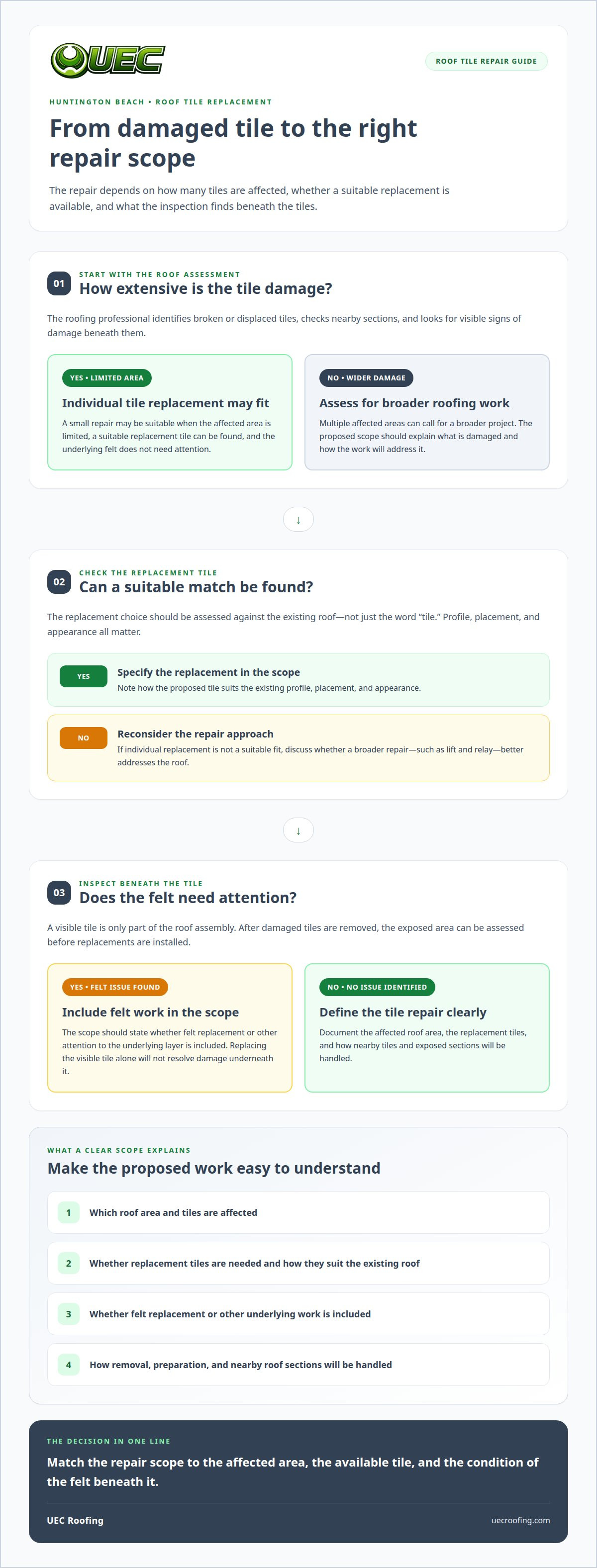
A tile replacement project begins with assessing the affected roof area. The roofing professional identifies broken or displaced tiles, checks nearby sections, and looks for visible signs of damage beneath them. In Huntington Beach, this assessment helps distinguish an isolated tile issue from a broader repair need. The proposed scope should explain what is affected and how the work will address it.
Project timelines vary with the amount of removal and preparation involved. Some tile installation projects take a few hours, while others require several days. A small, accessible repair differs from work involving multiple roof sections or underlying felt. The extent of the damage and the condition of the surface beneath the tiles shape the sequence and duration.
Removing tiles requires care because nearby pieces can be affected during access. A roofing professional lifts and removes damaged tiles, then assesses the exposed area before installing replacements. If the inspection reveals an issue with the felt, that layer may also need attention. Replacing a visible tile alone won’t resolve damage underneath it.
A clear scope describes the work in practical terms. It can identify the affected roof area, whether replacement tiles are needed, and whether felt replacement is included. It should also explain how the work will address nearby tiles and exposed sections. These details show what the project covers, beyond a general label like “tile repair.”
Materials and surface preparation also affect the work plan. Tile installation projects may involve mortar and tile-mounting materials, including backer board, depending on the application. Those materials relate to tile work generally, so a roof assessment should specify the materials suited to the roof’s construction. In Huntington Beach, the professional should explain any preparation needed before new tiles are set.
Before work begins, share useful details such as where you’ve noticed a leak, when a tile appeared out of place, or whether damage followed a particular event. This context helps focus the inspection. The roofing professional can then document the affected area, explain the repair sequence, and outline any related roofing work. A step-by-step scope makes the proposed solution easier to understand.
For a roof tile repair, prioritize a scope that connects visible damage to the roof beneath it. Clear explanations of access, preparation, replacement, and any felt work help set practical expectations.
Cracked or chipped tile replacement
A cracked roof tile is more than a cosmetic flaw. It can expose the layers beneath to weather, while a chipped edge may leave an opening around neighboring tiles. For tile replacement in Huntington Beach, an assessment should identify the damaged piece, inspect nearby tiles, and determine whether the issue extends beneath the visible surface. The repair scope should reflect those findings, not appearance alone.
For a small, isolated defect, the assessment focuses on the affected tile and its immediate surroundings. The roofing professional checks whether adjacent tiles are stable and whether the supporting felt shows visible damage. If the felt is compromised, replacing the tile alone may leave the underlying problem unresolved. The scope should distinguish the visible replacement from any related work beneath it.
Several cracked tiles in one area call for a broader inspection. Their location can help show whether damage is confined to one spot or extends across a roof section. A chipped tile beside a cracked one, for example, is a reason to examine nearby pieces. The professional documents the affected area and explains which tiles need attention.
Replacement also depends on finding a suitable tile. A close match considers the existing tile’s profile, size, color, and roof placement. If the original tile is discontinued, a substitute may look different beside weathered pieces. Discussing the expected appearance before work begins helps set practical expectations, especially for repairs visible from the street.
Tile replacement in Huntington Beach should also account for roof felt. A leak near a cracked tile can indicate that the problem reaches beyond the tile itself. The proposed scope should explain whether felt replacement is needed and how the work will address the exposed section. Connecting the surface tile to the underlying layer is central to a sound repair.
Pool tiles require a separate standard. For pool tile repair, a spot repair is recommended when fewer than 8 tiles are loose or cracked and surrounding grout remains solid. The pool water is lowered a few inches below the damaged area, and the repair removes old thinset down to the bare concrete beam. These criteria apply to pool waterlines, not roof tiles.
Before approving work, review the written scope for the location and number of affected roof tiles, the condition of surrounding pieces, and any felt work. A precise description helps distinguish a limited replacement from a larger repair. It also gives homeowners a useful record for future roof inspections and maintenance.
Matching discontinued tile
A discontinued roof tile can make a repair more visible, but it doesn’t automatically mean the entire roof needs replacing. In Huntington Beach, matching starts with identifying the tile’s profile, dimensions, color, and finish. A replacement with a different shape may sit unevenly beside existing pieces, even if its color looks close from the ground.
The roofing professional can compare an intact tile from the affected roof area with the proposed replacement. That helps distinguish the original color from changes caused by weather and age. A new tile, for example, may appear brighter beside older, faded pieces. Homeowners should understand the initial contrast before work begins.
Tile markings or manufacturer details can help identify a match when available. The professional can compare those details with the physical tile, including its profile and measurements. A product name alone may not be enough if a product line includes different shapes or finishes. The existing roof remains the reference for assessing whether a potential match will fit.
If an exact match cannot be sourced, assess the proposed substitute for both fit and appearance. A close color match with the wrong profile may not integrate properly. A tile with a compatible shape may still stand out if its finish differs. The homeowner should receive a clear explanation of these trade-offs before approving the replacement.
Placement also affects how noticeable a replacement will be. A substitute on a less prominent roof section may draw less attention than one near the front entry or on a street-facing slope. Replacing one tile in a highly visible roof plane, for example, can create a sharper contrast than placing the same replacement in a shaded area. The assessment should identify where the difference may show.
When several tiles are affected, the professional can assess whether replacements should be distributed across the roof or kept in one area. The approach depends on the roof layout and available matching material. The goal is a sound repair with an honest explanation of appearance, not a promise that the result will be indistinguishable.
Useful details to share include the roof’s age, any spare tiles left from installation, and earlier repair records. A spare tile provides a direct sample for comparison. If none remains, clear photos of the affected area can help start the discussion, while an on-roof inspection determines the fit. These details help clarify matching options before the work is scoped.
For a Huntington Beach home, the final decision should account for roof performance and curb appeal. A written scope can identify the proposed replacement, its location, and any expected visual difference. This gives you a specific basis for approving the repair and understanding how the completed roof may look.
Tile installers serving Huntington Beach
For Huntington Beach homeowners, the key is finding a roofing professional whose work fits the project. Roof tile replacement involves the roof assembly, not just tile setting on a floor or wall. A useful assessment identifies the affected area, visible damage, and whether water has reached the layers beneath. These details help define the work before you consider the scope.
Huntington Beach building permit requirements depend on the proposed work. Replacing tiles differs from altering roof structure, so the project scope is central to determining what permit review may apply. The plan should describe the work clearly rather than assume every tile repair has the same requirements.
Removal and disposal needs depend on the amount of material being removed, access to the roof, and whether underlying material also needs removal. UEC Roofing provides pricing after a quote request, with removal and preparation needs factored into the estimate.
A written scope makes a proposal easier to evaluate. It should identify the roof area being addressed, describe the planned replacement, and explain whether felt work is included. For example, if tiles near a reported leak are part of the project, the proposal should clarify whether it covers only the tiles or also assesses the underlying roofing layers.
Matching materials deserve specific attention in Huntington Beach. A replacement tile needs to fit the existing roof profile and placement. If the original tile is discontinued, a substitute may look different. A clear scope can identify where the replacement will go and explain any expected visual contrast, helping you understand the result before work begins.
Project communication matters, too. The plan should explain how the work area will be accessed, what will be removed, and how related roof components will be handled. If an inspection changes the scope, the reason should be explained before additional work proceeds. A specific explanation helps distinguish necessary work from tasks outside the original project.
For Huntington Beach roof work, prioritize project details over a broad “tile installer” label. A professional assessment should connect the visible damage to the proposed repair, identify any related felt concerns, and clarify removal and disposal needs. This gives homeowners a practical basis for understanding the work without relying on a directory listing or a general description of tile experience.
Huntington Beach, California has 339 listed ceramic tile professionals. That count can serve as a starting point, but homeowners still need to determine whether a candidate handles roof tile replacement rather than only other ceramic tile work. Ask how the assessment will connect visible damage with the proposed repair, and whether the proposal will explain any felt work, removal, and disposal.
Before choosing a repair approach, compare how clearly the proposed scope describes the work and any changes that may follow an inspection. Confirm that the replacement accounts for the existing roof profile and that likely appearance differences are discussed in advance. A careful conversation about access, preparation, and the limits of the work helps ensure the plan addresses your specific roof.
UEC Roofing: Tile replacement
UEC Roofing provides tile replacement for homeowners with damaged or displaced roof tiles. The work begins by assessing the affected area and determining whether the tiles or underlying felt need attention. If the damage is accompanied by a leak, UEC Roofing can also provide leak repair.
With a brick-and-mortar location in Lake Elsinore and over 2,000 successful projects in the region, UEC Roofing serves Southern California homeowners across the Inland Empire, Riverside, Orange, and San Diego Counties, making them a reliable choice for tile replacement in Huntington Beach. A clear scope helps distinguish a focused tile repair from broader roofing work.
If your Huntington Beach roof has cracked tiles, missing pieces, or a leak, contact UEC Roofing to discuss the repair. A straightforward conversation can help define the next step for your roof.
Choose a Clear Next Step for Your Roof
For tile replacement in Huntington Beach, the next step is to connect the visible problem with the condition of the roof beneath it. Share where you’ve noticed damage or a leak and what you want the repair to address. This gives UEC Roofing a practical starting point for discussing the work and its scope.
UEC Roofing provides tile replacement and leak repair, along with roof tune-ups and broader roofing services. If you’re unsure whether the concern calls for a focused repair or a wider assessment, describe what you’ve observed. Schedule Today to discuss the next step for protecting your roof and home.
Contact UEC Roofing to discuss your project and the condition of your roof. With a clear assessment and a well-defined scope, you can move forward with greater confidence.
Frequently Asked Questions
How much does it cost to install tile?
The cost depends on the project scope, and UEC Roofing provides pricing after a quote request. For roof tile replacement, the estimate can vary with the affected area, access, removal needs, and whether the underlying felt requires work. Replacing a few tiles and repairing several roof sections are different projects. Describing where and how the damage occurred helps frame the assessment.