
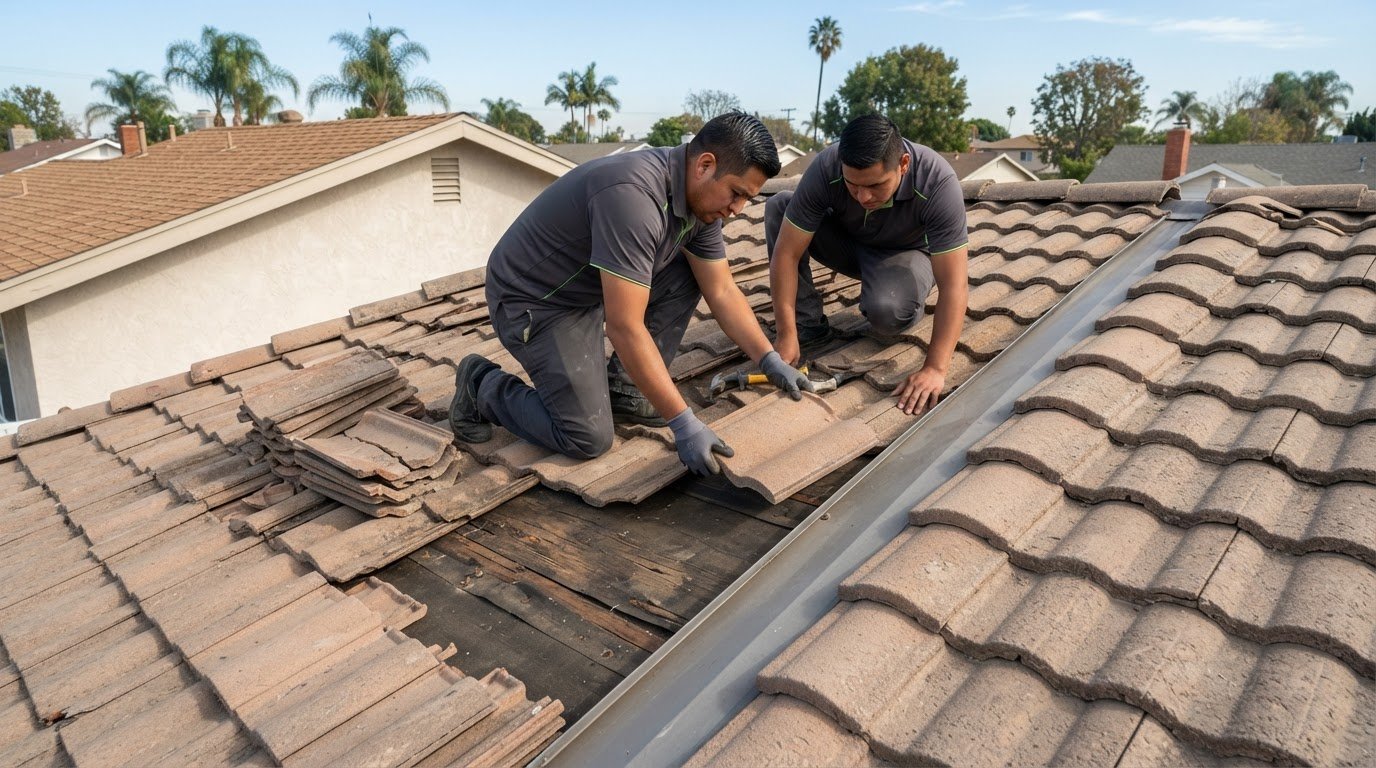
Tile replacement timelines vary with the size and complexity of the roof work. A local company for tile replacement in Anaheim can assess the roof and explain what the project involves before setting a schedule. The right timeline depends on the specific work, not a one-size-fits-all estimate.
Before arranging work around your home, get a clear picture of the proposed scope and schedule. This article explains how roof conditions, preparation, and tile selection affect planning, and what to look for in an estimate and written warranty. It also outlines practical questions to discuss before work begins.
You’ll find practical points to consider when planning tile replacement in Anaheim, from the initial assessment through the work schedule. The goal is a clearer picture of the decisions involved, so you can plan with confidence and know what to discuss before moving forward.
Key Takeaways
- Project timing can range from a few hours to several days, depending on the scope, complexity, and preparation involved.
- Understand how the work plan and labor warranty terms relate to the specific tile replacement project.
- A clear estimate should explain the proposed work and the factors that shape the schedule.
- Learn how roof tile replacement differs by project needs and when related roofing services may be relevant.
- See what to expect when discussing estimates, scheduling, and warranty coverage for a roofing project in Anaheim.
Tile installation experience and labor warranty
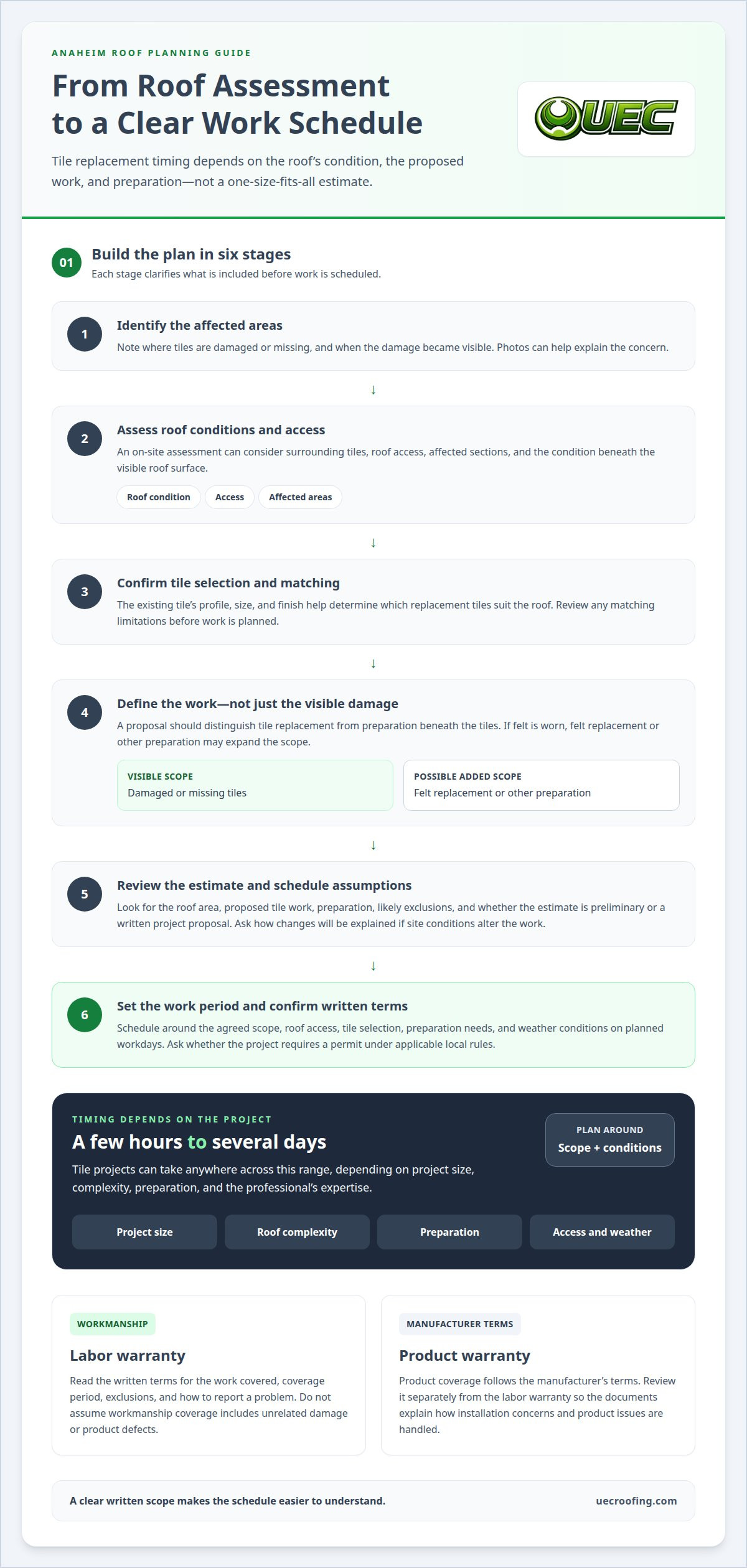
Installation time and workmanship depend on the surface, tile type, layout, and preparation. Tile projects can take a few hours or several days, depending on project size, complexity, and the professional’s expertise. A careful assessment helps a contractor identify the work involved before setting a schedule.
Roofing costs vary with the affected area, tile selection, access, removal, and preparation beneath the tiles. Interior flooring and wall-tile benchmarks do not apply to roof replacement, so request a project-specific roofing estimate.
For roof tile replacement, the type and condition of the existing tiles affect the work. Matching the current roof may require identifying the tile’s profile, size, and finish. The roof’s underlying condition matters too: felt replacement or other preparation can expand the scope beyond replacing visible tiles.
Roofing professionals select tools and materials suited to the roof and tile. The work may involve removing damaged tiles, fitting replacements to the existing roof, and assessing the materials beneath them. Because each roof has different conditions, the proposed work should explain what will be repaired or replaced rather than applying the same approach to every project.
A labor warranty concerns workmanship, while a product warranty follows the manufacturer’s terms. Read the written documents for the work covered, coverage period, exclusions, and process for reporting a problem. The terms should explain how installation-related concerns are handled. Do not assume a workmanship warranty covers unrelated damage or product defects.
For Anaheim homes, permit requirements depend on the project scope and whether work affects more than the tile finish. Ask the contractor to identify whether the planned work requires a permit under applicable local rules before the project starts. Avoid assuming that every replacement has the same requirements.
Removing damaged tiles can reveal issues beneath the visible roof surface, which may expand the work and affect the schedule. For example, worn felt may require attention in addition to tile replacement. The estimate should explain how preparation or additional work will be handled if roof conditions differ from what was visible during the assessment.
Free estimates and service timing
For an Anaheim roof tile project, the estimate should define the proposed work before scheduling. Timing then depends on the roof’s condition, tile selection, access, and agreed scope.
Free Estimates
Estimate policies vary among contractors, so the word “estimate” alone doesn’t establish whether there’s a charge. A useful estimate identifies the roof area, proposed tile work, preparation, and any likely exclusions. It should also explain whether the amount is a preliminary assessment or a written project proposal. That detail helps homeowners understand what the estimate covers before making a scheduling decision.
For roof tile replacement, the assessment should distinguish visible tile damage from issues beneath the tiles. If the felt is worn, the work may need to include felt replacement rather than only individual tiles. The estimate should describe that distinction clearly.
Tile selection affects planning, particularly when matching an existing roof. The tile’s profile, size, and finish help determine which replacements suit the roof. Clear photos of the affected area can help explain the concern, while an on-site assessment can evaluate surrounding tiles and roof conditions.
Service Timing
Scheduling includes arranging the assessment and setting a work period. The timing depends on roof access, project scope, tile selection, and whether preparation needs expand after inspection. Replacing a few tiles differs from work across several roof sections, so the written scope should make the difference clear.
Roof access and site setup also shape the schedule. A steep roof, limited access, or several affected areas can require additional coordination. Weather can affect outdoor work, so the schedule should account for conditions on the planned workdays. Avoid treating a preliminary date as a firm completion date if inspection or material selection remains unfinished.
Before scheduling, organize the details that can affect the work:
- Identify the roof areas where tiles are damaged or missing.
- Share photos and note when the damage became visible.
- Review the proposed tile selection and any matching limitations.
- Confirm whether the written scope includes underlying felt work if needed.
- Ask that schedule changes be explained when site conditions alter the work.
These details help turn a general estimate into a practical work plan. For example, a proposal for visible tile replacement differs from one that includes felt replacement or other work beneath the tiles. That distinction affects both the schedule and the work included.
When reviewing a roofing estimate and work scope, look for clear descriptions of inspection findings, included tasks, and schedule assumptions. A defined scope gives Anaheim homeowners a more useful basis for planning than an estimate with no explanation of its limits.
Which Anaheim tile replacement companies are licensed, insured, and well-reviewed?
For an Anaheim roofing project, licensing, insurance, and customer reviews answer different questions. A review score alone does not establish qualifications or explain what a written agreement covers. Consider each separately, then check whether the estimate, proposed work, and communication present a consistent picture.
Start with the contractor’s business name and license number. Check that the details match the business identity and current status in official state licensing records. The estimate and agreement should use the same business name. If the information differs, ask for an explanation before signing. This helps verify documented credentials rather than relying on verbal claims.
Insurance is another distinct consideration. Request current proof of coverage and review the named business, policy dates, and coverage description. The document should correspond to the company performing the work, not an unrelated entity. Keep a copy with the estimate and signed agreement. A dated record makes it easier to understand which business and coverage were represented for the project.
Reviews can provide useful context, but read the details rather than relying only on a star rating. Look for specific comments about communication, scheduling, cleanup, and whether completed work matched the agreed scope. A detailed account of how a crew handled a change is more informative than a general compliment. Multiple reviews may reveal recurring themes, while one review cannot establish a pattern.
Use a simple review process to keep the decision organized:
- Match the business name across the estimate, agreement, license record, and insurance document.
- Read several detailed reviews for repeated comments about workmanship and communication.
- Compare the written scope with the roof areas and tasks discussed during assessment.
- Save copies of documents and note any differences that need clarification.
For Anaheim properties, read the written scope carefully because roof tile work can extend beyond visible tiles. Check whether the document identifies the affected roof areas, replacement work, and any stated limits. Resolve any mismatch between the assessment and agreement before scheduling. Clear records help prevent confusion about the work included.
A sound decision depends on consistency across these checks, not one appealing claim. A current license record, matching insurance documentation, detailed reviews, and a specific written scope each answer a different question. Together, they help clarify who will perform the work and what the agreement covers.
What types of tile replacement services do Anaheim contractors provide?
Anaheim roof tile projects can range from replacing individual pieces to work involving other parts of the roofing assembly. The service depends on the condition of the roof, the type of tile, and the homeowner’s priorities. In Southern California, a project discussion can also consider exposure to local weather, energy efficiency, fire resistance, and attic ventilation. These factors help frame the assessment, but they are not all tile replacement tasks.
Replacing individual tiles can address broken or missing pieces while retaining surrounding tiles that remain suitable. The replacement’s profile and fit matter because it needs to sit appropriately within the existing roof. Photos and visible tile markings can help identify a match. UEC Roofing can assess the affected area and explain the proposed tile replacement work.
Some projects also involve materials beneath the tiles. Felt replacement addresses the roofing felt, while lift and relay allows access to materials below reusable tiles. These services differ from simply replacing a damaged tile. A proposal should identify the roof components and work included so homeowners can understand the scope.
Energy efficiency and attic ventilation are broader roof-system considerations, not automatic outcomes of changing tiles. If a homeowner raises either concern, the assessment can identify whether the project scope addresses it or focuses only on tile work. Likewise, fire resistance depends on the roofing materials and their documented properties. Homeowners should rely on product information and the contractor’s explanation rather than assuming every tile or replacement method performs identically.
Anaheim projects should also account for applicable local building requirements. The relevant considerations depend on the work scope, especially if work extends beyond replacing roof tiles. Before work proceeds, the project plan should identify how applicable requirements relate to the proposed roofing work. This keeps the discussion specific without treating every tile replacement as the same type of project.
To understand the available service, homeowners can distinguish these common scopes:
- Tile-only replacement: focuses on selected damaged or missing roof tiles.
- Underlayment work: addresses the felt beneath the tile covering.
- Lift and relay: reuses suitable tiles after lifting them for access below.
- Broader roof assessment: considers ventilation, energy efficiency, or fire resistance separately from tile placement.
For an Anaheim home, the clearest proposal names the roofing components involved and separates tile replacement from broader roof concerns. That helps homeowners understand what work is included and what falls outside the scope.
Do Anaheim tile replacement companies offer free estimates or warranties?
In Anaheim, estimate and warranty terms depend on the contractor and the written agreement. A free estimate is not something to assume from a website headline or brief phone conversation. Confirm whether assessment and proposal preparation are included without charge, and identify exactly what the estimate covers. For roof tile work, the document should define the affected areas, proposed tasks, and assumptions behind the scope.
A useful estimate separates visible tile replacement from work involving underlying materials. For example, it may describe a damaged roof section while noting that concealed conditions are not included in the initial scope. The proposal should explain how additional work would be discussed if removal reveals a different condition. This gives homeowners a clear basis for understanding the original scope and any changes.
Read the warranty as carefully as the estimate. A labor warranty concerns workmanship, while a manufacturer’s warranty follows the product terms. Written labor terms should identify the covered work, coverage period, exclusions, and process for reporting a concern. If the document refers to installation generally, ask for the covered roof areas and tasks to be specified in writing.
Warranty language also needs boundaries. A workmanship warranty may address installation-related concerns, while storm damage, unrelated deterioration, or later alterations can be treated differently. The contract should state how those conditions affect coverage rather than leaving homeowners to infer the answer. Keep the signed agreement, estimate, product paperwork, and completion records together for future reference.
Before approving a proposal, review these details:
- Estimate terms: whether inspection and written proposal preparation are free.
- Scope: roof areas, tile work, and any included underlying materials.
- Changes: how additional work is described and approved.
- Warranty: covered workmanship, duration, exclusions, and claim procedure.
- Records: copies of the final agreement and product documents.
For an Anaheim home, a clear estimate connects the observed roof conditions with the proposed work. Written warranty terms then explain what workmanship coverage applies after completion. Keep both documents specific: they should identify the agreed work, what the warranty covers, and any exclusions.
Reviewing these documents before scheduling can prevent confusion about project scope and future coverage. If roof tiles need attention, discuss your roof tile project and the written terms that apply to it.
UEC Roofing: Tile replacement
UEC Roofing is a local company for tile replacement in Anaheim, with a brick-and-mortar presence in Lake Elsinore. Its track record includes over 2,000 successful projects across the region, serving homeowners in the Inland Empire and Riverside, Orange, San Diego, Los Angeles, and San Bernardino Counties.
An assessment can clarify whether cracked, slipped, or missing tiles need repair or roof replacement. UEC Roofing also offers roof rejuvenation and systems including tile, composite shingle, metal, foam, and flat roofing. Leak repair and roof tune-ups can address leaks and broader maintenance needs.
Contact UEC Roofing to discuss tile replacement for your Anaheim home.
Plan the next step for your roof
A tile roof protects your home, so the next step should reflect its condition. If you’re considering a local company for tile replacement in Anaheim, ask for an assessment of the roof and the work needed. This can help determine whether tile replacement, felt replacement, or another service fits the concern.
UEC Roofing provides roof replacement, repair, and rejuvenation, along with tile, composite shingle, metal, foam, and flat roofing. Services also include leak repair, roof tune-ups, tile and felt replacement, and lift and relay. The right scope depends on the assessment, not on choosing the broadest service by default.
Ask questions and request a written scope that fits your roof. Contact UEC Roofing to schedule a roof assessment in Anaheim.
Discuss your tile replacement needs with UEC Roofing. A clear conversation can help you move forward with confidence.
Frequently Asked Questions
How long does a typical tile installation project take?
Ask how the work will be organized, including roof access, material placement, and cleanup. This helps you plan around the work area and protect nearby belongings. If access is limited to one side of the property, mention that during planning. A clear work sequence makes the proposed scope easier to understand.
Can you help with installation?
Yes. UEC Roofing provides roof tile replacement for Anaheim homeowners. This service concerns roof tiles, not indoor flooring, backsplashes, or showers. If you’ve noticed damaged tiles, describe the area and any signs of a leak so the roofing discussion can focus on the concern and relevant work.
How do I know what areas tile contractors in Anaheim, CA cover?
Check the contractor’s stated service area against the property’s city, rather than relying only on an Anaheim search result. UEC Roofing serves Anaheim and communities including Riverside, Corona, Lake Elsinore, and Temecula. Its regional coverage also includes locations such as Menifee and Huntington Beach. When a property sits near a city boundary, provide its city during the initial discussion to clarify whether the location falls within the stated service area.
What local companies in Anaheim, CA offer tile replacement?
UEC Roofing provides roof tile replacement in Anaheim, along with related services such as leak repair, roof tune-ups, felt replacement, and lift and relay. These services are for roofing concerns, not tile installation inside kitchens or bathrooms; homeowners looking for interior upgrades can explore design resources from Kitchen Renovations Perfected for kitchen remodeling inspiration. Explain whether you need tile replacement in one area or have a broader roof concern.
How much does tile replacement cost in Anaheim per square foot?
Roof tile replacement pricing depends on the project and is provided after a quote request. Cost factors include the affected roof area, tile selection, access, removal, and preparation beneath the tiles. A per-square-foot figure may not reflect those differences. For a useful proposal, the scope should identify the specific roof sections and work being priced.
How long does a typical tile replacement project take in Anaheim?
In Anaheim, clarify whether a proposed date is for the assessment, authorized start, or expected completion. These are separate milestones, and a start date does not indicate when work will finish. Ask how the schedule follows the agreed scope and how changes will be communicated if the plan needs adjustment.
What should homeowners ask before hiring a tile replacement contractor?
Ask which roof sections are included and how replacement tiles will be selected to suit the existing roof. Clarify how changes to the scope will be communicated if work reveals different conditions. Request the final work description and warranty terms in writing. These details help you understand the agreement and keep a useful record of decisions for your Anaheim home.