
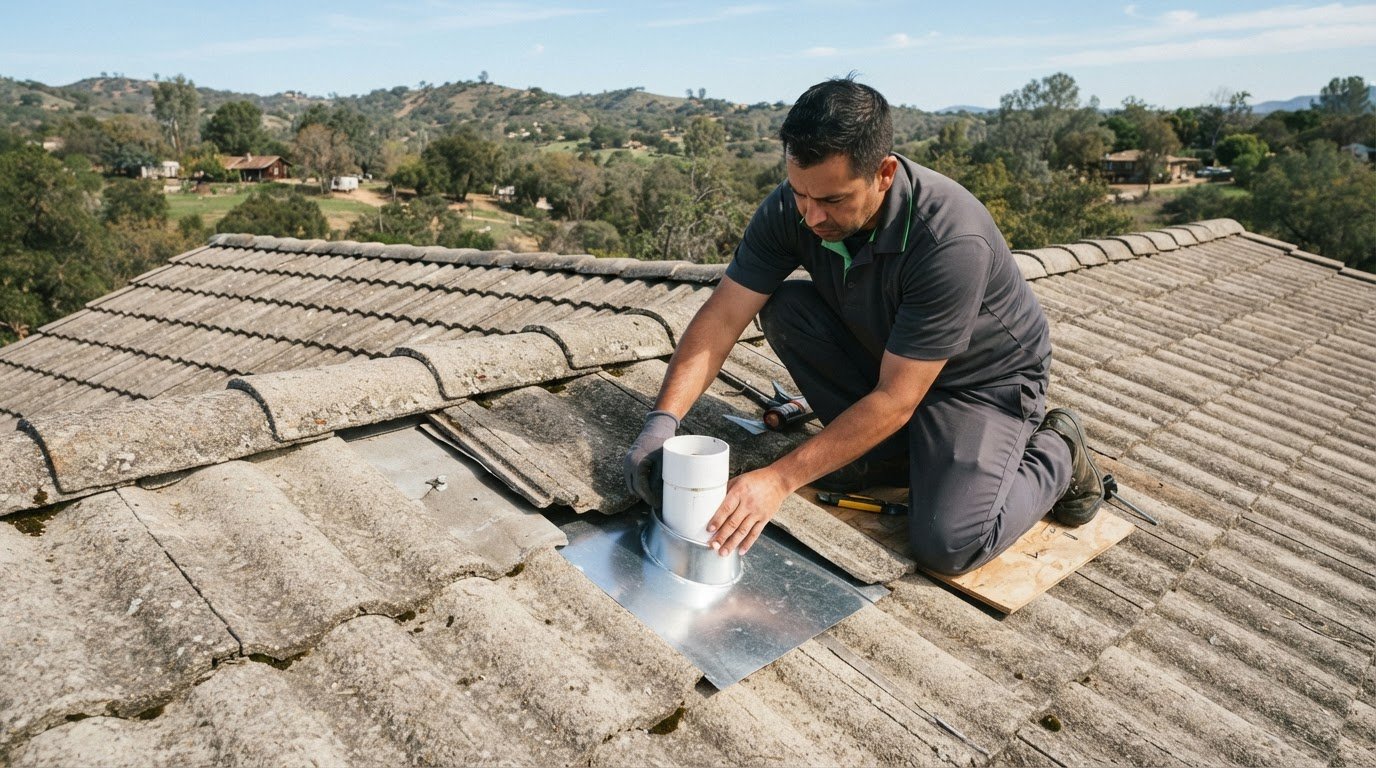
A ceiling stain is a warning sign, not a diagnosis. For leak repair in Fallbrook, the first step is tracing where water enters the roof, because the visible mark inside may not reveal the source.
It’s understandable to want a clear explanation of the damage, the repair, and what it may cost. Moisture can appear as a stain, dampness, or a musty odor, and delaying an investigation can leave the source unresolved. Drying or repainting the area alone won’t fix a roof leak.
This guide explains how roof leak detection and repair generally work, which signs warrant attention, and what can affect the scope of a repair. It also covers estimates and warranty terms from UEC Roofing for homeowners in Fallbrook and the surrounding local service areas.
Key Takeaways
- Recognize when stains, dampness, or musty odors may point to a moisture problem that needs investigation.
- Understand why drying or repainting a wet area won’t fix the source of a roof leak.
- Learn how the timing and location of moisture can help narrow down its likely cause.
- See what a clear repair estimate should explain about the proposed work and its scope.
- Review warranty terms carefully to understand what the written coverage applies to.
Water damage, mold, and erosion risks
Water can damage a Fallbrook home before a leak becomes an obvious drip. Moisture may travel along framing before appearing on a ceiling or wall, so the visible stain may be away from the entry point. Wet drywall can soften, paint can blister, and wood can stay damp inside a concealed space. The longer water continues entering, the more building materials may need inspection and repair.
Moisture also creates conditions for mold. According to the U.S. Environmental Protection Agency, damp or musty odors can indicate that water is or was present and mold growth is likely. The agency also notes that hidden leaks can cause condensation or wet spots on walls and lead to mold growth behind them. A musty smell near an attic, ceiling, or wall deserves attention, even if the surface looks dry.
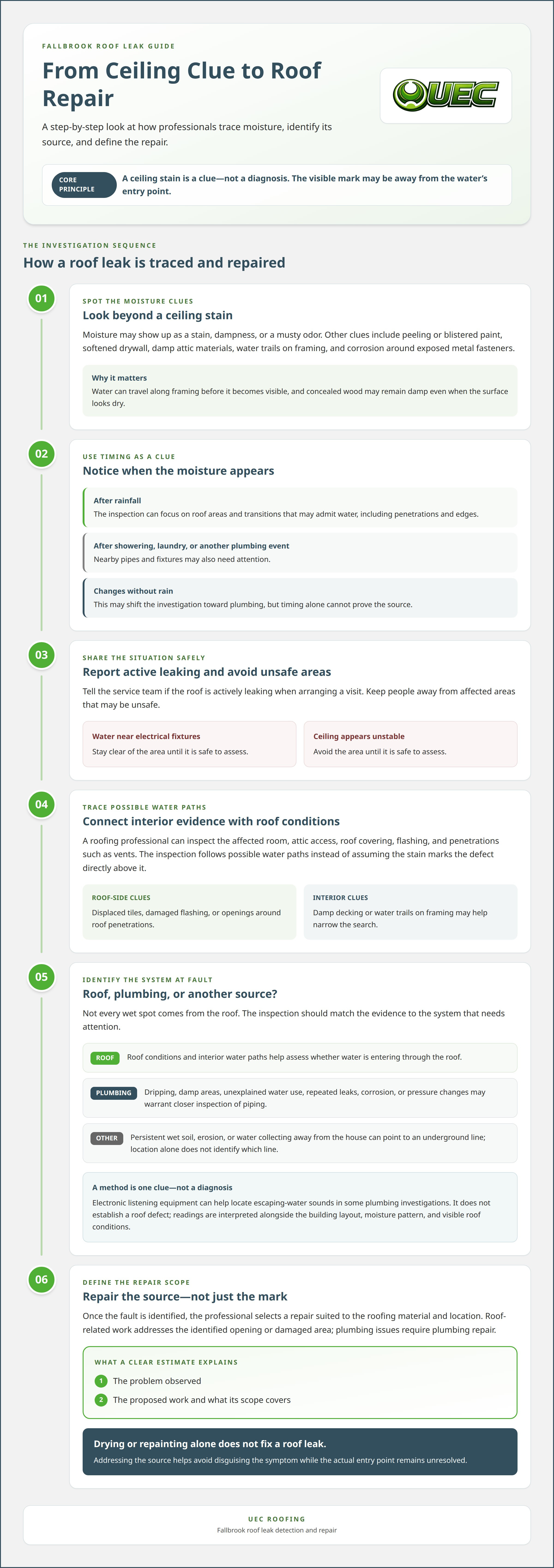
If your roof is actively leaking, tell the service team when arranging a visit and keep people away from unsafe affected areas. A roofing professional can assess the roof and interior signs, then trace likely water paths. Don’t assume a ceiling stain marks the roof defect directly above it. If water is near electrical fixtures or a ceiling appears unstable, avoid the area until it is safe to assess.
Not every wet spot comes from the roof. Plumbing leaks can cause dripping, damp areas, or unexplained water use. Repeated leaks, corrosion, or noticeable pressure changes may warrant closer inspection of piping. A sudden banging sound when a tap or appliance shuts off can indicate water hammer, when moving water stops abruptly and pipes knock. High pressure may also strain plumbing connections, so a roofing inspection alone won’t resolve a plumbing fault.
Underground leaks create a different pattern. Persistent wet soil, erosion, or water collecting away from the house can point to a buried line, but the location alone doesn’t identify whether it involves a supply pipe, drain, or sewer line. Fallbrook’s hilly terrain can make trenching for main water lines difficult. Expansive clay soils can also stress underground pipes and may require specialized excavation methods.
Fallbrook agricultural properties may have multiple water meters, private wells, or older irrigation systems connected to domestic supply lines. That complexity makes it important to identify the affected system before excavation or repair begins. A roofing professional addresses roof-related entry points; plumbing or underground-line symptoms call for investigation of those systems instead. Accurate identification helps prevent repeated surface repairs while the actual source continues causing moisture, material damage, or soil erosion.
Leak detection and repair
For leak repair in Fallbrook, detection starts by connecting interior evidence with roof conditions. A roofing professional can inspect the affected room, attic access, roof covering, flashing, and penetrations such as vents. A ceiling mark below a roof slope is a useful clue, but water may travel along framing before becoming visible. The inspection follows possible water paths rather than assuming the stain identifies the entry point. Roof material and access also shape how the inspection proceeds.
Professional leak detection methods depend on the roofing system and safe access. A visual inspection can reveal displaced tiles, damaged flashing, or openings around roof penetrations. From inside, damp decking or water trails may help narrow the search. For concealed plumbing, assessment depends on the system and available access. Electronic listening equipment can help locate escaping-water sounds in some plumbing investigations, but it doesn’t establish a roof defect.
What types of leak repair services are available in Fallbrook, CA? Roof-related work can address openings or damaged areas identified during inspection, while plumbing leak repairs address faulty pipes or connections. The right service depends on whether water enters through the roof, plumbing, or another system, since each source requires a different inspection and repair.
Electronic detection is one clue, not a substitute for diagnosis. A professional interprets readings alongside the building layout, moisture pattern, and visible roof conditions. For example, dampness near a vent may prompt a closer inspection of both the roof penetration and the surrounding attic. If evidence points to concealed piping, the assessment can focus on that plumbing system. Repiping is a broader plumbing decision, not an automatic response to one suspected leak. For a roof assessment in Fallbrook, matching the method to the likely source helps define appropriate next steps.
For an active roof leak, tell the service team when arranging help and avoid unsafe affected spaces. A professional can assess conditions, identify likely entry points, and determine the repair scope. If water is near electrical fixtures or a ceiling appears unstable, stay clear of the area. Prompt attention can limit continued water entry and help clarify which materials need inspection.
A sound repair addresses the source, not just the interior mark. Drying or repainting a wet area won’t correct a leaking pipe or roof opening. After identifying the fault, the professional selects a repair suited to the roofing material and location. A clear estimate describes the observed problem and proposed work, so you can understand what it covers. For roof-related issues, roof repair can focus on restoring the affected area rather than disguising the symptom.
Assessing when moisture appears
Roofing professionals in Fallbrook look for ceiling discoloration, peeling paint, damp attic materials, water trails on framing, and corrosion around exposed metal fasteners. These clues can point to hidden moisture, but an inspection must relate the interior signs to roof conditions and nearby plumbing.
Timing gives the inspection a useful starting point. If a ceiling mark appears after rainfall, the professional examines roof areas and transitions that could admit water, including penetrations and edges. If dampness follows showering, laundry, or another plumbing event, nearby pipes and fixtures also deserve attention. A moisture mark that changes without rain may shift the investigation toward plumbing, but timing alone cannot prove the source.
Next, the inspection compares the room’s moisture pattern with the roof layout above it. A stain near a chimney, vent, skylight, or roof-to-wall junction can guide a closer review of that detail. Inside the attic, a professional can trace water trails across rafters and check decking for dampness or deterioration. Water may travel sideways before reaching drywall, so the visible spot is evidence, not a confirmed fault location.
Professionals also consider whether the moisture pattern fits a roof leak or another source. For example, a wet area near a bathroom may prompt inspection of both the roof above and nearby plumbing fixtures or pipes. Corrosion around a pipe connection points to a different line of investigation than damaged roof flashing. Comparing these locations helps prevent an interior stain from being mistaken for proof of a specific roof defect.
Access affects what the inspection can establish. An open attic may let a professional examine the underside of the roof, framing, and insulation directly. A finished ceiling can conceal those materials, so the assessment may rely more on visible staining, nearby roof details, and the timing of moisture. The professional connects those observations before recommending where further inspection or repair should focus.
Moisture history can sharpen the assessment. A mark that darkens after rain offers a different clue from one that appears after a plumbing fixture is used. A professional can consider those changes alongside the roof’s layout and any nearby pipes. Clear notes about the location, appearance, and timing of the moisture help the inspection follow a consistent path without treating one clue as a final diagnosis.
For a suspected plumbing leak in Fallbrook, the investigation can consider when moisture appears and what plumbing is nearby. The timing of changes to a mark can be compared with use of nearby fixtures, while the damp area can be considered alongside pipes and connections. This comparison helps direct attention without turning a timing association into a conclusion. A moisture mark near a bathroom still needs to be considered alongside the roof above it; the visible location alone doesn’t establish which system is involved.
The assessment should consider each clue in context: the moisture’s timing and position, accessible materials, and nearby roof and plumbing features. If those clues point in different directions, the source remains uncertain until a closer inspection connects them. This cautious approach keeps the next inspection focused on relevant areas rather than treating an isolated stain as a diagnosis.
Free estimates and warranties
A useful roof repair estimate explains the observed problem, its likely source, and the proposed work. For example, if an inspection finds damaged flashing near a vent, the estimate should identify that location and describe the repair. It should also distinguish roof work from separate interior repairs, such as replacing stained drywall. A clear scope helps you understand what the proposed amount covers.
The estimate should connect each recommendation to an inspection finding. If a roof inspection identifies more than one damaged area, each should be described separately rather than grouped under a vague repair label. Material type and roof access can also affect the work involved. Repair cost depends on the damage, roofing material, access, and scope, and is provided after a quote request.
A written estimate should also explain what the inspection did and did not establish. A ceiling mark may be far from the roof opening, so the document should describe the evidence linking the proposed repair to the suspected source. If plumbing or another system may be involved, that distinction matters. An estimate focused on roof work should not imply that it will fix a separate plumbing leak.
Warranty terms need the same clarity. The written document should identify what work or materials the warranty covers, how long coverage applies, and any conditions or exclusions. Those details define the protection; the word “warranty” alone does not explain it. For example, terms may treat repair workmanship differently from an existing roof component, so the covered work should be named plainly.
Before approving an estimate, review its scope alongside the warranty document. Confirm that the described repair matches the inspection finding, and note how the terms address the specific work. If the estimate names a flashing repair, the coverage language should make clear whether that repair is included. Keep the estimate and warranty together with dated inspection records, photos, and any later notices about the same roof area.
A free estimate should still be specific enough to support an informed decision. It can outline the visible condition, proposed repair, and factors affecting the scope without promising that every hidden condition has been exposed. A notice of additional damage should explain the new finding and how it affects the work before the scope changes. Clear records help distinguish the original repair from later discoveries.
For a Fallbrook home, careful documentation supports long-term roof care. The estimate explains the proposed response to the inspection; the warranty defines the written coverage for that work. Read both together, especially when a roof repair involves existing materials or nearby components. That review helps keep the repair plan, expected work, and stated protections aligned.
Investigating recurring moisture
When a ceiling mark returns after a repair, the visible spot doesn’t prove the exact fault location. Water can travel from a roof leak before reaching drywall, so the damp area may be away from the entry point. A roofing professional compares the recurring mark with roof details above it, then follows likely paths through the attic or framing. The goal is to identify the source, not simply treat the repeated stain.
Timing helps organize the next inspection. Moisture that reappears after rain points attention toward roof areas exposed to water, including seams, flashing, and penetrations. If dampness returns after using nearby fixtures, the pattern may instead involve plumbing. A professional considers both possibilities and checks whether the conditions match the suspected source. That distinction matters because a roof repair won’t fix a plumbing fault, and plumbing work won’t seal a roof opening.
Recurring moisture also calls for a careful review of earlier work. The professional can compare the original repair area with surrounding materials and inspect nearby roof components for damage or gaps. On a tile roof, for example, the inspection may consider the tiles and underlayment around the affected area. A finding beyond the initial repair may change the scope. Replacing only a visible tile won’t resolve a separate defect nearby.
Inside the home, an inspection can look for fresh dampness, water trails, softened materials, or corrosion around exposed metal. In an attic, the professional follows marks across framing and checks where moisture appears relative to roof penetrations. Hidden water paths can make a small stain difficult to interpret. New observations should be compared with the previous repair and the conditions when moisture returned.
Fallbrook properties have different roof layouts and materials, so the inspection plan depends on the affected area and safe access. A low-slope section, roof-to-wall junction, and vent opening each present different areas to examine. The professional records the suspected entry point and supporting signs, then explains how the proposed repair relates to those findings. If the evidence points to plumbing instead, the roof should not be treated as the established source.
Repeated moisture can stress roof materials and interior finishes if water continues entering. A focused inspection can help distinguish a missed entry point from a separate nearby defect or a non-roof source. The repair scope should address the evidence, not just the stain. For recurring roof-related moisture, request a professional roofing inspection to trace the suspected source and assess the affected area.
Assess the identified cause and the evidence supporting it rather than assuming the mark identifies the entry point. In Fallbrook, water can travel from a plumbing leak, so a visible moisture mark does not prove the exact fault location. If the source remains uncertain, the inspection should keep roof and plumbing explanations distinct and connect each proposed repair to the signs found. This helps prevent work on a roof component from being mistaken for a solution to moisture caused elsewhere. Clear findings also give the homeowner a basis for checking whether moisture returns.
UEC Roofing: leak repair
UEC Roofing provides leak repair and roof repair when inspection findings point to a roof defect. Its Roofing Services address roofing concerns, while a Roof tune up supports ongoing roof maintenance.
For a suspected roof leak in Fallbrook, share where moisture appears and when it returns. Those details help explain the roofing concern and guide the appropriate next step.
Contact UEC Roofing to discuss a roof leak and arrange the next step.
Take the Next Step Toward a Sound Roof
Choosing professional leak repair in Fallbrook starts with a clear conversation about the roof concern. Note where moisture appears and when you notice it, then share those details when discussing the inspection. This gives the roofing professional useful context without treating a ceiling stain as proof of the exact source.
UEC Roofing offers leak repair, broader Roofing Services, and Roof tune up work. The right next step depends on the roof’s condition and the inspection findings. A focused evaluation can help determine whether repair or maintenance fits the concern, keeping attention on the roof’s condition and long-term protection.
If you’re ready to discuss a roofing concern, contact UEC Roofing about leak repair. A thoughtful next step can help you move from uncertainty toward a practical plan for protecting your home.
Frequently Asked Questions
How can homeowners compare leak detection methods and repair options?
Compare whether each proposed method fits the suspected source and the home’s roof system. For example, a roof inspection should assess roofing materials and details, while a plumbing leak calls for examining the relevant piping. Then compare repair plans by the specific damaged area and the work each includes. A useful estimate connects its findings to the proposed repair and makes clear whether it addresses one component or a broader section.