
Emergency Roof Repair in Poway: What to Do First
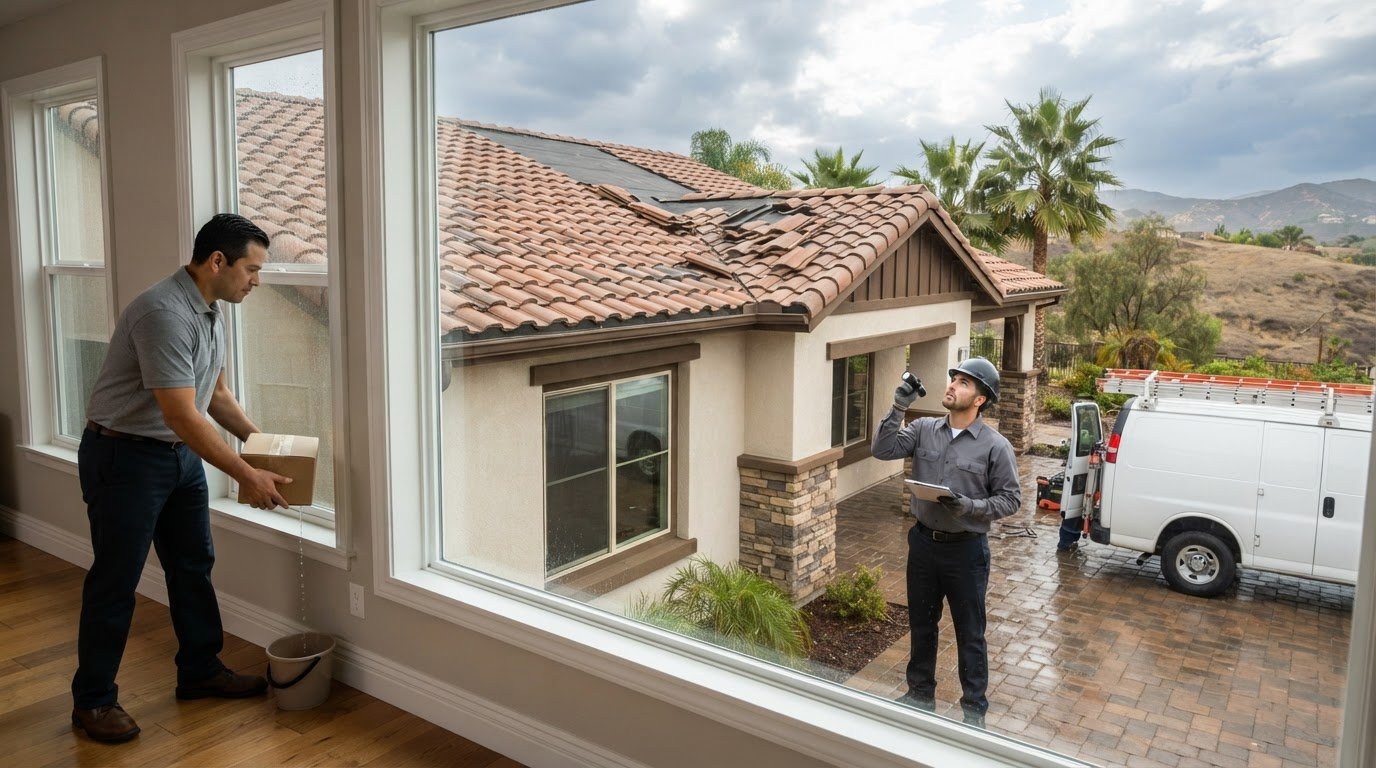
A roof leak can spread before you find where it started. If water is entering your Poway home, emergency roof repair Poway begins with protecting people and belongings, not climbing onto a wet or damaged roof. Keep clear of sagging ceilings, move valuables away from drips, and use a container to catch water if it’s safe to do so.
It’s understandable to want a quick fix, especially when the source of the leak isn’t obvious. A temporary measure may limit water intrusion, but lasting repair depends on locating the damage and understanding how it affects the roofing system. This guide explains what to do first, how to reduce further damage safely, and what to expect during a roof assessment.
Repair decisions can differ for tile roofs and other Southern California roofing systems, where intense sun and occasional heavy rain can stress materials. UEC Roofing serves Poway and nearby communities, including San Diego, Riverside, Orange, and Inland Empire cities such as Menifee, Lake Elsinore, Corona, and Murrieta.
Key Takeaways
- For emergency roof repair Poway, recognize signs that need prompt attention, including active indoor leaks, displaced tiles, and exposed underlayment.
- A roofer assesses visible damage, traces the likely leak source, and determines a repair plan based on the roof system and conditions found.
- An emergency leak doesn’t automatically mean you need a new roof. The repair scope depends on whether damage is localized or widespread.
- While waiting for an assessment, prioritize household safety and protect belongings from water without attempting roof access or risky repairs.
- Leak repair, tile replacement, felt replacement, and lift and relay address different types of roof damage.
Emergency Roof Repair in Poway: Which Problems Need Prompt Attention?
An active leak or visible roof damage can be unsettling, especially when you can’t tell how far water has traveled. With emergency roof repair Poway, the first priority is to distinguish immediate safety concerns from roof damage that needs prompt professional assessment. Water entering the home, newly displaced tiles, exposed underlayment, and visible structural damage all deserve attention. Don’t climb up to investigate.
Which signs suggest active roof damage?
Water dripping indoors or a ceiling stain that’s spreading suggests moisture may be getting in. A stain doesn’t pinpoint the roof opening: water can travel along roof materials or framing before appearing inside, so the ceiling mark may be some distance from the entry point.
Outside, displaced tiles or exposed underlayment indicate that the roof covering has been disturbed. Visible sagging or other apparent structural damage calls for extra caution. A photo or single indoor symptom can’t establish the leak’s source or show the full extent of damage. A roofer needs to assess the roof system and conditions.
What should homeowners avoid during a roofing emergency?
Stay off a wet, damaged, or unstable roof. Even a visible loose tile isn’t worth the risk of trying to reach it yourself. Inside, keep household members away from a sagging ceiling or any area that appears compromised. If water is near electrical fixtures, avoid touching them and keep clear.
From a safe location, take photos or note where water is appearing and what damage you can see. This can help explain the situation during an assessment, but it isn’t a substitute for inspection. A temporary response may help limit additional intrusion, while emergency repairs are not permanent solutions to the underlying cause.
- Active water indoors: Keep people clear of affected areas and arrange a professional assessment.
- Sagging or visibly compromised surfaces: Leave the area rather than approaching or touching it.
- Displaced tiles or exposed underlayment: Document what you can safely see, then arrange a roofing assessment.
Keep people away from active leaks and compromised ceilings. Never access a damaged roof; get professional help to assess the source.
What Happens During Emergency Roof Repair in Poway?
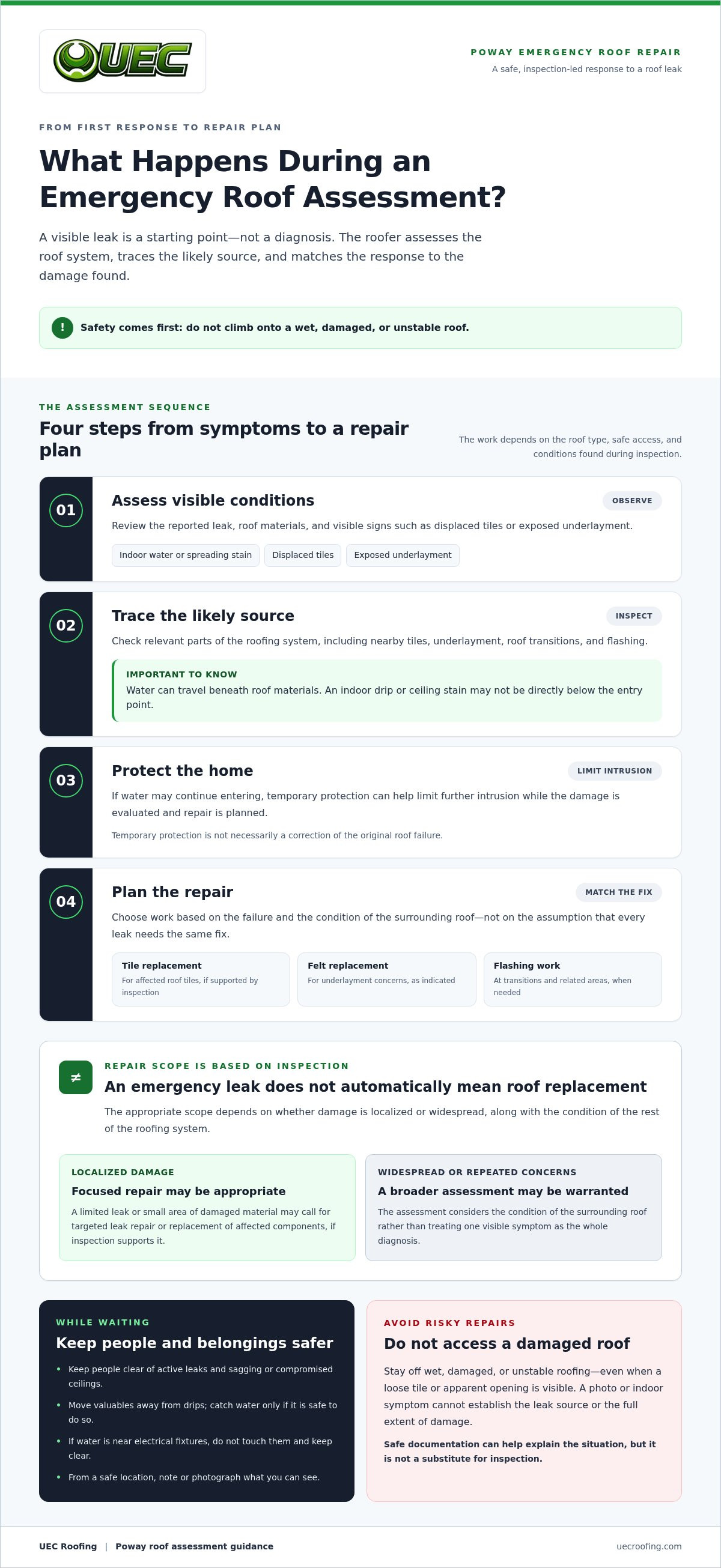
A roof leak needs more than a patch over the spot where water appears indoors. In Poway, the right repair approach depends on the roof type, safe access, and what an inspection reveals. A roofer works from visible conditions toward the likely source, then determines whether temporary protection or a lasting repair is appropriate.
- Assess visible conditions. Review the reported leak, roof materials, and any signs of displaced tiles or exposed underlayment.
- Trace the likely source. Inspect relevant parts of the roofing system, including nearby tiles, underlayment, transitions, and flashing.
- Protect the home. If water may continue entering, temporary protection can help limit further intrusion while repair is planned.
- Plan the repair. Match the work to the failure and the condition of the surrounding roof, rather than assuming every leak needs the same fix.
How does a roofer trace a roof leak?
Water can travel beneath roof materials before it reaches a ceiling, so the indoor drip or stain may not sit directly below the entry point. On a tile roof, an assessment may include checking tiles near the suspected area and the underlayment beneath them. Flashing at roof transitions can also be relevant. The source is determined through inspection, not reliably diagnosed from one symptom alone.
Temporary protection versus lasting repair
Temporary protection is meant to reduce additional water entry. It can be a practical step while the roofer evaluates the damage and plans the work, but it doesn’t necessarily correct the original failure. A lasting repair addresses the problem found during assessment. Depending on the roof, that could involve tile replacement, felt replacement, or work at flashing and related areas.
That distinction matters in emergency roof repair Poway: covering an opening and repairing the cause serve different purposes. A clear plan accounts for the roof system and the damage observed, including whether nearby materials also need attention. General preparation guidance from OSHA’s Emergency Preparedness and Response resource reinforces the value of planning for safety during emergencies.
For a roof-specific assessment and repair plan, explore UEC Roofing’s leak repair services. The goal is to limit further intrusion and address the failure with work suited to the roof, not rely on a temporary measure as the final fix.
Does Emergency Roof Repair Mean You Need a New Roof?
No. An urgent leak doesn’t automatically mean the whole roof needs replacement. The right scope depends on what an inspection finds: damage confined to a limited area may call for focused repair, while widespread deterioration or repeated problems may warrant a broader assessment. For Poway homeowners, the goal is to address the failure without overlooking the condition of the rest of the roofing system.
Observed condition: A localized leak or a small area of damaged material.
Possible next step: Targeted leak repair or replacement of affected components, if supported by inspection.
Observed condition: A tile roof with concerns involving tiles and the underlying felt.
Possible next step: Tile replacement, felt replacement, or lift and relay work, depending on the roof’s condition.
Observed condition: Repeated leaks or deterioration across broader areas.
Possible next step: Assess the wider roof before deciding among repair, rejuvenation, or replacement.
When may a focused roof repair be appropriate?
A targeted repair may make sense when inspection identifies a localized failure and the surrounding roof remains in serviceable condition. On a tile roof, the work might involve replacing damaged tiles or addressing felt beneath them. Flashing work may also be appropriate if the inspection identifies a problem there. The repair needs to address the source while accounting for nearby materials, not just the place where water appeared indoors.
When should the wider roof condition be assessed?
Repeated leaks or deterioration in multiple areas can signal that a single repair may not address the roof’s broader needs. That doesn’t make replacement automatic. Repair, rejuvenation, and replacement are distinct options, and the roof’s observed condition should guide the recommendation. Homeowners weighing those paths can review UEC Roofing’s guide to roof rejuvenation versus replacement for more context.
For emergency roof repair Poway, an inspection helps distinguish a contained problem from damage that affects a larger portion of the roof. Photos and notes can also help keep the assessment record clear. The IRS offers guidance on how to safeguard their records, including records related to property. The decision should reflect the roof in front of the roofer, not the urgency of the leak alone.
What Poway Homeowners Should Do While Waiting for Roof Assessment
While arranging an assessment, put household safety first. Don’t climb onto the roof or enter areas that look unstable. For emergency roof repair Poway, these safe first steps can help limit indoor damage and give the roofer useful information about the problem.
- Keep people clear of hazards. Stay away from sagging or bulging ceilings and visibly compromised areas. If water is near a light, outlet, or other electrical fixture, don’t touch it or the surrounding wet area.
- Move belongings only if it’s safe. Shift furniture and valuables away from drips if you can do so without entering an unsafe space.
- Catch water when safe. Place a container under a drip only if you can reach the spot safely. Don’t puncture a bulging ceiling to release trapped water.
- Record what you observe. Note when the leak began and whether water entry changes during rain. Take photos of interior damage from a safe location, and exterior damage only from the ground.
How can you limit indoor water damage safely?
Keep clear of a ceiling that’s swelling or appears damaged. A bucket may help catch a drip if you can place it safely, but don’t risk contact with wet electrical fixtures or stand beneath a compromised ceiling. If you’re unsure whether an area is safe, stay out and wait for professional guidance. For extensive moisture intrusion affecting interiors, working with property recovery professionals such as TBC Restoration can help manage indoor cleanup alongside roof repairs.
What information helps with a roof assessment?
A simple timeline can help: when you first noticed water, where it appeared, and whether it changed as rain continued. Safe photos can show how interior stains or visible damage develop, though they can’t identify the roof failure on their own. These details help focus an emergency roof repair Poway assessment on the conditions you observed.
For a local repair example, explore UEC Roofing’s Riverside roof leak repair case study. Poway’s Southern California weather can bring intense sun and occasional heavy rain, so noting when water appears may add useful context.
To arrange an assessment, contact UEC Roofing about roof leak repair. A clear account of what you’ve observed can help the team assess the problem and plan work suited to your roof.
Emergency Roof Repair for Poway Homes: How UEC Roofing Helps
Emergency roof repair in Poway starts with understanding the roof and the damage, then matching the work to the conditions found. A leak on a tile roof may call for a different approach than damage to another roofing system. UEC Roofing assesses the roof before determining whether leak repair, replacement of damaged materials, or broader work is appropriate.
Repair options for Southern California roof systems
On a tile roof, a cracked or displaced tile may need replacement. If inspection points to deterioration beneath the tiles, felt replacement may be part of the repair. Lift and relay is another option for tile roofs when the work requires addressing the underlying roofing layer and then putting the tiles back in place. The right scope depends on the roof’s condition, not just the visible leak.
These services address different needs. A localized issue may be suited to focused leak repair or tile replacement, while findings beneath the surface can change the repair plan. UEC Roofing provides lift-and-relay work for tile roofs; homeowners considering that approach can explore the company’s lift-and-relay guide for more information.
A local team for Poway and surrounding communities
UEC Roofing serves Poway and communities across Southern California, including Menifee, Temecula, Lake Elsinore, Canyon Lake, Corona, Anaheim, Moreno Valley, Winchester, Wildomar, Murrieta, Riverside, Orange, Huntington Beach, Fallbrook, Vista, Escondido, Carlsbad, San Diego, El Cajon, and Poway.
For homeowners, the value of an assessment is a repair plan grounded in the roof system and the damage observed. The recommendation may focus on a specific leak, tiles, or felt, rather than defaulting to a larger project. If broader work is warranted, the condition of the roof helps guide that conversation.
Contact UEC Roofing to arrange an inspection or discuss roof leak repair for your Poway home. A careful assessment can help identify the appropriate next step and support a lasting solution for protecting your home.
Protect Your Poway Home With a Clear Repair Plan
During a roofing emergency, keep household members away from unsafe areas and don’t climb onto the roof. Water stains may not show where a leak began, so an inspection can help identify the source and determine the right scope of work. An active leak doesn’t automatically mean you need a new roof; localized damage may call for focused repair, while broader deterioration deserves a wider assessment.
UEC Roofing serves Poway with leak repair, tile replacement, felt replacement, and lift and relay. Contact UEC Roofing to request a Poway roof inspection or repair, and build a lasting relationship with a team focused on being your roofer for life.
A careful assessment and appropriate repair can help protect your home now and support its care for years to come.
Frequently Asked Questions
What should I do first if my roof is leaking in Poway?
First, keep people away from sagging ceilings and visibly unsafe areas. Don’t climb onto the roof to find the source. If it’s safe, move belongings away from drips and place a container beneath leaking water. Avoid touching wet electrical fixtures. Note when the leak began and take photos from a safe location. These steps help you prepare for an emergency roof repair Poway assessment.
Can I put a tarp on my roof during an emergency?
Don’t climb onto a wet, damaged, or unstable roof to place a tarp. Falls and further damage are serious risks, and a tarp may not address the source of the leak. Temporary protection can help limit further water entry while repair is planned, but it doesn’t necessarily correct the underlying failure.
Does a roof leak mean I need a full roof replacement?
No. A leak alone doesn’t mean you need a full replacement. If damage is limited to a specific area and the surrounding roof remains in suitable condition, a focused repair may address it. Repeated leaks or deterioration across broader areas call for a wider assessment. The roofer’s findings help determine whether repair, rejuvenation, or replacement is appropriate for your home.
How do roofers find the source of a leak?
Roofers inspect the roof system and trace conditions that could explain the water entry. Water may travel beneath roofing materials before appearing indoors, so a ceiling stain doesn’t necessarily sit below the opening. Depending on the roof, the assessment may include nearby tiles, underlayment, transitions, and flashing. An indoor symptom or photograph alone can’t reliably identify the cause; the repair plan follows the inspection.
Can a tile roof be repaired after an emergency leak?
Yes. Tile roofs can often be repaired, but the right work depends on inspection findings. A damaged tile may need replacement, while a problem with the underlying felt may require felt replacement. Lift and relay can be appropriate when work beneath the tiles is needed and the tiles are to be put back. The visible tile condition is only part of the assessment; the underlying materials matter too.
What should I document before a roof repair inspection?
Write down when you first noticed the leak and whether water entry changes during rain. Note where you see drips or stains, but don’t assume that location shows where water entered the roof. Take photos of interior damage from a safe position and exterior damage from the ground. Keep clear of sagging ceilings, wet electrical fixtures, and unsafe areas while documenting what you observe.
Does UEC Roofing serve Poway and nearby Southern California communities?
Yes. UEC Roofing serves Poway and nearby communities, including Menifee, Temecula, Lake Elsinore, Canyon Lake, Corona, Anaheim, Moreno Valley, Winchester, Wildomar, Murrieta, Riverside, Orange, Huntington Beach, Fallbrook, Vista, Escondido, Carlsbad, San Diego, and El Cajon. Homeowners seeking emergency roof repair Poway can contact the team to arrange an inspection, leak repair, or another service suited to their roof.