
New Roofing in Southern California: A Homeowner’s Guide to Planning a New Roof

Does a worn-looking roof always need to be replaced? Not necessarily. In Riverside County, a new roofing plan should start with the roof’s condition, the protection your home needs, and the scope of work that fits the property.
It’s reasonable to feel unsure when repairs, maintenance, rejuvenation, and replacement are all possibilities. Choosing a roof system is a long-term decision: the materials and workmanship affect how your home is protected and how it looks over time.
This guide explains when a new roof may make sense and when another service could address the issue. You’ll also learn what to consider when comparing residential tile and shingle systems, defining project scope, and planning around your home’s priorities. We’ll focus on practical considerations for Riverside County homeowners, including those in Lake Elsinore and the Inland Empire.
Key Takeaways
- Look beyond visible damage. An assessment considers the roofing system, observed issues, and your goals before identifying a suitable next step.
- Compare residential tile and shingle systems based on your home’s needs. Commercial TPO and silicone coating systems are separate options for commercial buildings.
- Review a clear project scope to understand whether the work involves maintenance, repairs, materials, or a full re-roof.
- Prepare for new roofing by documenting your priorities and discussing the proposed work in the context of your property in Riverside County, Lake Elsinore, or the Inland Empire.
- Understand how UEC Roofing’s residential, commercial, and solar services can fit into roofing plans in Riverside County and surrounding communities.
When Does a Home in Riverside County Need New Roofing?
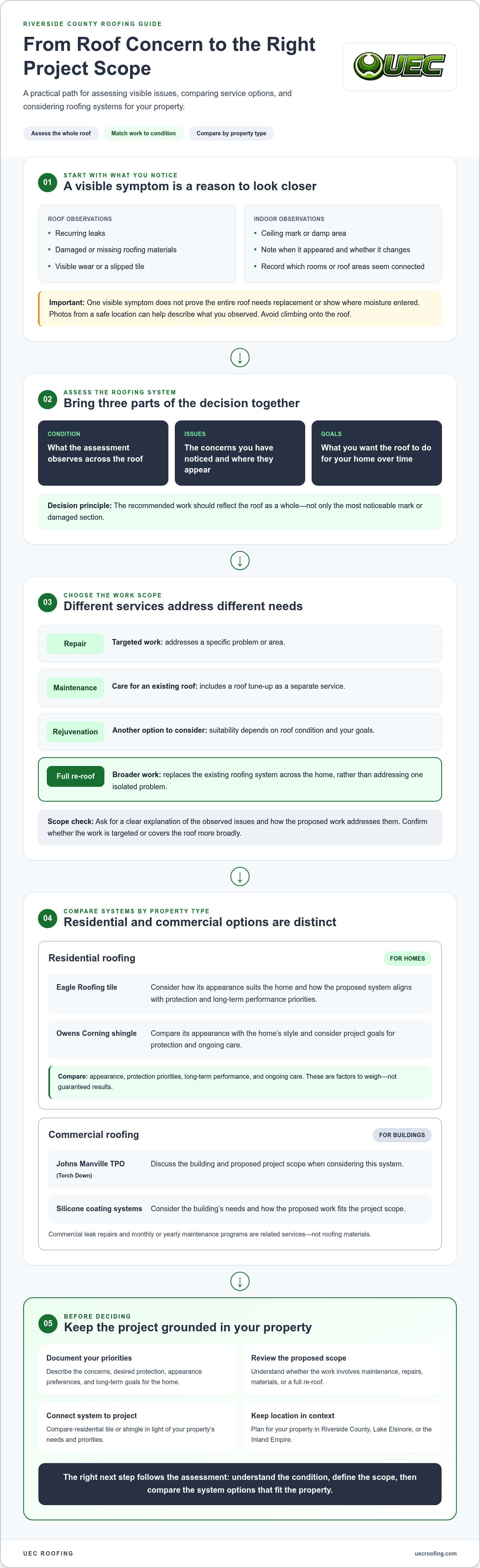
Visible damage can be worrying, but it doesn’t reveal the full condition of a roof on its own. A slipped tile, worn-looking area, or indoor stain is a reason to look closer, not proof that the entire roof needs replacement. A sound decision starts with an assessment of the roofing system, the issues you’ve noticed, and what you want your roof to do for your home over time.
A new roof project replaces the existing roofing system across the home, rather than addressing only one isolated problem. Whether that broader work is appropriate depends on the roof’s condition and whether a more targeted service can meet your needs.
What signs can prompt a closer roof assessment?
Recurring leaks, damaged or missing roofing materials, and visible wear are practical reasons to arrange an assessment. They can help identify areas that need attention, but one symptom may not show whether the issue is limited to one spot or connected to a wider concern.
Pay attention to indoor signs, but don’t treat them as a diagnosis. A ceiling mark or damp area can alert you to a problem, but it doesn’t establish where moisture entered or how much of the roof may be affected. Note when you first saw it, whether it changes, and which rooms or roof areas seem connected. Photos taken from a safe location can help you describe what you’ve observed. Avoid climbing onto the roof or assuming that one visible symptom calls for full replacement.
An assessment brings your observations together with the roof’s condition and your priorities. You may want to address a recurring concern, plan for long-term protection, or understand whether a limited service could be suitable. The recommended work should reflect the roof as a whole, not only the most noticeable mark or damaged section.
How is a new roof different from other roofing work?
A full re-roof is broader than an isolated repair. It renews the roof across the home, while roof repair addresses a specific problem or area. Maintenance, including a roof tune-up, is a separate way to care for an existing roof. Roof rejuvenation is another service to consider when deciding what work may fit the roof’s condition and your goals.
These services aren’t interchangeable, and the right scope depends on the assessment. Ask for a clear explanation of the observed issues and how the proposed work addresses them. That helps you understand whether the recommendation is targeted or covers the roof more broadly, without treating every concern as a replacement decision.
For a deeper comparison of rejuvenation and replacement, consult the roof rejuvenation versus replacement guide. If a full re-roof is being considered, the system matters too. Homeowners can explore an overview of types of roofing materials as background before comparing options for their property.
Which Roofing System Fits Your Riverside County Property?
Roofing systems vary by material and building type, so start by identifying the property and project. For residential roofing, UEC Roofing works with Eagle Roofing tile and Owens Corning shingle. Commercial projects have separate considerations, including Johns Manville TPO (Torch Down) and silicone coating systems. Your priorities for appearance, protection, and long-term performance can guide the comparison.
Material choice should reflect the project type and property needs, not a one-size-fits-all idea of the best roof. Use the table to see which system categories apply to residential and commercial projects.
| System category | Common context | Decision factors |
|---|---|---|
| Eagle Roofing tile | Residential roofing | Consider how its appearance suits the home and how the proposed system aligns with your protection and long-term performance priorities. |
| Owens Corning shingle | Residential roofing | Compare its appearance with the home’s style and consider the project’s goals for protection and ongoing care. |
| Johns Manville TPO (Torch Down) | Commercial roofing | Discuss the building and proposed project scope when considering this system. |
| Silicone coating systems | Commercial roofing | Consider the building’s needs and how the proposed work fits the project scope. |
How do tile and shingle options differ for homes?
Tile and shingle are distinct residential options. Eagle Roofing tile and Owens Corning shingle give homeowners two categories to compare. Consider how each roof’s appearance will complement the home, along with your priorities for protection and long-term performance. These are factors to weigh, not guaranteed results. The overall system and installation also matter.
For broader context on roofing materials and categories, the National Roofing Contractors Association guidelines offer industry resources to support your research as you consider a project.
When does commercial roofing require a different discussion?
Commercial roofing calls for a discussion centered on the building and the work planned. UEC Roofing’s commercial offerings include Johns Manville TPO (Torch Down) and silicone coating systems. Leak repairs and monthly or yearly maintenance programs are related commercial services, not roofing materials.
For a Riverside County home, focus on residential systems and your property’s priorities. A discussion with UEC Roofing can connect those choices to the project. You can discuss your roofing project with the local team.
What Should a New Roofing Project Scope Cover?
A clear project scope helps you understand the proposed work before deciding how to proceed. It should connect the roof conditions that have been observed with the services and materials being considered. That clarity matters in Southern California, where a roof is an important part of protecting your home over time.
Use the discussion to separate these parts of the work:
- Materials: Identify the roofing system under consideration and where it will be used.
- Repairs: Clarify which areas or concerns the repair is intended to address.
- Maintenance: Understand what care is proposed for the existing roof.
- Full re-roofing: Distinguish work across the roof from service focused on a limited area.
These categories describe different scopes, not interchangeable terms. A project might include a repair for a specific concern, while a full re-roof addresses the roof system more broadly—often incorporating essential roofline features like fascia, soffits, and guttering, as detailed by industry specialists like Archers Roofing Services Ltd. Understanding the difference helps you weigh the proposed work against your priorities without assuming every roof concern calls for the same solution.
How can homeowners understand the work being proposed?
Ask for a plain-language description of the areas involved, the roofing service proposed, and how it relates to the roof’s observed condition. UEC Roofing’s licensed, experienced team focuses on reliable craftsmanship and can explain the work in terms homeowners can follow. For additional context on roof performance and installation, FEMA’s building-science publications offer resources for understanding building-science considerations.
Before making a decision, make sure you can describe the scope in your own words. Is it maintenance, repair, or a full re-roof? Which areas are included? What materials are proposed? Clear answers help you compare the work with your goals and keep the discussion focused on your property.
What role do maintenance and roof condition play?
Maintenance, repair, and full re-roofing serve different purposes. UEC Roofing offers residential maintenance and repairs alongside full re-roofs, so project planning can account for more than one path. The roof’s condition guides the discussion: maintenance supports care of an existing roof, repair addresses a concern, and a full re-roof covers broader work.
UEC Roofing’s monthly and yearly maintenance programs are available for commercial properties. Homeowners looking for maintenance-specific advice can consult the Southern California roof tune-up guide, while readers considering contractor selection can refer to the guide on choosing a residential roofing contractor in Southern California. These topics can help frame questions, but the project scope should remain specific to the property and proposed work. Clear descriptions support an informed decision about the next step.
How Can Southern California Homeowners Prepare for New Roofing?
For homeowners in Riverside County, Lake Elsinore, and the Inland Empire, preparation means turning broad goals into specific topics for the project discussion. Think about how the roof should support your home over time, and note any concerns about efficiency, fire resistance, ventilation, or upkeep. The right choices depend on the property and the work being considered.
Use these steps to organize your preparation:
- Set your priorities. Decide whether protection, curb appeal, energy efficiency, or long-term roof care matters most to you.
- Record your concerns. Note recurring issues, where you have noticed them, and any changes you’ve observed. This keeps the project discussion specific to your home.
- Include efficiency and ventilation. Raise questions about energy use and attic ventilation as part of planning. These topics relate to how the home and roof system should be considered together.
- Discuss fire resistance and upkeep. Include fire resistance among your priorities, and discuss how preventative maintenance fits into caring for the roof over time.
- Review the proposed scope. Check that the described work reflects your goals and addresses the concerns you raised.
What should homeowners decide before work begins?
Think beyond the immediate project. If energy efficiency is a priority, make that clear so it can be included in the discussion alongside your other goals. If you want to support roof longevity, ask how the proposed scope relates to continued care and preventative maintenance. You can also raise questions about fire resistance and attic ventilation without assuming that a particular solution applies to every home.
Keep your notes handy. Project details should be shaped by your property, its condition, and the work selected, not by a generic checklist alone.
How should roofing and solar plans work together?
Include solar in your planning if your home already has panels or you’re considering them. UEC Roofing provides solar panel installation, system upgrades, battery backup solutions, and ongoing system support. Describe your existing setup or future plans as part of the project conversation. This keeps your roofing priorities and related solar needs in view without assuming a particular installation sequence or outcome.
For a focused discussion about your roof and project priorities in Riverside County, schedule a roofing assessment with UEC Roofing.
How UEC Roofing Approaches New Roofing in Riverside County
Planning a roof project is easier when the recommendation reflects the property, its condition, and the owner’s priorities. UEC Roofing is a licensed, experienced team serving Riverside County and surrounding communities. The company focuses on reliable craftsmanship and quality materials from trusted manufacturers, with attention to the roof’s role in protecting the property and supporting its appearance over time.
Residential and commercial roofs call for different project discussions. For homeowners, the scope may involve maintenance, repair, rejuvenation, or a full re-roof. Commercial property owners may be considering a different system or ongoing maintenance. In either case, understanding the proposed work helps ground the decision in the building’s needs rather than assumptions.
Which roofing services can support a property’s needs?
Residential services include maintenance, roof repairs, and full re-roofs. Roof rejuvenation is another service to discuss as part of caring for a roof. Commercial services include TPO roofing, silicone coating systems, leak repairs, and monthly or yearly maintenance programs. These options serve distinct purposes, and the appropriate scope depends on the property and work being considered.
UEC Roofing also provides solar panel installation, system upgrades, battery backup solutions, and ongoing support. Solar is a related consideration for a roofing project, not a roofing material. Including existing or planned solar needs in the project discussion can help clarify the overall priorities.
What is a practical next step for a new roof?
Start with a simple account of what you’ve noticed and what you want the project to achieve. You might note a recurring concern, a preference for a different appearance, or a goal of planning for the roof’s long-term care. This gives the assessment a useful starting point without presuming that one specific service is the answer.
From there, discuss the property, its observed condition, and the scope that may fit. A clear conversation can distinguish a targeted service from broader re-roofing and clarify how material selection relates to protection, performance, and curb appeal. Consider the project in context, with the home or building and its priorities in view.
For Riverside County homeowners, new roofing is a significant decision because the roof helps protect the home and the people and belongings inside it. UEC Roofing approaches that work with practical guidance, reliable craftsmanship, and attention to the property’s needs. You don’t need to have every detail decided before starting a conversation.
Contact UEC Roofing to discuss your roofing concerns or arrange an inspection. Share what you’ve observed and what you hope to accomplish so the team can help you understand a suitable next step for your property.
Take the Next Step Toward a Roof That Fits Your Home
A roofing decision doesn’t have to start with every answer in hand. Begin with what you know: the concerns you’ve noticed, what you want your roof to support, and any questions you still have. That gives the project discussion a clear starting point and keeps the next step focused on your property rather than assumptions.
For Riverside County homeowners, new roofing is an opportunity to make a considered choice about an important part of the home. The goal isn’t simply to select a material. It’s to understand the work being proposed and how it aligns with the home’s needs and your priorities. A careful conversation can turn uncertainty into a practical plan.
Bring your questions, even if they’re still taking shape. UEC Roofing can help you discuss the project and identify a sensible way forward. Contact UEC Roofing to discuss your roofing plans and arrange an inspection.
Frequently Asked Questions
How do I know if my home needs a new roof?
A professional assessment can help determine whether the roof needs broad replacement or more limited work. Recurring leaks, damaged materials, or interior marks are useful observations to share, but they don’t establish the condition of the entire roof on their own. Note where concerns appear and whether they return after rain. An assessment can connect those observations to the roof’s condition and your priorities.
Can a roof be repaired instead of replaced?
Yes. A repair may be appropriate when the issue is limited and the rest of the roof can continue to serve the home. For example, a concern around one roof area may call for targeted attention rather than a full re-roof. An assessment helps determine the scope. UEC Roofing provides roof repairs, leak repairs, and maintenance, as well as full re-roofs and roof rejuvenation.
What roofing materials does UEC Roofing work with?
UEC Roofing works with Eagle Roofing tile and Owens Corning shingle for residential roofing, and Johns Manville TPO (Torch Down) for commercial roofing. Commercial roofing also includes silicone coating systems, a separate system option rather than a tile or shingle material. Start by identifying whether the project is residential or commercial, then discuss which system suits the property and proposed work.
How does tile roofing differ from shingle roofing?
Tile and shingle are different roofing categories, each with its own visual character. Tile offers a pronounced, dimensional roof appearance, while shingles have a different look that can complement other home styles. These are aesthetic considerations, not performance guarantees. Compare how each option fits your home’s design, protection priorities, and project scope, then consider the selected material as part of the complete roofing system.
Can solar services be part of a new roofing project?
Yes. UEC Roofing provides solar panel installation, system upgrades, battery backup solutions, and ongoing support. If your home already has solar panels or you’re considering them, include that in the roofing conversation so your plans are part of the project discussion. Share what solar equipment is present and what you may want to add or update. Discuss roofing and solar plans together without assuming a particular installation sequence or outcome.
What should a roofing project scope explain?
A useful scope should make clear what work is proposed, which roof areas it addresses, and what materials or services are involved. For example, distinguish a repair focused on a specific concern from work that covers the roof more broadly. If the home has solar panels or recurring maintenance needs, mention those too. Understanding these details helps you see how the proposed work connects to the property’s condition and your goals.
Does UEC Roofing serve homeowners in Lake Elsinore and the Inland Empire?
UEC Roofing serves homeowners in Riverside County and surrounding communities, including Lake Elsinore and Inland Empire communities such as Menifee, Temecula, Canyon Lake, Corona, Moreno Valley, Winchester, Wildomar, Murrieta, and Riverside. Its broader local service area also includes Anaheim, Orange, Huntington Beach, Fallbrook, Vista, Escondido, Carlsbad, San Diego, El Cajon, and Poway. Share your location when discussing a roofing project.