
Winchester Roof Leak: 2026 Emergency Checklist

The sound of a steady drip hitting your living room furniture at 2:00 AM is enough to keep any Riverside County homeowner awake with worry. When water breaches your ceiling, the immediate panic is often followed by a flood of questions about mold, repair costs, and whether your insurance will cover the damage. Knowing exactly what to do when your roof is leaking Winchester homes requires a fast, methodical approach to protect your property and your peace of mind.
We understand that a leaking roof is more than a minor inconvenience; it's a threat to your family's safety and your home's long-term value. This 2026 emergency checklist provides an expert-led path to stop active water ingress, identify the source of the failure, and choose the right professional repair strategy for Southern California tile systems. You'll learn how to handle the immediate crisis, evaluate the health of your underlayment, and find a local partner who treats your roof as a critical investment rather than a temporary patch.
Key Takeaways
- Learn the immediate steps to mitigate interior damage, including the correct way to contain active leaks and protect your home’s interior.
- Discover exactly what to do when your roof is leaking Winchester property, focusing on identifying hidden underlayment failures beneath concrete tiles.
- Understand the critical differences between a simple repair, specialized roof rejuvenation, and a full replacement to protect your long-term investment.
- Find out how to document storm damage effectively to streamline insurance claims and decide when an out-of-pocket repair is the more strategic choice.
- Explore preventative maintenance strategies like the "Roof Tune-Up" and proper attic ventilation to defend your home against Inland Empire weather.
Immediate Emergency Action: The 'Stop the Leak' Checklist
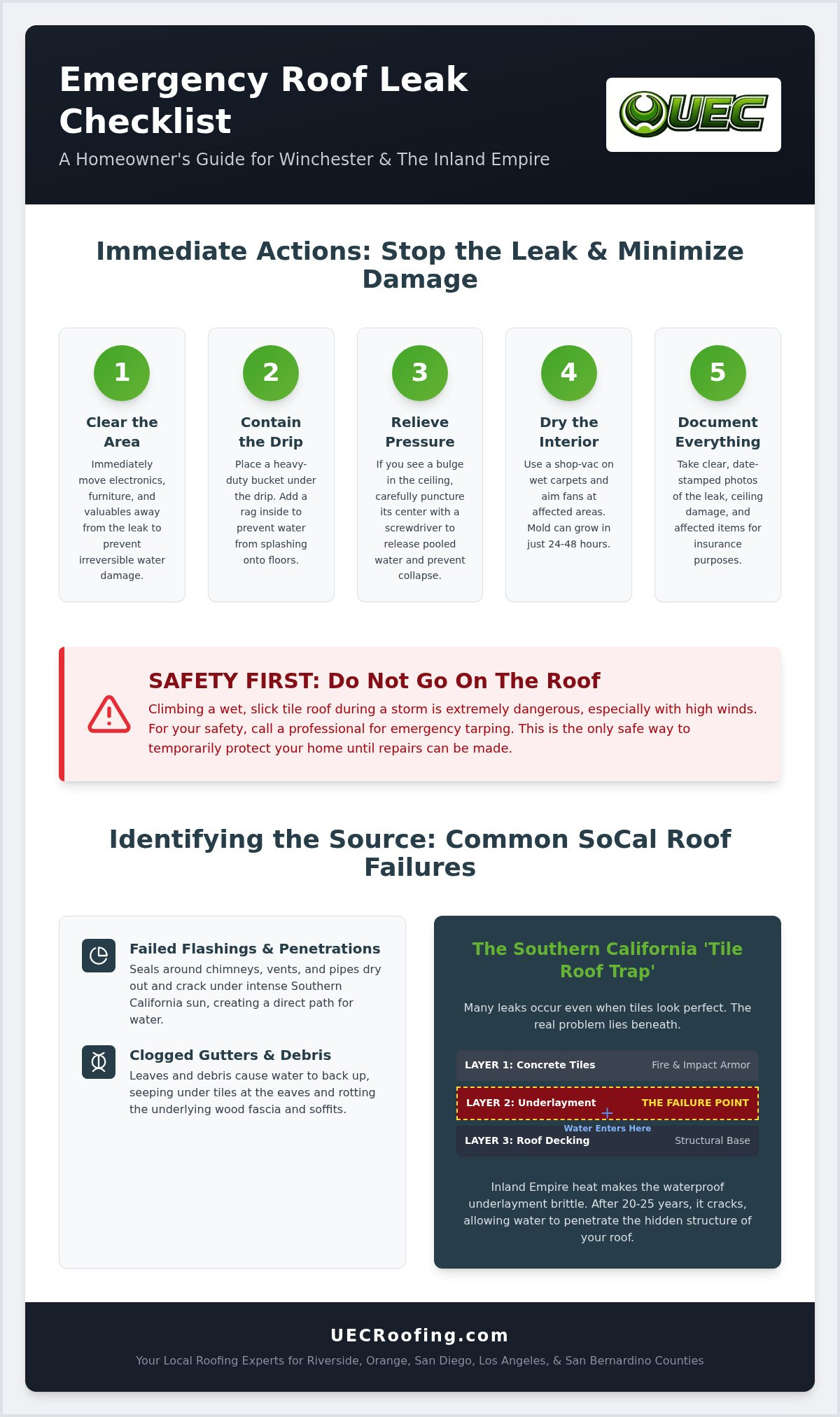
When water starts coming through the ceiling, stay calm but move quickly. Your priority is protecting your interior assets and preventing a localized structural collapse. While understanding the Common causes of leaks is helpful for long-term prevention, right now you need to manage the immediate symptoms. Knowing exactly what to do when your roof is leaking Winchester residents often discover during sudden winter storms can save thousands in interior restoration costs.
First, clear the area. Move electronics, heirlooms, and upholstered furniture to a dry room immediately. Water damage to these items is often irreversible once mold spores take hold. Next, contain the flow. Place a heavy-duty bucket under the drip. A seasoned pro tip is to place a small piece of wood or a rag inside the bucket. This breaks the surface tension of the water and prevents messy splashing on your hardwood or laminate flooring.
If you notice a bulge in your drywall, water is pooling behind the paint. This is a critical moment. Take a small screwdriver or awl and carefully puncture a hole in the center of the bulge. This relieves the weight of the water and prevents the entire ceiling section from collapsing under the pressure. It's much easier to patch a small hole than to replace an entire sheet of drywall.
Minimizing Interior Water Damage
Once the water is contained, focus on moisture extraction. Use a shop-vac to pull water out of carpets and area rugs immediately. Don't wait for the rain to stop. Set up high-volume fans and point them directly at the affected walls and floors. Mold can begin to colonize in as little as 24 to 48 hours in the warm, humid pockets of an Inland Empire home. Finally, document everything. Take clear, date-stamped photos of the leak, the ceiling damage, and any impacted belongings. This evidence is vital for your insurance carrier or for our team to verify the severity of the breach during an inspection.
When to Call for Emergency Tarping
You might be tempted to climb up and throw a tarp over the problem area yourself. Don't do it. Climbing a wet roof during a Winchester storm is incredibly dangerous, especially on slick concrete tiles common in Riverside County. High winds can turn a plastic tarp into a sail, easily pulling an inexperienced homeowner off the roof. Professional emergency tarping is the only safe way to protect your home until a permanent repair is scheduled. A local roofing contractor can quickly identify if the leak is a localized tile failure or a larger structural issue, ensuring your home stays dry while we wait for the weather to clear.
Identifying the Source: Common Winchester Roof Failures
Pinpointing the exact entry point of water is often more complex than looking directly above the interior drip. In the Inland Empire, our homes face environmental stressors that differ significantly from other regions. While national advice often focuses on snow loads or ice dams, knowing what to do when your roof is leaking Winchester property requires a focus on UV degradation and high-velocity wind damage. Identifying the failure early can be the difference between a simple repair and a full system replacement.
Flashings and penetrations remain the most frequent culprits for sudden leaks. These metal transitions around chimneys, vent pipes, and solar mounts are sealed with specialized mastics that eventually dry out and crack under the relentless Southern California sun. When these seals fail, water gravity-feeds into the attic, often traveling along rafters before finally soaking through your drywall. Debris from local vegetation also plays a role. Clogged gutters cause water to back up under the eave or "starter" course of tiles, leading to wood rot in the fascia and soffits that is often invisible from the street.
The 'Tile Roof Trap' in Southern California
Many Winchester homeowners are surprised to find a leak when their concrete tiles appear perfectly intact. It's vital to understand that tiles are merely the "armor" designed to shed bulk water and protect against fire. The actual "waterproof skin" of your home is the asphalt felt underlayment hidden beneath them. In the intense heat of the Inland Empire, this felt becomes brittle and loses its elasticity over 20 to 25 years. Eventually, it cracks. When rain hits, water slips through the gaps between tiles and enters these cracks in the felt. Because the tiles look fine, many people delay calling a roofing contractor, allowing the underlying structure to saturate and decay.
Exterior Visual Inspection from the Ground
You can perform a preliminary assessment without ever stepping on a ladder. Grab a pair of binoculars and scan your roofline for these specific red flags:
- Slipped or Cracked Tiles: Even a single displaced tile exposes the vulnerable underlayment to direct sunlight and rain.
- Granule Loss: On composite shingle roofs, look for "bald" spots or piles of sand-like granules in your downspouts. This indicates the shingle's protective layer is gone.
- Alligatoring: On flat roof sections, look for a cracked, scaly texture in the coating. This is a sign the material has been "baked" by UV rays and is no longer waterproof.
- Valley Debris: Check the "V" shaped channels where two roof planes meet. If these are filled with leaves or pine needles, water will divert sideways under your roofing material.
If you spot these issues, it's a clear sign that your roof's thermal and moisture barrier is compromised. Addressing these small failures now through a professional roof tune up can prevent the need for a premature and costly replacement.
Repair vs. Rejuvenation vs. Replacement: Making the Right Choice
Deciding how to proceed after finding water in your home is a significant financial choice. Most national websites offer a simple binary: patch it or replace it. However, knowing what to do when your roof is leaking Winchester homes involves understanding a middle ground that can save you thousands while maintaining the integrity of your property. Minor repairs are often sufficient for localized issues. A single cracked tile or a loose piece of flashing around a chimney can be addressed quickly. If the rest of the system is healthy, a targeted roof tune up can stop the leak and prevent future breaches without a major overhaul.
As a local expert with over 2,000 successful projects in the Inland Empire, we believe in providing honest, long-term solutions. We don't believe in high-pressure sales tactics. Instead, we focus on the specific health of your roofing system. Sometimes a patch is a temporary band-aid on a terminal problem. Other times, a full replacement is a premature waste of perfectly good materials. The key is identifying where your roof sits on the spectrum of wear and tear.
Understanding the Lift and Relay Process
For the many tile roofs in Riverside County, a full replacement is often unnecessary and wasteful. Concrete and clay tiles are incredibly durable and can last 50 years or more. The weak point is the asphalt felt underlayment beneath them, which typically fails around the 20-year mark. We specialize in the "Lift and Relay" process. This involves carefully removing your existing tiles, replacing the degraded felt with high-quality new materials, and then re-installing your original tiles. It provides the protection of a new roof at a fraction of the cost. For a deeper dive into this sustainable option, read our Lift and Relay Roofing Service: The Ultimate Guide.
Is Your Roof a Candidate for Rejuvenation?
If you have a composite shingle roof that is starting to show its age, you might not need a total tear-off. Roof rejuvenation is a specialized treatment that restores the essential oils to asphalt shingles. This process can extend the life of your roof by 5 to 15 years. This is an excellent option for roofs that are 15 to 20 years old but still have decent granule coverage and no structural rot. We take a "straight shooter" approach here. If your shingles are curling or the wood decking underneath is soft, rejuvenation is a waste of money. You can compare these paths in our guide on Roof Rejuvenation vs Replacement: Making the Right Choice.
A full replacement becomes the only ethical recommendation when the roof has reached the end of its functional life. If more than 25% of the surface is compromised or if the structural rafters show signs of chronic moisture, a new roof is the only way to protect your investment. Our team in Lake Elsinore treats every roof as a critical investment for protecting your family and property value.
Navigating Insurance and Documentation in Winchester
The decision to file an insurance claim isn't always straightforward. When you're determining what to do when your roof is leaking Winchester residents must weigh their deductible against the actual cost of repair. If the damage is minor, paying out-of-pocket might prevent your premiums from rising. However, for significant storm damage or high-wind events, your policy is there to protect your investment. We provide technical reports that help adjusters understand the full scope of the breach, ensuring no detail is overlooked.
California policies typically fall into two categories: Actual Cash Value (ACV) and Replacement Cost. ACV pays only for the depreciated value of your roof based on its age. Replacement Cost covers the actual expense of a new roof at current market rates. Understanding which one you have is crucial before you start the process. Regardless of the policy type, you must document everything. Take date-stamped photos of the initial leak, the interior ceiling damage, and any compromised electronics or furniture. This evidence is the foundation of a successful claim and prevents disputes over the timeline of the damage.
The Danger of 'Storm Chasers'
After a heavy rain in the Inland Empire, out-of-state contractors often flood the area. These "storm chasers" use high-pressure tactics to get you to sign over your insurance check. They often disappear once the work is done, leaving you with no recourse if the roof fails again. We take pride in our brick-and-mortar status in Lake Elsinore. A local presence means we are here for the long haul to support our warranties and provide follow-up care. Always verify a contractor's California C-39 roofing license and active workers' comp insurance before allowing them onto your property.
Preparing for the Adjuster's Visit
We recommend having your roofing contractor present when the insurance adjuster arrives. Adjusters are often spread thin during storm seasons and may miss subtle signs of damage. We help identify hidden issues like attic insulation saturation or early-stage mold growth that could lead to much larger problems later. Having a detailed roof repair estimate in hand during the inspection ensures the adjuster's report reflects the true cost of restoring your home's integrity. This collaborative approach ensures you receive the full benefit of the coverage you've paid for over the years.
Navigating the paperwork shouldn't be your burden alone. If you need a professional assessment for your insurance carrier, contact our expert team today for a comprehensive inspection.
Long-Term Prevention: The Winchester Homeowner’s Maintenance Plan
Stopping a leak once it starts is a necessity, but preventing it from ever happening is a superior strategy. In the Inland Empire, our roofs face a unique cycle of intense UV exposure followed by sudden, heavy winter rains. Instead of reacting to a crisis and wondering what to do when your roof is leaking Winchester homes should be protected by a proactive maintenance plan. We believe in the "Roofer for Life" philosophy. This means we prioritize consistent, small interventions that extend the life of your investment and keep your family dry year after year.
Attic ventilation is one of the most overlooked components of roof longevity in Riverside County. Without proper airflow, your attic can reach temperatures exceeding 150 degrees in the summer. This heat effectively "bakes" your shingles or underlayment from the inside out, causing them to become brittle and fail prematurely. Additionally, managing debris is critical. Winchester's wind-blown dust and seasonal leaves often collect in roof valleys and behind chimneys. This debris acts like a sponge, holding moisture against your roof and creating the perfect environment for wood rot. A simple cleaning can prevent water from backing up and seeping into your sub-roofing layers.
Scheduling Your Pre-Rainy Season Tune-Up
October is the most critical month for roof preparation in Winchester. By scheduling a professional assessment before the first major storm hits, you can address minor vulnerabilities before they become expensive emergencies. Our Roof Tune-Up Service: The 2026 Southern California Guide details exactly how we seal penetrations, clear drainage systems, and secure loose tiles. This small investment ensures your home’s thermal and moisture barrier remains intact throughout the winter, providing a level of security that reactive repairs simply cannot match.
Protecting Property Value with Maintenance Logs
Consistent maintenance doesn't just prevent leaks; it protects your home's resale value. When it comes time to sell a property in Riverside County, a documented history of professional roof care provides immense peace of mind to potential buyers. We also focus on fire-resistant roofing materials, which are essential in our high-risk zones. Our brick-and-mortar team in Lake Elsinore has completed over 2,000 successful projects, and we bring that same level of ethical craftsmanship to every maintenance visit. By treating your roof as a critical asset rather than a forgotten surface, you ensure it remains a stable, reliable shield for your property. We're committed to providing the honest, long-term care your Winchester home deserves.
Securing Your Winchester Home for the Long Term
A roof leak is a stressful event, but it's also an opportunity to transition from reactive repairs to a strategy of long-term stability. By taking immediate action to contain water and understanding the hidden failures of tile underlayment, you've already taken the most important steps to protect your property value. Determining what to do when your roof is leaking Winchester homes is just the first step toward securing your property's future. Whether your roof requires a specialized Lift and Relay or a restorative rejuvenation, the goal is always a reliable thermal and moisture barrier that stands up to the Inland Empire's unique climate.
At UEC Roofing, we bring the expertise of over 2,000 successful Southern California projects to every inspection. As specialized tile lift and relay experts with a brick-and-mortar office in Lake Elsinore, we're your neighbors and your long-term partners in home maintenance. Don't leave your family's safety to chance or temporary patches. Schedule your Winchester roof leak inspection with UEC Roofing today and experience the peace of mind that comes from working with a true local expert. We're here to be your roofer for life.
Frequently Asked Questions
Is a roof leak an emergency that requires immediate repair?
Yes, any leak is an active threat to your home's structure. Water quickly saturates attic insulation and weakens rafters, leading to costly restoration. Addressing the breach immediately prevents localized collapses and protects your long-term investment.
How much does a typical roof leak repair cost in Winchester, CA?
Costs vary based on the failure's complexity and the materials required. A simple flashing fix differs significantly from a specialized tile lift and relay. We provide detailed, transparent estimates after a physical inspection to ensure you only pay for necessary work.
Can I fix a roof leak from the inside of my attic?
You cannot permanently fix a leak from the inside. While you might divert water, the source is always on the exterior. Knowing what to do when your roof is leaking Winchester property means sealing the outer waterproof skin to stop wood rot and structural decay.
Will my homeowners insurance cover a roof leak caused by rain?
Insurance typically covers sudden storm damage or high-wind events. However, they generally exclude leaks caused by wear and tear or neglected maintenance. We provide technical reports to help adjusters distinguish between storm damage and age-related degradation.
How do I find the exact source of a roof leak on a tile roof?
Finding a source on tile roofs is difficult because water travels along the underlayment. Look for moisture trails on attic rafters that lead upward. Because tiles hide the actual waterproof felt, a professional inspection is the most reliable way to find the entry point.
Should I repair or replace my roof if it starts leaking?
This depends on the system's age and the extent of the damage. If the roof is under 15 years old and the leak is localized, a repair is usually sufficient. If the underlayment is over 20 years old, a replacement or lift and relay is often the smarter investment.
How long can I wait to fix a roof leak before mold starts growing?
Mold can begin colonizing within 24 to 48 hours. The warm, dark environment of a Southern California attic is an ideal breeding ground for spores once moisture is introduced. Immediate extraction and drying are vital to avoid expensive environmental remediation.
What is the fastest way to stop a roof leak during a storm?
The fastest solution is professional emergency tarping. Inside, you should contain the water with buckets and relieve ceiling pressure. Never climb a wet roof yourself during a storm; instead, wait for an expert to secure the barrier safely.