
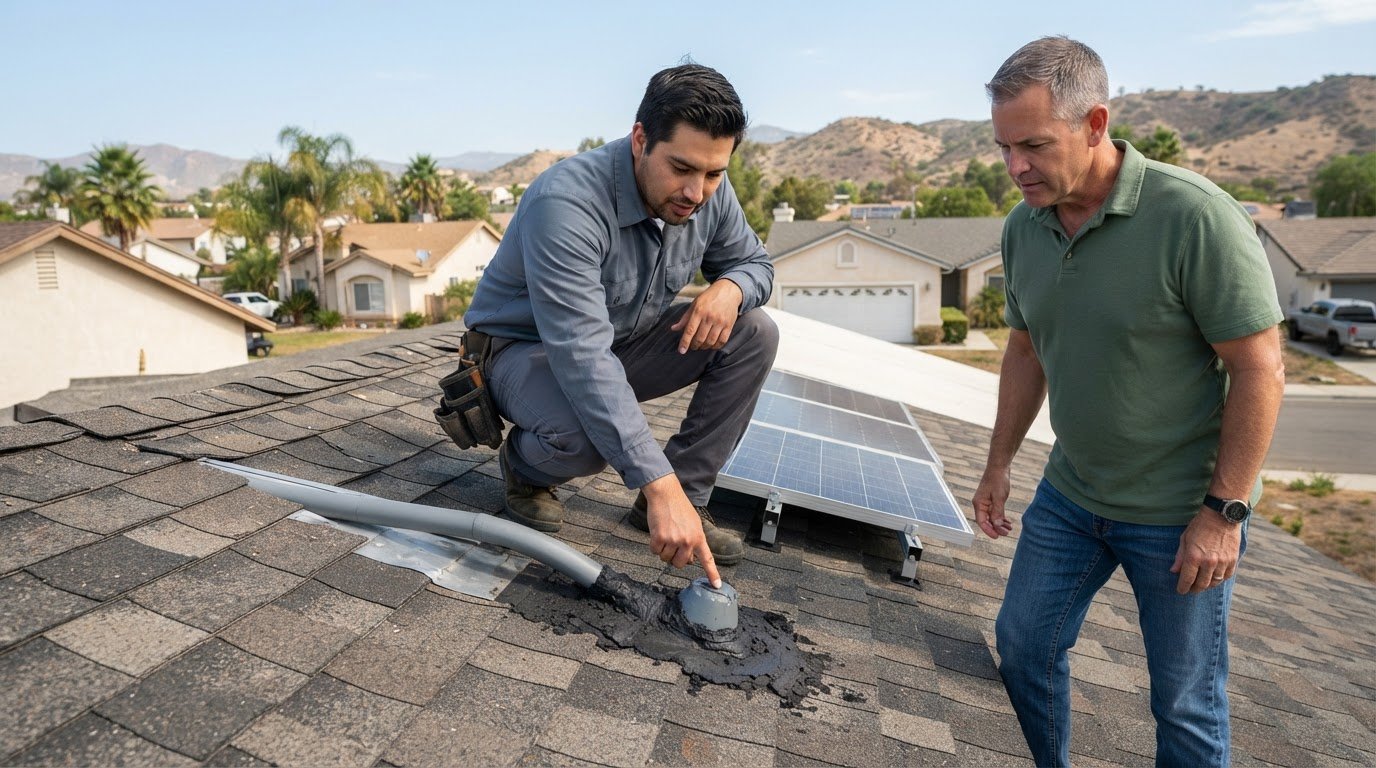
A roof warranty can be put at risk by improper installation, unauthorized repairs or modifications, incompatible materials, and maintenance that damages or neglects the roofing system. In Winchester, understanding what voids a roof warranty means reviewing the written terms and considering whether later work altered the roof or contributed to the problem.
A warranty can provide important protection, but it doesn’t cover every kind of damage or roof work. The details matter, especially when upgrades or repairs involve drilling, flashing, or other changes to the roof.
This article explains which installation mistakes, DIY fixes, exterior upgrades, and maintenance oversights can affect coverage. You’ll also learn how to protect your records, manage roof work carefully, and maintain your roof through Southern California’s changing weather.
Key Takeaways
- Unauthorized repairs or roof modifications can affect coverage, especially if they change flashing, penetrations, or other system details.
- Before arranging solar, skylight, HVAC, or other roof-related work, account for how the installation could affect the existing warranty.
- Keep warranty paperwork and records of roof work, inspections, and repairs to help document the system’s care.
- Routine maintenance matters: address debris and minor damage, and avoid cleaning methods that can harm roofing materials.
- Know the difference between material and workmanship warranties so you can understand which coverage may apply to a roof problem.
DIY repairs and unlicensed or uncertified contractors
In Winchester, DIY patches or contractor work can affect roof warranty coverage if the work alters the roofing system or fails to follow its requirements. Storm damage alone doesn’t automatically void coverage, but repairs that cause damage or conflict with warranty terms may complicate a claim.
DIY and Contractor Repair Restrictions
DIY and contractor repair restrictions can limit who may alter or repair covered roof components. Understanding what voids a roof warranty in Winchester starts with knowing whether work changed a roof detail or caused damage. Cutting flashing, lifting shingles, or applying generic roof cement can make a later failure harder to assess. For TPO, PVC, and EPDM systems, whether a contractor may open, flash, or repair the system depends on the specific warranty and system requirements. For example, installing a satellite dish can create penetrations that require proper flashing.
Before an exterior upgrade, contact the original roofing company and involve the original roofing contractor in roof work arrangements. An HVAC replacement can affect coverage if curb flashing is disturbed and not restored to the manufacturer’s detail by a contractor authorized under the applicable warranty and system requirements. One example involves a leak 18 months after solar panels were installed with unapproved penetrations. The key issue is whether the work caused damage or departed from required installation details, not simply whether another trade visited the roof.
Repair Authorization and Unapproved Patchwork
Repair authorization means getting required approval before work changes a covered roof system. Unapproved patchwork can conceal a leak source, introduce incompatible materials, or prevent a proper repair. Avoid treating generic caulk or roof cement as a catch-all fix. The Residential Clean Energy Credit ended for homeowner-owned solar systems installed after December 31, 2025, according to the Internal Revenue Service. According to the Internal Revenue Service, the federal Residential Clean Energy Credit was a 30% credit for homeowner-owned systems installed on or before December 31, 2025.
There’s no single safe-opening or repair-expense limit that applies to every warranty. The applicable limit depends on authorization terms, the damaged area, and the work needed to prevent further harm. After storm damage, photograph visible conditions and document whether the damage appears storm-related and may be repairable under your insurance policy. Insurance repairs don’t automatically void coverage, but unauthorized work or incorrectly restored flashing can affect it. Keep the repair scope, photos, and records together.
For Winchester homeowners asking what can void a roof warranty, the practical distinction is between responding to necessary damage and making an unapproved alteration. Follow the warranty’s notice and approval terms before non-emergency work. If immediate protection is needed, document the condition and temporary measures taken, so reviewers can distinguish them from permanent repairs.
Homeowner notice and maintenance responsibilities
Winchester homeowners can assess whether a roof warranty remains valid by reviewing the warranty document, registration records, transfer paperwork, and maintenance history. Check the coverage period, required care, notice process, and any conditions for repairs or alterations.
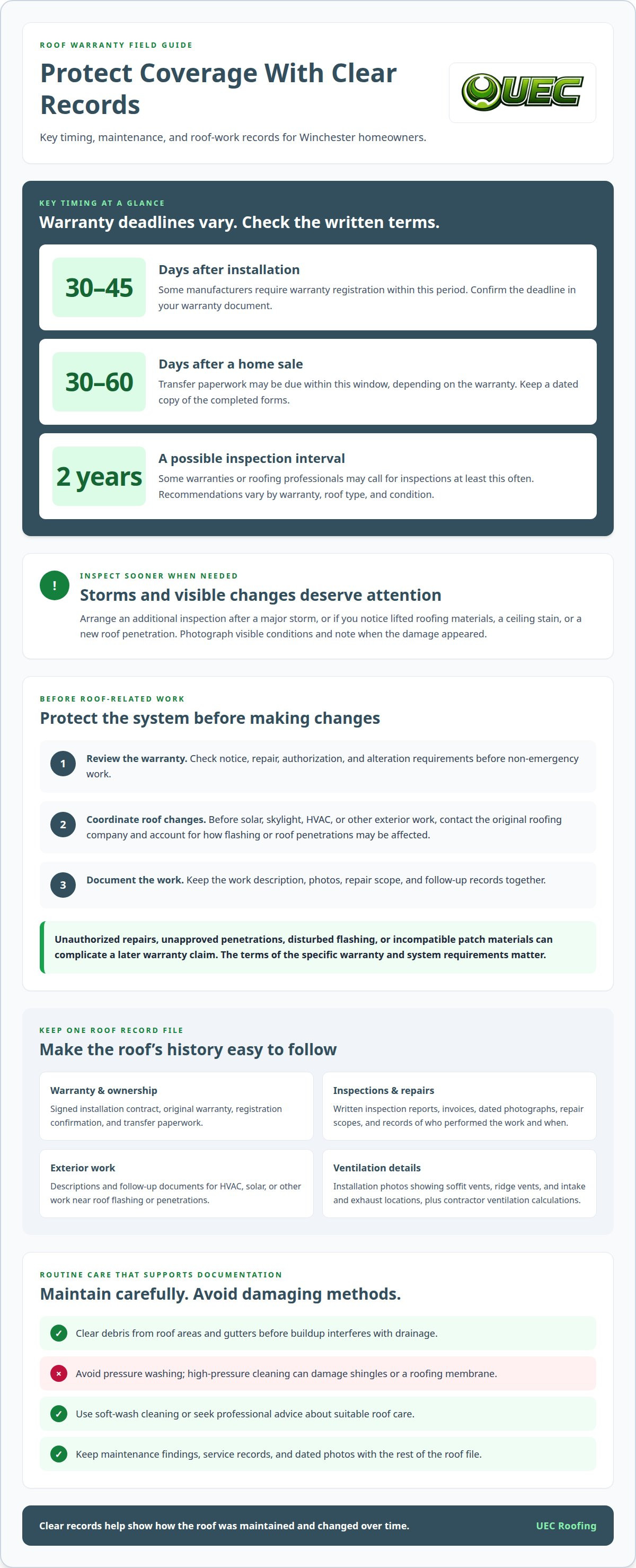
Some warranties set deadlines for registration and ownership changes, and requirements vary. Check the warranty document for the applicable deadlines; some manufacturers require registration within 30 to 45 days after installation. When a home is sold, transfer documentation may be due within 30 to 60 days, depending on the warranty. Keep dated copies of registration confirmations and transfer forms with the original warranty. Missing paperwork can make it harder to show that coverage requirements were followed.
Set an inspection schedule based on the warranty terms, roof type, and condition, and keep the findings. Some warranties or roofing professionals may call for inspections at least every two years, but recommendations vary. Arrange an additional inspection after a major storm or if you notice lifted materials, a ceiling stain, or a new roof penetration. A written report, dated photographs, and repair records create a useful timeline if a later warranty claim concerns damage or maintenance.
Keep maintenance records together instead of relying on memory. Save the signed installation contract, scope of work, product registration, inspection reports, invoices, and photos of completed repairs. Record who performed each roof-related job and when. If an HVAC technician or solar installer worked near roof flashing, retain the work description and any follow-up documentation. These details can help show whether a later failure followed a specific change.
- Clear debris from roof areas and gutters before buildup traps moisture or obstructs drainage.
- Avoid pressure washing, which can damage shingles and may jeopardize warranty coverage.
- Choose soft-wash cleaning or seek professional advice about suitable roof care.
- After a storm, photograph visible damage and document when it appeared.
Roof maintenance mistakes can turn minor wear into avoidable damage. High-pressure cleaning can gouge roofing materials or damage a membrane, while neglected debris and clogged gutters can prevent water from draining properly. Avoid DIY pressure washing and seek professional advice about suitable roof cleaning. Keep the service record and report with the roof’s other maintenance documents.
For a ventilation concern, preserve installation photos showing soffit vents, ridge vents, and intake and exhaust locations. Keep the contractor’s ventilation calculations as well. If a warranty dispute questions ventilation, those records can clarify how the attic system was designed and installed. A documented roof repair can address visible damage while keeping the work history organized.
Material, system, workmanship, and coating warranties
Roof warranties protect different parts of a roofing project, and their terms aren’t interchangeable. In Winchester, identify whether the document covers materials, installation work, or the complete roofing system.
Manufacturer, Workmanship, and Commercial Warranties
A manufacturer warranty addresses roofing products, while a workmanship warranty addresses installation labor; commercial system warranties may cover a broader assembly. Standard manufacturer material warranties typically last 20 to 50 years. Commercial system or no-dollar-limit (NDL) warranties typically last 10 to 30 years, while commercial contractor workmanship warranties typically last 2 to 10 years.
Those periods describe different warranty types, not a single combined term. Read a coating warranty according to its written scope, covered components, and stated exclusions. A homeowner’s roof warranty and a commercial system document can have different requirements, so match each claim to the specific agreement.
Manufacturer and Workmanship Coverage Differences
Manufacturer coverage generally concerns defects in products such as shingles, tile, or membrane; workmanship coverage concerns installation-related labor and errors. Contractor workmanship warranties typically last 1 to 10 years. That distinction matters when a roof leaks: a material failure and an installation defect point to different warranty protections.
For example, a defective shingle may fall under manufacturer terms, while a leak caused by poor installation may involve workmanship coverage. Solar panels add another distinction: the shingle manufacturer doesn’t cover damage caused during solar installation as a manufacturing defect. The solar installer’s workmanship warranty is the protection for leaks caused by improper work around mounts.
Defective Materials and Workmanship
A defective-material claim concerns a roofing product that fails under the manufacturer’s stated coverage, rather than damage caused by misuse or poor installation. A workmanship claim concerns how the roofing contractor installed the system. Separating these causes helps direct the claim to the warranty that addresses the failure.
Keep product paperwork, the installation contract, and repair history together. If a roof failure involves both a product and its installation, document the affected area and work performed. Use approved materials and follow system requirements, since incompatible products or skipped requirements can affect manufacturer coverage.
Warranty Coverage and Exclusions
Standard manufacturer warranties generally cover material defects, while workmanship warranties cover installation errors. Unauthorized repairs, improper installation, incompatible materials, and missed system requirements are common reasons manufacturer coverage may be voided. Workmanship exclusions commonly include third-party alterations, repairs by others, excluded maintenance issues, and undocumented changes.
Before approving a repair, identify the warranty type and its specific requirements. Find out which party is authorized to do the work and whether the proposed materials are approved for the system. A certified installer’s separate warranty doesn’t automatically extend or preserve the existing roof warranty. The written terms determine which defect, repair, or system component is covered.
What does a standard roofing manufacturer warranty cover and exclude?
A manufacturer warranty generally covers defects in roofing materials, such as shingles, tile, or membrane. It isn’t blanket protection for every leak or roof failure. In Winchester, the cause matters: a product defect differs from damage caused by installation, maintenance, or later alterations.
Many standard material warranties have an initial non-prorated period of 10 years. During that period, the warranty’s terms describe how covered material defects are handled. Read the document for covered products, exclusions, claim requirements, and any conditions that apply after the initial period. A stated warranty term alone doesn’t show which damage qualifies.
Coverage can be limited when a roof is changed or maintained outside the manufacturer’s requirements. Common exclusions include damage or work by unauthorized parties, improper installation, incompatible materials, and skipped system requirements. For example, drilling into shingles to mount an antenna or satellite dish can create a leak opening and affect coverage.
- Roof penetrations: Skylights and solar panels can affect coverage if installed improperly or without the roofer’s knowledge.
- Ventilation: A warranty may address improper attic ventilation; any effect on coverage depends on the specific written warranty and the circumstances.
- Wind: Wind-speed limits vary by warranty; some documents may specify a limit of 70 mph.
- Commercial ponding: EPDM or TPO warranties may address ponding water, with exclusions and time limits, such as 48 hours or longer, depending on the specific written warranty.
Ventilation is especially relevant because heat buildup can affect roofing materials from beneath. Net-free-area ratios may be 1:150 or 1:300, depending on attic design and applicable requirements; these figures are not universal warranty rules. A 1:300 ratio can apply when upper and lower venting is balanced and other code conditions are met. Keep installation photos and ventilation calculations to document soffit vents, ridge vents, and intake and exhaust locations.
For a Winchester roof claim, distinguish a suspected material defect from a condition caused by later work. If solar mounts leak, for example, the damage occurred around the installation rather than from a shingle manufacturing defect. A separate installer warranty doesn’t necessarily mean the existing roof warranty covers the same problem. Identify the damaged component and the event or work connected to it.
Review the exact exclusion before deciding that a warranty is void. A wind limit, ponding-water clause, or ventilation requirement applies according to the specific written warranty’s wording and the reported cause of failure. If a denial cites one of these conditions, request the specific warranty provision and an explanation of how it relates to the damage. This gives you a clearer basis for understanding the decision.
Keep the warranty, product records, installation details, and any related inspection report together. If the manufacturer identifies improper installation, the issue may concern workmanship rather than defective materials. If the claim concerns damage after a roof alteration, the relevant terms may address unauthorized work. Matching the evidence to the coverage type helps clarify what the manufacturer’s warranty does and doesn’t protect.
What does a roofing contractor workmanship warranty cover and exclude?
A roofing contractor’s workmanship warranty covers installation-related labor and errors, such as a leak caused by incorrectly fitted flashing. It addresses how the roof was assembled, not whether shingles or membrane had a manufacturing defect. For a Winchester homeowner, identifying the likely cause helps distinguish a workmanship concern from a material claim.
Coverage follows the written warranty and installation scope. Compare the reported problem with the contract, roof details, and records of later work. A leak near a valley, for example, may warrant a review of how that detail was installed. A leak near a later roof penetration may have a different cause. Location alone doesn’t establish responsibility.
Common workmanship-warranty exclusions include third-party alterations, repairs by others, excluded maintenance issues, and undocumented changes. If another trade modifies a roof detail, the alteration may complicate a later claim about the original installation. Keep the work description, dated photographs, and repair records with the signed contract. These documents help establish what changed and when.
Maintenance can matter when neglect contributes to a failure. Debris left in a drainage path, for example, may create a condition unrelated to installation labor. The warranty’s specific language determines whether maintenance is the owner’s responsibility and how an omission affects coverage. Keep inspection reports and maintenance records to document the roof’s condition over time.
A workmanship claim should focus on the installation error and resulting problem. Describe where water entered, when the symptom appeared, and which roof area is affected. Preserve photos before temporary or permanent repairs alter the evidence. If a contractor’s explanation relies on an exclusion, request the specific warranty provision and an explanation of how it relates to the observed damage.
Separate warranties may apply to a single roof event. A manufacturer’s material warranty concerns a product defect; a contractor’s workmanship warranty concerns installation labor. If a shingle defect and a flashing leak appear together, record each issue clearly rather than treating them as one claim. The cause, affected component, and contract terms determine which coverage is relevant.
For Winchester homeowners, a signed contract, clear scope, installation photos, inspection reports, and repair records create a useful claim history. Keep documents in date order and note any later roof work. This record can help clarify whether a problem traces to installation, a product, maintenance, or a subsequent alteration, and support a focused review of the applicable warranty terms.
UEC Roofing
UEC Roofing helps homeowners address roof concerns that may raise questions about warranty coverage. Based in Lake Elsinore, the company has completed over 2,000 projects in the region, serving the Inland Empire and Riverside, Orange, San Diego, Los Angeles, and San Bernardino Counties.
For leaks, damage, or maintenance concerns, UEC Roofing offers leak repair, roof repair and replacement, roof rejuvenation, and tune-ups. Its roofing systems include tile, composite shingle, metal, foam, and flat roofing. The appropriate next step depends on the roof issue and warranty terms.
For help with a roof concern or related repair, contact UEC Roofing.
Protect Your Roof’s Future with a Clear Next Step
Your next roofing decision can help protect your home and its coverage. Before scheduling roof work, compare the planned repair or maintenance with the warranty terms and the condition you’re addressing. This helps keep the work focused on the roof’s needs and documented requirements.
Understanding what voids a roof warranty in Winchester is useful when a leak, visible wear, or planned roof change raises concerns. UEC Roofing offers leak repair, roof tune-ups, and roofing services to help homeowners address roofing needs with care. The right service depends on the issue.
Start with a clear account of the roof concern and the work already performed. UEC Roofing can help with the roofing work itself, while the warranty document remains the guide to coverage terms. For help with your roof, contact UEC Roofing. Review your written warranty for coverage terms and take the next step with a well-informed plan.
Frequently Asked Questions
How Can You Keep Your Roof Warranty Fully Intact?
Use the warranty document as your reference for each roofing decision. Note which products and roof areas it covers, how claims must be submitted, and whether the terms address ownership changes. Keep a copy that’s easy to find, not just with closing papers or contractor records. For a Winchester home, knowing where to find the relevant terms can help you respond promptly when a roof concern arises.
What actions can void a roof warranty in Winchester, California?
Actions that breach written warranty conditions can jeopardize coverage, including unapproved changes, improper installation, or using materials the roof system doesn’t allow. A denial may concern only the affected component or narrow coverage, rather than automatically canceling every protection for the roof. Read the stated reason and the specific clause cited. That distinction helps Winchester homeowners understand the scope of a warranty decision.
Can improper roof installation void a manufacturer's warranty?
Yes. A manufacturer may exclude a product failure linked to installation that didn’t follow the roofing system’s requirements. When reviewing a concern, distinguish the product involved from the installation detail and identify how each relates to the reported failure. A material warranty and a contractor’s workmanship warranty address different issues. Keeping those documents clearly labeled can make it easier to direct a claim to the relevant coverage.
Can unapproved repairs or roof modifications void a roof warranty?
Yes, if the work conflicts with a warranty condition or contributes to the damage. If a claim is denied, request the exact provision relied on and an explanation of how it applies to the reported condition. A conclusion without that connection leaves homeowners without a clear explanation. Keep the response with the claim file so any follow-up addresses the stated issue, not assumptions about the entire roof.
Can lack of roof maintenance or delayed repairs void coverage?
Coverage can be affected if the warranty requires maintenance and a failure is linked to neglected care. The relevant question is whether the condition and maintenance history relate to the claimed damage. For example, a dispute about water entry should distinguish the original point of entry from later interior effects. A clear timeline of observations and responses can help explain the sequence during a coverage review.
Does installing solar panels or satellite dishes affect a roof warranty?
Solar equipment can create a timing issue as well as a roof-work concern. Solar panels typically last about 25 to 30 years, while a roof may need replacement sooner. The U.S. Department of Energy advises homeowners expecting a new roof within the next few years to consider replacing it before installing solar panels. Planning roof and solar timelines together can help avoid removing and reinstalling panels when the roof wears out.
What steps should homeowners take to preserve a roof warranty?
Keep the warranty easy to find, understand the claim-notice process, and retain a timeline of roof concerns. After a storm, document visible damage and determine whether it may be storm-related and repairable under your insurance policy. If a warranty explanation doesn’t address the specific terms or evidence, request clarification. If a dispute remains unresolved, an independent expert can provide another assessment of the roof condition and the stated reason for denial.