
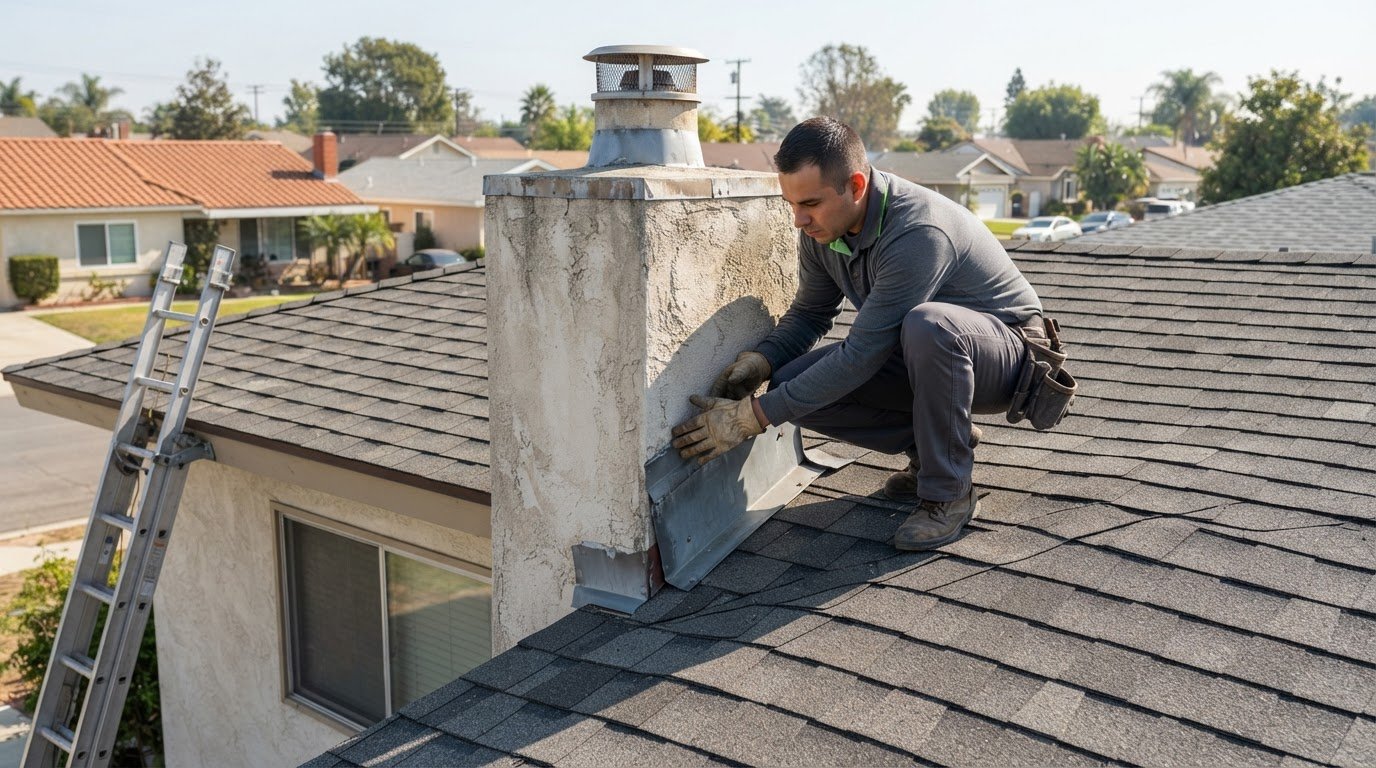
A low quote tells you little about whether a roofer is qualified to work on your home. A practical way to learn how to vet a roofing company in Anaheim is to start with its California license: roofing contractors must hold a C-39 license issued by the Contractors State License Board.
When learning how to vet a roofing company in Anaheim, look beyond the estimate. Your roof protects your home from Southern California sun and seasonal weather, so check the contractor’s local experience, insurance, and inspection process. A clear written scope helps you understand what the proposed work includes before deciding how to proceed.
This guide explains how to check a roofer’s license, confirm service in Anaheim, review insurance and relevant project experience, and understand what a thorough inspection should cover. Use these practical checks to evaluate a roofing quote and choose your next step with confidence.
Key Takeaways
- Confirm the roofer holds a California C-39 roofing contractor license before weighing a quote.
- A useful estimate follows an on-roof inspection and explains the work in a clear written scope.
- Check that the contractor serves Anaheim and Orange County, and look for a consistent local business history.
- Review proof of liability insurance and workers’ compensation coverage before roof work begins.
- Match the contractor’s experience to your roof type and project, whether it’s a residential repair or a commercial roofing job.
Getting an on-roof inspection before a quote
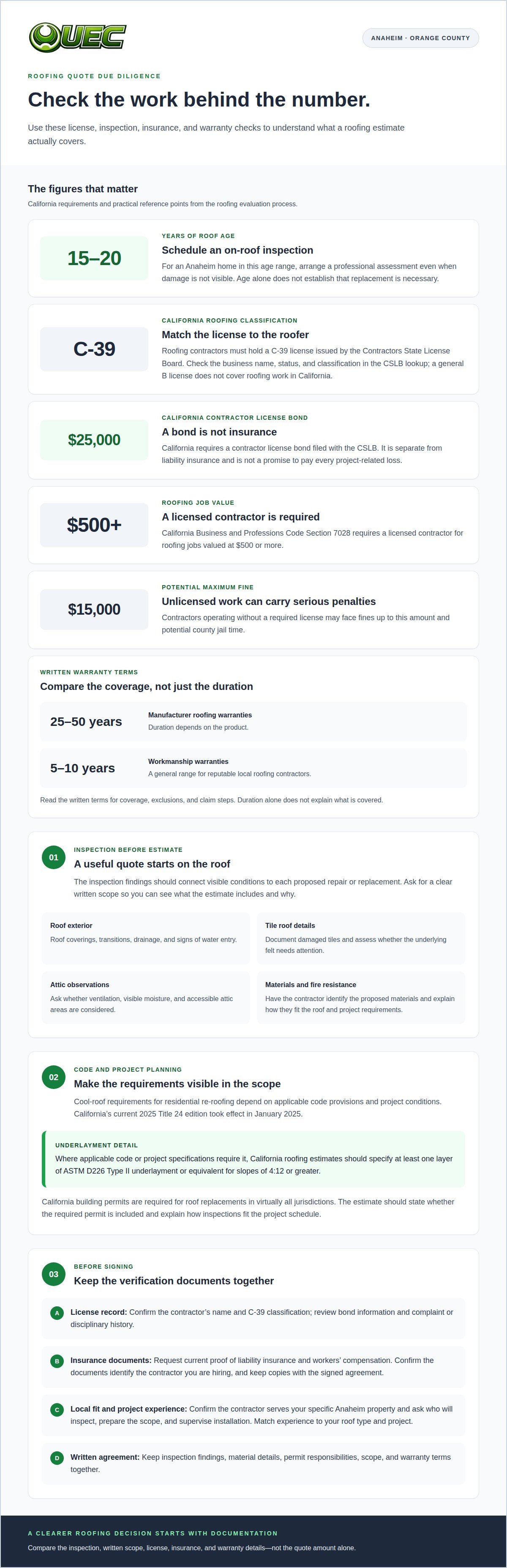
A reliable roofing quote starts with an inspection and a written scope, not a guess based on a street view. Schedule a professional roof inspection when an Anaheim home’s roof is between 15 and 20 years old, even if no damage is visible. Age alone doesn’t establish that replacement is necessary, but an on-roof assessment can identify conditions that affect the recommended work.
The inspection should assess roof coverings, transitions, drainage, and signs of water entry. On a tile roof, for example, ask the contractor to document damaged tiles and assess whether the underlying felt needs attention. Findings should connect visible conditions to each proposed repair or replacement. A written scope lets you see what the estimate includes and why.
Include the attic in the broader assessment. Ask whether the inspection considers ventilation, visible moisture, and accessible attic areas. These observations can help explain whether the proposed work addresses only the exterior or also accounts for concerns beneath it. The report should distinguish observed issues from work included in the estimate.
Discuss fire resistance in relation to the proposed roofing materials and project requirements. Ask the contractor to identify the materials and explain how they fit the roof and property. Don’t assume a material’s name alone establishes its suitability. The estimate should clearly identify the selected product and installation scope.
Material and energy-efficiency requirements matter in Anaheim and Orange County. Cool-roof requirements for residential re-roofing projects depend on applicable code provisions and project conditions; the current 2025 California Title 24 edition took effect in January 2025. Where applicable code or project specifications require it, California roofing estimates should specify at least one layer of ASTM D226 Type II underlayment or equivalent for slopes of 4:12 or greater.
Include permits in project planning. California building permits are required for roof replacements in virtually all jurisdictions. The estimate should state whether the required permit is included and explain how inspections fit the project schedule. Keep the inspection findings, material details, and written scope together so the proposed work and approval process are clear.
- Schedule an on-roof assessment before comparing estimates.
- Ask how the findings support repair or replacement, including attic observations.
- Review proposed materials, underlayment, cool-roof details, and permit responsibilities.
How to check a California roofing contractor's license?
Start with the contractor’s California license classification. According to the Contractors State License Board (CSLB), roofing contractors must hold a C-39 Roofing Contractor license. A general B contractor license does not cover roofing work in California, so verify the classification rather than relying on a company name or estimate alone.
Use the CSLB license lookup to search by the contractor’s business name or license number. Confirm the record matches the business preparing your quote, then review its status and listed classification. If the name on the estimate differs from the license record, ask for an explanation before proceeding. A valid license is a basic check, not a substitute for reviewing the proposed work, insurance, and contract.
California requires a $25,000 contractor license bond filed with the CSLB. The bond is tied to the licensing requirement; it is not the same as liability insurance or a promise to pay every project-related loss. Check the license record for bond information, and treat a request to begin work before the contractor has clarified licensing details as a reason to pause.
California Business and Professions Code Section 7028 requires a licensed contractor for roofing jobs valued at $500 or more. Contractors operating without a required license may face fines up to $15,000 and potential county jail time. These rules make license verification especially relevant before signing a roofing contract or allowing work to start.
Review the CSLB record for complaint and disciplinary history, considering the details rather than relying on a single entry. Note whether a complaint appears resolved or remains open, and ask the contractor to explain relevant issues in writing. The record is one part of due diligence; compare it with the written scope, insurance documents, and consistency of the contractor’s business information.
A license check doesn’t replace an insurance check. Before roof work begins, ask for proof of liability insurance and workers’ compensation coverage. Confirm that the documents identify the roofing contractor you’re hiring and are current for the planned work. Keep copies with the signed agreement. Clear documentation helps explain who is responsible for the project and what protections apply.
Ask for workmanship and material warranties in writing. Manufacturer roofing warranties typically range from 25 to 50 years, depending on the product, while workmanship warranties from reputable local roofing contractors generally range from 5 to 10 years. Read the written terms for coverage, exclusions, and claim steps; the stated duration alone doesn’t explain what the warranty covers.
- Match the contractor’s name and C-39 classification to the CSLB record.
- Review bond, insurance, and complaint information before signing.
- Keep the warranty terms with the written roofing agreement.
Checking whether the contractor serves Anaheim and Orange County
A contractor’s service area should include your specific Anaheim property, not just Southern California generally. Ask who will inspect the roof, prepare the scope, and supervise the installation. For regional context, UEC Roofing’s stated service coverage includes Orange County, Riverside County, San Diego County, Los Angeles County, and San Bernardino County, along with communities in the Inland Empire such as Lake Elsinore. Confirm that the contractor’s stated coverage includes your property.
Look for completed projects in Anaheim or nearby Orange County communities. Ask for references related to comparable work, such as a shingle repair or full roof replacement. A useful reference can describe communication, schedule changes, cleanup, and whether the finished work matched the contract. Focus on projects similar to yours rather than a long list of claimed service locations. A project in Lake Elsinore, for example, may offer regional context, but the roof type and scope still matter.
Business history provides another point of comparison. Five years operating under the same business name is a low bar when vetting a roofing contractor; ten or more years under a consistent name is a stronger stability signal. A changing name doesn’t prove poor work, but it makes clear business records and project references especially useful. Consider how long the business has operated under its current name, not only how far it claims to travel.
Warning signs include pressure to sign immediately, an unclear written contract, or a request for a large upfront payment. Avoid paying more than 10-15% upfront, and don’t accept an offer to waive an insurance deductible; that can constitute insurance fraud. According to the FTC, about 22% of roofing scams involve a contractor collecting partial payment and disappearing. Urgency alone shouldn’t replace a clear scope and payment schedule.
Before signing, read the contract for the project address, work description, materials, payment schedule, and process for changes. Payment milestones should correspond to completed work rather than requiring most funds before installation begins. Keep the signed agreement and payment records together. If an emergency repair is proposed, document the immediate protection and permanent work as separate scopes.
Bonding and credentials can help establish accountability. Confirm that the contractor’s business details match its licensing record and that bond information is consistent. If a dispute arises, preserve the estimate, contract, photographs, and payment records. The CSLB provides a channel for contractor complaints; document insurance disputes with your insurer through the policy’s claim process.
To vet a roofing company in Anaheim, compare service-area claims with specific evidence: a relevant reference, consistent business identity, and written terms. Ask who handles the work and what the agreement covers. A direct explanation should make project responsibilities clear without relying on urgency or verbal promises.
- Confirm Anaheim service using a nearby, comparable completed project.
- Review business history, references, written terms, and payment milestones.
- Pause if you face pressure, excessive upfront payment demands, or a deductible-waiver offer.
Liability and workers’ compensation insurance
Before roof work begins at an Anaheim home, ask the roofing contractor for proof of liability insurance and workers’ compensation coverage. These policies address different risks. Liability coverage relates to certain property damage or third-party claims, while workers’ compensation relates to eligible work-related employee injuries. The documents should identify the insured business and show active coverage dates.
Read the certificate carefully. Check that the named business matches the company on the written estimate and contract. Confirm that the coverage dates include the planned work period, and note the insurer and policy details. A certificate summarizes insurance information; it doesn’t explain every policy term or guarantee that a particular loss will be covered. Keep a copy with the contract.
Review workers’ compensation separately because roofing work takes place above the home and may involve a crew. Ask how coverage applies to the workers performing the job. If a subcontractor is involved, make sure the paperwork identifies the arrangement and applicable coverage. A general statement that “everyone is covered” is not a substitute for documentation.
Insurance paperwork helps clarify the written estimate, but each serves a different purpose. The estimate should describe the roof work, materials, and project scope, while insurance documents address coverage. Neither replaces the other. For example, if a quote concerns a leak, the written scope should explain the proposed repair; insurance doesn’t establish that an insurer will pay for it.
If roof damage may involve a homeowner’s insurance claim, notify the insurer promptly. Policy deadlines may run even before a contractor is contacted, and many policies set repair and payment deadlines from 180 days to one year. Review the policy’s notice and repair terms, then keep the insurer’s instructions, claim communications, inspection records, and contractor estimate together.
Don’t sign an insurance-related agreement under pressure before you understand its terms. A contractor should not promise that a claim will be approved or that every repair will be covered. Compare the contractor’s written scope with the insurer’s documented decisions, and have changes recorded in writing. Keep copies of revised estimates, approvals, and receipts as the project moves forward.
For an Anaheim roof project, use this practical document check before work starts:
- Match the insured business name to the estimate and contract.
- Confirm liability and workers’ compensation coverage dates are active for the work period.
- Keep the written scope and insurer communications separate, organized, and available.
- Contact your insurer promptly if damage may involve a claim.
Evaluating residential and commercial roofing experience
A contractor experienced with one roof type may not have the right background for another. In Anaheim, match the proposed work to completed projects on similar buildings. Residential experience should reflect the specific home and roofing system, while commercial experience should relate to the building’s layout and roof design. Ask for examples that resemble your property, not just a general project list.
For a residential project, discuss the existing material and planned work. A tile roof, for example, has different repair and replacement considerations from a shingle roof. Ask how the contractor identifies the source of a leak, distinguishes visible damage from underlying concerns, and explains the recommended scope. Clear answers should connect inspection findings to the proposed work without overstating what a repair can solve.
Commercial roofs require a separate experience check. California commercial roofing contractors should be familiar with Title 24 energy code compliance. Ask how the project team accounts for the building’s use, roof configuration, and energy-efficiency requirements. A flat-roof problem may affect the interior area below it, depending on the roof’s condition and the extent of the issue. Relevant experience means understanding the building’s needs, not simply offering a material or installation method.
Manufacturer instructions are another way to assess technical familiarity. Ask how the contractor will follow the selected manufacturer’s installation instructions and document the materials used. The estimate should identify the product and scope clearly enough for you to understand what the crew plans to install. If the contractor discusses a manufacturer warranty, ask how the proposed system and installation relate to its written terms.
Local experience can add useful context. Ask for examples from Anaheim or elsewhere in Orange County, then compare each project’s building type and roofing system with yours. For a commercial flat roof, a reference involving a similar property is more relevant than a residential shingle installation. For a home, focus on comparable roof materials and repair or replacement scope. The county name alone doesn’t show that the experience fits.
Use a short, consistent set of questions during your evaluation:
- Which completed project most closely matches this roof and scope?
- How does the crew document materials and follow manufacturer instructions?
- For commercial work, how does the plan address Title 24?
- What findings support repair rather than replacement, or the reverse?
Specific examples and straightforward explanations help you assess whether a contractor’s experience fits your Anaheim property and project.
UEC Roofing
UEC Roofing helps Anaheim homeowners with roof repair, replacement, and rejuvenation for tile, composite shingle, metal, foam, and flat-roofing systems. Its brick-and-mortar location in Lake Elsinore and track record of over 2,000 successful projects in the region reflect its local presence. If you’re weighing an inspection finding or planning roof maintenance, UEC Roofing can help you discuss the work your home needs. Contact UEC Roofing to talk through your roof concerns.
Make a Confident Next Move for Your Roof
Choosing a roofing contractor also means deciding how you’ll care for your home over time. Consider what you need the roof to do: protect the home, support its value, and suit your plans for the property. Organize your inspection findings and quote documents so you can make decisions with the full project scope in view.
Learning how to vet a roofing company in Anaheim gives you a stronger basis for moving forward, but the roof’s condition remains central. Its materials and repair needs shape the work that makes sense. Take time to understand the recommendations and choose a path that fits your home rather than responding to pressure.
For a practical conversation about your roof and the next step, contact UEC Roofing to discuss your roof. A considered decision today can help you plan with greater confidence.
Frequently Asked Questions
How to find a good roofing company near me?
Start with roofing contractors that serve Anaheim and can discuss projects in Orange County. Look for completed work that matches your roof type and property, rather than relying on a broad service-area claim. Read reviews for details about communication, cleanup, and whether the finished work matched the agreed scope. Then compare inspection findings, written estimates, and contract terms before choosing a contractor.
What should I ask when choosing a roofer?
Ask what the inspection found, why the proposed work addresses it, and which materials the estimate includes. Clarify who will supervise the installation, how scope changes are documented, and what the written warranty covers. For an Anaheim home, ask how the proposed roofing materials and underlayment fit the project requirements. Clear answers should connect the inspection, written scope, and payment milestones.
How do I verify a roofing contractor’s California CSLB license and status?
Search the contractor’s business name or license number in the California Contractors State License Board lookup. Confirm that the record identifies a C-39 Roofing Contractor classification and matches the business preparing your estimate. Review the license status and any listed bond or disciplinary information. If a company uses a different name on its estimate, clarify the relationship before signing or allowing work to begin.
What insurance should a roofing company in California carry, including workers’ compensation and liability?
Request current proof of liability insurance and workers’ compensation coverage before roof work starts. Check that the documents identify the contractor named in your agreement and cover the planned work period. If the project involves subcontractors, ask how their coverage is documented. Keep the certificates with your contract, remembering that a certificate summarizes policy information rather than explaining every coverage term.
How do I check roofing company reviews, references, complaints, and disciplinary history in Anaheim?
Look for repeated, specific themes across reviews, such as missed appointments, unclear communication, or careful cleanup. Ask for references involving a similar roof system or project in Anaheim or Orange County. Check the contractor’s CSLB record for complaint or disciplinary information, and read the details rather than judging by an isolated entry. Save relevant records and written explanations with your estimates.
What should an Anaheim roofing estimate include, and how do quotes compare?
A useful estimate describes the work, materials, and project scope in enough detail to compare like with like. Check for material brand, grade, warranty information, underlayment, and whether required permits are included. Gather three detailed, itemized estimates, then compare each line of work rather than focusing only on the total. Different scopes or materials can explain why quotes vary.
What questions should homeowners ask before hiring a roofing contractor?
Ask who will be your project contact, who performs the work, and how discoveries that change the scope will be recorded. Find out how the crew will protect nearby areas and handle cleanup. If an inspection reveals concealed damage, for example, ask how revised work and added materials will be documented before proceeding. Keep answers in writing with the project agreement.
What contract, cancellation, deposit, and lien rules apply to California home-improvement roofing work?
Before signing, make sure the written agreement spells out the scope, materials, payment schedule, change-order process, and cancellation terms. Don’t rely on verbal statements about cancellation windows or lien releases; get the applicable terms in writing and retain payment records. Avoid paying more than 10-15% upfront. Review each payment milestone against the work described, and keep contract changes with the original agreement.