
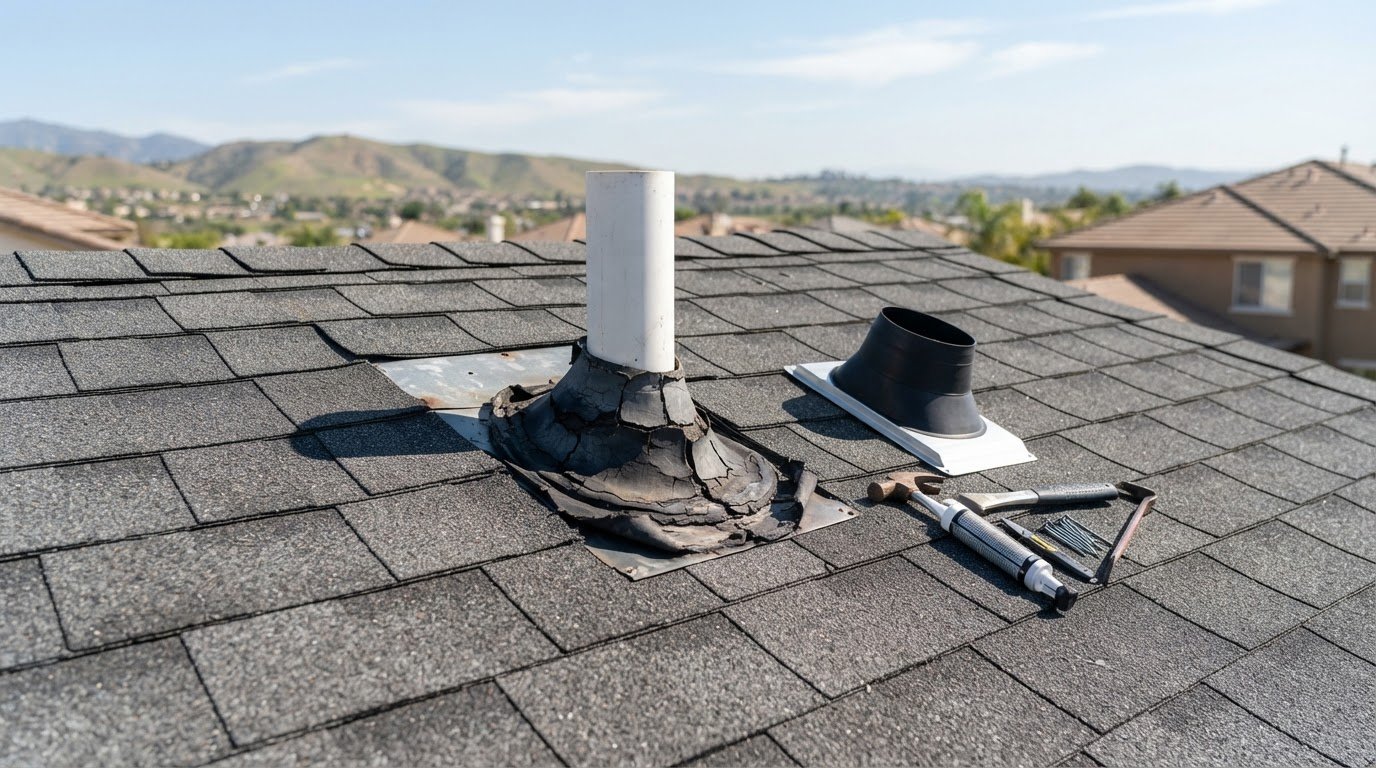
Vent pipe boot replacement in Corona is usually the right choice when the boot is cracked, split, loose, or no longer seals closely around the pipe. If the boot is intact and the leak comes from a small, localized flashing issue, a repair may be enough. The condition of the boot and nearby roofing materials determines the appropriate fix.
A leak near a vent pipe can be mistaken for a problem with the pipe itself. The boot is the flashing that seals the roof opening around the pipe, so damage can let water reach the roof deck and nearby interior surfaces. A careful inspection helps distinguish a worn boot from a repairable issue and avoids replacing parts that are still serviceable.
This guide explains the warning signs to look for, how roofers assess whether to repair or replace a vent pipe boot, and what replacement involves. You’ll also learn why sound flashing and careful work around the surrounding roofing help protect a Corona home over time.
Key Takeaways
- Look for cracking, splitting, looseness, or a failing seal around the vent pipe to help identify a boot that may need replacement.
- A localized flashing problem may be repairable, while a worn or damaged boot can call for replacement.
- Assess the boot and nearby roofing together, since the leak source may extend beyond the visible area around the pipe.
- Proper replacement involves addressing the old flashing and fitting the new boot so it seals around the pipe and integrates with the roof.
- UEC Roofing’s leak repair and roof repair services can help address a vent-area leak and assess the surrounding roof.
Vent pipe boot replacement Corona
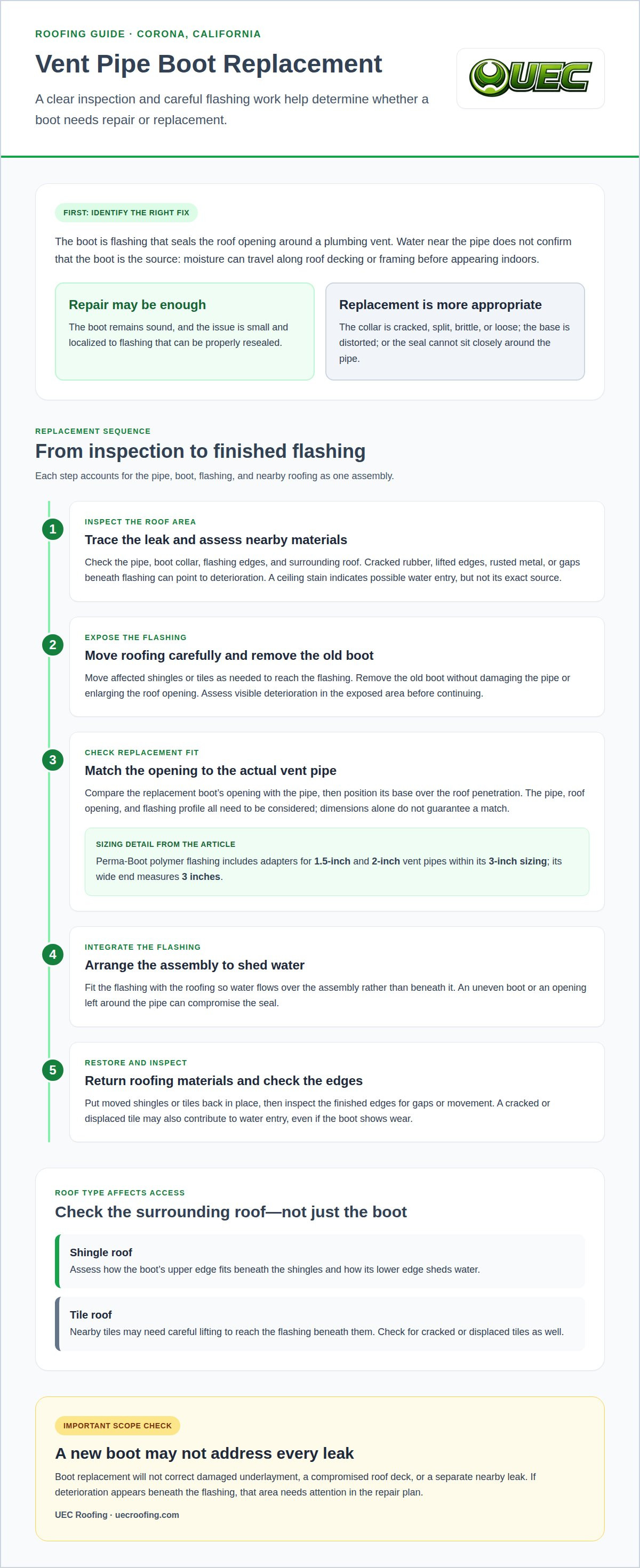
A vent pipe boot seals the gap where a plumbing vent passes through the roof. In Corona, replacement is appropriate when the boot’s collar splits, its base pulls away, or the flashing no longer sheds water. Corona sits in the Inland Empire, where homes have varied roof designs and materials. A roofer should inspect the boot and nearby roofing before choosing a repair. Damage at the pipe opening can resemble a leak elsewhere, so tracing the water path matters.
Look for deterioration around the pipe, including cracked rubber, lifted edges, rusted metal, or gaps beneath the flashing. A ceiling stain below the penetration may indicate water entry, but it doesn’t identify the exact source. Moisture can travel along roof decking or framing before appearing inside. Note the stain’s location and whether it changes after rain. Those details help guide an inspection in Corona, Lake Elsinore, or another nearby community.
Repair or replace: what the inspection reveals
A localized problem may be repairable if the boot remains sound and the surrounding flashing can be properly resealed. Replacement is more appropriate when the collar is brittle or split, the base is distorted, or the seal can’t sit closely against the pipe. Patching a deteriorated collar may leave the underlying weakness in place. The decision should account for the boot, pipe fit, flashing, and nearby roof materials as one assembly.
Roof material changes the work around the penetration. On a shingle roof, the roofer examines how the boot’s upper edge fits beneath the shingles and how its lower edge sheds water. On a tile roof, nearby tiles may need careful lifting to reach the flashing beneath them. A cracked or displaced tile can contribute to water entry, even when the boot also shows wear. Homeowners in Riverside, Orange, San Diego, Los Angeles, and San Bernardino Counties should likewise have each affected component assessed, rather than focusing only on the most visible damage.
Pipe size also matters when selecting replacement flashing. Perma-Boot polymer flashing includes adapters for vent pipes with diameters of 1.5 inches and 2 inches within its 3-inch sizing; its wide end measures 3 inches. Those dimensions describe fit, not a universal match for every roof. The installer still needs to compare the actual pipe, roof opening, and flashing profile before fitting a replacement. An uneven boot or an opening left around the pipe can compromise the seal.
What replacement involves
For vent pipe boot replacement in Corona, work begins with a close inspection of the roof surface. The roofer checks the pipe, boot collar, flashing edges, and surrounding materials. Next, affected shingles or tiles are moved as needed to expose the flashing. The old boot is removed without damaging the pipe or enlarging the roof opening. Any visible deterioration in the exposed area should be assessed before installation continues.
- Compare the replacement boot’s opening with the vent pipe, then position its base over the roof penetration.
- Integrate the flashing with the roofing so water flows over the assembly rather than beneath it.
- Return moved roofing materials to their positions and inspect the finished edges for gaps or movement.
The work depends on the roof design and the condition of materials around the pipe. Replacing a boot won’t correct damaged underlayment, a compromised roof deck, or a separate nearby leak. If inspection reveals deterioration beneath the flashing, that area needs attention as part of the repair plan. Documenting affected materials helps homeowners understand why work may extend beyond the boot itself.
After the work, look from the ground for displaced roofing or debris, but don’t climb onto a steep or fragile roof. Keep a record of the repair location and any interior staining. If the stain grows or returns after rain, note where it appeared and when. That information can help distinguish a continuing penetration leak from moisture entering through another roof area in Corona and nearby communities.
UEC Roofing: leak repair
UEC Roofing provides leak repair and roof repair when water appears near a vent pipe or the source is unclear. A roof assessment can help distinguish a boot-related leak from damage elsewhere, so the repair addresses the affected area rather than just the interior stain. This is useful when moisture returns after rain, roofing materials around the pipe appear disturbed, or the leak has spread beyond the visible penetration.
Share where the stain appears and when you first noticed it. Those details can help guide the inspection. UEC Roofing can assess the roof and determine the appropriate repair for the leak and surrounding materials. For a vent-area leak in Corona, contact UEC Roofing to discuss the next step.
Protect the Roof Beyond the Repair
A simple maintenance record can make future roof inspections more useful. Note the repair date, the vent’s location, and any changes you observe indoors after rain. Photos taken from the ground can also help track visible changes without requiring you to climb onto the roof. For vent pipe boot replacement in Corona, keeping these details together gives you a practical reference as you care for your roof over time.
Pay attention to new ceiling marks, dampness, or changes around the repaired area, and record when they occur. This information can help clarify what needs attention if another concern develops. If you’re ready to discuss your roof, contact UEC Roofing about your roof. A clear record and a thoughtful next step can help you care for your home with confidence.