
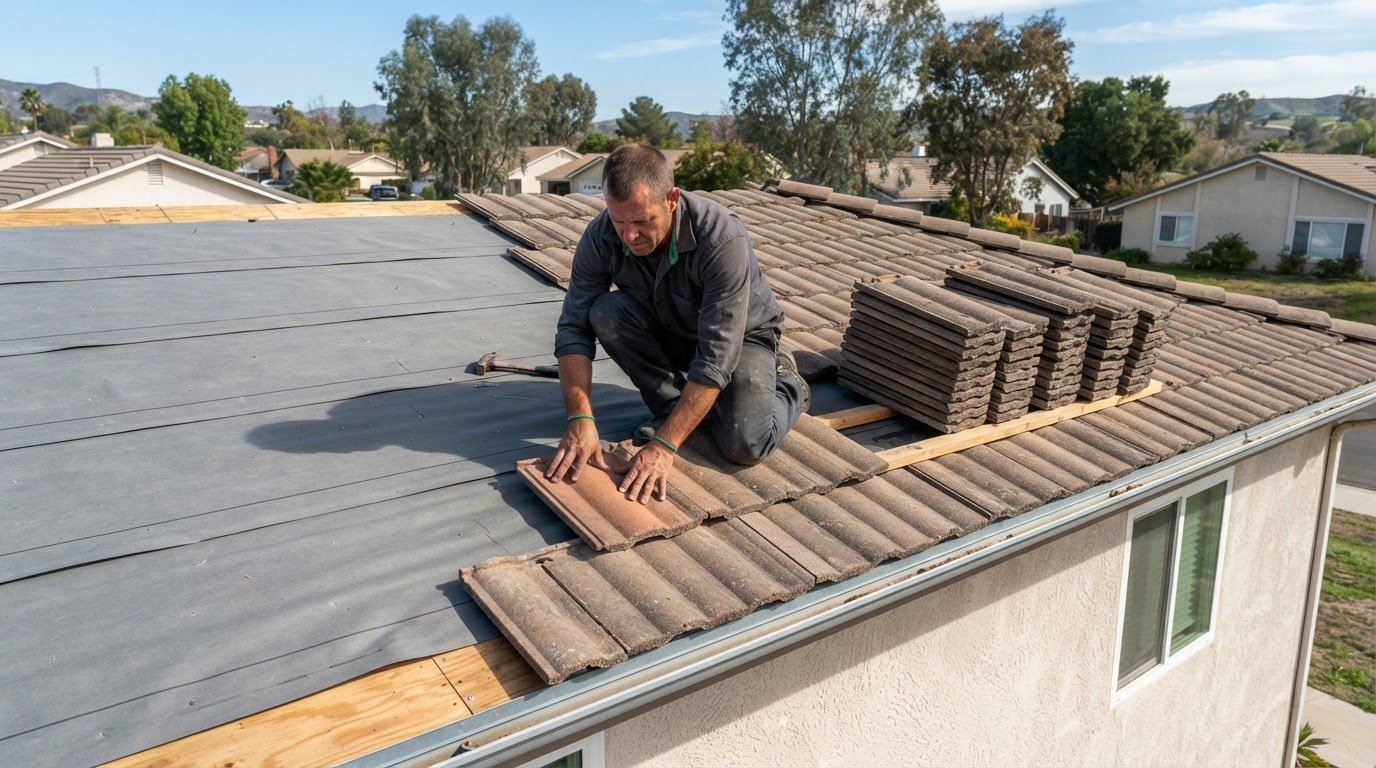
A tile lift and relay can be worthwhile in Wildomar when the existing tiles are suitable for reuse but the underlayment needs replacement. Southern California tile roofs often reach this stage at around 25 to 35 years old, even though roof tiles can last 50 years or more and felt underlayment typically lasts around 30 years. Whether a lift and relay is worth it in Wildomar depends on the condition of both layers, not just the roof’s age.
When asking whether a lift and relay is worth it in Wildomar, start with the condition of both the tiles and the roof beneath them. Replacing sound tiles may be unnecessary, but brittle or damaged tiles can make reuse impractical. This guide explains how a lift and relay works, how professionals assess tile condition, and when a repair or full replacement may be a better fit.
Key Takeaways
- Separate isolated tile damage from problems beneath the tile layer to understand whether a focused repair may address the issue.
- Learn what a lift and relay involves, including how the existing tiles are handled while the roof’s underlying components are addressed.
- See how tile condition, breakage, and the availability of a suitable match affect reuse decisions.
- Follow the main stages of a lift-and-relay project so you know what professional work to expect.
- Understand which project details shape the scope and help determine whether lift and relay fits your roof’s needs.
Roof inspection and alternative repair options
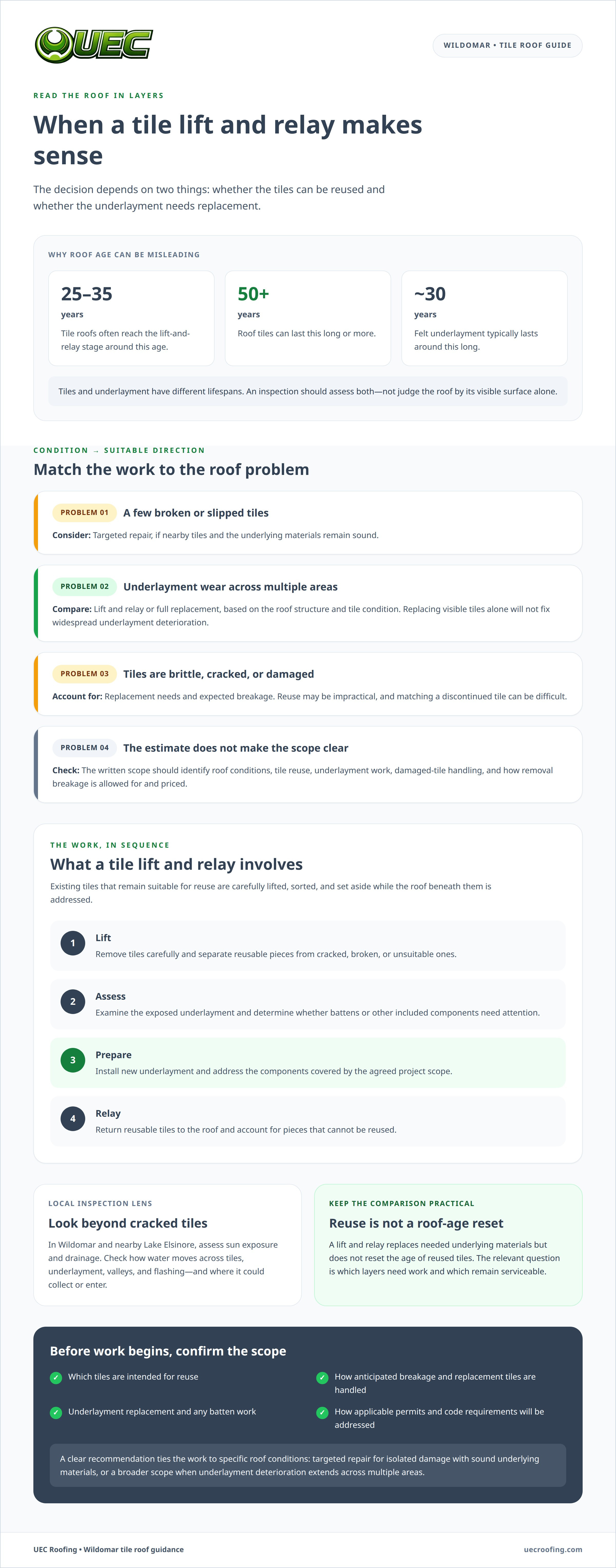
A useful inspection separates tile condition from the roof layers beneath it. In Southern California, tile roofs often reach the lift-and-relay stage at around 25 to 35 years old. Roof tiles can last 50 years or more, while felt underlayment typically lasts around 30 years. Those different lifespans explain why tiles may remain serviceable after the protective layer has weakened. An inspector assesses both, rather than judging the roof by its visible surface alone.
Broken or slipped tiles may call for a focused repair if the underlayment is still sound. For instance, a few displaced tiles on an otherwise stable roof may not require lifting and relaying the entire surface. But if the underlayment has deteriorated across multiple areas, replacing only visible tiles will not address the underlying problem. The extent and spread of the damage should guide the scope.
When comparing roofing estimates in Wildomar, line up the proposed work rather than just the totals. Each written scope should describe the roof’s condition, tile reuse, underlayment work, and how damaged tiles will be handled. For tile removal, compare the expected breakage allowance and how it is priced. Itemized estimates make differences in scope easier to spot.
Permit and building-code requirements for a Wildomar roof project depend on its scope and applicable property requirements. A localized repair and a broader replacement may involve different steps. The written project scope should explain how applicable permits and code requirements will be addressed before work begins. Do not assume the requirements are identical for every project.
In Wildomar and nearby Lake Elsinore, sun exposure and drainage are important parts of a roof assessment. Sun can wear roofing materials over time, while rain tests how well water moves across the tiles, underlayment, valleys, and flashing. An inspection should look for places water could collect or enter, not just count cracked tiles. These factors also matter across the Inland Empire and in Riverside, Orange, San Diego, Los Angeles, and San Bernardino Counties, where each property’s exposure and drainage differ.
Roof conditions vary across communities such as Menifee, Temecula, Canyon Lake, Corona, Moreno Valley, Murrieta, and Riverside. An assessment should account for each property’s exposure, drainage, and existing roof condition before recommending repair, lift and relay, or replacement.
Use the findings to compare practical alternatives:
- Isolated tile damage: Consider targeted repair when nearby tiles and underlying materials remain sound.
- Widespread underlayment wear: Compare a lift and relay with full replacement, based on the roof’s structure and tile condition.
- Fragile or damaged tiles: Account for replacement needs and expected breakage when assessing reuse.
- Unclear scope: Request an estimate distinguishing visible tile work from underlying repairs.
For a Wildomar home, a lift and relay may be worth considering when the tiles are reusable but the underlayment needs attention. If the damage is limited and the underlying layer remains sound, a targeted repair may be more suitable. The inspection should tie each recommendation to a specific condition on the roof.
What a tile lift and relay involves
A lift and relay preserves existing tiles that remain suitable for reuse. The crew removes and sorts the tiles, exposes the underlayment, replaces it, then relays the reusable tiles. This addresses aging beneath the visible roof without automatically replacing every tile. Careful removal, assessment, and reinstallation are essential to the process.
During removal, the crew separates reusable tiles from pieces that are cracked, broken, or otherwise unsuitable. Reusable tiles are set aside for reinstallation where practical. Breakage matters because damaged pieces may need replacement, and matching a discontinued tile can be difficult. Using salvaged tiles may help maintain a closer visual match than introducing new pieces.
Once the tiles are lifted, the exposed roof assembly can be assessed. The condition of the underlayment is a key consideration, as is whether the battens need replacement. The crew can address these components before relaying the tiles. New underlayment alone will not resolve the problem if damaged areas or other underlying components are left unaddressed.
A lift and relay does not reset the age of reused tiles. Its service life depends on the tiles’ condition and the performance of the replaced underlayment. Full replacement may include new tiles as well as new underlying materials. The practical comparison is which layers need work and which remain serviceable, not a guaranteed lifespan for either approach.
Possible issues include tiles breaking during removal and damage becoming visible beneath them. The written scope should explain how these findings could affect the work. Review the agreement’s warranty terms to understand what materials and workmanship are covered and what conditions or components are excluded. Do not assume a warranty covers every existing tile or the entire roof assembly.
In Wildomar, identify each project component before work starts. A clear sequence helps homeowners understand the plan and where further decisions may be needed:
- Lift: Remove existing tiles carefully and separate reusable pieces from damaged ones.
- Assess: Examine the exposed underlayment and battens for condition and needed work.
- Prepare: Install new underlayment and address the components included in the agreed scope.
- Relay: Return reusable tiles to the roof and account for pieces that cannot be reused.
Before approving the work, make sure the scope covers tile reuse, anticipated breakage, underlayment replacement, and batten work. These details clarify what the lift and relay includes and whether it fits the roof’s actual condition, rather than its appearance alone.
How a roofing contractor determines whether tiles can be reused
A roofing assessment should establish whether tiles are suitable for reuse. It considers visible cracks, broken edges, displaced pieces, and signs that tiles may not withstand careful handling. A tile that looks intact from the ground may prove unsuitable once lifted. The assessment should distinguish pieces that can be reused from those likely to break or fail during reinstallation.
The roof’s existing tile type also matters. Matching discontinued tile can constrain a project, while salvaging existing tile is usually cheaper and closer to a match. A contractor considers whether the current tiles can cover the roof consistently, including areas where damage or prior repairs have created gaps. If many pieces are unsuitable, reuse may not provide a practical or visually consistent result.
The condition beneath the tiles is part of the decision. Lifting the tiles exposes the underlayment and battens for inspection. Their condition helps determine whether they need replacement. Tiles that look sound cannot make deteriorated underlying materials suitable to keep. The assessment should explain which components can remain and which need attention.
A lift and relay may not suit a roof when tiles are extensively damaged, too fragile to handle, or insufficient to cover it after expected breakage. It may also be a poor fit if inspection reveals broader problems that call for work beyond reusing tiles. The recommendation should explain how the roof’s condition shapes the scope, rather than treating reuse as automatic.
To evaluate tile reuse, compare estimates with the same details. The written scope should explain how existing tiles will be assessed, how damaged pieces will be handled, and whether replacement tiles are anticipated. Ask what breakage allowance is included and how it will be priced. The estimate should distinguish this from other roof work.
Experience with tile roofs is relevant because careful removal and sorting affect how much material can be returned to the roof. Ask how many tile or slate roofs the crew completed in the previous year. The answer helps put the crew’s recent project experience in context, alongside the proposed handling and reuse plan.
- Tile condition: Identify cracked, broken, or fragile pieces that may not be reusable.
- Coverage: Determine whether the remaining sound tiles can cover the roof consistently.
- Underlying materials: Include underlayment and batten condition in the project assessment.
- Breakage planning: Document expected tile breakage and its pricing in the estimate.
For a Wildomar home, a sound reuse decision connects tile condition, expected breakage, and the needs of the underlying roof. That assessment shows whether salvaged tiles suit the project or whether their condition limits the value of relaying them.
Lift-and-relay project steps
A well-organized lift and relay follows a clear sequence, from defining the scope to reinstalling reusable tiles. In Wildomar, the written plan should identify the roof areas involved, underlayment work, and how damaged tiles will be handled. This gives the crew and homeowner a shared reference if lifting the tiles reveals additional needs.
- Confirm the work scope. The contractor records which roof sections are included and what the project covers. The scope should state whether underlayment and battens are part of the work, and how tile breakage will be addressed. This keeps the planned work distinct from extra repairs identified later.
- Prepare the site. Before roof work begins, the crew organizes the work area and plans where removed tiles will be placed. Separating tiles by roof area can help keep reusable pieces together. The site plan should also account for protecting nearby property from debris.
- Remove and sort tiles. The crew lifts the existing tiles and separates sound pieces from broken or unsuitable ones. Handling and sorting happen before reinstallation, so the contractor can account for reusable material and anticipated breakage. The estimate should describe how that breakage is priced.
- Assess exposed components. With tiles removed, the contractor examines the underlayment and battens. The findings guide any work included in the agreed scope. If the exposed roof shows conditions outside that scope, the contractor explains the affected area and proposed change before proceeding.
- Install underlayment. The crew places new underlayment over the prepared roof area. This step addresses the layer beneath the tile surface. The work sequence matters: tiles return only after the underlayment work and included component repairs are complete.
- Relay reusable tiles. The crew returns suitable tiles to the roof and accounts for pieces that cannot be reused. Any replacement needs should follow the project plan. Because matching discontinued tile can be difficult, salvaged pieces can help maintain a closer match.
- Review completed work. The final review checks that the work described in the scope has been completed. The contractor can explain any tile substitutions, underlayment work, or batten repairs recorded during the project. A clear closeout connects the finished roof to the original plan.
Communication matters at every stage. If the crew finds damaged battens after lifting the tiles, for example, the homeowner needs a clear explanation of how that affects the agreed work. Documenting the area and proposed response helps avoid confusion about scope, materials, and costs.
Before approving a Wildomar project, review the work sequence alongside the written scope. Confirm that tile handling, underlayment work, batten treatment, and breakage pricing are described. This makes it easier to understand what the crew will do and how the completed work will be assessed.
What does a lift and relay roof replacement include?
A lift and relay involves removing existing tiles, installing new underlayment, and relaying tiles that remain suitable for reuse. It renews the protective layer beneath the tile surface while preserving serviceable tiles. The scope should state which roof areas are included and what materials or repairs the work covers.
The existing tiles are lifted and sorted for reuse or replacement. The plan should account for breakage during removal and explain how unusable pieces will be handled. Salvaged tiles may provide a closer match than replacement pieces, especially when the original style is discontinued. The estimate should state the expected breakage allowance and how it is priced.
New underlayment is central to the work. After tile removal, the exposed roof surface can be prepared for the new layer. The scope should specify where underlayment will be replaced and how exposed areas will be addressed. This distinguishes underlayment work from repairs to other roof components.
Battens may also need attention. Their condition becomes visible once the tiles are lifted, so the project documents should say whether batten work is included. If inspection reveals deterioration beyond the agreed scope, the affected area and proposed work should be explained. This helps clarify what the original plan covers.
Tile replacement may be part of the project, but it should be described separately from reusing existing tiles. The scope can explain how damaged or missing pieces will be handled and how replacement tiles will be selected. Matching discontinued tile can be difficult, so salvaged material may help keep the roof’s appearance more consistent.
Before approving the work, review the written scope for these inclusions:
- Tile handling: Removal, sorting, reuse, and treatment of broken pieces.
- Underlayment: Areas receiving new material and preparation work included.
- Battens: Whether inspection or replacement is part of the project.
- Tile replacement: How unsuitable pieces and matching needs are addressed.
- Changes to scope: How newly visible roof conditions are communicated.
This level of detail matters because a lift and relay involves more than removing and reinstalling tiles. The exposed roof’s condition can affect the work, and reuse depends on which tiles remain serviceable. A written scope links the inspection findings to the project’s tasks and materials.
For a Wildomar roof, compare the proposed work against the actual condition of both tiles and underlying components. That makes it easier to see whether the scope addresses the roof’s needs without assuming every tile or batten can be reused. Discuss your lift-and-relay project when you’re ready to review the work involved.
UEC Roofing: Lift and Relay
UEC Roofing offers Lift and Relay, roof replacement, repair, and rejuvenation, with tile, composite shingle, metal, foam, and flat roofing systems. Its brick-and-mortar presence in Lake Elsinore and track record of over 2,000 successful regional projects reflect its work across Southern California. A leak repair or roof tune up may also suit your roof’s needs.
For your Wildomar home, UEC Roofing can help connect the roof’s condition with an appropriate scope of work. Contact UEC Roofing to discuss your roof and the options that may suit it.
Choose the Next Step for Your Roof
Deciding whether a lift and relay is worth it in Wildomar starts with matching the work to your home’s needs. Use the inspection findings to clarify which components need attention, what can remain, and what belongs in the proposed scope. This supports a considered decision based on the roof’s condition, not appearance alone.
If a targeted solution is a better fit, UEC Roofing also provides roof repair, replacement, and rejuvenation, along with tile, composite shingle, metal, foam, and flat roofing systems. The right next step depends on the roof’s condition and the work it needs. A specific scope gives you a practical basis for planning and understanding how the work supports your roof over time.
Contact UEC Roofing to discuss your roof and consider which option fits your home. A thoughtful decision today can help you move forward with greater clarity.
Frequently Asked Questions
How does a roofing contractor determine whether my tiles can be reused?
The assessment considers tile damage, brittleness, matching needs, and how much usable material remains across the roof. It also accounts for how tiles may hold up during removal and reinstallation. Sound tiles across most areas may still need replacements where prior repairs or breakage have left gaps. Ask how the reuse plan will address damaged pieces and tile matching.
Is a lift and relay cheaper than a full roof replacement?
A lift and relay may cost less than a complete replacement when existing tiles can be reused. For a Wildomar home, whether it is worth it depends on the usable tiles and the work needed beneath them. Extensive tile damage or additional roof repairs can change the scope and narrow the difference. Compare estimates that describe the same work, including tile handling, underlayment, battens, and replacement pieces.
What do installation and fees include?
Project pricing depends on the work included, not just tile removal. A written scope should identify labor, underlayment work, batten repairs, tile replacement, and how breakage is handled. It should also explain how additional work discovered during the project will be discussed. Itemized details help you understand what the estimate covers and compare scopes accurately.
What exactly is a tile lift and relay?
A tile lift and relay removes existing roof tiles, installs new underlayment, and returns reusable tiles to the roof. It renews the layer beneath the tile covering while retaining tiles that remain serviceable. Depending on the roof’s condition, the scope may also address battens or damaged tiles. In Wildomar, the tile condition and exposed roof determine the work plan.
Why does the underlayment fail before the tiles do?
Tiles and underlayment are different roofing materials, so they can have different service lives. Roof tiles can last 50 years or more, while felt underlayment typically lasts around 30 years. Tiles form the visible roof covering, but they don’t make the underlayment last as long. That difference can leave intact-looking tiles above underlayment that needs attention.
What is the average cost of a lift and relay roof replacement in Wildomar, CA?
The project price depends on the roof’s size and layout, tile reuse, expected breakage, and the condition of underlying components. The amount of underlayment and batten work also affects the scope. UEC Roofing prepares pricing based on the specific project. Review the written estimate for included work and how changes will be handled rather than relying on a general average.
When is a lift and relay roof replacement worth the cost?
Deciding whether a lift and relay is worth it in Wildomar starts with the roof’s condition. Consider it when tiles remain suitable for reuse but the underlayment needs replacement. Reusing existing tiles may make the project less costly than a complete replacement. Compare the proposed scope with the tile damage and underlying repairs required. If extensive tile replacement is needed, assess whether a broader replacement better suits the roof.
How long does a lift and relay roof last compared with a full replacement?
A lift and relay does not reset the age of reused tiles. Its service life depends on their condition and the performance of the new underlayment. Full replacement may include new tiles and underlying materials, but neither approach comes with a guaranteed lifespan.