
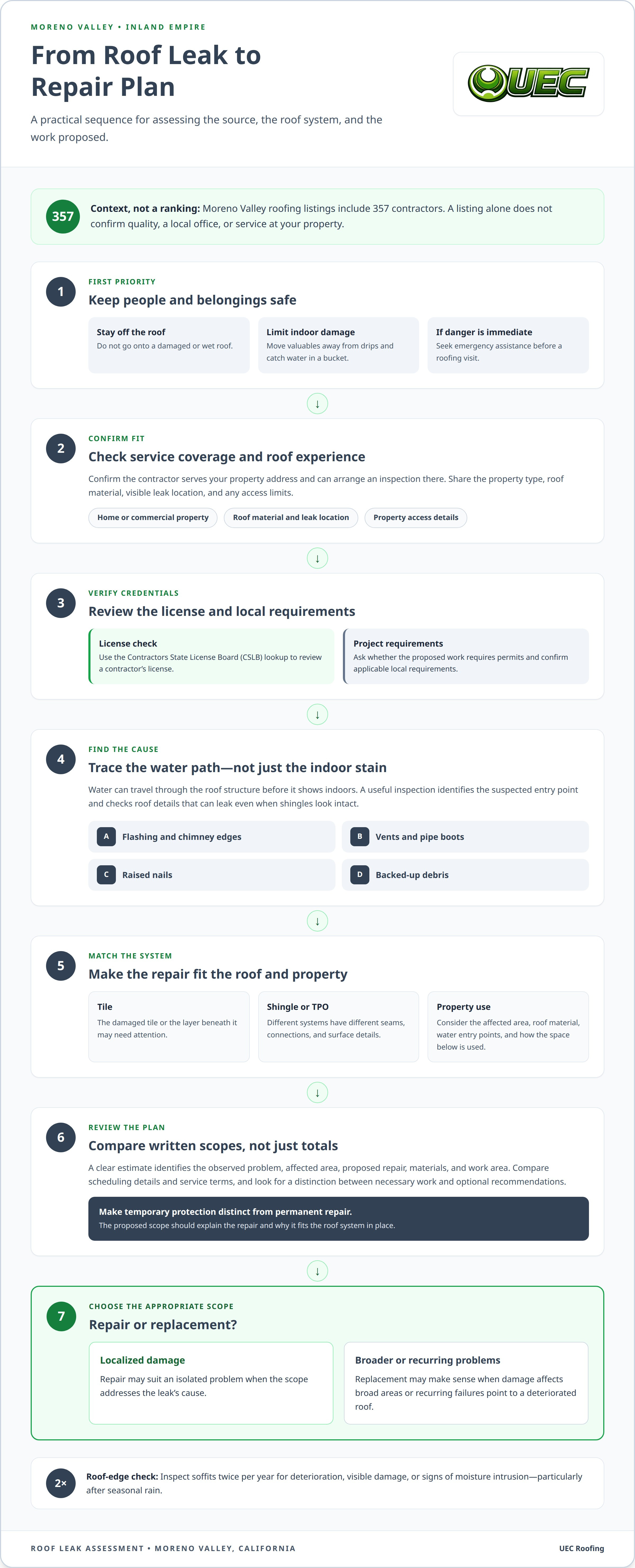
The best roof leak specialist serving Moreno Valley is the one whose experience, credentials, service coverage, and repair plan fit your property, whether it’s residential or commercial. A roof leak specialist should look beyond the visible stain: water can travel through the roof structure before it appears indoors. Southern California’s strong sun and seasonal rain make it important to assess both the source of a leak and the roof’s overall condition. Moreno Valley listings include 357 roofing contractors, but a city listing alone doesn’t mean a company has a local office or serves your property.
It’s sensible to compare repair scopes, scheduling, and contractor credentials before arranging work. For safety, stay off a damaged or wet roof. While waiting for a roofer, move valuables away from the leak and catch dripping water in a bucket. If the structure is unsafe or anyone faces immediate danger, seek emergency assistance before a roofing visit.
This guide explains how to assess service coverage and estimates, what can cause leaks even when shingles look intact, and how temporary protection differs from permanent repair. It also covers what to consider when choosing a roof leak specialist for a home or commercial building in Moreno Valley and the Inland Empire.
Key Takeaways
- Use the Contractors State License Board (CSLB) lookup to review a contractor’s license, then assess whether the proposed inspection and repair scope fits your property.
- Compare estimates by the work described, scheduling details, and service terms, not just the final figure.
- Learn why flashing, pipe boots, nail pops, and backed-up debris can cause leaks even when shingles look intact.
- Consider how a home’s or commercial building’s roof system and operating needs shape the repair approach.
- Understand how to review insurance policy language and distinguish a covered event from the work needed to repair the roof.
Who are the best roof leak repair companies in Moreno Valley, CA?
Moreno Valley roofing listings include 357 contractors, but that figure isn’t a quality ranking. The best fit is a contractor who can identify the leak source, explain the repair scope, and work on your roof system. Southern California’s long periods of sun and seasonal rain make it important to address damage before water enters the home. Repair suits isolated damage; replacement may make sense when problems affect broad areas or recurring failures point to a deteriorated roof.
Use the same criteria for each contractor rather than relying on listing order. Review service coverage, experience with your roof system, inspection process, written estimate, and scheduling terms. In California, homeowners can use the Contractors State License Board (CSLB) lookup to verify a contractor’s license. Ask whether the proposed work requires permits and confirm it will follow applicable local requirements. A Moreno Valley listing alone doesn’t establish a local office or guarantee service coverage.
For fascia and soffit work, look for an inspection that considers how these roof-edge components connect with the roof and drainage. An estimate should identify the affected area and distinguish repair from replacement. Inspect soffits twice per year for deterioration, visible damage, or signs of moisture intrusion, particularly after seasonal rain. The repair plan should address the cause, not just the visible symptom.
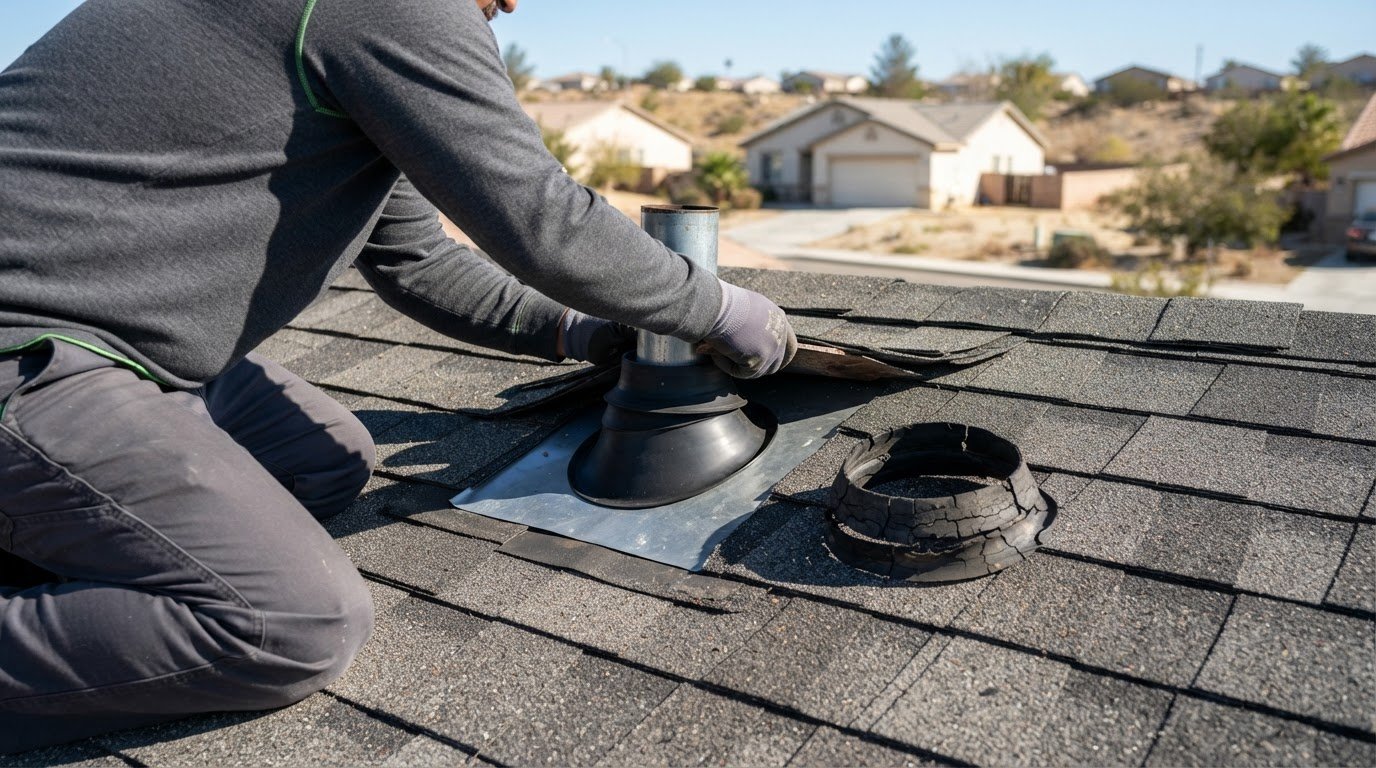
Flashing, chimney edges, vents, and pipe boots deserve specific attention during leak diagnosis. Failed flashing can let water in around roof openings, while cracked pipe boots can expose gaps around plumbing vents. Raised nails or backed-up debris can also cause leaks even when no shingles are missing. A useful inspection traces the water path and identifies the suspected entry point before work begins, including areas that may have been stressed by sun exposure or rain.
Roofing materials require different repair methods. A tile roof may need attention to a damaged tile or the layer beneath it. Shingle and TPO systems have different seams, connections, and surface details. Ask for an explanation of how the proposed repair fits the existing roof and why replacement isn’t necessary. The repair method should match the system in place and account for the roof’s exposure to local conditions.
Property use matters, too. A Moreno Valley home may have tile or shingle roofing, while a commercial building may use TPO. The inspection should account for the affected area, roof material, water entry points, and how the space below is used. For either property, request a clear scope that separates temporary protection from permanent repair and explains any applicable local requirements.
Safety should guide your next step. Stay off a damaged or wet roof, move valuables away from interior drips, and catch water in a bucket. If the structure appears unsafe or anyone faces immediate danger, seek emergency assistance before arranging a roofing visit. These steps protect people and belongings without risking a fall or further roof damage.
Provider coverage, estimates, scheduling, and service terms
A useful roofing inquiry starts with the property, the leak, and the roof system. Clear details help a roofing contractor assess service coverage, plan an inspection, and define the work before scheduling. In Southern California, intense sun, seasonal rain, and occasional Santa Ana winds can affect roof conditions and safe inspection timing.
Service Areas and Contractor Experience
For a Moreno Valley property, confirm that the contractor serves its address and can arrange an inspection there. A listed service area describes geography, not necessarily an office location or confirmed appointment. Include the property type, roof material, and visible leak location in your inquiry. These details help clarify whether the contractor’s experience fits the work.
Experience matters most when it matches the roof and repair involved. A tile roof, for example, calls for familiarity with its components and the layers beneath them. A low-slope commercial roof has different access and drainage considerations. Ask for a scope that identifies the relevant system and explains how the inspection will locate the source, rather than relying only on the indoor stain. After seasonal rain, describe whether water entry is ongoing or limited to specific storms; this can help the contractor plan the inspection.
For projects across Moreno Valley and the Inland Empire, service boundaries can affect travel and appointment planning. Share the property address and any access limits, such as a secured entrance or restricted business hours. If the roof is part of a commercial site, explain who can provide access and whether the inspection must avoid occupied areas. Scheduling may also need to account for heat and wind, which can affect safe roof access.
Estimates, Scheduling, and Service Terms
A useful estimate identifies the observed problem, proposed repair, materials, and work area. It should distinguish necessary work from optional recommendations. For example, a localized leak near a vent should have a scope that identifies that roof detail, not a vague description such as “general repairs.” Written details make the proposed work easier to understand.
Scheduling depends on the inspection, the roof’s condition, material needs, and access to the property. In your inquiry, describe when the leak appears, which room or area shows signs, and whether water is still entering. For a business, include operating constraints. In Southern California, rain forecasts and high winds can affect roof access and work planning, so ask how weather may influence the proposed schedule. This information helps the contractor plan an appropriate visit without assuming every property follows the same schedule.
Review service terms for the estimate’s scope, payment timing, exclusions, and how changes are handled if inspection reveals additional damage. Temporary roof protection and permanent repair are separate scopes, so the document should identify which work it covers. If you need a clearer view of roofing project details, review the available service information before arranging the next step.
Keep your inquiry focused. Share the address, roof type, leak symptoms, and preferred access arrangements in one message. These details give a roofing contractor a practical starting point for discussing service coverage, inspection timing, and the estimate process.
Common causes of leaks without missing shingles
Intact shingles don’t rule out a roof leak in Moreno Valley. During Southern California’s winter rains, water can enter at one roof detail, travel along framing, and appear elsewhere indoors. A ceiling stain below a roof slope may not be directly beneath the opening. A roof leak specialist in Moreno Valley traces the water path instead of assuming the stain reveals its source. That distinction helps focus the repair on the damaged area.
Flashing protects roof joints, including chimney edges, roof-to-wall transitions, and vent openings. Wind-driven rain can expose a lifted edge, failed seal, or damaged section, letting water pass beneath nearby shingles. For example, a leak beside a chimney may begin where metal flashing meets masonry. The inspection should examine the full joint and nearby roofing, not just the interior stain. The repair scope should identify the affected junction and explain how water may have entered.
Pipe boots seal around plumbing pipes that extend through the roof. Southern California’s strong sun and heat can wear roofing materials over time, and a cracked boot can create an opening around the pipe even when the surrounding shingles look sound. Raised nails create another possible entry point: a nail can disturb the shingle surface and expose a small gap. In either case, the inspection should locate the precise roof penetration or fastener before recommending work.
Debris can interfere with water flow at roof valleys and drainage points. Leaves and accumulated material may slow runoff or cause water to back up beneath roof edges, particularly during seasonal rain. Backed-up water and debris can also contribute to leaks. In Moreno Valley, focus on the observed obstruction and its location, rather than making assumptions based on a ceiling mark. A professional should assess nearby seams and roof transitions.
Indoor evidence can help narrow the search. A stain near an exterior wall may point toward a roof edge or roof-to-wall connection; moisture near a bathroom vent may make that roof penetration worth examining. These clues guide an inspection but don’t prove the source. Water can move before reaching drywall, so the repair plan should connect visible damage with a specific roof detail.
For homes and commercial buildings in Riverside County, an assessment should consider roof materials and nearby components together. A tile roof, for instance, may have intact visible tiles while a concealed layer or flashing detail needs attention. In another case, a pipe boot or raised nail may be the more likely entry point. The material and location determine which areas need close inspection, especially after seasonal rain or periods of intense heat.
Before permanent work begins, the contractor should explain the suspected entry point, supporting evidence, and proposed repair area. If the inspection reveals multiple possible sources, each should be described separately. That keeps a small ceiling mark from driving an overly broad scope. A roof leak specialist in Moreno Valley can also distinguish roof repairs from interior water damage, helping property owners understand the work under consideration.
Residential and commercial roofing
Residential and commercial properties in Moreno Valley have different needs during roof repair. A home assessment considers the rooms below the affected area and the roof system in place. A commercial assessment also accounts for building use, site access, and coordination with occupants. In the Inland Empire, exposure to strong sun and seasonal rain can also shape the repair plan. The work should reflect how each property functions and the conditions it faces, not simply the size of its roof.
Roof material shapes the inspection and repair scope. A tile roof, for example, may need tile replacement, while a shingle roof requires work suited to its existing system. Commercial properties may have TPO roofing. The contractor should identify the material and describe how the proposed repair fits it, including any applicable local building requirements. This explanation helps owners understand why the same repair approach may not suit every building.
In a home, the location of interior signs can help guide the inspection. A stain in an upstairs room, for instance, may lead the roofer to examine the roof area above it and nearby transitions. Attic conditions can also inform the assessment. The inspection should connect those observations with the roof system, rather than assume the visible indoor spot identifies the exact source.
Commercial sites bring different planning considerations. A repair near a work area, storage space, or building entrance may require coordination around access and daily operations. A site contact can explain how crews reach the roof and which areas below need attention. These details help shape a practical scope while keeping the proposed work focused on the affected part of the building.
Weather exposure and drainage also matter across the Inland Empire. Roof shape, edges, and drainage routes influence how water moves across a property, particularly during seasonal rain. The roofer’s assessment should consider these features alongside the material and applicable local requirements. For a home or business, identifying the relevant conditions supports a repair plan tailored to that roof, rather than a general solution.
Owners can help keep the assessment focused by sharing the building’s use, known roof material, and access requirements. A homeowner might mention a room used by children, while a commercial manager could identify areas with restricted entry. The contractor can then account for occupants and operations when describing the work and its sequence.
The practical takeaway is to choose a repair plan based on both the roof system and the building’s purpose. A Moreno Valley residence and a commercial property in Riverside County may need different inspection priorities, even when both have a leak. A clear scope should explain how the proposed work suits the roof, local conditions, and the people who rely on the space below.
Are Moreno Valley roof leak repairs covered by homeowners insurance?
Homeowners insurance coverage depends on the policy and the reported cause. A leak alone doesn’t establish that roof repair is covered. The insurer reviews the policy terms, the damage, and the circumstances. In Moreno Valley and across Southern California, a sudden leak after a period of heavy rain or strong winds may be assessed differently from deterioration noticed during routine maintenance. The policy language and claim assessment guide the outcome.
Start by reviewing the policy sections on dwelling damage, exclusions, deductibles, and claim reporting. Note how it describes roof damage, water intrusion, and maintenance responsibilities. If the wording is unclear, ask the insurer to explain how it applies to the reported damage. Keep a record of the explanation, including the date and representative’s name.
Separate the roof issue from damage inside the home. A ceiling stain, wet insulation, and damaged flooring are distinct observations. Photograph each affected area and note when it appeared. For example, record whether a stain grew after local rain or whether dripping continued afterward. These details help create an accurate account without assuming what the policy will cover.
Report the loss promptly through the insurer’s stated claim process. Provide the property address, discovery date, visible damage, and any known weather event. Keep copies of photographs, messages, inspection notes, and claim documents together. If water is still entering, explain that clearly. Don’t climb onto a wet or damaged roof to collect evidence, particularly after rain when roof surfaces can be slippery.
Temporary protection and permanent repair are separate scopes of work. The insurer’s instructions may affect documentation and claim handling, so understand the process before authorizing work beyond urgent protection. Ask how the insurer wants temporary measures documented. Keep receipts and written descriptions of completed work. A contractor’s estimate can describe the roof condition and proposed repair without deciding insurance coverage.
Wear, age, or missed maintenance can be treated differently from sudden damage under policy terms. In Southern California, prolonged sun exposure can contribute to roof wear, while seasonal rain can reveal existing weak points. A leaking pipe boot, for example, identifies a roof component, but not necessarily why it failed. The inspection should describe the condition and likely entry point. The insurer then evaluates that information against the policy wording and claim details.
For a Moreno Valley claim, keep three records aligned: the policy, the insurer’s claim instructions, and the roofing scope. Ask the insurer which documents it needs and whether an inspection is part of its process. Request a written explanation of any coverage decision. If the roof needs attention regardless of claim status, a professional roof repair assessment can define the work independently.
UEC Roofing: leak repair
UEC Roofing provides roof replacement, repair, rejuvenation, and leak repair for homes and commercial properties, with tile, composite shingle, metal, foam, and flat roofing systems. Its Lake Elsinore location supports service across Moreno Valley, Riverside, and surrounding Southern California communities.
With over 2,000 successful projects in the region, UEC Roofing brings experience to roof assessments and repair planning. Share the property location, roof material, and signs of leakage to help frame the discussion. A roof tune up may also address maintenance needs.
For professional help with a roof leak, contact UEC Roofing to discuss your property and repair needs.
Protect Your Roof with a Clear Next Step
A lasting solution starts with an accurate diagnosis and a repair scope suited to your roof. If you’re deciding what to do next, focus on protecting the property and the people inside. A roof leak specialist in Moreno Valley can assess the issue and explain an appropriate repair approach for your home or building.
UEC Roofing offers roof replacement, repair, and rejuvenation, plus tile, composite shingle, metal, foam, and flat roofing. Share where you’ve noticed water, the roof material, and any details about when the leak appears. That gives the conversation a practical starting point and keeps attention on your roof’s needs.
Take the next step at your pace. Contact UEC Roofing for roof leak help to discuss your property and repair needs. A clear plan can help you move forward with greater confidence.
Frequently Asked Questions
What should I do while I wait for a roofer in Moreno Valley, CA?
Keep people clear of the affected area, especially beneath a ceiling that’s bulging or actively dripping. Move belongings, place a bucket under the leak, and note whether water continues entering. Take photos from inside the building if you can do so safely. Don’t climb onto a wet or damaged roof. If the structure appears unsafe or anyone faces immediate danger, seek emergency assistance first.
Why is my roof leaking without missing shingles?
Water can enter through roof details while shingles remain in place. Failed flashing near a chimney, a cracked pipe boot, or a raised nail can create an opening. Debris that blocks drainage may also contribute to water backing up. Since water can travel before appearing indoors, the ceiling stain may not be directly below the entry point. A professional inspection can trace the likely path.
Which roof leak repair specialists serve Moreno Valley, CA?
UEC Roofing serves Moreno Valley and provides leak repair. When arranging professional help, describe the property type, roof material, and symptoms, such as a stain that appears after rain or a drip near a vent. These details help frame the inspection. Request a written scope identifying the suspected source and proposed work, so you understand what the repair addresses.
What are the best-rated roof leak repair companies in Moreno Valley?
A rating alone doesn’t establish which contractor is best for your roof. UEC Roofing serves Moreno Valley with leak repair, but a “best-rated” label requires current, comparable rating information. Consider whether the company handles your roof system, explains the diagnosis clearly, and provides a specific repair scope. You can also review license status through the Contractors State License Board lookup.
What does roof leak repair cost in Moreno Valley?
The cost depends on the project and is provided after a quote request. Factors include the leak’s source, roof material, repair area, access, and whether the inspection finds related damage. A pipe boot repair and a broader flashing issue involve different work. Review the written scope alongside the quote so the proposed work and cost refer to the same repair.
Do Moreno Valley roofers offer free inspections or estimates?
Inspection and estimate terms vary, so don’t assume either is free. Before scheduling, review whether the estimate includes an inspection, what areas it covers, and whether a charge applies. A useful written estimate identifies the suspected leak source, proposed repair, and relevant exclusions. If the inspection uncovers additional damage, the document should explain how changes to the original scope are handled.
How quickly can a local roofing specialist respond to an emergency leak?
Response timing depends on current scheduling, weather, roof access, and the leak’s condition. Describe whether water is actively entering, which part of the property is affected, and any access restrictions. This information helps the roofing specialist understand the situation and plan a visit. If there’s immediate danger or the structure is unsafe, seek emergency assistance before waiting for a roofing appointment.
What should homeowners do immediately after discovering a roof leak?
First, keep clear of unsafe areas and protect belongings inside the home. Record where the water appears, when you first noticed it, and whether it changes during rain. Photos of interior damage can document the condition without requiring roof access. If you plan to report the damage to your insurer, keep those records together with related communications and inspection paperwork.