
Step Flashing a Roof: The Homeowner’s Guide to Leak-Proofing Wall Intersections
Imagine the frustration of discovering a mysterious water stain on your ceiling after a heavy Riverside downpour, despite having a relatively new roof. For many homeowners across Los Angeles County and the Inland Empire, these leaks don't start in the middle of the shingles, but at the vulnerable intersections where your roof meets a vertical wall. If you've been disappointed by "quick-fix" sealants that fail after a single season, you aren't alone; standard caulking simply cannot handle the thermal expansion common in our Southern California climate.
This guide will help you master the essentials of step flashing a roof to protect your home from these persistent vertical-wall leaks once and for all. We understand that roofing terminology can feel overwhelming, so we've simplified the mechanics of a water-tight transition. You'll learn how to identify if your current flashing was installed incorrectly and gain the confidence to know exactly when to call a professional for a permanent, code-compliant fix that protects your family and property value.
Key Takeaways
- Understand why individual L-shaped metal pieces are superior to continuous flashing for preventing leaks at wall intersections.
- Learn the "over-under" layering principle essential for properly step flashing a roof to ensure water is diverted away from your home's structural framing.
- Identify common contractor shortcuts, like the "caulk-only" trap, that lead to expensive moisture damage and mold.
- Discover how specialized materials like lead or malleable flashing are used to protect the unique tile roof systems common across Riverside and San Diego Counties.
- Recognize the warning signs of flashing failure and know when to transition from a DIY patch to a permanent professional repair.
What is Step Flashing and Why is it Critical for Your Roof?
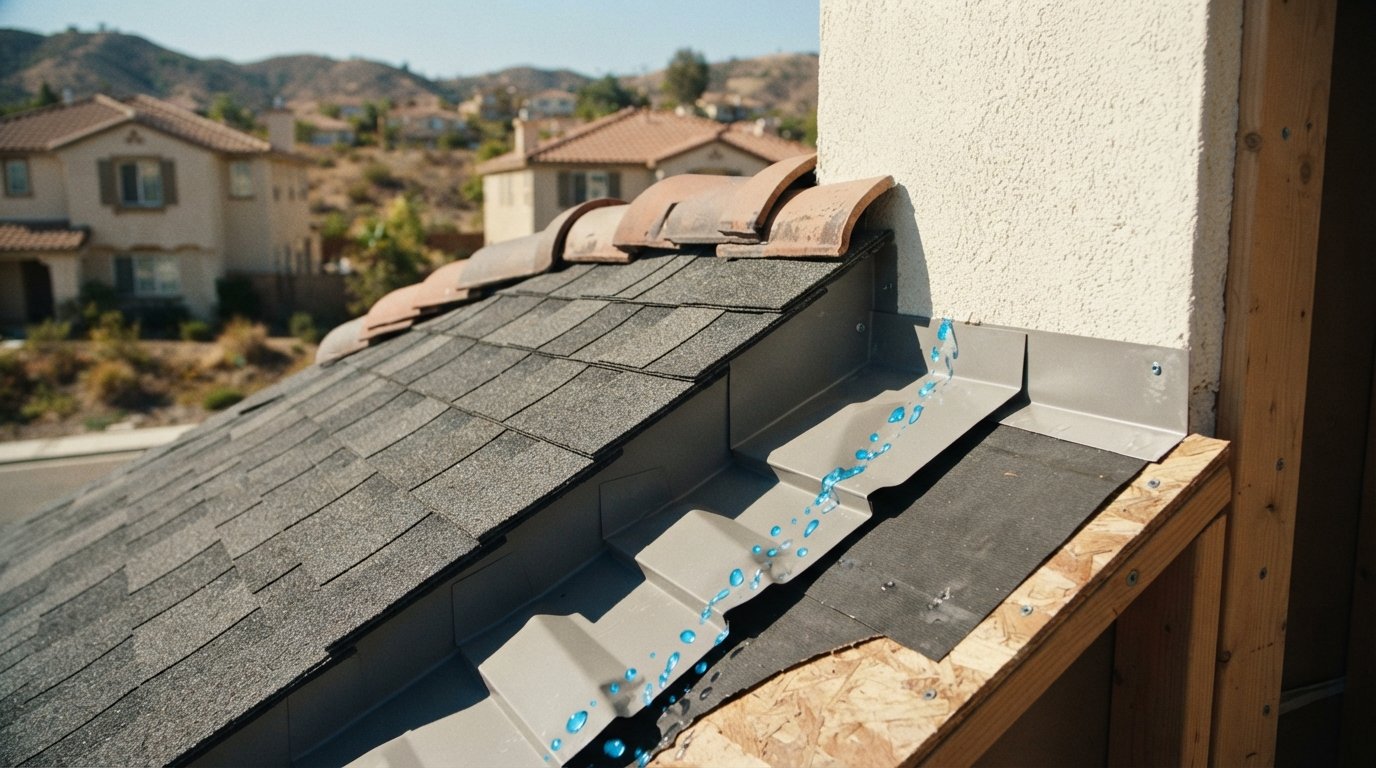
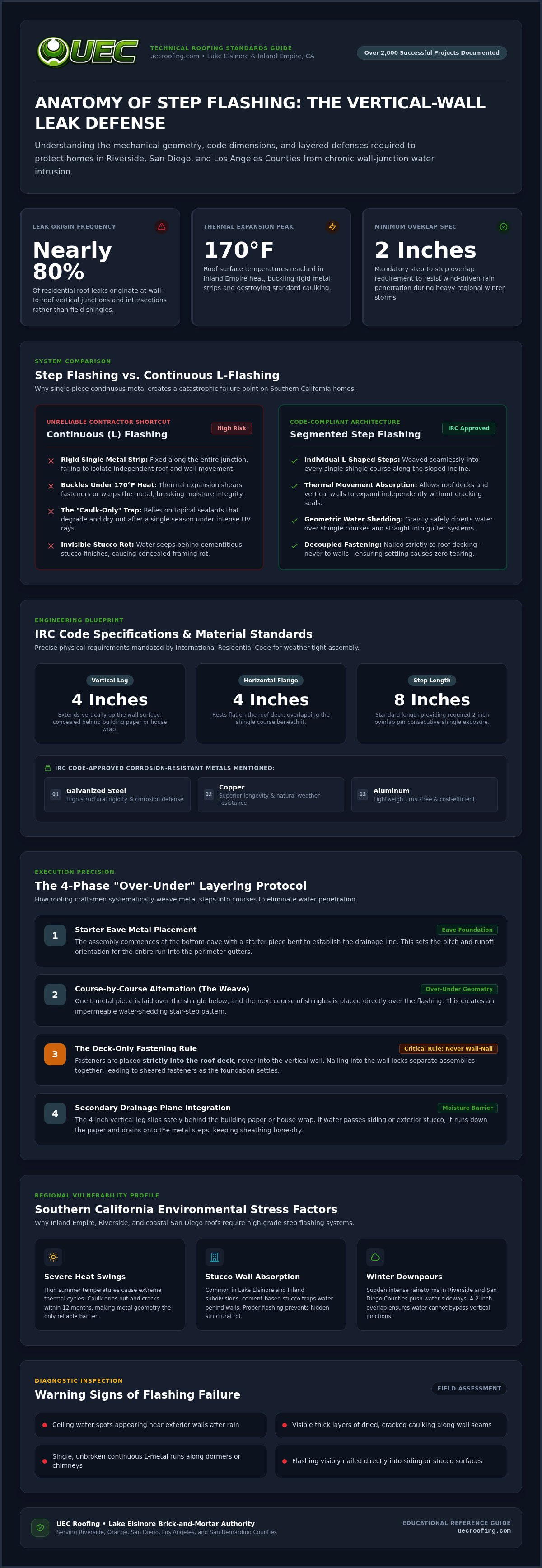
When we discuss step flashing a roof, we aren't just talking about a minor accessory. We're describing the most critical defense against water intrusion at wall intersections. This system consists of individual, L-shaped metal pieces that we weave into each layer of shingles. It creates a series of overlapping "steps" that guide water safely down the roof slope and into your gutters. In our experience completing over 2,000 projects across Riverside and San Diego Counties, we've found that nearly 80% of residential roof leaks originate at these specific junctions. If you're considering a full roof replacement, ensuring your contractor uses brand-new step flashing is absolutely non-negotiable for a dry home.
The Vertical Wall Intersection: A High-Risk Zone
Vertical walls, chimneys, and dormers create a natural break in your roof's surface. These areas are inherently prone to leaks because gravity pulls water down the wall, while surface tension can pull moisture behind your siding or stucco. Without professional-grade weatherproofing roof flashing, water will eventually find its way into your home's structural framing. In Lake Elsinore and the Inland Empire, we often see stucco walls ruined by poor flashing. The moisture gets trapped behind the cement-based finish, leading to wood rot that remains invisible until the damage is severe. High-quality underlayment provides a secondary shield, but the metal flashing is your primary line of defense.
Step Flashing vs. Continuous (L) Flashing
Many "solar cowboys" or cut-rate contractors try to save time by using continuous L-metal. This is just one long, rigid strip of metal tucked against the wall. It's a recipe for disaster on shingle or tile roofs. Your roof deck and the wall are separate structures that move independently as temperatures fluctuate. In the intense Inland Empire heat, where roof surface temperatures can hit 170°F, continuous metal often buckles or shears its fasteners under this extreme thermal expansion. True step flashing a roof avoids this trap. By using individual pieces for every shingle course, the system allows for natural movement without breaking the water seal. This ensures a reliable, overlapping path that sheds water onto the roof surface rather than letting it seep behind the wall. It's a simple geometric solution to a complex moisture problem.
The Mechanics of Proper Step Flashing Installation
Properly step flashing a roof requires precision and high-quality materials to withstand the unique climate of the Inland Empire. We typically use corrosion-resistant galvanized steel, copper, or aluminum. Each piece is usually bent into a 4-inch by 4-inch by 8-inch L-shape. These dimensions aren't just a suggestion. They align with the International Residential Code roof flashing requirements, which mandate specific heights to prevent water from overtopping the metal during heavy Riverside rains.
The "over-under" layering principle is the heart of the system. We integrate every metal piece with a corresponding course of shingles. This creates a staggered barrier that water cannot penetrate. A critical rule we follow is to never nail the flashing to the wall. We only fasten it to the roof deck. This allows your home to settle and expand without buckling the metal or tearing the seal. If you're seeing stains on your interior walls, it might be time for a professional roof repair to address these hidden failures.
Step-by-Step Installation Process
We begin at the bottom eave with a starter piece. This first "step" sets the stage for the entire run. Each subsequent piece must overlap the one below it by at least 2 inches. This overlap ensures that wind-driven rain, common during our winter storms in Riverside and San Diego Counties, can't find a gap. We then integrate the vertical leg of the flashing behind your home's building paper or house wrap. This creates a secondary drainage plane that keeps your wall sheathing bone-dry.
Tools of the Trade
Craftsmanship depends on the right tools. We use high-leverage tin snips for clean, burr-free cuts and roofing hammers for precise fastener placement. While these tools are accessible, the skill lies in the execution. Working on the steep pitches often found in Lake Elsinore subdivisions requires professional safety gear and a steady hand. Using high-grade, solar-resistant sealants at the very end adds an extra layer of security, but the metal geometry does the heavy lifting. Our team takes pride in doing the job right the first time, ensuring your investment is protected for decades.
Common Step Flashing Mistakes That Lead to Leaks
Many homeowners in Riverside and Lake Elsinore assume a leak is just a missing shingle. Often, the real culprit is a failure in how the roof meets the wall. One of the most frequent errors we encounter is the "caulk-only" trap. Instead of correctly step flashing a roof, some contractors simply smear roofing cement over a gap. In the intense Inland Empire sun, this mastic dries and cracks within just a few seasons. It's a temporary patch that fails to provide the long-term stability your home deserves.
Another significant mistake occurs during a roof replacement. To cut costs, some crews leave the original 20-year-old flashing in place. This is a false economy. Metal degrades over time. If we don't replace these components, you're essentially putting a new engine in a car with a rusted chassis. We also see pieces that are simply too small. If the metal doesn't extend at least 4 inches up the wall, a heavy Southern California downpour will simply overtop the barrier and enter your wall cavity.
The Dangers of 'Solar Cowboy' Repairs
Solar installers often compromise your roof's integrity without you even knowing it. These "solar cowboys" frequently overlook flashing details to speed up panel mounting. A quick patch might look fine from the ground, but it often leads to hidden wood rot in your attic. This damage can fester for years before a ceiling stain appears. By then, the structural repair costs far exceed the price of a proper initial installation. We take pride in fixing these shortcuts to ensure your investment remains protected.
Corrosion and Material Failure
Environmental factors in Southern California play a major role in flashing longevity. In coastal areas of San Diego County, salt air accelerates corrosion on galvanized steel. If you see rust, the metal is already porous. In contrast, the heat in Riverside and San Bernardino Counties destroys low-grade sealants. This is why we advocate for expert roof leak repair that prioritizes mechanical flashing over chemical sealants. We never nail through the vertical leg. Doing so pins the flashing to the wall, causing it to tear as the house naturally settles and shifts.
Southern California Challenges: Tile Roofs and Heat Factors
In Southern California, our regional architecture presents unique hurdles for homeowners. While shingle roofs are common, the clay and concrete tile systems found throughout Temecula and Anaheim require a completely different approach to step flashing a roof. Standard L-metal simply won't cut it here. Because tiles sit several inches off the roof deck, we use specialized "pan flashing" or "channel flashing" to manage the heavy volume of water that gathers during seasonal storms.
The intense Inland Empire heat is another critical factor. On a 100°F day in Riverside, your roof surface can easily exceed 150°F. This extreme thermal expansion causes metal joints to shift significantly. If your flashing is pinned incorrectly or relies on low-grade sealants, the bond will break within a few summers. We often utilize malleable lead or specialized aluminum flashing that can be custom-contoured to the profile of your S-tiles or flat tiles. This ensures a snug, water-tight fit even as your home naturally expands and contracts. When these systems fail, a simple patch isn't enough. Our lift and relay roofing service is often the most effective solution. We carefully remove the existing tiles, replace the failed flashing and underlayment, and then reinstall the original tiles for a permanent fix.
Flashing in Tile Roof Systems
Tile roofs are particularly prone to "damming." Leaves, dust, and debris often get trapped in the flashing channels, forcing water to back up under the tiles. This is why tile replacement and flashing repair must go hand-in-hand. You can't fix one without inspecting the other. We ensure these channels are clear and properly integrated with the roof's drainage plane to prevent moisture from reaching the wood deck.
Regional Weather Considerations
Santa Ana winds can drive rain horizontally, pushing moisture into tiny gaps that standard flashing might miss. Additionally, in wildfire-prone areas like Lake Elsinore, metal flashing provides superior fire resistance compared to plastic or vinyl alternatives. We highly recommend a professional roof tune-up before the winter rains hit San Diego and Riverside Counties. It’s the most cost-effective way to catch small flashing issues before they become major structural headaches. Schedule your tile roof inspection with our Lake Elsinore team today.
When to Call a Professional for Flashing Repairs
Identifying the limit of a DIY project is essential for protecting your home’s structural integrity. If you notice internal ceiling stains, peeling paint near wall joints, or soft spots on your roof deck, the damage has already moved beyond a simple surface fix. Properly step flashing a roof involves integrating metal with the underlying substrate. Once moisture has caused the wooden decking to rot, a homeowner's "quick fix" with a tube of caulk will only trap water inside. This accelerates decay and leads to expensive mold remediation that could have been avoided with a professional intervention.
Let's be straight shooters about the risks involved. Climbing onto a steep Southern California roof pitch is inherently dangerous. Professional teams use specialized fall-protection gear and staging equipment to navigate these high-risk zones safely. In Riverside and Orange County, many residential designs feature complex multi-story wall intersections. Attempting to repair these areas without the proper training or equipment isn't worth the risk to your personal safety. A professional inspection provides a clear, documented path toward a permanent solution.
The UEC Roofing Difference
Our team brings the experience of over 2,000 successful projects across the Inland Empire and surrounding counties. From our brick-and-mortar headquarters in Lake Elsinore, we provide a level of reliability that "tailgate contractors" simply cannot match. We prioritize ethical standards and transparent pricing in every consultation. We don't believe in temporary patches. Instead, we focus on the long-term stability of your roof system. Whether we're fixing the shortcuts taken by "solar cowboys" or restoring a historic tile roof, we treat your property with the respect a major investment deserves.
Next Steps: Protect Your Investment
A targeted flashing repair is a proactive financial strategy. By addressing failed wall intersections now, you can often delay the need for a full roof replacement by several years. This small investment provides the peace of mind that comes with a professionally sealed home before the next heavy rains hit San Diego or Riverside. We invite you to schedule a comprehensive roof inspection with our experts. We'll provide an honest assessment of your flashing’s condition and ensure your home remains a dry, secure sanctuary for your family.
Secure Your Home Against the Next Southern California Storm
Mastering the essentials of step flashing a roof is the most effective way to protect your property from the hidden dangers of water intrusion. Relying on temporary sealants or shortcuts is a recipe for structural rot. Proper metal layering and mechanical water-shedding are the only reliable defenses against our intense Inland Empire heat and seasonal rains. Whether you're managing a complex tile system or a standard shingle roof, getting these details right ensures your home remains a safe sanctuary for your family.
With over 2,000 successful projects across Riverside and San Diego Counties, our team at UEC Roofing understands the specific challenges of Southern California architecture. As local Lake Elsinore experts and specialists in regional tile roofs, we take pride in fixing the mistakes of less experienced crews and providing long-term stability for your investment. Don't wait for a ceiling stain to reveal a problem that's already causing damage. Contact UEC Roofing today for a professional roof inspection and leak repair. We're here to be your roofer for life, ensuring every wall intersection on your home is truly leak-proof.
Frequently Asked Questions
Can I install step flashing over old shingles?
No, you cannot install step flashing over old shingles. For the system to function correctly, each L-shaped metal piece must be woven between the courses of shingles to guide water onto the layer below. Placing it over the top creates gaps that allow moisture to bypass the metal entirely.
How much does it cost to repair roof flashing in Southern California?
Repair costs vary depending on the roof's pitch and the accessibility of the wall joints. While a localized repair is a manageable investment, ignoring the issue leads to expensive structural rot. We provide transparent assessments to help homeowners in Riverside and Los Angeles County protect their property value.
Is roofing cement a permanent fix for flashing leaks?
Roofing cement is a temporary patch, not a permanent fix. The intense heat in the Inland Empire causes mastic to crack and pull away from the wall within a few seasons. Only mechanical step flashing a roof provides the long-term stability needed to keep your home dry.
What is the difference between step flashing and counter flashing?
Step flashing is the L-shaped base layer woven into the shingles. Counter flashing is a separate piece that overlaps the vertical leg of the step flashing from the wall. This two-piece system allows the roof and wall to move independently without breaking the water-tight seal.
How long does metal roof flashing typically last?
Metal flashing generally lasts between 20 and 30 years. However, in coastal areas like San Diego, salt air can accelerate corrosion. We recommend replacing all flashing during a roof replacement to ensure your entire system has a consistent lifespan and protects your investment for decades.
Do I need to remove my siding to fix the flashing?
Yes, accessing the vertical leg of the flashing usually requires loosening the bottom layer of siding or stucco. This ensures the metal is tucked behind the building's moisture barrier. Our Lake Elsinore experts use this method to provide a code-compliant seal that prevents hidden leaks.
Can step flashing be used on a tile roof?
Yes, but tile roofs in areas like Anaheim require specialized pan flashing to handle the higher water volume tiles carry. Because tiles sit higher than shingles, the flashing must be custom-contoured or integrated with a channel system to ensure moisture is diverted safely away from the wall.
What are the signs that my roof flashing has failed?
Common signs include interior ceiling stains near walls, rusted metal, or cracked sealants around chimneys. If you notice these issues, your step flashing a roof system has likely failed. A professional inspection can determine if a repair is needed before the next Southern California rainy season.