
New Roof Cost: The Complete Southern California Homeowner Guide (2026)
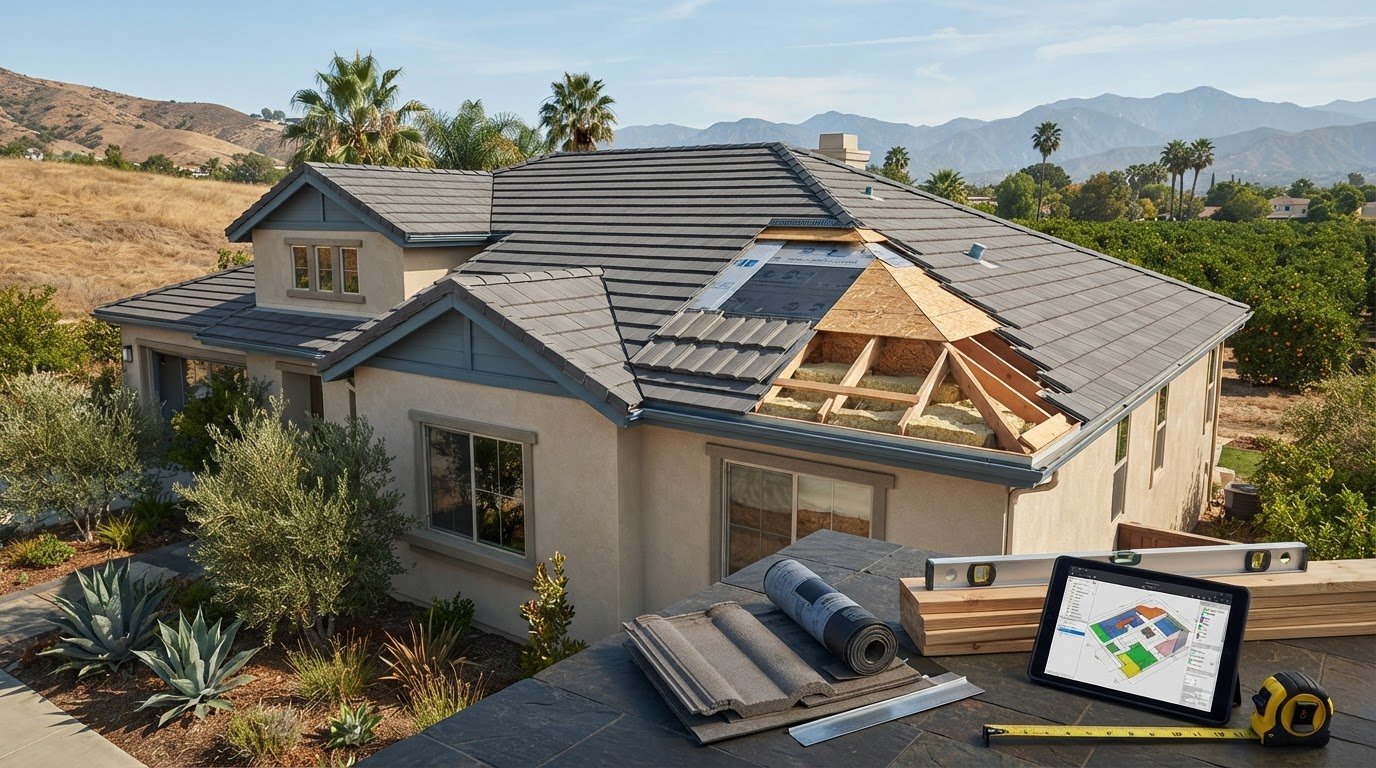
Calculating your new roof cost with a generic square-footage formula is one of the fastest ways to derail a home improvement budget. If you've gathered estimates across Riverside, Orange, or San Diego counties, you've likely seen wildly divergent bids that leave you wondering what's actually necessary. It's completely natural to feel overwhelmed by conflicting scopes, strict California Title 24 cool-roof mandates, and the quiet fear that stripping away old materials will uncover costly hidden deck damage.
A dependable roof isn't just about the surface materials you see from the curb. It's about engineering a resilient system that stands up to punishing Inland Empire heat cycles, adheres to fire safety rules, and protects your home value for decades. We wrote this guide to eliminate the guesswork. You'll learn how to evaluate material tiers, navigate local building codes, and determine whether your home truly requires a complete replacement or a cost-effective tile lift and relay. Here is everything you need to know to assess bids with confidence and make an informed investment in your property.
Key Takeaways
- Architectural complexity, pitch, and regional building codes shape your total new roof cost far more than simple square footage alone.
- Matching the right roofing material to your home balances upfront project requirements with long-term resistance to intense Southern California heat and UV exposure.
- Sound concrete or clay tiles often outlive their underlayment, making a tile lift and relay a practical way to restore leak protection without purchasing new tiles.
- A professional proposal must itemize tear-off, decking replacement rates, proper attic ventilation, and Title 24 compliance to eliminate mid-project surprises.
- Working with an established roofing contractor with deep regional roots ensures your roof is engineered specifically for Inland Empire climate demands.
Deconstructing New Roof Cost: Key Pricing Factors in Southern California
Automated online calculators often promise an instant figure in two minutes. In reality, these tools rely purely on rough square footage, completely ignoring the structural and regional realities that shape your actual investment. A realistic new roof cost reflects physical site conditions, environmental mandates, and labor demands unique to our region.
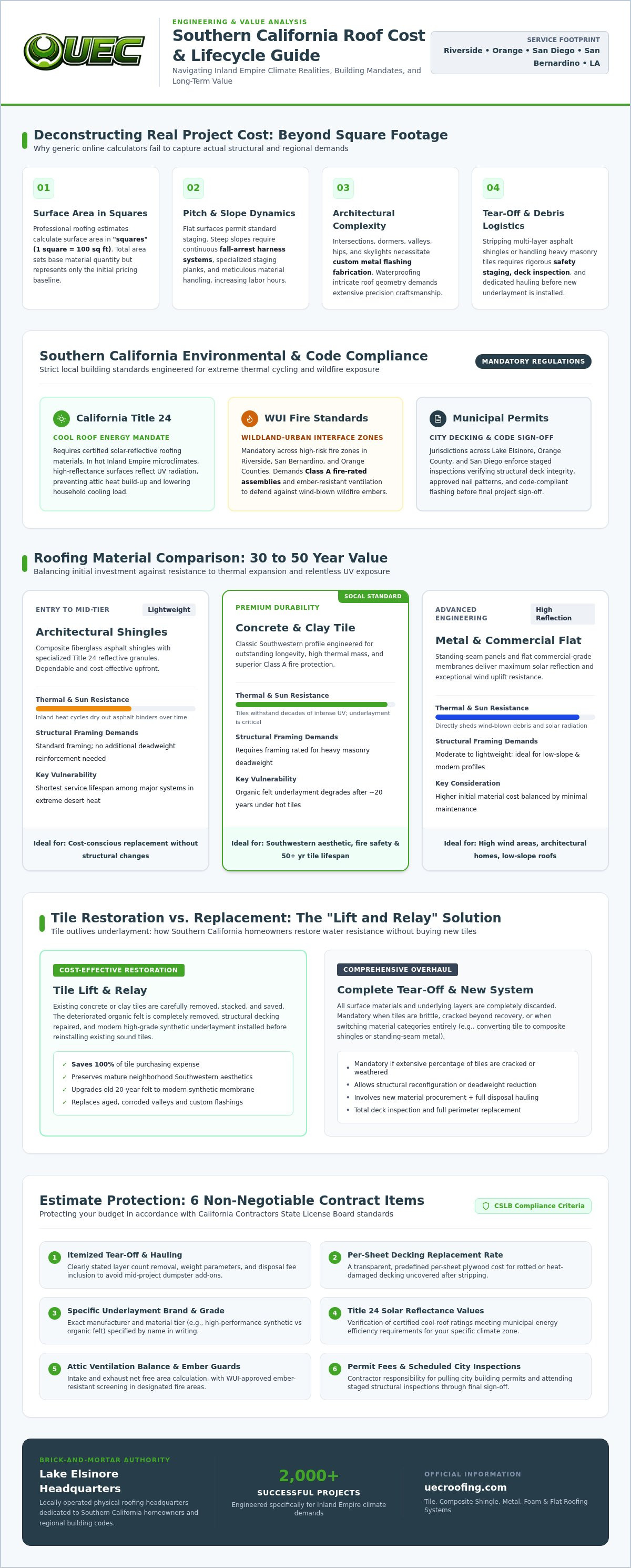
Every reliable estimate starts with total surface area. Professional roofing contractors calculate this in "squares," where one square equals 100 square feet of finished roof deck. Beyond raw size, tear-off logistics play a massive role. Removing multiple layers of brittle composite shingles or stripping heavy clay and concrete roof tiles requires extensive labor, safety staging, and dedicated debris hauling before any fresh underlayment touches your deck.
Roof Size, Pitch, and Structural Complexity
Slope and geometry directly govern production speed. Flat or low-slope surfaces allow straightforward staging, whereas steep pitches require continuous fall-arrest harness systems, staging planks, and meticulous material handling. Complex rooflines with multiple valleys, intersecting hips, dormers, and skylights require custom-fabricated metal flashings. These intricate intersections take significantly more time to waterproof properly, directly shaping total labor requirements.
Regional Environmental Demands and California Code Compliance
Operating in Southern California introduces strict regulatory standards that generic national estimators overlook entirely. Your installation must meet stringent energy and fire benchmarks:
- California Title 24 Standards: State energy codes mandate certified cool-roof materials that reflect solar radiation. In hot Inland Empire microclimates, these reflective surfaces prevent excessive attic heat buildup and reduce cooling strain.
- Wildland-Urban Interface (WUI) Mandates: Properties situated in designated fire zones throughout Riverside, San Bernardino, and Orange counties require Class A fire-rated assemblies alongside ember-resistant ventilation to protect against wind-blown embers.
- Municipal Permitting: Building departments across Lake Elsinore, Orange County, and San Diego require formal permits and staged inspections to verify structural decking integrity and code adherence.
An accurate assessment cannot happen from an aerial photograph alone. True precision requires a physical evaluation of your roof deck, flashing conditions, and attic ventilation balance.
Roofing Material Selection and Long-Term Value Breakdown
Selecting the right material is about lifecycle return, not just the initial bill. Daily thermal cycling expands and contracts roof surfaces across Southern California, steadily testing seams and chemical binders. Your material selection shapes your total new roof cost across thirty to fifty years, making resistance to intense sun exposure just as critical as your immediate budget.
Architectural Shingles vs. Concrete Tile Systems
Architectural composite shingles remain a dependable, budget-conscious choice for many homeowners. Modern cool-roof shingles feature reflective granules engineered to meet California energy thresholds without adding structural weight to your framing. However, prolonged exposure to high desert and inland heat gradually dries out asphalt binders over time, resulting in a shorter service lifespan than masonry alternatives.
Concrete and clay tiles provide classic Southwestern appeal, exceptional fire resistance, and decades of structural resilience. The main vulnerability with tile isn't the tile itself; it's the waterproof barrier underneath. Traditional organic felt deteriorates after two decades under baking tiles, whereas upgrading to high-performance synthetic underlayment preserves the assembly. Confirming that your agreement follows California Contractors State License Board contract guidelines by explicitly itemizing underlayment brand and grade protects your investment from early failure.
Metal Roofing and Flat Commercial-Grade Membranes
Modern standing-seam metal roofing delivers superior thermal reflection and exceptional wind uplift resistance. Metal panels shed wind-blown debris effortlessly and offer outstanding longevity, making them an attractive option for homes in high-heat or fire-prone foothill zones.
Properties featuring flat architectural sections or low-slope patio transitions require specialized commercial-grade membranes. These areas cannot shed water through gravity alone. Installing heat-welded single-ply membranes or modified bitumen systems ensures standing water cannot penetrate vulnerable seams.
Review our detailed roof replacement cost guide to compare system lifespans. Partnering with a trusted local roofing contractor ensures you select the ideal material grade for your neighborhood's exact microclimate.
Replacement vs. Restoration: Exploring the Tile Lift and Relay Option
Many contractors default to recommending a total tear-off the moment a tile roof develops a leak. This recommendation often leads homeowners to assume an entirely new roof cost is unavoidable. Across Riverside, Orange, and San Diego counties, however, the concrete or clay tiles protecting your home are frequently in excellent structural shape. The real culprit behind leaks is almost always the deteriorated underlayment beneath them.
Southern California's intense inland sun rapidly dries out organic asphalt felt, causing it to crack and fail after twenty to thirty years. Meanwhile, heavy concrete tiles can easily last fifty to a hundred years. Tearing off intact tiles simply to install identical new ones wastes money and clogs local landfills. An ethical inspection determines whether your property qualifies for restorative solutions like our lift and relay roofing service before pushing for a full replacement.
How Tile Lift and Relay Protects Your Budget
A tile lift and relay focuses labor and materials where protection actually broke down. The process follows a clear, methodical sequence:
- Systematic Tile Salvage: Crews carefully remove, clean, and stack the existing field tiles directly on the roof framing to preserve structural balance.
- Decking Inspection: The crew strips brittle, degraded felt paper completely, exposing the bare wooden deck to locate and repair isolated dry rot or moisture stains.
- Membrane Upgrade: Technicians install high-grade synthetic underlayment, fresh battens, and upgraded corrosion-resistant metal flashings around valleys, walls, and chimneys.
- Precision Reinstallation: Workers reinstall the original tiles over the fresh waterproof barrier, replacing any individual broken pieces with color-matched units.
Because you avoid purchasing thousands of pounds of fresh tile and paying heavy freight fees, this restoration approach dramatically reduces out-of-pocket expenses compared to total replacement. Following California Contractors State License Board guidelines, make sure any contractor providing this service clearly itemizes the underlayment brand and includes proper tear-off disposal terms in writing.
When Full Roof Tear-Off Becomes Structurally Necessary
Restoration isn't universally viable for every property. A full replacement becomes mandatory if decades of hidden moisture intrusion have caused widespread dry rot across your rafters, demanding extensive structural carpentry. Similarly, older lightweight clay tiles that are brittle, broken, or permanently discontinued cannot safely withstand the handling required for a reset.
Homeowners facing aging shingle roofs can consult our guide on roof rejuvenation vs replacement to explore preventative options. When underlying decking and structural timbers remain solid, choosing targeted restoration keeps your home secure while effectively managing your overall new roof cost.
Navigating the Estimate Process: What Quality Proposals Must Include
Vague, one-page roofing quotes represent one of the largest financial risks for homeowners. When a bid simply states "replace roof" without specifying materials, tear-off limits, or labor terms, unexpected change orders quickly inflate your final bill. A transparent quote protects you by itemizing every phase of production, ensuring that your calculated new roof cost remains firm and fully accounted for before work begins.
The Comprehensive Attic and Exterior Roof Inspection
Accurate scopes require more than a quick look from the driveway. A qualified inspector must climb onto the roof surface and enter the attic space. Evaluating the attic framing uncovers hidden moisture stains, mold blooms, sagging rafters, and inadequate ventilation. If air cannot cycle smoothly through intake and exhaust vents, trapped heat will bake new shingles from underneath and void manufacturer protections.
Down on the perimeter, an inspector checks the structural edges of the home. Rotted fascia boards, damaged starter courses, and failing eave flashings must be documented early so they can be written directly into the project scope rather than discovered mid-tear-off.
Scrutinizing Contractor Quotes for Hidden Costs
Comparing bids across Lake Elsinore, Orange County, or San Diego requires evaluating the exact details behind the bottom-line price. Protect your home and budget by insisting on these explicit line items:
- Decking Replacement Rates: Proposals should state an exact, agreed-upon per-sheet replacement rate for rotted plywood or OSB sheathing discovered after tear-off.
- Permits and Code Staging: The contract must clearly state who pulls municipal building permits and manages required city inspections.
- Ventilation Hardware: Specific intake and ember-resistant exhaust vents should be itemized to satisfy California Title 24 and Wildland-Urban Interface building codes.
- Insurance and Warranty Split: Demand certificates proving active workers' compensation and general liability coverage. Your paperwork must clearly differentiate between the manufacturer's material warranty and the contractor's installation workmanship coverage.
Evaluating these details eliminates unpleasant billing surprises. If you are preparing to review estimates, schedule an on-site inspection with an established roofing contractor to receive a clear, line-item proposal tailored to your property.
Protecting Your Home Investment: The UEC Roofing Craftsmanship Standard
Investing in a roofing project isn't just about paying for materials and labor. It's about establishing trust with a team that stands firmly behind its craftsmanship for decades. When you assess your total new roof cost, factoring in contractor accountability and post-installation support ensures your investment delivers genuine security.
Rooted in Southern California: Lake Elsinore Craftsmanship
Out-of-area crews and temporary operations often disappear the moment a final invoice clears. UEC Roofing operates from an established brick-and-mortar headquarters located in Lake Elsinore. Maintaining a permanent physical facility ensures rapid mobilization, dependable warranty support, and long-term accountability to our neighbors.
With over 2,000 successful projects completed across Riverside, Orange, San Diego, San Bernardino, and Los Angeles counties, our specialists understand regional microclimates intimately. We know how dry Santa Ana winds, intense UV exposure, and rapid inland thermal swings affect specific roofing materials. Experienced project managers provide direct daily oversight on every installation, ensuring strict compliance with local codes while maintaining clean, organized job sites throughout the build.
The Roofer for Life Approach to Longevity
A durable roof shouldn't be treated as a one-time transaction. We operate under a dedicated "roofer for life" philosophy that prioritizes proactive maintenance and education over premature tear-offs. Once an installation concludes, our team conducts a thorough physical walkthrough to ensure every seam, valley flashing, and ridge cap adheres to our exacting standards.
Scheduled preventative checkups and timely roof tune up services stop minor weather wear from developing into costly water leaks down the road. If you're managing active moisture damage right now, read our expert roof leak repair case study to see how prompt, specialized diagnostics resolve persistent structural leaks.
A well-built roof protects your property value, supports home energy efficiency, and shields your family from seasonal extremes. Planning your project alongside a trusted local team keeps your long-term new roof cost predictable while delivering enduring peace of mind.
Take Confident Control of Your Southern California Roofing Investment
Navigating your project doesn't have to feel like an exercise in guesswork. An accurate assessment of your new roof cost comes down to understanding structural complexity, adhering to regional Title 24 standards, and exploring cost-saving restorations like a tile lift and relay before committing to a full tear-off. Transparent, line-item estimates ensure your property gets the exact protection it needs without surprise expenses.
With our physical brick-and-mortar headquarters established in Lake Elsinore and over 2,000 successful roofing installations across Southern California, UEC Roofing delivers dependable craftsmanship tailored to Inland Empire heat and regional microclimates. Every project includes comprehensive workmanship warranties backed by a dedicated local roofer-for-life team committed to long-term preventative care.
Ready to protect your home value and secure lasting peace of mind? Take the next step today and schedule your comprehensive roof inspection with UEC Roofing.
Frequently Asked Questions
What primary variables influence the overall cost of a new roof?
Your overall new roof cost depends primarily on total square footage, roof pitch, and architectural complexity. Steep roofs require specialized fall-protection equipment and additional labor hours, while features like skylights and intersecting valleys demand custom metal flashings. The selected material system, existing tear-off layers, structural decking condition, and regional code compliance requirements across Southern California also directly influence total project scope.
Does California Title 24 affect my roof replacement expenses?
Yes. California Title 24 energy standards mandate certified cool-roof materials that reflect solar radiation away from your home. When re-roofing over significant portions of a residence in inland climate zones like Riverside or San Bernardino counties, products must carry Cool Roof Rating Council certification. While compliant reflective shingles and tiles require specialized manufacturing standards, they lower attic temperatures and reduce long-term household cooling expenses.
How do I know if I need a full replacement or a tile lift and relay?
A professional roof inspection evaluates tile integrity versus underlayment condition. If your concrete or clay tiles remain structurally sound without widespread cracking, but moisture is penetrating aged felt paper beneath them, your home is likely a prime candidate for a tile lift and relay. You only require a complete replacement if existing tiles are discontinued and brittle, or if extensive structural rafter damage demands comprehensive carpentry.
Why do new roof estimates differ so dramatically between contractors?
Discrepancies in new roof cost estimates typically stem from differences in project scope, material tiers, and business overhead. A lower bid might exclude building permits, use cheap organic felt instead of synthetic underlayment, or omit required attic ventilation upgrades. Reputable contractors include full tear-off, continuous ground protection, legitimate worker's compensation insurance, and written workmanship warranties directly in their upfront pricing.
How long does a typical residential roof installation take in Southern California?
Most residential roof installations take between two to five working days to complete. Simple architectural composite shingle replacements on single-story homes often finish in two to three days. Larger homes, complex tile installations, or detailed lift and relay projects typically require four to five days to allow for methodical tile removal, deck repairs, municipal city inspections, and careful precision reinstallation.
What unexpected structural expenses can arise once the old roof is removed?
The most common unexpected expense discovered after tear-off is rotted or damaged roof decking. Years of minor moisture intrusion often rot plywood sheathing, starter boards, and fascia along eave edges without showing clear symptoms inside living spaces. Reputable roofing agreements outline a clear per-sheet replacement rate in advance, ensuring that damaged wood repairs don't result in surprise billing changes.
Are permits required for residential roof replacement in Southern California?
Yes. Every municipality across Riverside, Orange, and San Diego counties requires a formal building permit for residential roof replacements. Permitting protects homeowners by ensuring independent municipal inspectors verify structural decking repairs, fire ratings, attic ventilation, and California Title 24 cool-roof compliance. A licensed roofing contractor handles permit acquisition on your behalf and coordinates scheduled city inspections before final job sign-off.