
Roofing Estimates: Southern California Guide for 2026
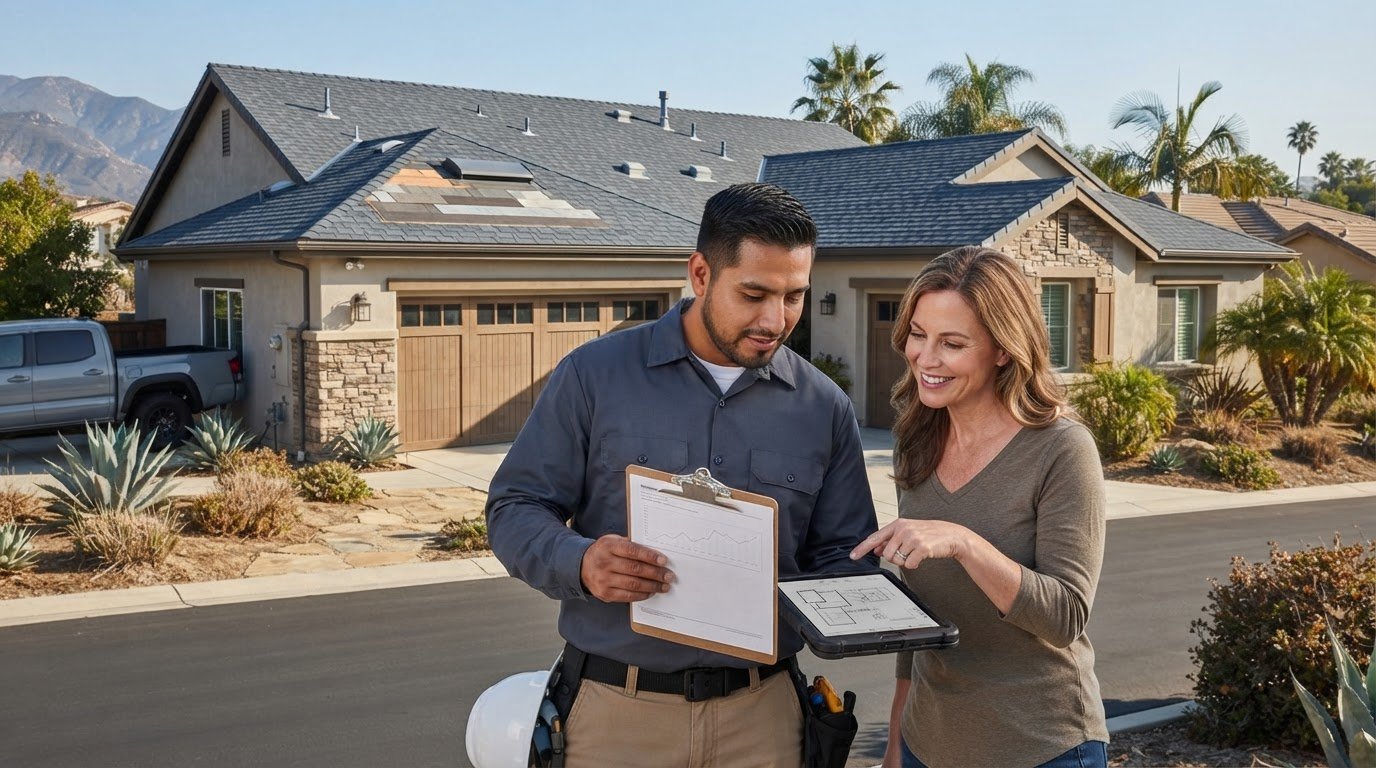
What if the roofing estimate that looks simplest leaves the most important questions unanswered? For Southern California homeowners, roofing estimates can describe very different levels of work, even when they address the same leak or aging roof. A short description may not make clear which materials are included, what areas will be repaired, or what is excluded.
It’s reasonable to want a clear explanation before committing to roof work. A lower total doesn’t necessarily mean the proposals cover the same scope, and a longer list of tasks doesn’t automatically mean every item is needed. The details matter, especially in a region where a roof must stand up to strong sun, heat, and seasonal weather.
This guide explains what a roofing estimate should spell out, how to compare proposed work line by line, and what to ask when something is unclear. You’ll also learn how to review exclusions and material choices so you can make a confident decision about a durable solution for your home.
Key Takeaways
- Use roofing estimates to understand the exact work proposed, including affected areas, materials, cleanup, and exclusions.
- Compare proposals by matching their work areas and tasks, not by looking at the headline total alone.
- Consider your roof’s material, condition, and access when reviewing recommendations for a Southern California home.
- Ask how an inspection supports the proposed work, and clarify anything that isn’t clearly explained before approving it.
- Discuss whether repair, a roof tune-up, rejuvenation, or replacement fits the roof’s condition with a local roofing professional.
Roofing Estimates: What Homeowners Need to Know Before Choosing a Contractor
A roofing estimate is a written description of the work a contractor proposes for a roof, including the areas involved and relevant project details. It gives you a basis for understanding what is recommended and asking questions before you decide how to proceed. For a general overview of what a cost estimate is, see the common forms an estimate can take. Roofing estimates should go further by connecting proposed work to the roof’s observed condition.
An estimate isn’t automatically the final agreement. Contractors may use terms such as “estimate,” “proposal,” or “contract” differently. Before approving anything, ask which document describes the agreed scope, how changes are handled, and whether the written estimate becomes part of the final agreement.
What does a roofing estimate typically describe?
Look for enough detail to picture the work, not just a general label such as “roof repair.” The document should identify the roof areas and reported conditions, then describe the tasks proposed for those areas. Where relevant, check whether it specifies materials, labor, access arrangements, and cleanup.
Ask the contractor to make uncertainties visible. In particular, clarify:
- Which areas and tasks are included, and which are excluded?
- What assumptions does the recommendation rely on?
- What conditions might require reassessment or a change in scope?
These details help distinguish a targeted repair from broader work without treating either as automatically right. A clear explanation should let you connect the observed condition to the recommended task.
When should you request a roof estimate?
Visible leaks, damaged tiles, aging roofing materials, or plans for roof work are good reasons to arrange an inspection and request a written assessment. A stain inside the home or a tile that appears displaced can signal a concern, but neither reveals the full roof condition on its own. Photos and symptoms can help explain what you’ve noticed, but they shouldn’t be treated as a diagnosis.
An on-roof assessment can help clarify what needs attention and whether repair or replacement should be considered. That documentation gives you a more useful starting point for planning and evaluating recommendations, particularly in Southern California, where a roof is exposed to strong sun and changing seasonal conditions. Homeowners in Lake Elsinore and across the Inland Empire can ask the contractor to explain how inspection observations support each proposed task.
What Should a Roofing Estimate Include? Check Scope, Materials, and Exclusions
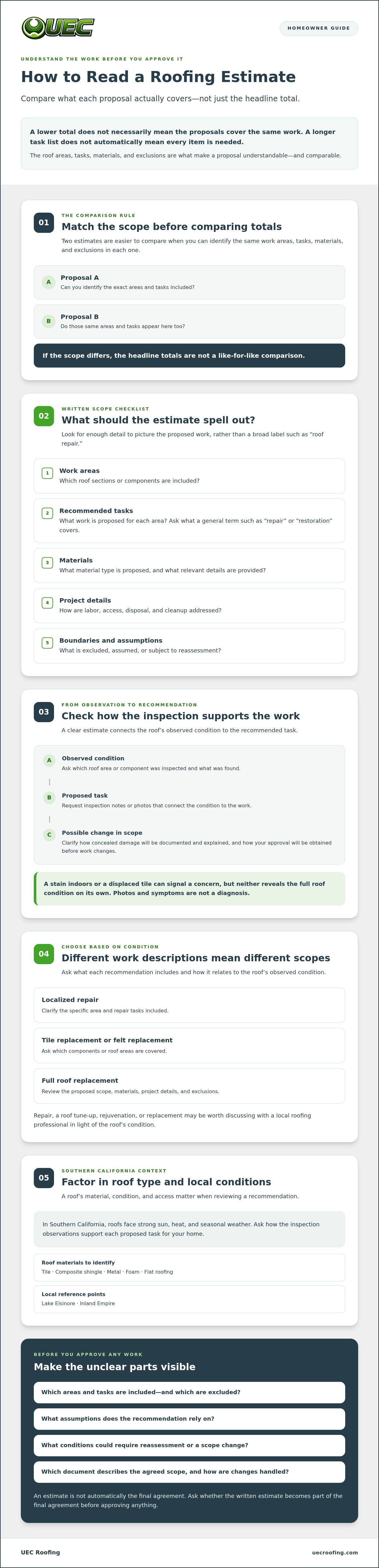
A useful estimate makes the proposed work specific enough to review before you approve it. A comparable estimate needs a clearly stated scope: the same roof areas, tasks, materials, and exclusions must be easy to identify. That standard helps you compare proposals on what they cover, not just on how they describe the job.
Use this checklist to review the written scope:
- Work areas: Which roof sections or components are included?
- Recommended tasks: Does the estimate spell out the work, rather than using only a broad label like “repair” or “restoration”?
- Materials: What material type is proposed, and what relevant details are provided?
- Project details: How are labor, access, disposal, and cleanup addressed?
- Boundaries: What is excluded, assumed, or subject to reassessment?
The scope should reflect the work being considered. A localized roof repair, tile replacement, felt replacement, and full roof replacement are different projects. If an estimate uses a broad term, ask the contractor to explain in writing what tasks it covers and what it doesn’t. This makes it easier to understand whether a recommendation addresses the observed issue or includes a wider area of work.
How should roof damage and proposed work be documented?
Ask for inspection notes or photos that connect observed conditions to the proposed tasks. A description of a specific roof area or component is more useful than an unexplained line item that simply says “repair roof.” If damage is concealed and only becomes visible during the work, clarify how the contractor will document it, explain any proposed change, and get your approval before proceeding.
Which materials and project details should be clarified?
For tile, composite shingle, metal, foam, or flat roofing, ask the contractor to identify the material category and relevant details in the estimate. Don’t assume a general phrase names the exact material being proposed. Also confirm how labor, disposal, access, and cleanup are handled, so you know what the written scope includes.
Ask whether ventilation or energy-efficiency recommendations are part of the proposed work or separate considerations. If you’re reviewing a contractor, the California Contractors State License Board explains how to verify a contractor's license. For a roof-specific assessment in Southern California, you can also discuss an inspection and roofing estimate with UEC Roofing.
How to Compare Roofing Estimates Without Missing Scope Differences
Put each proposal beside the others and compare what the contractor plans to do, not just the headline total. Two roofing estimates may address the same concern but cover different roof areas, tasks, materials, or exclusions. A shorter description may leave important work undefined; a broader scope may include tasks that another proposal doesn’t address. Neither is easy to evaluate until the differences are clear.
How can you make two roofing estimates comparable?
Create a simple comparison sheet. Use the same categories for every proposal, then note what each contractor has included, omitted, or described differently.
- Inspection findings: What observed conditions support the recommendation?
- Work areas: Which roof sections or components are covered?
- Proposed tasks: Is the work a repair, tune-up, rejuvenation, or replacement, and what actions does that involve?
- Materials: Are the material categories described clearly enough to compare?
- Exclusions and assumptions: What is outside the scope, optional, or dependent on further inspection?
Mark blank or unclear items rather than assuming they’re included. Then ask the contractor to clarify the difference in writing. Keep required work separate from optional recommendations, and distinguish stated work from assumptions that could affect the scope. This gives you a more balanced view of what each proposal actually covers.
What questions help reveal estimate uncertainty?
Ask each contractor to connect the recommended approach to the inspection findings. For example: “What did you observe that supports this repair?” or “Why are you recommending rejuvenation or replacement instead?” The goal isn’t to choose the most extensive option. It’s to understand the reasoning and determine whether the proposed work addresses the condition described.
Before authorizing work, clarify how changes will be handled. Ask how the contractor will document newly discovered conditions, explain any scope change, and obtain your approval. Confirm what the estimate says about scheduling, cleanup, and project documentation, too. If an answer is unclear, request a written explanation and keep it with the proposal.
Once the differences are documented, compare like with like. If one proposal includes work another leaves out, ask whether the difference reflects a different inspection finding, a different recommendation, or simply an undefined scope. That conversation helps you make a decision based on clarity and fit for your roof, rather than choosing by the headline figure alone.
Southern California Roofing Estimates: Account for Local Conditions and Roof Type
A useful roofing estimate should reflect the actual home, not just a general description of roofing work. In Lake Elsinore and the Inland Empire, discuss the roof’s current condition, observed sun exposure, and seasonal weather with the contractor. Share the property’s location and ask whether local requirements could affect the proposed project. UEC Roofing serves homeowners in Menifee, Temecula, Lake Elsinore, Canyon Lake, Corona, Anaheim, Moreno Valley, Winchester, Wildomar, Murrieta, Riverside, Orange, Huntington Beach, Fallbrook, Vista, Escondido, Carlsbad, San Diego, El Cajon, and Poway.
Permit and code details can vary by jurisdiction. If a proposal mentions a requirement or permit, ask which local authority it relates to and verify the guidance with that authority. Also ask whether attic ventilation, energy efficiency, or fire resistance is relevant to your roof and whether any related work is included in the estimate or treated separately.
How does roof type shape the proposed scope?
Roof systems don’t all call for the same assessment. Tile, composite shingle, metal, foam, and flat roofs have different materials and conditions to consider, so ask the contractor to explain how the roof type informs the recommendation. For tile, clarify whether the inspection supports targeted repair, felt replacement, or lift and relay, and what roof areas each option would address.
Project scope matters, too. A focused repair and a full replacement aren’t interchangeable recommendations. Ask what inspection findings support the proposed work and whether other options are appropriate for the roof’s observed condition. If you’re weighing a replacement, consult UEC Roofing’s published roof replacement cost guide for planning context. If the choice is between rejuvenation and replacement, the company’s rejuvenation-versus-replacement guide may help frame the questions to ask. Confirm that any estimate explains the work recommended for your specific home.
What should you clarify before comparing proposals?
Ask each contractor to identify the roof areas included, describe how access or condition affects the work, and explain any assumptions. A proposal for a home in Southern California should make clear whether the recommendation accounts for the roof type and the conditions observed during inspection. Don’t infer that a general reference to “local requirements” covers your jurisdiction; verify permit or code questions with the relevant local authority.
For an inspection and explanation of the work options for your roof, contact UEC Roofing about a roof assessment.
Getting a Clear Roofing Estimate from UEC Roofing
A clear estimate starts with a clear conversation. Describe what you’ve noticed, arrange an inspection, review the written scope, and ask questions about anything that remains uncertain. The recommendation should follow the roof’s observed condition. Repair, a tune-up, rejuvenation, or replacement may be options to assess, not automatic next steps.
UEC Roofing provides leak repair, roof tune-ups, felt replacement, tile replacement, lift and relay, roof rejuvenation, and new roof installations. Use an inspection to understand which work, if any, fits your roof and why. A thoughtful assessment can help you plan for roof protection over the long term.
How to prepare for a roofing estimate appointment
Before the inspection, make a short list of concerns. Include where you’ve noticed leaks, visible damage, past roofing work, or questions about roof performance. Photos can help show what you’ve observed, and access details can help with planning, but neither replaces an inspection.
Bring your questions, too. Ask which findings support the proposed work, what areas will be addressed, and what remains uncertain. If the recommendation involves repair, a tune-up, rejuvenation, or replacement, ask the roofing professional to explain why that option is being considered. The goal is to understand the reasoning, not to arrive with a diagnosis.
What happens after you receive the estimate?
Read the written scope before approving work. Check that it describes the roof areas and tasks, and ask for clarification if a term is broad or an important detail is missing. Confirm how questions or changes will be communicated and approved. For additional guidance on evaluating a roofing contractor, consult UEC Roofing’s published Southern California roofing contractor guide.
Take the time you need to understand the recommendation. A sound working relationship depends on clear explanations, careful workmanship, and respect for your home. UEC Roofing can discuss its roofing services and help you understand which options may fit the conditions found during an inspection.
Ready to clarify what your roof needs? Contact UEC Roofing to discuss a roof inspection or roofing service. Start with your concerns, get the roof assessed, and build a relationship with a roofer for life.
Make Your Next Roofing Decision with Confidence
A clear estimate helps you understand what work is proposed, where it will happen, and what remains outside the scope. Before approving roof work, compare the same areas, tasks, materials, and exclusions across proposals. Then ask the contractor to explain how inspection findings support the recommendation and clarify any uncertainty in writing.
These steps matter for Southern California homes, where the right solution should fit the roof’s condition and type, not just a broad label. Reviewing roofing estimates carefully can help you choose work that supports your home’s protection and long-term value.
Whether your home is in Menifee, Temecula, Lake Elsinore, Canyon Lake, Corona, Anaheim, Moreno Valley, Winchester, Wildomar, Murrieta, Riverside, Orange, Huntington Beach, Fallbrook, Vista, Escondido, Carlsbad, San Diego, El Cajon, or Poway, contact UEC Roofing to discuss an inspection or roofing estimate. Start with clear questions and move forward with confidence.
Frequently Asked Questions
What should a roofing estimate include?
It should identify the roof areas and conditions assessed, the work proposed, relevant materials and project details, and any exclusions or assumptions. Ask for clarification if it uses broad terms such as “repair” without stating what tasks are included.
How do I compare roofing estimates from different contractors?
Compare the same roof areas, tasks, material categories, exclusions, and assumptions across proposals. Mark unclear or missing details and ask each contractor to explain them in writing. Headline totals alone won’t show whether the proposals cover equivalent work.
How much does a roofing estimate cost?
Estimate fees depend on the contractor’s process and the assessment involved. Ask whether an inspection or written estimate has a charge, what it includes, and whether any additional evaluation would be discussed with you beforehand.
Can a roofing estimate change after work begins?
It may need revision if concealed conditions are discovered or the agreed scope changes. Before work starts, ask how new findings will be documented, how proposed changes will be explained, and how your approval will be obtained.
Is a roof inspection necessary before getting an estimate?
An inspection helps connect observed roof conditions to proposed work. A leak, stain, or photograph can describe a concern but doesn’t establish the roof’s full condition. Share what you’ve noticed and ask which findings support the recommendation.
What if one roofing estimate recommends replacement and another recommends repair?
Ask each contractor to explain the inspection findings behind the recommendation and identify the areas covered. Compare the evidence, assumptions, and proposed tasks. If important questions remain unresolved, seek further professional guidance before deciding.
Should a roofing estimate include attic ventilation or energy-efficiency work?
The estimate should say whether ventilation or energy-efficiency work is included, excluded, or presented separately. Ask what findings make it relevant to your roof and request a clear description of any proposed work.
For an inspection or to discuss roofing services, contact UEC Roofing about your roof. Get clear answers and a practical next step for protecting your home.