
How to Maintain a New Tile Roof in Riverside: 2026 Guide
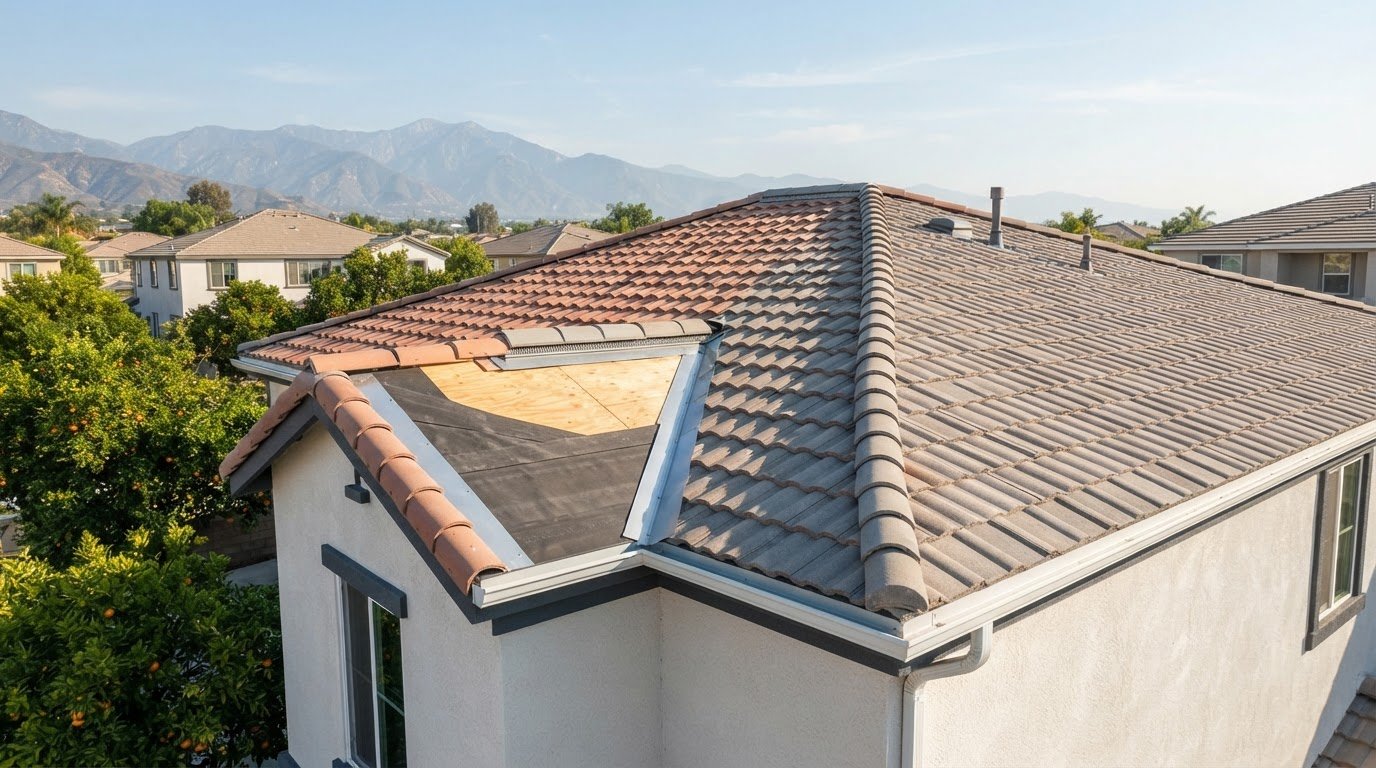
If you’re asking how to maintain a new tile roof Riverside homeowners can start by following the installer’s care guidance and learning which changes call for professional attention. This guide offers practical ways to observe your roof safely, keep useful records, and decide when to contact a roofer.
For Riverside homeowners, roof care is part of protecting a significant investment in the home. Local conditions and the details of each roof can shape what deserves attention, so dependable records and informed advice matter.
This guide explains how to approach routine care safely, what changes to document, and when a roofer may be able to help. UEC Roofing offers roofing services in Riverside and nearby communities, including Menifee, Temecula, Lake Elsinore, Canyon Lake, Corona, Anaheim, Moreno Valley, Winchester, Wildomar, Murrieta, Orange, Huntington Beach, Fallbrook, Vista, Escondido, Carlsbad, San Diego, El Cajon, and Poway.
Key Takeaways
- Learn how to maintain a new tile roof Riverside homeowners can care for by looking beyond the visible tiles to the roof system beneath them.
- Use ground-level checks and keep notes or photos of changes. Don’t walk on tile roofing for routine inspection.
- Use seasonal transitions as reminders to observe the roof, document concerns, and check drainage areas you can safely access.
- Know which signs may call for a roofer to assess the tiles, underlayment, or other roof details.
- Understand when a roof tune-up, tile replacement, or leak assessment may be appropriate, without assuming every new roof needs paid work.
Start Your New Tile Roof Maintenance Plan in Riverside With a Baseline
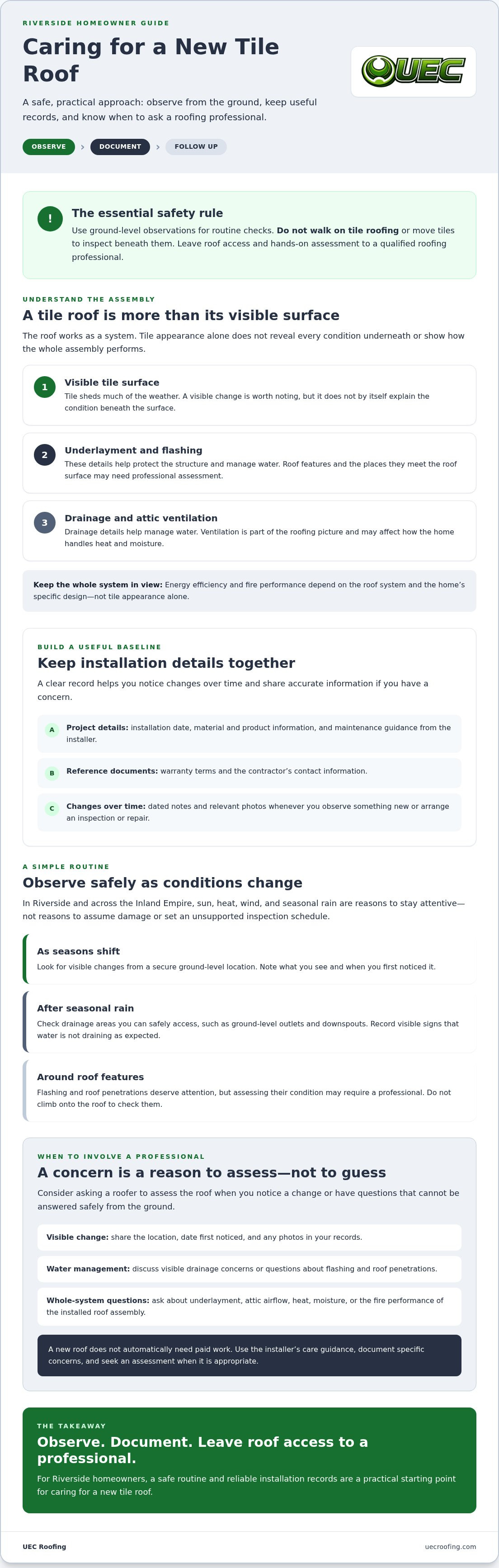
A new tile roof calls for a different approach than an older roof with an active leak or visible damage. Start by keeping a clear record of what was installed and how the contractor recommends caring for it. That baseline can help you recognize later changes and give a roofer useful context if a concern arises.
Think of the roof as a system. Tile sheds much of the weather, while underlayment, flashing, and drainage details help protect the structure and manage water. Roof tiles come in different materials and forms, so keep the product information for your specific installation rather than relying on general advice. The visible surface matters, but it isn’t the whole roof.
What to record after a new tile roof installation
Gather the project paperwork in one digital folder or file. Keep available material and product details, warranty terms, photographs, and the contractor’s contact information. Record the installation date and save any maintenance instructions the installer provided. If you later notice a change or arrange an inspection or repair, add the date, notes, and relevant photos. A simple record helps you share accurate details without guessing.
How Riverside conditions shape a sensible upkeep routine
In Riverside and across the Inland Empire, account for sun, heat, wind, and seasonal rain as you plan to observe the roof. These conditions are reasons to stay attentive, not grounds for assuming damage or setting an unsupported inspection schedule. Look for visible changes from the ground as seasons shift, and note when you first observe them.
Pay attention to drainage areas you can safely access, such as ground-level outlets and downspouts. After seasonal rain, note visible signs that water is not draining as expected. Roof penetrations and flashing, where features pass through or meet the roof surface, also deserve attention, but assessing their condition may require a professional. Don’t climb onto tile roofing to check them.
For homeowners in Riverside and nearby communities such as Lake Elsinore, the same principle applies: observe, document, and follow up on specific concerns. This is a practical starting point for how to maintain a new tile roof Riverside homeowners can manage safely. Leave roof access and hands-on assessment to a qualified roofing professional, and use your installation records to guide the conversation.
Understand How Tile, Underlayment, and Drainage Protect a Riverside Home
A tile roof is a coordinated assembly, and its performance involves more than water management. Roofing materials, underlayment, and attic ventilation can also affect how the home handles heat and moisture. Energy efficiency and fire performance depend on the roof system and the home’s specific design, so don’t assume the tile surface alone tells the whole story. Ask your UEC Roofing professional which materials and details were installed and what guidance applies to your home.
What the visible tiles can and cannot tell a homeowner
Visible tiles may show a change, but they don’t reveal every condition beneath the surface or establish how the roof performs as a complete system. Attic ventilation is another part of the roofing picture. Discuss questions about airflow or signs of excess moisture in the attic with a professional rather than altering roof components yourself. For general roofing context, see the roofing reference.
Why flashing, penetrations, and drainage deserve attention
Transitions around roof features affect how water is managed, while ventilation and material choices may also factor into energy use and fire performance. These concerns call for a whole-system perspective, not assumptions based on tile appearance. If you have questions about attic airflow, heat, or the fire performance of your roof assembly, ask a UEC Roofing professional to explain the installed components and any relevant recommendations for your home.
Separate Safe Homeowner Checks From Professional Tile Roof Work
Good maintenance starts with knowing where observation ends and roof work begins. Ground-level checks and clear records help you notice changes. Climbing onto tiles, moving them, or working around roof details can create risk and may disturb the roofing system. If you’re considering how to maintain a new tile roof Riverside, use a simple routine: observe from a secure location, document what you see, and leave roof access to a professional.
Which new tile-roof checks can homeowners make safely?
Use the ground or another safe vantage point, such as a window, to look for visible changes. Take photos from the same spot when practical, and note when you observed them. Inside, keep track of moisture signs such as a new ceiling stain, including when it appeared and whether it changes. Don’t climb a ladder to get a closer look, walk on tiles, or move them to inspect what’s underneath.
Cleaning also calls for care. A convenient method can damage roofing materials or disturb tiles. Avoid pressure washing and unverified treatments. Ask a roofer what approach, if any, is appropriate for your roof. The Tile Roofing Industry Alliance offers industry resources, but advice for your specific roof should account for its materials and installation.
When should a tile-roof concern go to a professional?
Contact a roofer if you notice a broken or displaced tile, suspect a leak, or can’t tell whether a change needs attention. Tile replacement and felt work involve more than the visible surface, so the roof assembly should be assessed before work is planned. UEC Roofing provides tile replacement, felt replacement, leak repair, and roof tune-ups. A tune-up may be worth discussing when you have a specific concern or want a professional assessment, not because every new roof automatically needs paid work.
| Task | Homeowner-safe action | When to contact a roofer |
|---|---|---|
| Observe tiles | Photograph visible changes from the ground. Don’t climb or move tiles. | If a tile looks broken or displaced, or you’re unsure what you’re seeing. |
| Check for moisture | Record interior stains and when they appear or change. | If moisture is suspected, persistent, or the source is unclear. |
| Clean or adjust roof materials | Don’t pressure wash, apply unverified treatments, or alter the roof. | Ask a roofer to assess suitable next steps. |
Use a Riverside Tile Roof Maintenance Routine Through the Year
A useful routine doesn’t require climbing onto the roof or following a rigid inspection schedule. In Riverside and across the Inland Empire, use seasonal transitions as reminders to assess the roof from a safe location. Pay attention after periods of intense Southern California heat or the arrival of Santa Ana winds. The aim is to notice changes and keep a record, not to diagnose the roof from the ground.
What to observe after seasonal weather changes
Heat, wind, and rain can affect roofing materials. After a significant wind or rain event, take a few minutes to look at the roof from the ground. Note tiles that appear shifted, new gaps, or debris visible in the valleys. Don’t climb up to investigate; record what you can see and ask a roofer about anything that concerns you.
Incorporate these steps into your seasonal home care:
- Observe: Scan the roof from a safe vantage point on the ground after significant wind or rain events.
- Document: Take photos of any visible changes and note the date you first noticed them.
- Check drainage: Ensure ground-level downspouts are clear of leaves and debris so water moves away from the foundation.
- Follow up: Contact a professional if you see displaced tiles or signs that water is pooling in unexpected areas.
What to do if you notice a leak or roof change
If you discover moisture inside your home, document what you see. Record where the moisture appears and note the weather conditions at the time. Move furniture or electronics to a dry area, but don’t attempt to access the roof to find the source. Water can travel along the underlayment, so the entry point may not be directly above the interior stain.
Disturbing tiles while looking for a leak can cause further damage. Instead, share your notes and photos with a qualified roofing professional who can assess the roof. An evaluation can help determine whether a specific area needs attention or whether a broader roof tune-up is appropriate. For professional assistance with a tile-roof concern in Riverside, contact UEC Roofing about leak repair.
Know When UEC Roofing Can Help Maintain a New Tile Roof
A new tile roof doesn’t automatically need paid maintenance. If you see no changes or signs of a concern, keep your installation records and follow the care guidance you received. If you notice a broken or displaced tile, signs of moisture, or a condition you can’t assess safely, a professional evaluation can help clarify whether work is needed.
UEC Roofing provides tile-roof services for homeowners in Riverside and nearby communities. The right next step depends on the roof’s condition, not a one-size-fits-all schedule. A focused repair may be appropriate for one concern, while other findings may call for a different approach.
Which tile-roof services may address a maintenance concern?
A roof tune-up can address maintenance concerns identified during a professional review. Tile replacement may be appropriate when a tile is broken or displaced. If an assessment identifies a concern with the felt beneath the tiles, felt replacement may be considered. Lift and relay involves lifting and reusing tiles as part of work on the underlying roof system. It’s a specialized option, not a routine step for every new roof.
These services aren’t interchangeable. Ask the roofer to explain what they observed and why a particular recommendation fits. Findings, rather than assumptions based on roof age or appearance alone, should guide the decision. A leak concern may also warrant an assessment to help identify where water is entering and what repair, if any, is suitable.
How to prepare for a professional roof assessment
Before contacting a roofer, gather your installation documents, available material information, earlier inspection or repair notes, and photos showing the change. Write down when you first noticed it and whether it has changed. These details help you describe the concern without climbing onto the roof to investigate.
During the assessment, ask the roofer to explain the findings in clear terms, identify what requires attention, and outline reasonable next steps. If no work is recommended, ask what observations to monitor. A useful assessment should help you understand the condition and decide what to do next.
If you’re unsure how to maintain a new tile roof Riverside homeowners can benefit from professional guidance when a specific concern appears. Request a professional tile-roof assessment from UEC Roofing to discuss what you’ve observed and whether a tune-up, tile replacement, felt replacement, leak repair, or another service may be appropriate.
Protect Your Tile Roof With a Clear Next Step
A sound maintenance approach starts with knowing what was installed, watching for visible changes from a safe location, and keeping clear records. Don’t walk on tile roofing or guess at the condition of the underlayment from the surface. If you spot a change or suspect a leak, a professional assessment can help identify whether any work is needed.
That’s the practical answer to how to maintain a new tile roof Riverside homeowners can use: stay observant, document concerns, and seek informed guidance when something changes. UEC Roofing provides tile replacement, roof tune-ups, leak repair, felt replacement, and lift and relay work.
If you have a specific concern about your tile roof, share your notes and installation records with the team. Request a professional tile-roof assessment from UEC Roofing. A clear assessment can help you decide on a sensible next step and care for your home with confidence.
Frequently Asked Questions
How often should a new tile roof in Riverside be inspected?
There isn’t one inspection interval that suits every new tile roof. Follow the maintenance guidance provided by your installer, since roof details and local exposure can affect upkeep needs. Arrange a professional assessment if you notice visible changes, suspect a leak, or have another unusual concern. Keep dated notes and inspection records with your installation documents so you can track observations and share the roof’s history with a roofer.
Can I walk on my new tile roof to check for broken tiles?
No. Don’t walk on a tile roof for routine checks. Walking on tiles can damage them, and accessing a roof can be hazardous. Instead, observe from the ground or another safe vantage point and photograph anything that looks broken or displaced. Don’t move tiles or try to repair them yourself. Contact a qualified roofing professional to assess the concern and recommend an appropriate next step.
Does a new tile roof need maintenance in Riverside?
Yes. A new roof isn’t maintenance-free, but that doesn’t mean it needs a fixed schedule of paid work. To learn how to maintain a new tile roof Riverside homeowners can follow the installer’s guidance, keep project records, and observe the roof safely for visible changes or signs of water entry. A professional can advise based on the installed roof system and your home’s specific conditions, rather than assumptions about age alone.
Should I pressure wash a new tile roof?
Don’t assume pressure washing is safe for your tile roof. An unsuitable cleaning method may damage roofing materials or disturb components, and the right approach can depend on the specific installation. Ask the installer or a qualified roofer what care is appropriate for your roof before arranging cleaning. Don’t climb onto the tiles to wash them yourself. If you see debris or buildup, describe its location and ask for professional guidance.
What should I do if my new tile roof leaks?
Document where and when you notice moisture, take a photo if safe, and move belongings away from the affected area. Contact a qualified roofer for an assessment. The visible stain may not be directly below the point where water entered, so its location alone may not identify the source. Don’t remove tiles or attempt roof repairs without the right expertise. Share your notes and installation records with the roofer.
Can cracked or displaced roof tiles be replaced without replacing the whole roof?
Sometimes an individual tile can be replaced, but the appropriate repair depends on a professional’s findings and the condition of the underlying roof system. A limited repair may not address every concern, particularly if there are signs of moisture or tiles keep moving. Don’t lift or replace tiles yourself. Ask a roofer to assess the affected area and explain whether tile replacement or another type of work is warranted.
What records should I keep after a new tile roof installation?
Keep available installation documents, material information, warranty terms, project photographs, and contractor contact details together. Add the installation date and any maintenance instructions supplied by the installer. As time goes on, record inspection dates, repairs, and visible changes with brief notes or photos. Organized records help a roofer understand the roof’s history if a concern arises. Follow the actual warranty terms provided for your installation.