
Roof Replacement Cost Per Square Foot: 2026 Southern California Guide
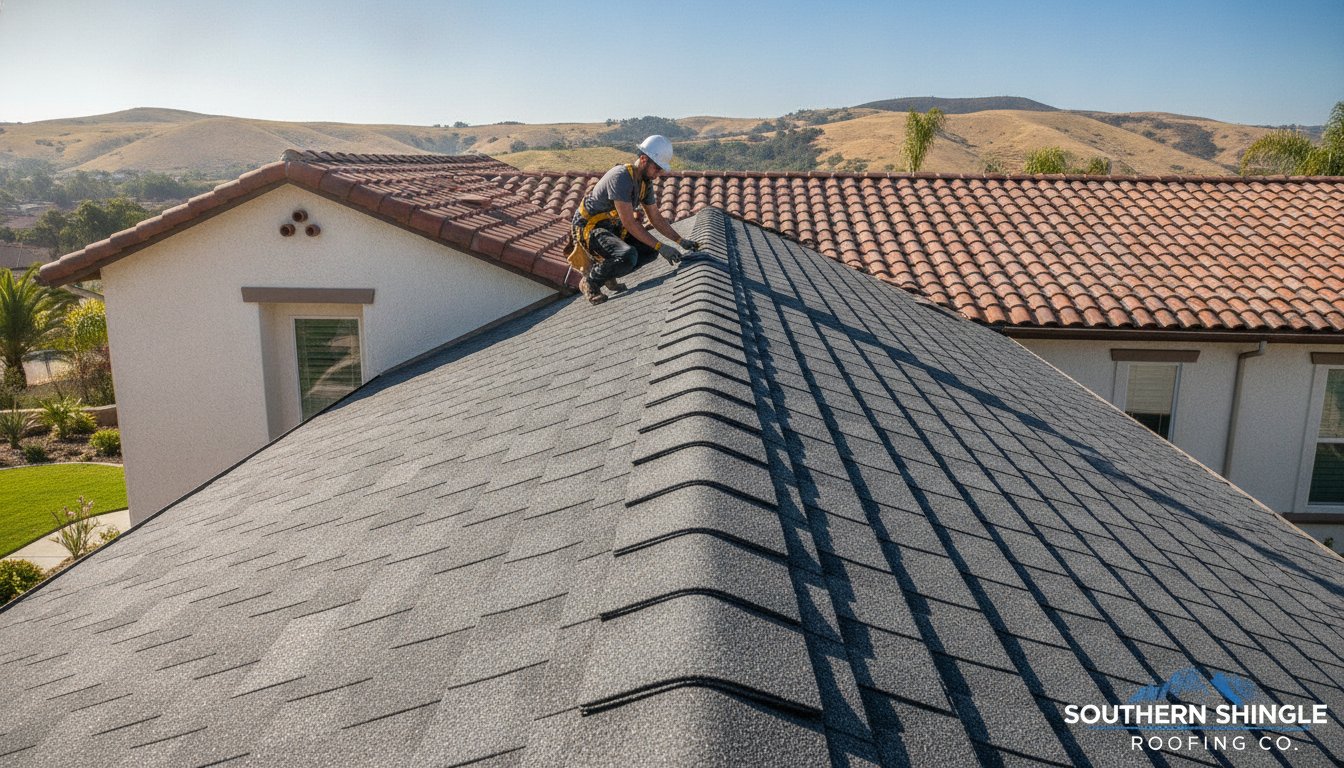
Many homeowners are shocked to learn that a standard roof replacement in our region costs up to 25% more than the national average. When you start researching your roof replacement cost per square foot, it's easy to get lost in generic data that doesn't account for the unique demands of our climate. You're likely feeling the pressure of balancing fire safety with a fair price, especially with the 2026 code updates looming. We agree that transparency is the only way to build trust in this industry.
This guide provides a realistic breakdown of the roof replacement cost per square foot for homes across Lake Elsinore, Riverside, and San Diego Counties. We'll show you exactly how material choices like clay tile or "Cool Roof" shingles impact your long-term investment. You'll also learn how to spot hidden variables, from steep pitch factors to the $335.50 Riverside County permit fee, that often inflate the final roof replacement cost per square foot. By the end, you'll have a clear framework to navigate your project with the quiet confidence of a seasoned professional.
Key Takeaways
- Learn how to translate the industry standard "roofing square" into a realistic roof replacement cost per square foot for your specific property.
- Compare the durability and fire resistance of tile, metal, and composite materials to ensure your investment stands up to the intense Southern California heat.
- Understand how 2026 building code updates and "cool roof" requirements impact labor costs and material selection across Riverside and San Diego Counties.
- Identify hidden cost drivers like roof pitch, attic ventilation needs, and structural repairs that often lie beneath the surface of a basic estimate.
- Discover how specialized roof rejuvenation can serve as a strategic, lower-cost alternative to a full replacement for qualifying homes.
Understanding the "Roofing Square" and Base Replacement Costs
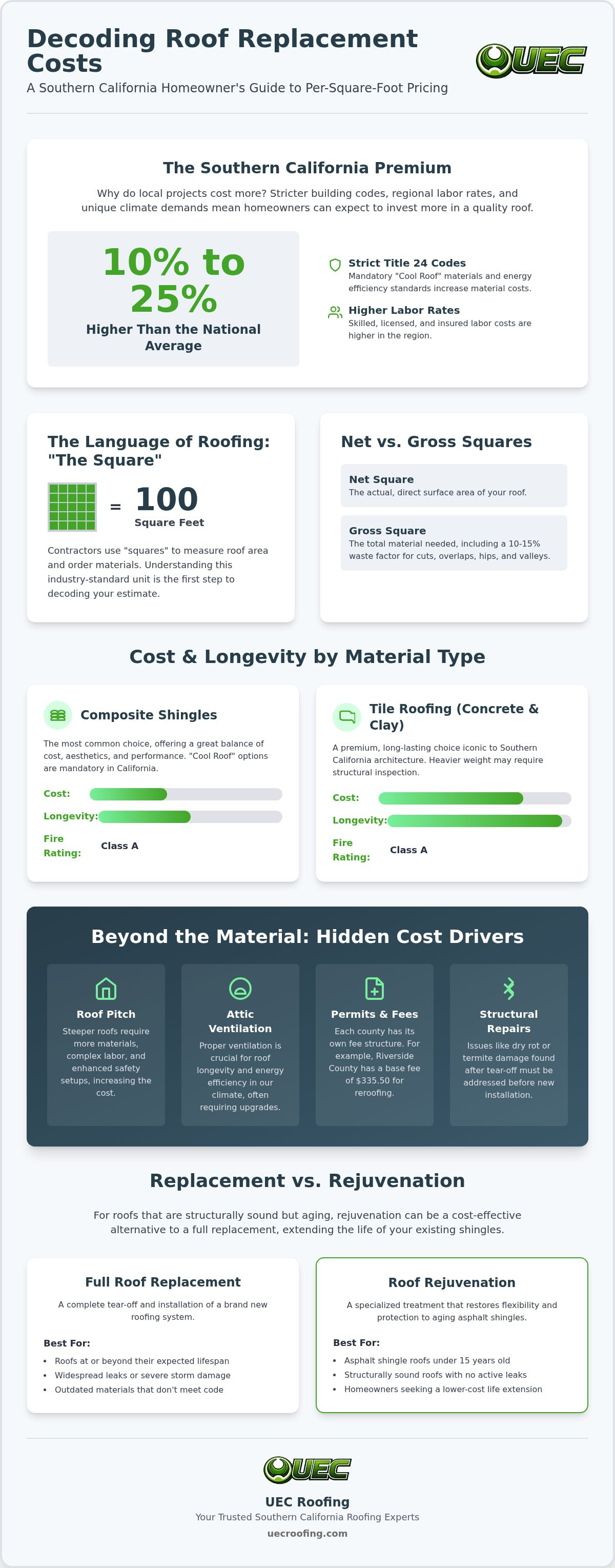
Roofing contractors in Lake Elsinore and the Inland Empire typically speak a different language than homeowners. While you might measure your home in square feet, professionals use a unit called a "square." One roofing square equals exactly 100 square feet of roof surface. Understanding this distinction is the first step toward decoding your estimate. While the "square" is the industry standard for ordering materials, calculating your roof replacement cost per square foot is often a more helpful metric for homeowners. It allows for a direct comparison between initial bids and helps you understand the true scale of your investment.
It is also vital to distinguish between "gross square" and "net square" measurements. The net square represents the actual surface area of your roof. The gross square includes the extra material needed to cover that area, accounting for overlaps and cuts. In Southern California, where complex rooflines are common, the gap between these two numbers can be significant. Local homeowners in San Diego or Orange County often find that regional labor rates and strict Title 24 energy requirements make their base costs 10% to 25% higher than national averages. This reflects the high standards of Domestic roof construction required to withstand our unique climate.
Calculating Your Roof’s Total Square Footage
Estimating your roof size starts with your home's ground-level footprint, but it doesn't end there. You must account for the "pitch factor." A steep roof has significantly more surface area than a flat one covering the same footprint. For example, a home in San Bernardino with a sharp peak will require more materials and labor than a ranch-style home in Riverside. Additionally, a waste factor of 10% to 15% is standard for every roof replacement cost per square foot calculation. This ensures there is enough material to handle hips, valleys, and starter courses without running short mid-project.
What is Included in a Professional Cost-Per-Square Estimate?
A transparent estimate covers more than just the visible top layer. It includes specialized labor, the removal of old materials, and disposal fees. In Riverside County, for instance, a fixed permit fee of $335.50 is a standard starting point for reroofing projects. High-quality underlayment is another non-negotiable cost. In our heat, the underlayment acts as the primary moisture barrier. Skimping here to lower the initial price often leads to expensive repairs later. A professional quote should clearly group these values to show you exactly how your investment protects your property value.
Breaking Down Costs by Material: Shingles, Tile, and Metal
Material choice is the primary driver of your total investment and your roof replacement cost per square foot. In 2026, supply chain shifts have stabilized for shingles but remain volatile for high-end metals and specialty clay. Beyond the sticker price, you must consider the "Weight Factor." Heavier materials like concrete or clay tile often require a structural inspection. This ensures your home's framing can safely support the load. This inspection is a critical step for properties in Lake Elsinore and the Inland Empire where tile is a standard architectural choice.
Composite Shingles: The Most Common Replacement Choice
Modern architectural shingles offer a balanced cost-to-longevity ratio for most homeowners. Many now choose high-definition designer shingles for enhanced curb appeal and superior wind resistance. In Southern California, all new installations must comply with California's Building Energy Efficiency Standards (Title 24). This mandate requires "Cool Roof" shingles designed to reflect solar heat. While these materials might slightly increase the initial roof replacement cost per square foot, they drastically reduce energy bills and provide essential Class A fire resistance.
Tile Roofing: Concrete vs. Clay Costs
Tile roofing is a premium investment for Riverside and San Diego homes. Concrete tile is typically more budget-friendly than clay while still offering excellent durability. Clay tile remains the gold standard for its color longevity and natural thermal properties. Since tiles can last for decades, we often suggest a Lift and Relay Roofing Service. This specialized maintenance allows you to reuse your existing tiles while replacing the underlayment, which is the component that typically degrades over time. It's a strategic way to protect your home without the price tag of a full replacement.
Metal and Flat Roofing Systems
Standing seam metal roofs are a top choice for 2026 due to their extreme fire resistance and 50-year lifespan. For modern architecture or low-slope sections in Orange County, flat roofing systems like Foam or TPO are the standard. These systems require precise installation to manage drainage and prevent ponding. If you aren't sure which material provides the best long-term value, consulting a local roofing contractor will help you determine the right fit for your specific property.
The Hidden Variables: Why Flat "Per-Square" Quotes Can Be Misleading
Homeowners often ask why a final estimate differs from a ballpark figure. A flat roof replacement cost per square foot rarely accounts for the specific geometry of your home. If your property in San Bernardino or Los Angeles has a steep pitch, labor costs rise because crews require specialized safety harnesses and scaffolding. Similarly, multi-story homes in Orange County or difficult site access in the hills of San Diego require more time for material staging and debris removal. These factors are not "upsells" but logistical realities that ensure a safe, professional installation. Every extra hour spent on safety or logistics is an investment in the protection of your family.
Proper attic ventilation is another variable often overlooked in generic quotes. To meet California's Title 24 standards, your roof must breathe to prevent heat buildup. High-performance systems rated by the Cool Roof Rating Council perform best when paired with balanced intake and exhaust vents. Without this, even the best materials will degrade prematurely in the Inland Empire's intense summer sun. We prioritize these systems because they extend the life of your roof and lower your monthly cooling bills.
Decking and Structural Repairs
The most common surprise occurs during the tear-off phase. Once the old materials are removed, we often find dry rot or termite damage in the underlying wood deck. In our region, this is a frequent occurrence due to moisture trapped under old tiles or shingles. Replacing a damaged sheet of plywood is an additional expense that most contractors quote per sheet. Since the structural integrity of your roof depends on a solid deck, these repairs are essential for long-term stability and fire resistance. We provide a transparent breakdown of these costs so you aren't left guessing about your home's foundation.
Flashing, Valleys, and Penetrations
Complex rooflines with multiple dormers, chimneys, or valleys require significantly more detail work. Every penetration is a potential leak point. We never recommend "re-using" old flashing to save on the roof replacement cost per square foot. New, high-quality flashing is a small investment that prevents catastrophic water damage. If you have skylights or solar tubes, these must be integrated into the new system correctly. At our home base in Lake Elsinore, we've seen how cutting corners on these details leads to premature failure. Doing the job right the first time is the only way to protect your property value.
Southern California Specifics: Labor, Codes, and Permits in 2026
National industry guides often suggest a low roof replacement cost per square foot, but these figures rarely reflect the regulatory environment of Southern California. In 2026, labor rates in San Diego and Orange Counties are among the highest in the country. This is driven by the regional cost of living and the high insurance premiums required for licensed crews. Additionally, California's Title 24 energy standards mandate "Cool Roof" materials for most reroofing projects. These codes also prioritize proper attic ventilation to manage heat loads effectively. These requirements add time to the planning and installation phases, ensuring your home meets strict solar reflectance and thermal emittance goals.
Permit fees also vary significantly by location. As of July 22, 2026, Riverside County has a fixed permit fee of $335.50 for a standard reroof. In San Bernardino County, fees are typically calculated based on the total project valuation. These administrative costs are separate from material and labor but are essential for a legal, code-compliant installation. Skipping the permit process can lead to heavy fines and significant issues when you try to sell your home later. We handle these logistics to ensure every project meets local standards.
Local Fire Codes and Wildfire Resilience
If your home is in a Wildland-Urban Interface (WUI) zone, fire safety is a top priority. State law now requires Class A fire-rated roof assemblies in many areas of the Inland Empire to combat the threat of embers. Choosing these materials is about more than just compliance. It's about protecting your family's safety and your home's structure during wildfire season. Many insurance providers now offer discounts for homes with verified fire-resistant roofing. This long-term savings often offsets the higher initial cost of premium materials.
The "Roofer for Life" Philosophy: Quality vs. Cheap Labor
Hiring unlicensed labor might seem like a way to lower your roof replacement cost per square foot, but it carries immense risk. If an injury occurs on your property, you could be held liable for medical costs. Unlicensed work also voids most manufacturer warranties, leaving you unprotected if materials fail. We believe in the "Roofer for Life" philosophy. This means doing the job right the first time with a licensed, insured team based right here in Lake Elsinore. Our track record of over 2,000 successful projects is built on quality workmanship and ethical standards. To ensure your home is protected by local experts, contact our team for a professional assessment.
Replacement vs. Rejuvenation: Maximizing Your Investment
Deciding whether to invest in a new system or maintain an old one is a significant choice for any homeowner. While calculating your total roof replacement cost per square foot is essential for budgeting, you might not need to spend that full amount today. Roof rejuvenation is a scientifically backed strategy designed to restore flexibility to aging shingles. By choosing Roof Rejuvenation vs Replacement, you can often delay a major overhaul for several years. This approach is particularly effective in the dry, intense heat of the Inland Empire, where shingles lose their essential oils faster than in other climates. It's a strategic way to manage your home's maintenance lifecycle without sacrificing protection.
When is a Full Replacement Mandatory?
There are times when a complete replacement is the only responsible path forward. If you notice systemic leaks, brittle materials that crumble to the touch, or visible structural sagging, your home's safety is at risk. California building codes also mandate a full tear-off if your roof already has multiple layers of existing materials. In these scenarios, attempting a repair is often a temporary fix for a permanent problem. While the roof replacement cost per square foot for a full installation represents a larger upfront investment, it provides a clean slate, updated fire resistance, and a full manufacturer warranty. We prioritize honesty in our assessments, ensuring you don't waste money on a roof that has reached the end of its functional life.
The Value of Preventative Maintenance
Prevention is always more cost-effective than an emergency repair. Our specialized Roof Tune-Up Services can extend the life of a qualifying system by five years or more. This methodical process involves securing loose tiles, replacing worn felt, and ensuring all penetrations are sealed against the elements. Simple tasks, like clearing debris from valleys and gutters, prevent water from damming and seeping into your eaves. We recommend scheduling a professional inspection before the Southern California rainy season begins. This proactive step identifies small issues before they become expensive failures, protecting your property value and your family's peace of mind. Our team is here to help you navigate these choices with the quiet confidence of seasoned professionals.
Investing in Your Home’s Long-Term Protection
Navigating the roof replacement cost per square foot in Southern California requires more than just a calculator. It demands an understanding of our unique fire codes, Title 24 energy standards, and the intense heat of the Inland Empire. You now have the framework to distinguish between base estimates and the logistical realities of a professional installation. Whether you choose a high-performance tile system or a strategic rejuvenation, your goal is to safeguard your family's most valuable asset. We treat every project with the respect your investment deserves.
With a brick-and-mortar presence in Lake Elsinore and over 2,000 successful projects across Riverside, Orange, and San Diego Counties, we are your local experts in tile, shingle, and rejuvenation systems. Don't settle for national averages that ignore our specific regional requirements. It's time to work with a team that values craftsmanship and honesty above all else. Protect your Southern California home with a trusted expert. Contact UEC Roofing today for a professional roof replacement estimate. We look forward to being your roofer for life.
Frequently Asked Questions
What is the average cost per square foot for a roof replacement in Southern California?
Your roof replacement cost per square foot typically falls within a wide range depending on whether you choose composite shingles or premium tile. In Southern California, factors like strict building codes and higher labor rates in Orange County and San Diego push these figures above national industry averages. A transparent estimate should always include tear-off, disposal, and the high-quality underlayment necessary to withstand our intense Inland Empire heat and protect your home's foundation.
Does a steeper roof cost more to replace per square foot?
Yes, a steeper roof pitch significantly increases the replacement cost. High-slope roofs require specialized safety equipment, harnesses, and slower staging of materials to ensure crew safety. This increased labor time and the need for additional equipment mean that a home with a sharp peak in Riverside will likely have a higher per-square rate than a ranch-style home with a lower, more accessible profile. Safety is a non-negotiable factor in professional roofing.
Are permits included in a typical roof replacement estimate?
Most professional estimates include the cost of obtaining local permits. In Riverside County, for example, the fixed permit fee for a reroof is $335.50 as of July 2026. However, it's essential to verify this with your contractor during the initial inspection. A reputable professional handles the administrative burden of local building departments in San Bernardino or Los Angeles to ensure your project remains code-compliant, legal, and fully protected by regional regulations.
How much more does a tile roof cost compared to asphalt shingles?
Tile roofing is a premium investment that costs significantly more than architectural shingles. This price gap reflects the extreme durability of concrete or clay and the specialized labor required for installation. Beyond the material itself, your roof replacement cost per square foot for tile often includes a structural inspection to ensure your home can support the weight. While the upfront investment is higher, the long-term ROI and fire resistance are superior for many Southern California homes.
Can I save money by installing a new roof over my old one?
While "roof-overs" were once common, they're generally not recommended and often violate modern California building codes. Installing a new layer over an old one traps heat, adds excessive weight, and prevents the inspection of the underlying wood deck for dry rot or termite damage. In our region, doing the job right requires a full tear-off to ensure your system meets fire resistance and attic ventilation standards. It's the only way to protect your property value.
Does home insurance cover the cost of a roof replacement?
Home insurance typically covers roof replacement only if the damage is caused by a sudden, accidental event like a severe storm or fire. It rarely covers replacements due to age or lack of maintenance. Homeowners in San Diego and Riverside Counties should review their policies for specific exclusions related to wildfire zones. Maintaining a record of professional inspections can help support a claim if unexpected damage occurs, providing a clear history of your roof's condition.
How long does a typical roof replacement take in the Inland Empire?
A standard roof replacement for a single-family home in the Inland Empire usually takes between three and five days. This timeline depends on the complexity of your roofline and the material being installed. Tile systems or projects requiring extensive deck repairs for dry rot may take longer. We prioritize efficient, purposeful communication to ensure your project stays on schedule while maintaining the high craftsmanship standards our Lake Elsinore neighbors expect from a seasoned local expert.
What are the benefits of a "Cool Roof" in Southern California?
A "Cool Roof" uses materials designed to reflect more sunlight and absorb less heat than standard roofing. In Southern California, these systems are often mandatory under Title 24 energy standards. The primary benefits include lower indoor temperatures and reduced monthly cooling costs during our blistering summers. These systems also extend the life of your materials by reducing thermal expansion and contraction, making them a smart investment for long-term property value and overall home comfort.