
Roof Leak Repair in Anaheim: Find the Source and Fix It Right

Could a roof leak be entering several feet from the stain on your ceiling? Water can travel beneath roofing materials before becoming visible indoors, so the mark may not reveal the source or the full extent of the issue. For roof leak repair Anaheim homeowners need, careful diagnosis matters more than guessing from the stain alone.
It’s understandable to worry that a small patch of discoloration signals a bigger problem. Anaheim’s strong sun and heat can wear down roofing materials and sealants, while rain may expose weaknesses that were not obvious during dry weather. This guide covers safe steps to take inside your home, how a roofer traces a leak, and how the roof’s overall condition helps determine whether a targeted repair or broader work makes sense. The goal is a well-matched solution that protects your home without jumping to conclusions.
Key Takeaways
- Note where and when water appears so an assessment can start with useful details.
- A roof inspection considers the roofing material and the location of the indoor leak to help trace likely entry points.
- For roof leak repair Anaheim homeowners can use an inspection-led assessment to understand whether the issue appears localized or needs broader evaluation.
- Visible symptoms alone can’t determine the right repair scope; the roof’s condition helps guide the decision.
- Ongoing roof care can help identify developing issues early and support long-term roof performance.
Roof Leak Repair in Anaheim: Why the Visible Water May Not Reveal the Source
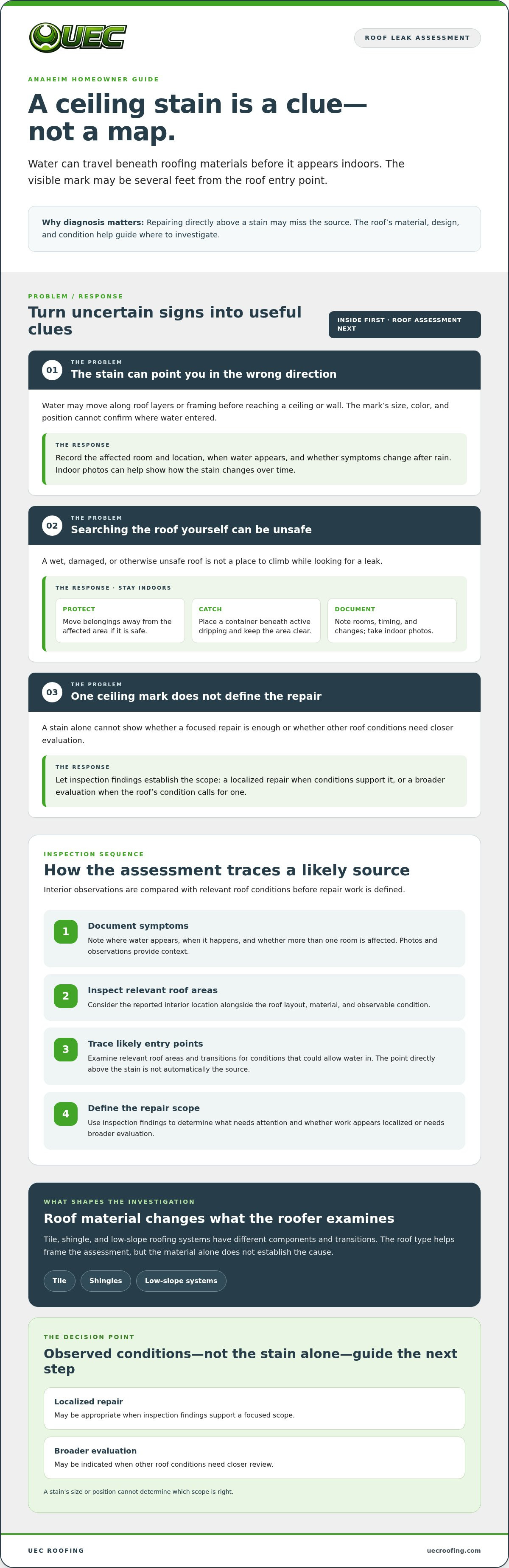
A ceiling stain or drip inside your home is unsettling. You may see water gathering near a light fixture, spreading across a bedroom ceiling, or marking a wall after rain. That first visible sign deserves attention, but it doesn’t necessarily show where water entered the roof. Water can move along roof layers or framing before reaching the interior, so the stain and the source may be in different places.
That distinction matters for roof leak repair Anaheim homeowners can rely on. A repair aimed only at the spot directly above a stain may miss the actual entry point. The roof’s material and design also affect how water travels. Tile, shingles, and low-slope roofing systems have different components and transitions, as outlined in this overview of types of roofs and roofing materials. An assessment should consider those details instead of treating every ceiling mark the same way.
Prompt attention can help limit continued exposure to water and make it easier to understand what needs repair. Southern California roofs also face long periods of sun and heat, which can contribute to material and sealant wear. Rain may reveal a weakness that wasn’t obvious beforehand. That doesn’t mean every stain signals extensive damage. Document what you see and arrange an assessment rather than guessing at the cause.
What a ceiling stain can, and cannot, tell you
A stain confirms that moisture has affected an indoor surface, but its size, color, or position can’t confirm the roof entry point. Water may follow the roof deck or framing before appearing in a room. Note the stain’s location and whether it changes after rain. A photo can help record its appearance over time, but don’t diagnose the roof from the mark alone.
What to do while arranging a roof assessment
Take practical steps indoors while staying off the roof. If it’s safe, move belongings away from the affected area and place a container beneath active dripping. Don’t climb onto a wet, damaged, or otherwise unsafe roof to search for the source. Record when the leak appears, which rooms show signs, and whether the symptoms change. These observations give the roofer useful context for the assessment.
- Protect: Move furniture and valuables away from the water when it’s safe to do so.
- Collect: Use a container to catch drips, and keep the area clear.
- Document: Take indoor photos and note the room, location, and timing of the leak.
These steps won’t identify the roof defect, but they can preserve useful information and reduce avoidable disruption indoors. When ceiling or drywall materials suffer significant moisture intrusion, emergency services such as dropletrestoration.com can help address interior water damage while a roofer compares your observations with the roof’s condition and traces likely entry points before defining the repair scope.
How a Roof Leak Assessment Traces the Problem Before Repair
A sound assessment connects what you’ve observed inside with conditions on the roof. The ceiling stain is a starting clue, not a map to the entry point. In Anaheim and across Southern California, the roof’s material, condition, and details above the affected room all help guide the investigation.
A roof assessment connects interior symptoms with visible roof conditions to identify likely entry points and define a repair scope. The process is methodical: document symptoms, inspect relevant roof areas, trace likely sources, then determine what work the findings support. This helps avoid treating a visible mark as proof of a specific defect.
- Document the symptoms. Note where water appears, when it happens, and whether more than one room is affected. Photos and your observations provide useful context.
- Inspect relevant roof areas. Consider the reported interior location alongside the roof’s layout, material, and observable condition.
- Trace likely entry points. Examine relevant roof areas and transitions for conditions that could allow water in. Don’t assume the point directly above the stain is responsible.
- Define the repair scope. Use inspection findings to establish what needs attention and whether the work appears localized or calls for a broader evaluation.
How roof material informs leak investigation
The inspection approach depends on the roofing material and its condition. A tile roof and a shingle roof have different components, so the areas to examine can differ too. Eagle Roofing tile and Owen’s Corning shingle products are examples of materials used in roofing. Knowing what material is on a home helps frame the assessment, but the material alone doesn’t establish the cause of a leak.
For Anaheim homeowners, describing the roof type and the indoor location of the water gives the roofer useful direction. It doesn’t replace an inspection. General information from the National Roofing Contractors Association can also help explain professional roofing practices, while the roof’s actual condition determines what applies to a particular repair.
From suspected entry point to repair scope
Inspection findings guide the next step. The roofer considers whether visible conditions align with the reported symptoms, then determines what work is appropriate to address the suspected leak. A stain’s size or position alone can’t show whether a focused repair is sufficient or whether other roof conditions need closer evaluation.
This distinction matters for roof leak repair Anaheim homeowners are considering. A clear scope follows observed conditions, not assumptions made from indoors. The assessment may point to a localized repair or indicate that the roof needs a broader review. The recommended repair and expected work should be based on what the inspection reveals.
UEC Roofing’s experienced team provides roof repair and leak repair. Learn about roof leak repair from UEC Roofing.
Roof Leak Repair or a Larger Project? How to Understand the Difference
A leak doesn’t automatically mean the entire roof needs replacement, and a single visible stain doesn’t prove that a small repair will be enough. The right scope depends on what an inspection reveals about the affected area and the roof as a whole.
Repair scope should follow the roof’s observed condition, not assumptions based on one symptom. Use the comparison below as a guide to what an inspection may consider, not as a diagnosis from indoors.
| What an inspection may find | What it may mean for the next step |
|---|---|
| A limited, identifiable area of damage | A focused repair may be appropriate if surrounding materials and components are in suitable condition. |
| A damaged tile or a localized underlayment concern | Tile replacement or felt replacement may be considered as part of the repair scope. |
| Leak symptoms appearing in multiple areas or returning after previous work | Assess the roof more broadly to understand whether the issue extends beyond one repair location. |
| Widespread wear or roof conditions that raise concerns beyond the leak | Evaluate broader options, which may include rejuvenation or roof replacement, based on the roof’s condition. |
When a focused roof repair may be appropriate
If an inspection identifies localized damage and the surrounding roof is also assessed, a targeted repair may be worth considering. UEC Roofing provides roof repair, tile replacement, and felt replacement. These services can address specific components, but an isolated symptom alone can’t establish that broader work won’t be needed.
When the roof may need a broader evaluation
Wider or recurring symptoms are a reason to look beyond the immediate leak area. An assessment of the roof as a whole can help determine whether rejuvenation or replacement is worth considering. Neither option follows automatically from a stain or repeat leak; the roof’s observed condition should guide the discussion.
For homeowners weighing roof leak repair in Anaheim against a larger project, the key is a clear explanation of the findings and how they inform the recommended scope. Ask the roofer to distinguish between the affected area and any wider concerns, so you can understand why a focused repair, rejuvenation, or replacement is being considered.
Safety matters during any roof work. Homeowners shouldn’t climb onto a roof to evaluate damage themselves. OSHA provides information on roofing work and safety, while a professional assessment can examine the roof without asking you to take that risk.
UEC Roofing provides roof repair, rejuvenation, and roof replacement. Learn about UEC Roofing’s roof repair services.
After the Repair: Reduce Repeat Leak Risk with Roof Care
A completed repair addresses the work identified for that leak. Continued roof care serves a different purpose: it can help surface developing concerns before they become more noticeable. For homeowners considering roof leak repair in Anaheim, follow-up attention is part of caring for the roof as a long-term investment, not a promise that future leaks can be prevented.
What homeowners can monitor after roof repair
Keep an eye on the interior areas that showed signs of moisture, especially after weather that brings rain or strong wind. Changes in the old stain, new discoloration, or fresh dampness are useful observations to share with a roofing professional. A mark may take time to dry or remain visible, so note whether it changes rather than assuming its appearance alone proves the repair has failed.
- Watch indoors: Check the previously affected ceiling or wall for new moisture or changes.
- Keep notes: Record when a change appears and whether it follows a weather event.
- Share what you see: Photos and observations can help inform a professional assessment.
Keep this follow-up at ground level. Don’t climb onto the roof to look for a change or inspect the repair yourself. New or recurring signs deserve professional attention, since indoor symptoms alone can’t show what is happening across the roof.
How scheduled roof maintenance supports early attention
A roof tune-up gives homeowners a way to keep roof condition in view beyond a single repair. Maintenance can help identify issues early, supporting informed decisions about roof care and longevity. It doesn’t guarantee that problems won’t develop, but noticing a concern sooner can give homeowners a clearer basis for deciding what attention may be needed.
UEC Roofing provides residential roof tune-ups. The company also offers monthly and yearly commercial maintenance programs designed to identify issues early. The appropriate maintenance approach depends on the roof and property type; no single interval or set of tasks should be assumed for every home. A Southern California roof tune-up guide can also help homeowners understand the role of ongoing care in the region.
For Anaheim homeowners, seasonal check-ins can be a practical reminder to pay attention to changes without assuming a specific weather pattern or schedule. Note visible interior signs, keep records, and arrange a professional assessment if concerns arise. That measured approach supports roof care while avoiding risky do-it-yourself roof access.
UEC Roofing’s roof tune-ups and repairs help homeowners address roof concerns with attention to workmanship and long-term performance. Explore roof repair and tune-up services from UEC Roofing.
Roof Leak Repair in Anaheim with UEC Roofing: A Clear Next Step
For an Anaheim homeowner, the next step is to share what you’ve observed and let an assessment guide the work. UEC Roofing serves homeowners in Riverside County and surrounding communities, including Anaheim, Lake Elsinore, Riverside, and other Inland Empire communities. Local conditions can inform what to look for, but the condition of your roof should determine the repair plan.
What UEC Roofing brings to a roof repair
UEC Roofing provides leak repair, tile replacement, felt replacement, and lift and relay services. Roof tune-ups and maintenance support continued attention to roof condition after immediate repair needs are addressed. The aim is to match the work to the roof, with care for the home and its long-term protection.
A roof is part of your home’s protection and value. Understanding the recommended scope helps you make a considered decision, whether the assessment points to a focused repair or indicates other work should be discussed. The right plan should be based on observed conditions, not assumptions.
Request a roof leak assessment
When reaching out, describe where water appears indoors, when you first noticed it, and whether the affected area has changed. Notes or indoor photos can provide useful context. You don’t need to identify the roof entry point yourself or climb onto the roof to investigate.
Share what you’ve observed with UEC Roofing and discuss an assessment. Contact UEC Roofing about roof leak repair in Anaheim to take a clear, informed next step toward protecting your home.
Take the Next Step Toward a Sounder Roof
A roof is a lasting investment in your home’s protection. Making a considered decision about a leak can help you care for that investment without assuming every symptom calls for the same solution. For roof leak repair Anaheim homeowners can start by moving from uncertainty to a clear understanding of the work their roof needs.
Once you have a professional perspective, you can make decisions with the roof’s condition in mind and plan for its ongoing care. That’s a steadier approach than guessing from an indoor mark or putting off a concern because the right solution isn’t obvious. A reliable roofing partner can help make the next step easier to understand.
UEC Roofing is ready to discuss your roofing concern. Contact UEC Roofing about roof leak repair in Anaheim to take the next step toward a well-cared-for roof. With the right attention, you can move forward with greater confidence in your home’s protection.
Frequently Asked Questions
Is a ceiling stain always caused by a roof leak?
No. A roof leak is one possible cause, but a ceiling stain alone doesn’t establish where moisture came from. Plumbing leaks, condensation, or another building system may also contribute. Note the stain’s location and whether it changes, and take an indoor photo if useful. An assessment can help distinguish possible causes before you decide whether roof work is appropriate. Don’t treat color or shape as a diagnosis.
How soon should I have a suspected roof leak assessed?
Arrange an assessment promptly, especially if water is actively entering or the affected area is changing. For roof leak repair Anaheim homeowners may need, early evaluation can help clarify the source and appropriate scope, though it can’t guarantee that damage will be prevented. If it’s safe, move belongings away from the water and collect drips indoors. Don’t climb onto a wet or damaged roof to investigate.
Can water show up inside far from where a roof is leaking?
Yes. Water can move along roof layers or building components before reaching a visible indoor surface, so the stain may not be directly beneath the entry point. For example, water could follow a sloped surface or framing before appearing elsewhere. That possibility is why stain location alone can’t establish where a roof is letting water in. A professional inspection is needed to assess the specific conditions.
Can a roof leak appear only during certain weather?
Yes. A leak may become noticeable only under conditions that expose a vulnerable area, while remaining unseen at other times. The pattern alone doesn’t identify the cause. Keep a simple record of when water appears, which rooms are affected, and whether the signs change. Intermittent symptoms still warrant assessment, since an inspection can help establish what’s happening and what repair, if any, is appropriate.
Does homeowners insurance cover roof leak repair?
Coverage depends on your policy, the cause of the leak, and your insurer’s terms. A roofer can assess visible roof conditions and describe the repair scope, but that assessment doesn’t determine what your policy covers. Review your policy and contact your insurer with questions about coverage or a claim. Keep relevant records, such as dates, indoor photos, and notes about when you noticed the moisture.
What information should I share when requesting a roof leak assessment?
Describe the room and indoor area where water appears, when you first noticed it, and whether the stain or dampness has changed. Mention whether more than one room is affected and when symptoms tend to occur. You can also share roof concerns visible safely from the ground. Don’t climb up or reach for a closer view. Contact UEC Roofing to discuss an inspection or roof leak repair.