
Replacement Roofing Cost in Southern California: What Shapes Your 2026 Estimate?
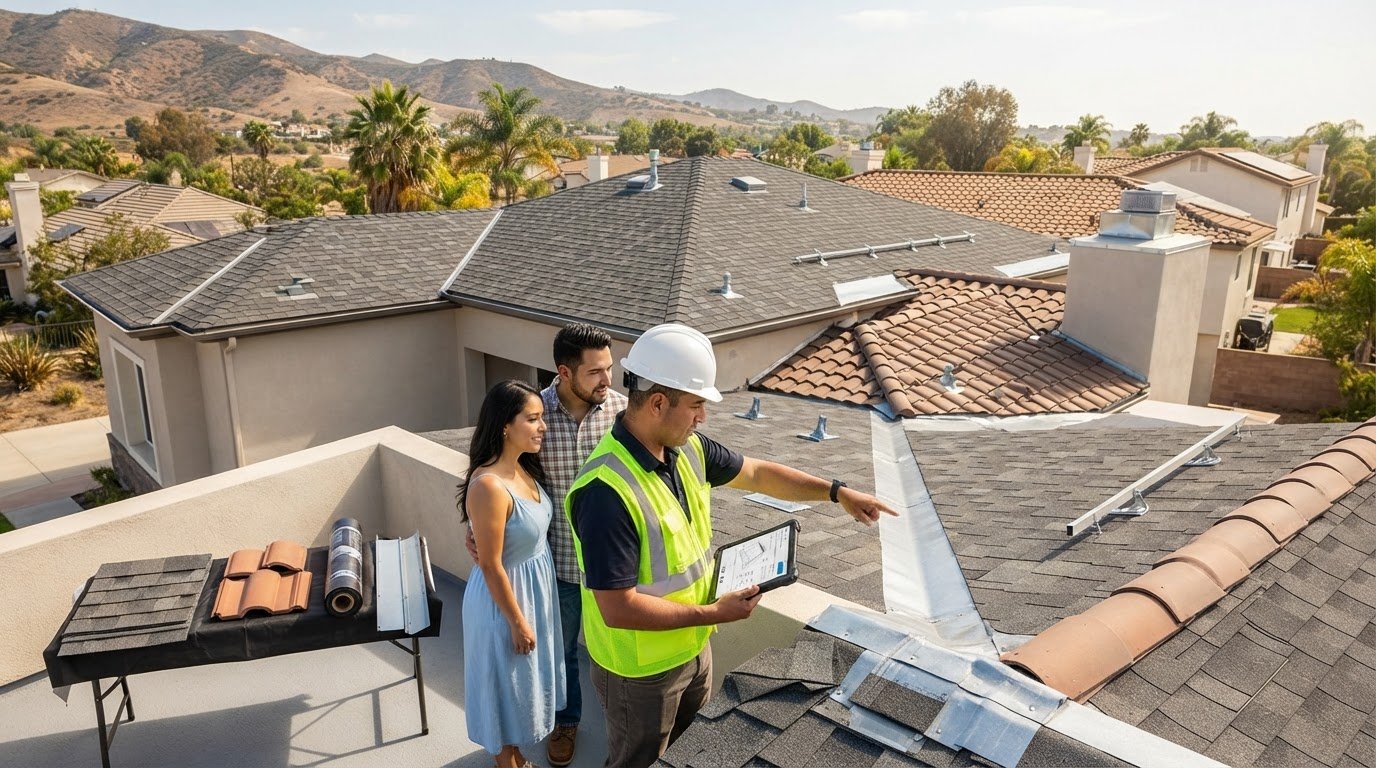
Replacement roofing cost depends on the work your roof actually needs, not a generic price figure. If you’re weighing a full replacement against repair or rejuvenation, a property-specific assessment can help explain the scope and identify visible concerns that may affect the project.
In Southern California, roof design, existing materials, condition, access, and any underlying work all help shape an estimate. Local conditions matter, too. Intense sun, seasonal weather, and fire exposure in some communities are considerations when evaluating a roofing system for a particular home.
This guide explains what can influence an estimate, what an inspection can reveal, and how replacement compares with repair or rejuvenation. It also covers what to prepare and what to look for in a clearly explained scope. UEC Roofing serves homeowners in Menifee, Temecula, Lake Elsinore, Canyon Lake, Corona, Anaheim, Moreno Valley, Winchester, Wildomar, Murrieta, Riverside, Orange, Huntington Beach, Fallbrook, Vista, Escondido, Carlsbad, San Diego, El Cajon, and Poway.
Key Takeaways
- A property-specific replacement roofing cost assessment considers more than roof area, including design, materials, condition, and access.
- Different roofing systems involve different materials and installation scopes.
- Repair, tile lift and relay, rejuvenation, and full replacement address different roof conditions.
- Gather roof history, note current concerns, and share access details to make an assessment more useful.
- A clear estimate should explain the proposed scope, materials, underlying work, and exclusions.
What Shapes Roof Replacement Cost in Southern California?
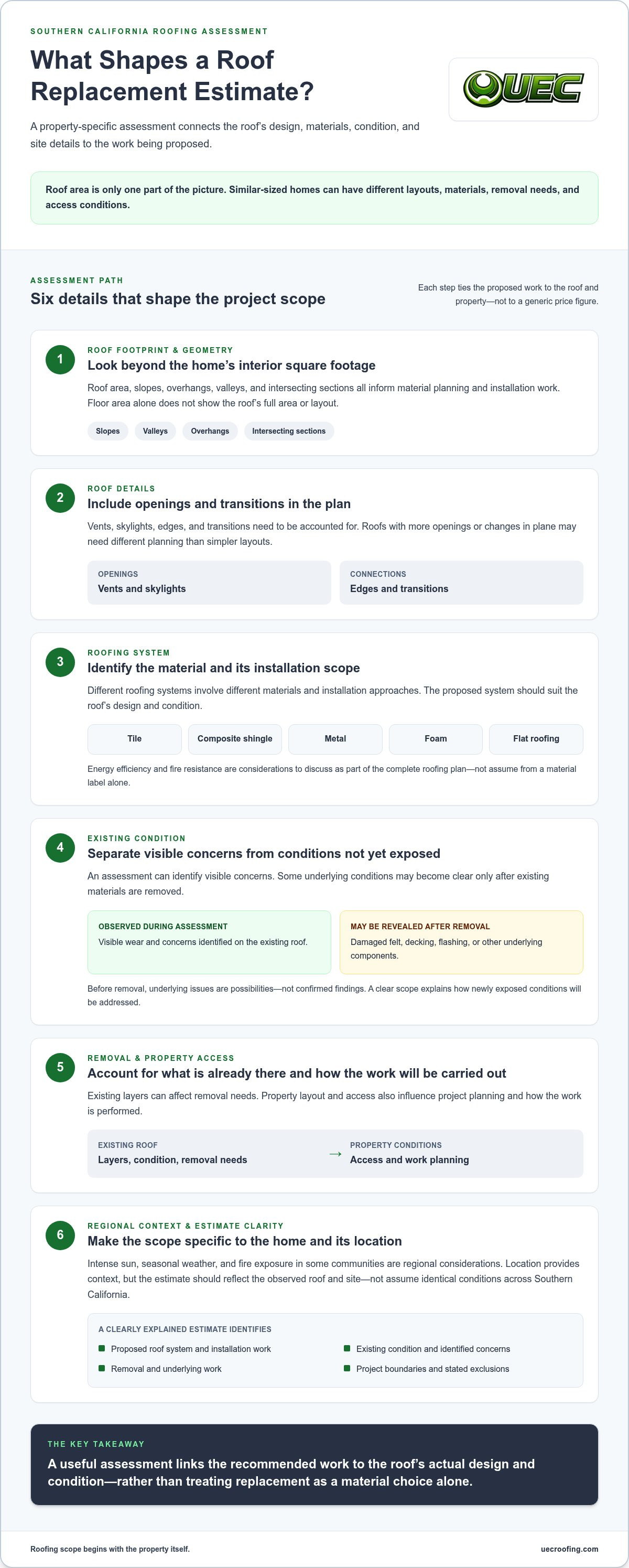
A roof replacement estimate should reflect the work your home needs. It considers roof design, materials, access, and condition rather than applying one figure to every house. A generic price per roof can mislead because homes with similar living areas may differ in roof layout, materials, and removal needs.
Roof area is one part of replacement roofing cost. Slopes, overhangs, existing layers, and openings also affect material planning and project scope. Interior square footage alone does not reveal the roof’s full area or its details.
Why roof size is only one part of the estimate
Valleys, intersecting slopes, vents, and skylights all need to be accounted for in the assessment and project plan. Two homes with similar floor plans can have very different roof layouts. A simpler roof and one with several slopes and openings may require different material planning and installation work, even if the homes look similar from the street.
How Southern California location can shape project planning
Location provides context, but an estimate should be based on the property itself. A home in Lake Elsinore or elsewhere in the Inland Empire may have different site conditions from one in coastal Orange or San Diego County. Roofs also vary from Riverside to other parts of Southern California. The assessment should account for the observed roof and site rather than assume identical conditions across the region.
Material choice is another project-specific consideration. Tile, composite shingle, metal, foam, and flat roofing systems involve different scopes. When exploring types of roofing materials, consider how a system suits the roof’s design and condition, as well as the work needed to install it.
- Roof geometry: Slopes, valleys, and intersecting sections shape planning.
- Roof details: Vents and other openings need to be included in the scope.
- Existing layers and condition: The current roof can affect removal and underlying work.
- Access: Property layout can influence how the work is carried out.
A useful assessment connects the recommended work to the roof’s actual design and condition. That gives homeowners a clearer basis for understanding the proposed project instead of relying on a general price range.
Which Roof and Property Details Change a Replacement Estimate?
A replacement estimate takes shape from several connected factors: the roofing system, the roof’s condition, removal needs, access, and the complete project scope. Considering these together helps distinguish what can be seen before work begins from what may need attention after existing materials are removed. An estimate based on assumptions alone may not reflect the work the home ultimately requires.
Material choice and roof condition need to be assessed together. The selected system affects the planned work, while the existing roof determines what is already in place and what lies beneath it. A material cannot be evaluated in isolation from the roof surface, the details it must meet, and any underlying repairs needed for a sound installation.
How roofing system and roof design affect project scope
Tile, composite shingle, metal, foam, and flat roofing systems each involve different materials and installation approaches. Roof shape adds another consideration: intersecting planes, edges, transitions, and openings all require planning and careful workmanship. Energy efficiency and fire resistance should also be discussed as part of the complete roofing plan, rather than assumed from a material label alone.
Even roofs in the same general material category can require different scopes. A roof with multiple transitions, for example, may call for more detailed planning than a simpler layout. The estimate should describe the proposed system and account for the features and work specific to the property.
What hidden roof conditions may change the work
An inspection can identify visible concerns, but some conditions become clear only when existing materials are removed. Damaged felt, decking, flashing, or other underlying components may affect the work needed to complete the replacement. Before inspection or removal, these are possibilities, not confirmed findings. A clear assessment distinguishes observed issues from assumptions and explains how newly exposed conditions will be addressed within the project scope.
As you review an estimate, look for clarity across these areas:
- Roof system: The proposed material and the installation work it involves.
- Existing condition: Visible wear and underlying concerns identified during assessment.
- Removal needs: Which existing materials are included in the planned work.
- Access and design: Property conditions and roof details that affect planning.
- Project boundaries: Work included in the scope and any stated exclusions.
These details help explain how the recommended work relates to the roof itself, rather than treating replacement roofing cost as a material choice alone. If you’re considering a replacement, a roof replacement assessment can help clarify the scope for your home and evaluate the existing roof’s condition.
Repair, Rejuvenation, or Replacement: Which Scope Fits the Roof?
A full replacement should follow an assessment of the roof’s condition and needs, not an assumption based on age or one visible problem. The right scope depends on whether damage is localized, whether the roof system can be restored or reset, and whether deterioration extends across the roof or into underlying components. These options serve different purposes, so they are not interchangeable shortcuts to the same result.
This distinction matters when comparing replacement roofing cost with the work the roof actually needs. An inspection can help determine whether focused work is suitable or whether broader work is needed for lasting protection. Appearance alone does not reliably establish a roof’s remaining service life.
When repair or tile lift and relay may be worth assessing
Repair may be suitable for a localized issue, such as damage limited to one area. Lift and relay can be assessed when a tile roof needs work beneath or around the tiles and the existing system may be suitable for resetting. Neither approach resolves every roof condition. The assessment should consider the affected area and the overall state of the roof. For more detail, consult UEC Roofing’s “Lift and Relay Roofing Service” guide.
When rejuvenation may fit, and when replacement deserves consideration
Rejuvenation may be appropriate when the existing roof’s condition makes restoration a suitable option. It is not a substitute for repairing underlying problems or replacing a system with widespread deterioration. An inspection can help distinguish a roof that may benefit from rejuvenation from one that needs more extensive work. UEC Roofing’s guide, “Roof Rejuvenation vs Replacement: Making the Right Choice for Your Southern California Home,” explores that decision.
Replacement may be more appropriate when deterioration is widespread or underlying issues are extensive. A new roof addresses the system as a whole, so the quality and completeness of the planned work matter for long-term protection and the home’s value. The recommendation should connect the observed condition to the proposed scope instead of relying on a general rule.
- Repair: Assess for a localized concern that does not require work across the entire roof.
- Tile lift and relay: Consider for a tile system where the tiles may be lifted and reset as part of the required work.
- Rejuvenation: Evaluate when the existing roof’s condition makes restoration suitable.
- Replacement: Consider when broader deterioration or underlying concerns call for a new roofing system.
For Southern California homeowners, the sound decision is grounded in the roof’s actual condition, with clear reasoning for the recommended work. An inspection can help identify which scope is appropriate before you commit to repair, rejuvenation, tile lift and relay, or full replacement.
How to Prepare for a Clear Roof Replacement Estimate
A little preparation makes a roof assessment more useful. You do not need to diagnose the roof yourself or climb up to inspect it. Share what you know about its history and current concerns, then ask for the recommended work to be explained in terms you can understand. This gives you a clearer basis for evaluating replacement roofing cost and the project scope behind it.
- Gather roof history. Note known system details, past repairs, and any records or photos related to previous work.
- Write down concerns. Record leaks, visible damage, and when you first noticed changes. If you know an issue appeared during or after a particular weather event, mention that too.
- Identify access details. Share practical information about reaching the property and roof work areas, such as gates, limited access, or areas that need coordination.
Information to gather before the assessment
Keep your notes factual. Describe where a leak appears inside the home and when it occurs without assuming its exact source. Mention repairs you know about and any changes you have observed. Do not access the roof yourself to look for damage. A professional assessment can examine the roof and relate its condition to the concerns you report.
What a well-explained project scope should cover
A thorough assessment should explain the proposed work and how it relates to the roof’s observed condition. Ask for the planned materials, removal work, repairs, and installation details to be clearly described. The scope should identify exclusions and explain how newly discovered conditions will be discussed and documented. Concealed conditions cannot be confirmed before they are observed.
As part of the conversation, discuss how the home’s needs relate to:
- Attic ventilation: Whether ventilation is part of the roof assessment and proposed scope.
- Energy efficiency: How the selected roofing approach relates to the home’s efficiency goals.
- Fire resistance: Whether fire-related considerations apply to the property and proposed system.
- Underlying work: How repairs to components beneath the visible roofing would be handled if needed.
These topics connect material choices with the home’s broader protection needs. They also clarify which details are included in the proposal and which depend on conditions found during the work. For preventative-care context, UEC Roofing’s Roof Tune-Up Service: The 2026 Southern California Homeowner’s Guide explains how maintenance fits into roof care over time.
For a property-specific assessment, contact UEC Roofing to discuss your roof replacement. Bring your notes and questions so the team can review the roof’s condition and explain a scope suited to your home.
Get a Southern California Roof Replacement Assessment from UEC Roofing
A useful estimate begins with the home itself. UEC Roofing is a local roofing contractor serving homeowners in Menifee, Temecula, Lake Elsinore, Canyon Lake, Corona, Anaheim, Moreno Valley, Winchester, Wildomar, Murrieta, Riverside, Orange, Huntington Beach, Fallbrook, Vista, Escondido, Carlsbad, San Diego, El Cajon, and Poway. A property-specific assessment connects the roof’s condition to the work being considered, helping homeowners understand the scope and discuss practical next steps.
Roofing needs vary across Southern California. Material, design, visible condition, access, and the homeowner’s concerns all inform an evaluation. The aim is a clear assessment, careful workmanship, and a roofing solution suited to the property’s long-term protection.
Local experience grounded in Southern California homes
UEC Roofing works with homeowners on roof replacement, repair, rejuvenation, and tune-ups. Its services also include felt replacement, tile replacement, and lift and relay for tile roofs. Each property deserves an assessment based on its actual condition rather than an assumption that one approach fits every home.
An inspection can help identify whether the next step is focused repair, rejuvenation, or a broader replacement project. It also gives homeowners a chance to discuss roof longevity, attic ventilation, energy efficiency, and fire resistance in relation to their home and the proposed roofing system.
Request an inspection and discuss the right project scope
During an assessment, the roof’s condition and the homeowner’s priorities can be considered together. The discussion should clarify the proposed work, materials, underlying work, and exclusions. That makes it easier to understand what an estimate covers and how replacement roofing cost relates to the project.
UEC Roofing’s “roofer for life” philosophy reflects a long-term approach grounded in honest guidance and quality workmanship. An inspection can help you understand your roof’s condition and consider the next step without pressure.
Contact UEC Roofing to request a roof inspection or discuss a replacement assessment for your Southern California home. Bring any roof history and questions you have, and the team can help you consider the right scope with care and clarity.
Make Your Next Roofing Decision With Confidence
A roofing project is an opportunity to protect your home with a solution suited to its condition and your priorities. Before deciding, consider what matters most for the property over the long term, including reliable protection, energy efficiency, and quality workmanship. A clear assessment can turn uncertainty about replacement roofing cost into a practical discussion about the work your roof needs.
You do not have to rely on a general estimate or guess at the roof’s condition. Start with a professional inspection, bring your questions, and discuss the options that fit your home. UEC Roofing’s approach is built around being your “roofer for life,” with guidance focused on the roof’s needs rather than pressure to choose a particular scope.
Request a roof inspection from UEC Roofing and take a confident next step toward protecting your home.
Frequently Asked Questions
How much does roof replacement cost in Southern California in 2026?
There is no single 2026 figure that reliably describes every Southern California home. Replacement roofing cost depends on the property and the work identified in its assessment. Similar-looking roofs may differ in material, layout, removal needs, and underlying condition. For a useful comparison, review the proposed scope and exclusions rather than relying on a broad online average. A property-specific inspection is the practical starting point.
Does roof size determine the full cost of a roof replacement?
No. Roof area is one factor, but it does not capture all the work involved. A roof with several intersecting planes, skylights, or other details may require different planning from a simpler roof of comparable area. Interior floor area is not a dependable substitute for measuring the roof itself. Look for an estimate based on the roof’s actual surfaces and features, not just the home’s listed square footage.
Can a tile roof be repaired instead of fully replaced?
Yes. A tile roof may be a candidate for repair when a concern is localized, or for lift and relay when the tile system and its condition make that scope appropriate. A small area of tile damage calls for a different assessment than recurring concerns across multiple roof sections. The condition of both the tiles and the components beneath them helps determine whether focused work can address the issue.
Is roof rejuvenation an alternative to roof replacement?
It can be an option for an aging roof when its condition is suitable for rejuvenation. UEC Roofing provides roof rejuvenation designed to revitalize existing roofing materials and delay the need for full replacement. It will not suit every roof or resolve every underlying problem. An inspection can help determine whether rejuvenation fits the system or whether repair or replacement is more appropriate.
Does replacing a roof improve energy efficiency?
It may, depending on the roofing system selected, the quality of installation, and the home’s existing conditions. A new roof alone does not guarantee lower energy use or bills. Discuss how the proposed system relates to your efficiency goals and whether attic ventilation is part of the assessment. For a Southern California home, consider these choices alongside the roof’s overall condition and the protection the system is intended to provide.
How long does a roof replacement take?
The project timeline varies with the roof and the work involved, so there is no reliable duration that applies to every home. Roof design, material, access, removal needs, and conditions uncovered during work can all affect planning. A project-specific discussion should explain the expected sequence and how newly discovered work could affect it. A general timeline is not a commitment for a particular property.
What should a roof replacement estimate include?
A useful estimate should identify the proposed roofing system, removal work, installation scope, and any repairs or underlying work included. It should also state exclusions so you can see what falls outside the described project. Review whether the materials and work are clearly named, and note anything that is unclear. This helps you understand what the proposal covers before deciding how to proceed.
Contact UEC Roofing to request a roof inspection and discuss whether replacement is the right scope for your home.