
Post-Storm Roof Damage Assessment in San Diego: A Homeowner Checklist
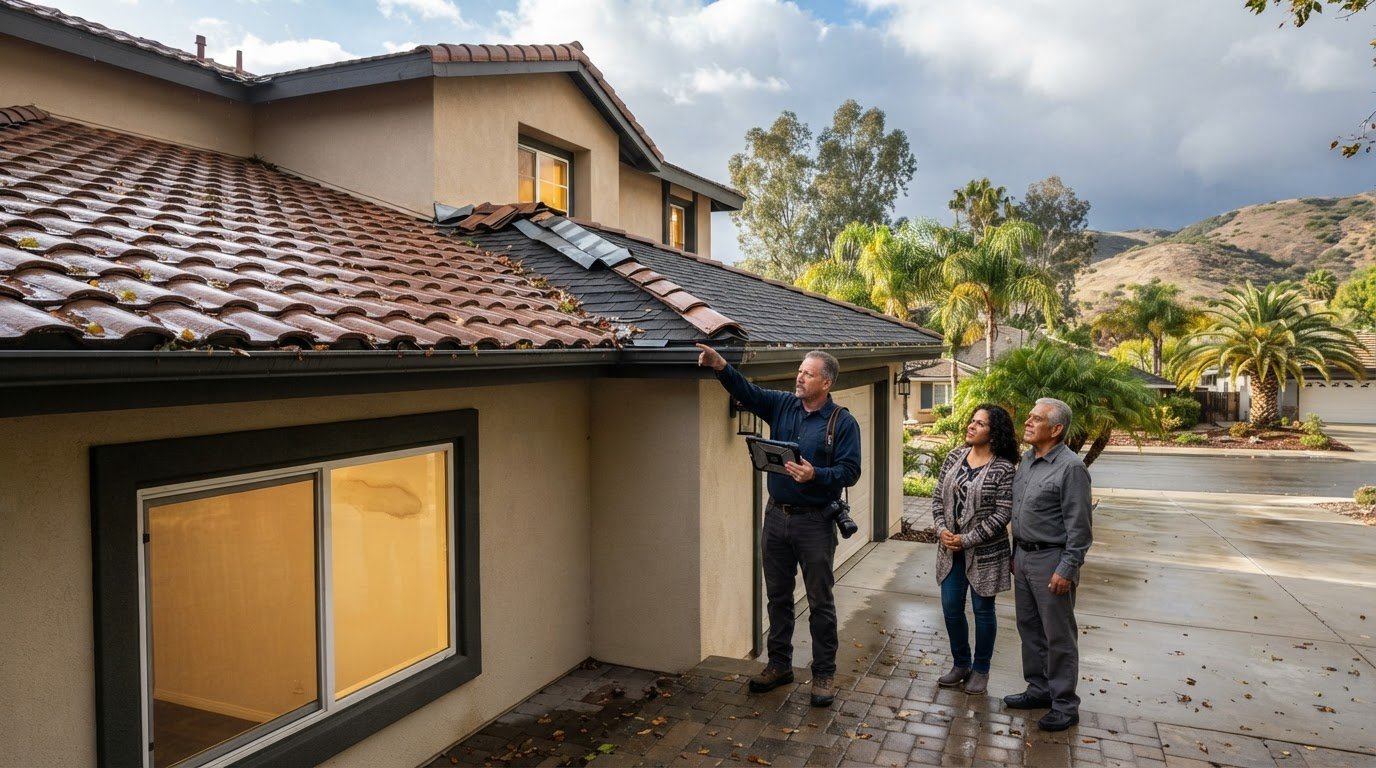
What if a ceiling stain signals a roof problem but doesn’t show where water entered? After a San Diego storm, wind, rain, or falling debris can leave concerns that are difficult to spot from the ground. A post-storm roof damage assessment San Diego homeowners can start safely begins with careful observation, not climbing onto the roof.
Across Southern California, storm conditions can affect homes in San Diego, El Cajon, Poway, Escondido, Vista, Carlsbad, Fallbrook, Huntington Beach, Orange, Anaheim, Corona, Riverside, Moreno Valley, Menifee, Temecula, Lake Elsinore, Canyon Lake, Winchester, Wildomar, and Murrieta. Wherever you are, start by observing safely and recording what you notice. A ceiling mark may not reveal where water entered, and a roof that looks unchanged from the street may still deserve attention.
This checklist will help you identify visible signs of possible damage around your home, document what you observe with useful notes and photos, and recognize when a professional assessment is the right next step. You’ll also learn how roof condition can guide a practical conversation about repair, maintenance, or replacement.
Key Takeaways
- Keep your roof check ground-based. Note visible changes to tiles, shingles, flashing, or drainage without treating them as a diagnosis.
- For a post-storm roof damage assessment San Diego homeowners can prepare for, record when the storm occurred and photograph concerns from a safe vantage point.
- Ceiling marks or damp areas are useful clues to report, but they don’t pinpoint where water entered the roof.
- A professional assessment can connect indoor and outdoor observations with the roof’s overall condition and help identify an appropriate next step.
- UEC Roofing’s licensed, experienced team provides residential repairs, maintenance, and re-roofing based on the roof’s condition.
After a San Diego Storm, Start with a Safe Roof-Damage Check
A ground-level check can help you spot possible storm concerns, but it can’t establish the full condition of your roof. From the yard or another stable location, look for changes that weren’t there before the storm. Don’t climb onto a wet, damaged, or unstable roof. Slippery surfaces, loose materials, and hidden weak spots can make a closer look dangerous.
A careful post-storm roof damage assessment San Diego homeowners begin themselves is a visual check, not a diagnosis. Debris or an apparently exposed area may point to a concern, but a professional assessment is needed to connect what you see with the roof’s overall condition.
What San Diego homeowners can observe safely from the ground
Choose a stable place with a clear view, such as a path or patio away from the house. Scan roof edges, ridges, eaves, and any roof sections visible from the ground. Look for apparent gaps, displaced material, or changes in the roofline. Check the yard and nearby areas for roofing pieces or storm debris, but don’t handle anything that could be sharp, heavy, or unstable.
Binoculars or a phone camera can help you see or record details from a safe position. Keep your feet on firm ground. Don’t lean from a window, climb a ladder, or step onto an awning to improve the view. If an area can’t be seen safely, leave it for a professional.
When a storm-related roof concern needs prompt attention
Active water entering the home, visible interior damage, or an apparent opening in the roof needs professional attention. The urgency depends on what you observe and whether water is still entering. Keep people away from the affected area, and don’t touch loose roofing materials. If downed wires are present, stay well clear and avoid approaching them.
- Note whether water is actively entering or whether you’ve found a new damp area indoors.
- Look from a safe distance for a visibly open roof section or roofing material on the ground.
- Keep children and pets away from debris and any area that may be unstable.
- Share your observations with a roofing professional so the concern can be assessed.
Don’t try to cover an opening by climbing up or moving loose material. If there’s a safe way to limit access to an affected room, do so without approaching electrical hazards or handling damaged building materials. Your visual check can identify concerns, while a professional roof assessment evaluates the roof’s condition and helps determine an appropriate next step. Keep your observations factual, and let the roof’s actual condition guide what happens next.
San Diego Roof Damage Assessment Checklist: Tile, Shingles, Flashing, and Drainage
Use this checklist to organize what you can see from the ground or another stable vantage point. You’re looking for visible changes to report, not trying to determine whether a roof is damaged or how it should be repaired. If a section is hidden by the roof’s shape or an obstruction, mark it as not visible rather than climbing for a better view.
For a useful post-storm roof damage assessment San Diego homeowners can prepare, describe the location and appearance of each concern as clearly as possible. For example, say that a tile near the front-left eave appears shifted rather than concluding that the roof is leaking.
Tile and shingle roof observations after a storm
From a safe viewpoint, look across visible roof sections for tiles that appear shifted, displaced, or absent. On shingle roofs, note areas that appear lifted, missing, or different in appearance from nearby surfaces. Don’t touch materials or try to reposition them. UEC Roofing works with Eagle Roofing tile products and Owen’s Corning shingle products, and can assess the roof material and its condition professionally.
Flashing, roof edges, and drainage features to include
Scan visible areas around vents, roof openings, wall connections, valleys, and edges for changes such as gaps, bent-looking metal, or debris. From the ground, note leaves or other visible obstructions near drainage paths, gutters, or downspouts. Don’t reach up to clear debris or inspect flashing closely. Record the feature and its location so the professional assessment can focus on the relevant area.
Use the checklist below to keep observations organized:
- Tile or shingle surface: Note the roof face and approximate location of any material that appears moved, lifted, or missing.
- Ridges and edges: Record visible changes along the ridge, eaves, and roof perimeter, including any newly exposed areas.
- Flashing and connections: Identify the nearby feature, such as a vent or wall connection, and describe what looks different from the surrounding roof.
- Valleys and drainage: Note visible debris, pooling, or apparent obstruction from a safe vantage point, without attempting to access the roof.
A changed area can make nearby sections worth including in an assessment, because the visible concern needs to be considered alongside the surrounding roof surface and connected features. That doesn’t mean adjacent areas are damaged. It means the full context helps guide an accurate assessment.
UEC Roofing’s roof repair and maintenance services address relevant findings based on the roof’s condition. Keep your notes factual, and leave the diagnosis and repair scope to a professional.
Look Indoors Too: Connecting Ceiling Clues to a San Diego Roof Assessment
A roof concern may first become noticeable inside the home. After rain or wind, check ceilings and upper walls for a new mark, dampness, or visible moisture. These signs are useful to report, but they don’t identify the exact roof opening or prove what caused the mark. Treat them as clues to consider alongside the roof’s condition.
For a clear post-storm roof damage assessment San Diego homeowners can prepare, make a simple room-by-room record. Note where you saw the change and whether it appeared or became more noticeable after the storm. Keep the description objective. “Damp patch near the hallway light” is more useful than guessing that a particular roof tile is leaking.
Interior signs to record after rain or wind
Walk through the home from a safe position and note visible changes on ceilings, upper walls, or other interior surfaces. Don’t touch damp areas, open ceilings, or disturb material that appears damaged. If moisture is near an electrical fixture, don’t touch the fixture or the surrounding wet surface. Keep clear and seek appropriate professional help.
- Room and location: Name the room and describe where the sign appears, such as near a corner, wall, or ceiling fixture.
- What you observe: Record whether it’s a mark, dampness, or visible water. Avoid labeling it as mold or structural damage based on appearance alone.
- Timing: Note whether you first noticed it after the storm, or whether an existing mark seems to have changed.
- Photographs: Take a photo from a safe, dry position. Don’t climb or reach toward a wet fixture to capture a closer image.
These details make the observation easier to discuss and compare with any visible exterior concerns. Keep your notes and images together, and avoid scraping, probing, or opening the affected area to investigate. If indoor dampness lingers or leads to worries about fungal contamination, professional remediators like MouldMen highlight the importance of proper testing and inspection alongside roof repairs.
Why roof and indoor observations need professional context
Water can travel through roof and building materials before it becomes visible indoors. As a result, a ceiling mark may not sit directly beneath the point where water entered. The mark’s appearance alone can’t establish the source, the extent of the concern, or the repair needed.
Share the indoor location and timing alongside any exterior observations, such as a visibly changed roof section or debris nearby. A roofing professional can assess these details together rather than assuming that the closest roof feature is the source. This context helps direct attention to relevant parts of the roof without turning a homeowner’s observation into a diagnosis.
If you observe active water intrusion, UEC Roofing provides leak repair. A professional assessment can help determine how the roof condition relates to the interior signs and what action is appropriate. Keep people away from affected areas if materials appear unstable, and don’t disturb the ceiling or other damaged surfaces while recording what you see.

Document Storm Findings and Decide What to Prioritize
A clear record helps a roofing professional understand what you noticed and when. It can also give you an organized reference if you discuss the damage with your insurer. Keep observations separate from conclusions: describe what you saw, but don’t assume the storm caused it or decide the repair scope before the roof is assessed.
A practical sequence for documenting roof concerns
Follow these steps from a safe location. Don’t climb onto the roof, move loose materials, or enter an area that appears unstable to gather information.
- Note the storm context. Record when the storm occurred and when you first noticed the concern. If you’re unsure of the exact timing, say so rather than guessing.
- Describe what you observed. Identify the property area and the visible condition. For example, note “debris beside the back eave” or “damp mark on the bedroom ceiling,” rather than stating that a specific roof part failed.
- Photograph safely. Take photos from stable, dry locations. Capture the general area and, if you can do so safely, a closer view. Don’t climb, reach over an edge, or touch damaged materials to get a better image.
- Keep records together. Store notes and photos in one place, then add any professional assessment or repair documents for future reference.
- Arrange an assessment. Share the record with a roofing professional so visible and interior concerns can be considered in context.
Useful storm documentation records when a concern appeared, where it is, and what you can safely see, without assuming its cause or promising an insurance outcome.
If water intrusion is part of your observations, expert roof leak repair in Riverside offers related context on addressing roof leaks. Insurance decisions depend on the terms of your individual policy and the information available to your insurer. Photos and notes can help preserve your observations, but they don’t guarantee coverage or a particular result.
How assessment findings help frame repair decisions
A professional assessment connects the observed condition with the roof material and the areas affected. The discussion may focus on a localized repair, broader maintenance, or questions about the roof as a whole. A visible change in one spot doesn’t determine the repair scope by itself, and it doesn’t automatically mean a full re-roof is needed.
If the assessment raises broader questions about the roof’s condition, replacement planning may become part of the conversation. Otherwise, the next step may be more focused. The goal is to understand the roof before deciding what work is appropriate.
For a post-storm roof damage assessment San Diego homeowners can act on, bring your notes and photographs to the conversation and keep the findings factual. To discuss roof repair or arrange an assessment with UEC Roofing, contact the roofing team.
From San Diego Storm Assessment to the Right Roofing Next Step
A professional assessment brings the pieces together: visible roof changes, interior signs, roof material, and the condition of affected areas. That fuller picture helps clarify whether the appropriate conversation is about a focused repair, maintenance, or a broader roofing project. A storm concern alone doesn’t determine the scope of work.
How roof findings can shape a repair or maintenance plan
If an assessment identifies a leak or localized concern, UEC Roofing’s roof repair and leak-repair services can address the issue. Maintenance can respond to the roof’s observed condition and help identify areas that need attention. The right approach depends on the findings, not on an assumption that every storm requires the same work.
A full re-roof may enter the discussion if the assessment points to broader concerns across the roof. It isn’t an automatic response to storm damage. Roof material matters too: UEC Roofing works with Eagle Roofing tile and Owen’s Corning shingles, which can help frame a discussion around the existing system and its condition.
For homeowners considering a broader project, residential roofing guidance can help put the planning conversation in context. The goal is to understand the work being considered and why it fits the assessment findings.
Take the next step with UEC Roofing
UEC Roofing provides residential repairs, maintenance, and re-roofing. Its licensed and experienced team can assess the roof and discuss a suitable path forward. An assessment is a way to understand what your roof needs, not a commitment to replacement.
Bring your notes and any safely taken photos to the conversation. If the findings raise questions about a larger project, roof replacement planning in Southern California may help you consider the broader decision alongside the roof’s condition.
A post-storm roof damage assessment San Diego homeowners arrange should lead to clear information, not pressure to make an unsupported decision. Contact UEC Roofing to discuss your roof’s condition and the next step for your home.
Contact UEC Roofing about a roof assessment.
Give Your Roof a Clear Path Forward
After a storm, uncertainty can linger even when the weather has passed. A measured next step can replace guesswork with a clearer understanding of your roof’s condition. Your notes and photos provide a useful starting point, while a professional assessment helps put those observations in context and determine whether further action is appropriate.
A post-storm roof damage assessment San Diego homeowners arrange isn’t a commitment to a particular repair or replacement. It’s a practical way to make informed decisions about protecting your home and planning for the roof’s long-term care.
When you’re ready to discuss what you’ve observed, reach out to UEC Roofing about your roof assessment. Share your concerns and take the next step with clear information and a steady plan for your home.
Frequently Asked Questions
Can a roof have storm damage even if there is no leak inside?
Yes. A shifted tile, missing shingle, or visible change near flashing may deserve assessment even if ceilings look normal. A ground-level view can’t show the whole roof, so note visible changes and arrange a professional review if you’re concerned.
How soon should I arrange a post-storm roof assessment in San Diego?
Timing depends on what you observe. Active water entry, an apparent opening, or displaced roofing material calls for prompt attention. Don’t climb onto the roof or disturb damaged areas. Other concerns can be documented and reviewed professionally.
What should I do if water starts coming through the ceiling after a storm?
Keep people away, especially if water is near an electrical fixture. Don’t touch wet fixtures or climb onto the roof. Note the affected room from a safe position, then seek professional help. The ceiling location may not match the roof entry point.
Does homeowners insurance cover roof damage after a storm?
Coverage depends on your policy, the documented circumstances, and your insurer’s review. Keep factual notes and safe photographs, then direct coverage questions to your insurance provider. A roofing assessment can describe observed conditions but can’t determine coverage.
Does every storm-damaged roof need to be replaced?
No. The next step depends on the roof’s condition, affected areas, and material. Some findings may lead to a repair discussion; broader concerns may prompt consideration of replacement. An assessment helps establish the roof’s condition before you decide on scope.
Can I inspect my roof myself after a storm?
You can observe visible changes from the ground, but don’t climb onto a roof that may be wet or damaged. A ground-level check can’t establish the full condition. Record what you can see safely and leave close inspection to a roofing professional.
What information should I have ready when requesting a roof assessment?
Share the property location, what you noticed, when you noticed it, and whether water is entering. Notes about affected rooms and safely taken photos can help explain the concern. Don’t climb or move materials to gather more evidence.