
New Roof Quote: A Homeowner’s Guide to Southern California Roofing Costs (2026)

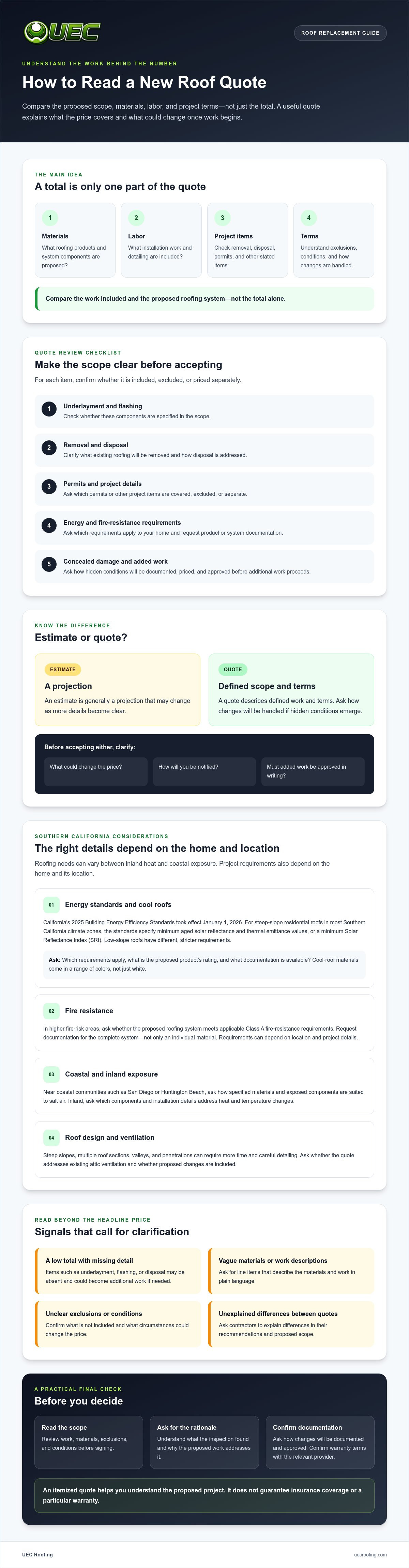
When you compare a new roof quote, the lowest total may not include work your home needs. A useful estimate explains the proposed materials, labor, removal, and other project details, so you can understand what the price covers and what could change once work begins.
Before committing, ask contractors to explain any differences in their recommendations. This guide shows you how to review a roof replacement estimate, compare the scope of work, and clarify important details about materials, permits, energy standards, and warranties.
Roofing needs can vary from inland heat to coastal exposure, and requirements depend on your home and project location. UEC Roofing provides leak repair, roof tune-ups, felt replacement, tile replacement, lift and relay services, roof rejuvenation, and new roof installations. The company serves homeowners in Menifee, Temecula, Lake Elsinore, Canyon Lake, Corona, Anaheim, Moreno Valley, Winchester, Wildomar, Murrieta, Riverside, Orange, Huntington Beach, Fallbrook, Vista, Escondido, Carlsbad, San Diego, El Cajon, and Poway.
Key Takeaways
- Use a new roof quote to understand the proposed scope, materials, labor, and items that could affect the final estimate.
- Ask how applicable energy-efficiency and fire-resistance requirements affect the roofing materials proposed for your home.
- Check whether underlayment, flashing, permits, removal, and disposal are included, excluded, or priced separately.
- Compare quotes by the work included and the proposed roofing system, not by the total alone.
- Ask how the contractor will document and price concealed damage if it is discovered during the project.
What is a New Roof Quote and Why is Accuracy Critical?
A roof quote is a written description of the proposed work, materials, labor, and other stated project items. Its terms may form a binding agreement once accepted, so read the scope, exclusions, and conditions before signing. A useful quote explains what the contractor plans to do, rather than giving only a roof measurement and a total.
Satellite measurements can help estimate roof area, but they cannot reveal every condition beneath the visible surface. A roof’s framing, covering, and supporting components work together, as outlined in Domestic roof construction. An on-site assessment can help identify visible concerns, such as water damage or deteriorated materials, that may affect the proposed work. Ask how concealed damage will be handled if the estimate does not explain it.
The Difference Between an Estimate and a Quote
An estimate is generally a projection that may change as more details become clear. A quote describes a defined scope and terms, but you should still ask how changes will be handled if hidden conditions emerge. Before accepting either, confirm what could change the price, how you will be notified, and whether you must approve additional work in writing.
Why Professional Quoting Protects Your Investment
A low figure may leave out necessary items such as underlayment, flashing, or disposal. If those items are needed but absent from the scope, they may become additional work and cost after the job starts. Ask the contractor to identify what is included and excluded, and to explain how changes will be documented and approved.
An itemized new roof quote also gives you a record to review when discussing project documentation with your insurer or checking warranty terms. It does not guarantee insurance coverage or a particular warranty, so confirm requirements directly with the relevant provider. Look for line items that describe the materials and work in plain language, and ask for clarification if the scope is vague.
UEC Roofing offers new roof installations as well as roof maintenance and repair. If you are comparing a replacement with work on an existing roof, ask what the inspection found and why the proposed scope addresses those conditions. The goal is to understand the work before deciding, rather than choosing based on the initial figure alone.
Key Factors Influencing Roofing Estimates in Southern California
A new roof quote should reflect more than roof size and material. Energy standards, fire exposure, roof design, and local weather can all affect which system is appropriate and how much installation work is involved. Conditions can differ between inland communities such as Riverside and Corona and coastal locations such as San Diego or Huntington Beach.
Energy Efficiency and Cool Roof Requirements
California’s 2025 Building Energy Efficiency Standards took effect January 1, 2026. For steep-slope residential roofs in most Southern California climate zones, the standards specify minimum aged solar reflectance and thermal emittance values, or a minimum Solar Reflectance Index (SRI). Low-slope roofs have different, stricter requirements. Ask the contractor which requirements apply to your project and request the proposed product’s rating and documentation. Cool-roof materials are available in a range of colors, not just white.
Reflective roofing can help reduce heat entering a home, but actual utility savings depend on the building and how it is used. Attic ventilation is another part of the performance picture. Ask whether the quote addresses existing ventilation and whether any proposed changes are included in the scope. This is particularly useful when comparing recommendations for homes in hot inland areas such as Riverside and Corona.
If you are weighing work on an existing roof against replacement, review roof rejuvenation vs. replacement as part of your planning.
Regional Weather, Fire Risk, and Roof Design
In higher fire-risk areas, ask whether the proposed roofing system meets applicable Class A fire-resistance requirements. Request documentation for the complete system, not just an individual material. Requirements can depend on location and project details, so confirm what applies to your home and permit jurisdiction.
Coastal exposure also deserves attention. If your home is near San Diego or Huntington Beach, ask how the specified materials and exposed components are suited to salt air. Inland, roofing materials experience heat and temperature changes. Ask which components and installation details address the expansion and contraction of materials.
Roof pitch and architectural complexity affect labor. Steeper slopes, multiple roof sections, valleys, and penetrations can require more time and careful detailing than a simple roofline. Ask the contractor to show how the features of your roof are reflected in the proposed scope and estimate.
The Anatomy of a Professional Roofing Quote
A detailed quote should make clear what will be installed, what work is included, and which costs are separate. Look beyond the visible covering. Underlayment, flashing around roof penetrations and transitions, removal, disposal, and permit-related items can all affect the completed project. If a line item is unclear, ask what it covers before approving the work.
Materials: More Than Just Shingles or Tiles
The material list should identify the proposed roof covering and supporting components, including felt or underlayment and flashing. Ask why the specified materials are suitable for your roof design and local conditions, and confirm that the quote describes the products clearly enough for you to compare with other proposals.
For some tile roofs, replacement may not be the only option to discuss. UEC Roofing offers Tile Roof Lift and Relay, which involves lifting and relaying existing tiles as part of the roofing work. The company also offers roof rejuvenation for homeowners considering options for an aging roof. Ask which approach is appropriate for your roof and which components the proposed scope includes. The Lift and Relay roofing guide offers more background on this option.
Labor, Project Costs, and Warranty Terms
Ask the contractor to describe the installation work and identify who will perform it. The quote should state whether permits, tear-off, and disposal are included or listed separately. Do not assume these items are covered by a single project total. Request documentation of the contractor’s license and insurance, including workers’ compensation coverage, and verify the details with the relevant source.
Distinguish between a manufacturer’s product warranty and any workmanship coverage offered by the contractor. They are not the same. Read the terms, exclusions, duration, and claim process, and ask how installation requirements affect product coverage. A clear new roof quote makes these responsibilities easier to understand before work begins.
How to Compare Quotes and Spot Red Flags
A low total can look appealing, but it may not represent the full cost of completing the work. If a quote leaves out necessary items, you may face additional charges or end up with a roof that does not address underlying problems. Compare scope, materials, exclusions, and warranty terms side by side, then ask each contractor to explain differences in writing.
Evaluate the Scope of Work
Check whether the proposal specifies a full tear-off or an overlay, sometimes called a nail-over, and ask how the contractor determined that approach is suitable. Look for clear information about disposal, permits, flashing, and any identified deck or dry rot repairs. The quote should also state whether attic ventilation is included, excluded, or left unchanged. For more guidance on selecting a professional, see choosing a residential roofing contractor.
Be cautious if essential work is described vaguely, excluded without explanation, or deferred until installation begins. Ask how concealed damage will be documented, priced, and approved before additional work proceeds. That way, you know what could change and how the contractor will discuss it with you.
Check Credentials and Local Reputation
Verify a contractor’s license status and classification through the California Contractors State License Board. Request current proof of insurance, including workers’ compensation coverage, and confirm the documents independently before signing.
After storms or other periods of high demand, homeowners may receive unsolicited offers from contractors they do not know. Take time to check the company’s local presence, written agreement, and references. Ask for examples of completed projects in your area, and ask references about communication, scope changes, and cleanup. Regardless of a contractor’s local presence, review the written terms carefully.
Request a line-item cost breakdown, not just a total. You can also review a roof replacement cost breakdown to understand what categories a professional proposal may address. Your project scope will depend on your home’s condition and location, so use other estimates as a comparison rather than assuming they describe the same work.
UEC Roofing offers roof inspections, leak repair, roof tune-ups, and replacement services. For an inspection and a clear discussion of your roof’s needs, contact the UEC Roofing team.
The UEC Roofing Quote Process: Precision and Integrity
A useful quote starts with understanding the roof, not just measuring its outline from a distance. Satellite imagery can estimate dimensions, but it cannot show every visible or concealed condition. An in-person review gives you and the contractor an opportunity to discuss the roof’s condition, proposed scope, and questions before the proposal is finalized.
When reviewing a proposal from UEC Roofing, ask for a clear explanation of the work, exclusions, and next steps. If concealed damage is discovered later, confirm how the condition and any change to the scope will be documented and approved.
What to Expect During Your Inspection
Ask what the inspection will cover. Depending on access and project conditions, discuss whether the contractor will assess the roof surface, attic, ventilation, flashing, and signs of leaks or deterioration. A satellite estimate alone cannot confirm these details. The findings should inform the proposed materials and work, rather than leaving important questions unresolved.
Material recommendations should account for your home’s design, budget, and local conditions. Ask whether applicable energy-efficiency or fire-resistance requirements affect the proposed system, and request an explanation of how the recommendation addresses them. For an example involving leak repair, review UEC Roofing’s Riverside roof leak repair case study.
Finalizing Your Quote and Next Steps
Before accepting a new roof quote, read the scope, exclusions, payment terms, warranty information, and any stated schedule. Ask the contractor to clarify the expected project start and completion timing. Schedules can depend on project details and other factors. Do not assume financing or particular payment options are available. Confirm the terms directly and get any agreed details in writing.
UEC Roofing offers roof inspections and replacement, along with repair and maintenance services. Contact the team to discuss your roof’s condition and request a proposal based on your home’s needs.
Choose a Quote That Protects Your Home for the Long Term
A sound roofing decision starts with a clear scope, an on-site assessment, and materials suited to your home’s design and local conditions. Review each proposal for the work included, applicable energy-efficiency and fire-resistance considerations, and items that could affect the project if hidden damage is found. The right new roof quote should help you understand the plan and identify questions that need answers before you commit.
UEC Roofing serves homeowners in Menifee, Temecula, Lake Elsinore, Canyon Lake, Corona, Anaheim, Moreno Valley, Winchester, Wildomar, Murrieta, Riverside, Orange, Huntington Beach, Fallbrook, Vista, Escondido, Carlsbad, San Diego, El Cajon, and Poway. Its services include leak repair, roof tune-ups, felt and tile replacement, lift and relay, roof rejuvenation, and new roof installations.
Ready to discuss your roof’s condition and the work it may need? Request a new roof quote from UEC Roofing and ask for a proposal that clearly explains the scope, materials, and project terms.
Frequently Asked Questions
How long is a roofing quote typically valid in Southern California?
There is no universal validity period, so check the expiration date and terms stated on the quote. Material availability, project scope, or other conditions may change, but do not assume a proposal can be revised without notice. Before approving it, ask the contractor to confirm in writing how long the quoted terms remain valid and whether any changes require an updated proposal.
Does a new roof quote include the cost of building permits?
It depends on the contractor’s scope and the project’s jurisdiction. Check whether permit-related costs are included, listed separately, or excluded, and ask who will handle the permit process. Requirements and fees can differ between cities and counties in Southern California. A clear new roof quote should explain what it covers rather than leaving you to infer whether permits are part of the total.
Why do quotes for the same house vary so much between contractors?
Quotes can differ because contractors may recommend different materials, work scopes, or approaches to existing roof conditions. One proposal may include tear-off, underlayment, flashing, disposal, and permit items, while another leaves some out or treats them as potential additions. Compare itemized scopes and exclusions, not just totals. Ask each contractor to explain differences and document any revised terms before you decide.
What is the difference between a nail-over and a full roof tear-off in a quote?
A nail-over installs a new roof covering over existing roofing, while a full tear-off removes the existing covering before the new system is installed. The proposed approach can affect what the contractor can inspect and include in the scope. Ask how many existing layers are present, why the method is appropriate, and how concealed damage will be handled if uncovered during the work.
Are energy-efficient cool roofs more expensive to quote?
Not automatically. The estimate depends on the specific roofing material, its rating, roof design, and installation scope. In California, applicable energy-efficiency standards can affect material selection, so ask the contractor to identify the proposed product and explain how it meets requirements for your roof type and location. A cool roof can come in different colors, so do not assume compliance requires a white roof.
How do I know if I need a new roof quote or just a roof tune-up?
An inspection can help determine whether your roof needs replacement or whether a roof tune-up may address its condition. The right recommendation depends on the roof’s materials, age, visible wear, and any signs of leaks or damage. Ask the contractor to explain the observed issues and the reasoning behind the proposed work. Learn more about UEC Roofing’s roof tune-up service.
What specific certifications should I look for on a professional quote?
Rather than relying on a certification label alone, ask for the contractor’s California license information and verify the classification and status through the Contractors State License Board. Request current insurance documentation, too. If the quote names a roofing product or system, ask whether the manufacturer has installation or eligibility requirements that apply to its warranty. Confirm those details directly instead of assuming every credential applies to every project.
Can I get a new roof quote based only on satellite photos?
Satellite photos can help estimate roof dimensions, but they cannot reveal every condition of the roof or what may be concealed beneath its surface. Treat a photo-based figure as preliminary unless the contractor explains its limits and confirms the scope through an in-person assessment. For homeowners in Menifee, Temecula, Lake Elsinore, Canyon Lake, Corona, Anaheim, Moreno Valley, Winchester, Wildomar, Murrieta, Riverside, Orange, Huntington Beach, Fallbrook, Vista, Escondido, Carlsbad, San Diego, El Cajon, and Poway, an inspection can clarify visible concerns and help shape a more complete proposal.