
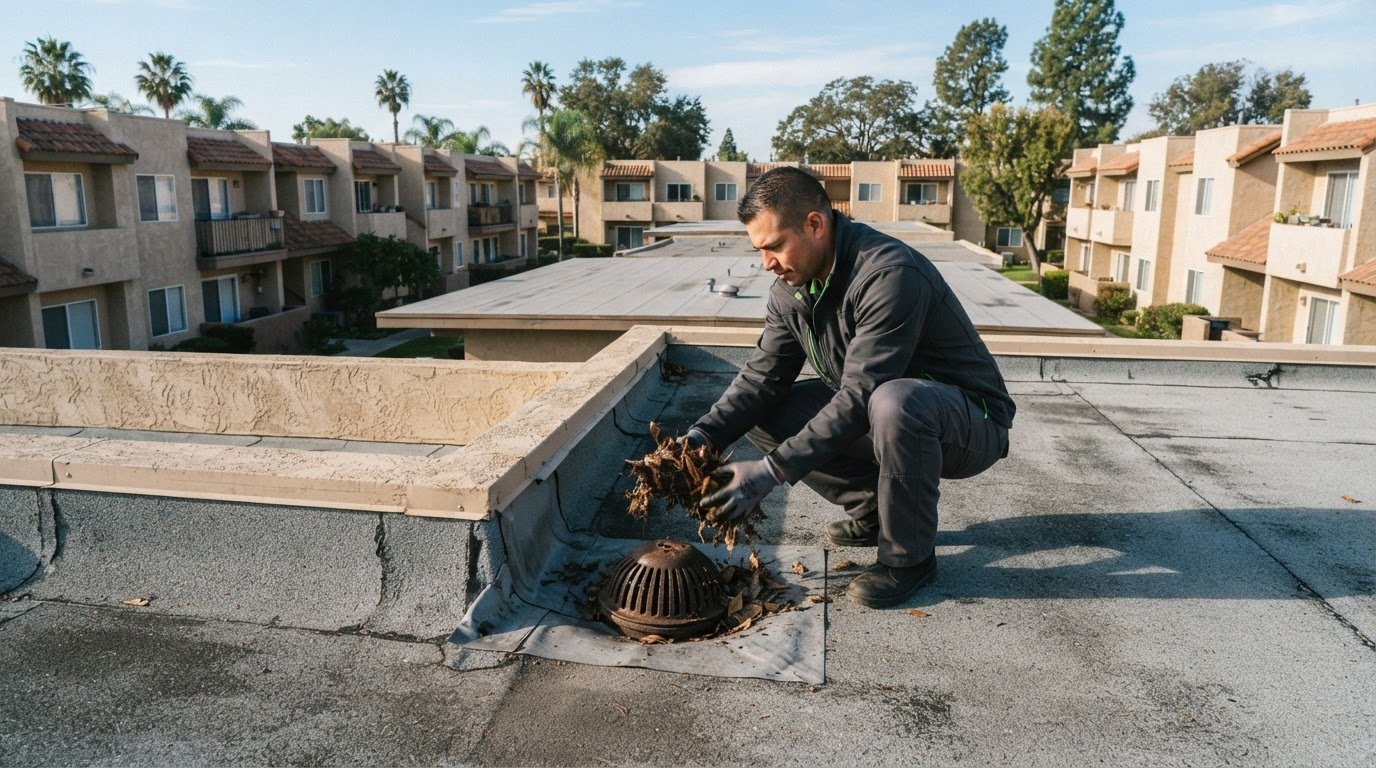
For multi-unit roof maintenance in Anaheim, estimates depend on the property, roof condition, access, and required work. UEC Roofing prepares pricing based on the project scope after a quote request.
HOAs and property managers need clear records to plan roof care and coordinate decisions. This guide explains the factors that shape estimates, permit planning, warranties, inspections, and maintenance schedules.
It also covers how to address leak concerns and ongoing care for shared roofs, so you can plan practical next steps for your property.
Key Takeaways
- Understand which project details shape an estimate and why permit requirements depend on the roofing work involved.
- Plan roof inspections at least once a year, ideally before the rainy season and after major storms.
- Learn what information helps pinpoint a leak and organize a practical response when water appears inside a building.
- Build recurring maintenance around documented roof conditions, repairs, and follow-up needs across the property.
- Identify when a roof tune-up or targeted repair may help address wear before it develops into a larger concern.
Roof permits, estimates, and workmanship warranties
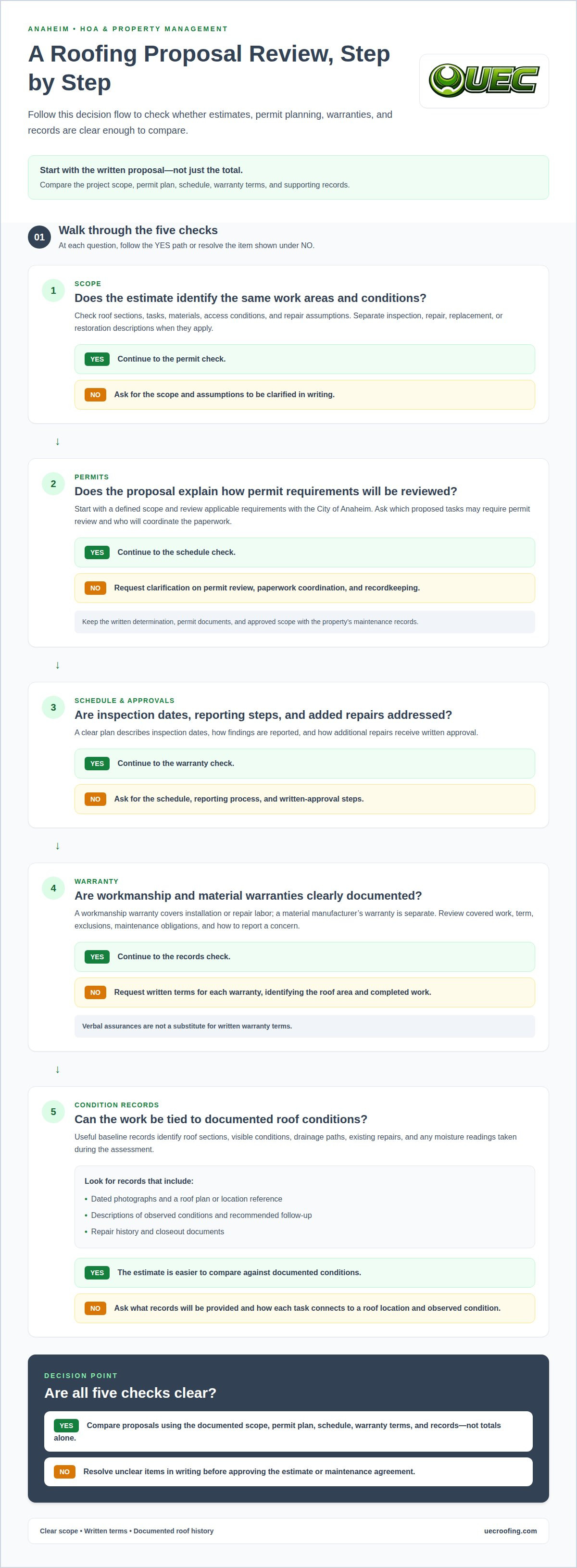
When comparing written roofing proposals, match the scopes, permit plans, and warranty terms, not just the totals. Confirm that each estimate covers the same roof areas, access conditions, repair assumptions, and documentation.
Anaheim, California, has a population of 346,824, according to the U.S. Census Bureau. With residential properties ranging from attached homes to larger shared buildings, a clear scope helps managers understand what the estimate covers. Ask for separate descriptions of inspection, repair, replacement, and restoration work when those items apply. This makes differences visible without relying on a vague “roof work” line.
Start permit planning with a defined scope and a review of applicable requirements with the City of Anaheim. Ask the roofing contractor to identify which proposed tasks may require permit review and who will coordinate the paperwork. A repair to an existing roof and a broader replacement can involve different project details. Keep the written determination, permit documents, and approved scope with the property’s maintenance records.
Initial condition records create a useful baseline for future inspections. At the start of a maintenance agreement, record roof sections, visible conditions, drainage paths, existing repairs, and any moisture readings taken during the assessment. Pair the records with dated photos and a roof plan. For example, a photo of a repaired seam should show its location and condition, with any recommended follow-up. Later records can then show whether it changed.
Compare workmanship warranties by reading the coverage terms. Look for the covered work, term, exclusions, maintenance obligations, and process for reporting a concern. A workmanship warranty covers installation or repair labor, while a material manufacturer’s warranty is separate. Ask that both documents identify the relevant roof area and completed work. Verbal assurances are not a substitute for written terms.
Before approving an estimate or maintenance agreement, review these details side by side:
- Scope: Roof sections, tasks, materials, and conditions that could change the work.
- Permits: Responsibility for determining requirements, coordinating applications, and retaining records.
- Schedule: Inspection dates, reporting steps, and how added repairs receive written approval.
- Warranty: Covered workmanship, exclusions, maintenance conditions, and claim instructions.
- Records: Baseline photographs, readings, repair history, and closeout documents.
A complete estimate connects every task to a location and documented condition. If tile replacement is proposed, for example, the scope should identify the affected area and explain how the work relates to observed damage. Clear records help an HOA board or property manager assess proposals consistently and maintain a reliable history for the next inspection.
Scheduled inspections for HOAs and property managers
Common roof concerns at Anaheim apartment properties include displaced tiles, damaged flashing, blocked drains, and worn seams. Delayed repairs can allow water to reach roof layers and interior finishes, extending damage beyond the original entry point.
For HOA boards, scheduled inspections make roof care a documented property task. An annual inspection, ideally before the rainy season, provides a baseline; another review after major storms can identify new concerns. In Anaheim, this timing can help identify vulnerable details before seasonal rain tests them.
Storm timing matters. Multiple atmospheric rivers can arrive in a week in the local area, testing vulnerable roof details. After a storm, focus the inspection on areas exposed to wind-driven rain, drainage paths, roof edges, and previous repair locations. A targeted review helps identify conditions that need attention before the next storm.
A useful inspection pairs a visual review with a written assessment. The roofing contractor can map observations by building and roof section, then distinguish maintenance needs from repairs that require further evaluation. For example, a note about a cracked tile should identify its location, nearby conditions, and recommended next step. That detail gives the manager a clear basis for follow-up.
Condition reports should make changes easy to track between visits. Request dated photos, a roof plan or location reference, descriptions of observed conditions, and a record of completed work. An accurate report separates inspection findings from recommendations. It should also identify inaccessible areas, so the record does not imply they received the same review.
For a multi-building HOA, a shared inspection calendar keeps records consistent. Include each building, its roof sections, inspection date, observed issues, and assigned follow-up. A maintenance log can show whether a recurring concern, such as debris near a drain, returns after service.
- Before rainy-season weather: Schedule an inspection and document drainage paths, penetrations, and previous repairs.
- After major storms: Arrange a focused review of vulnerable areas and visible changes.
- After completed work: Add closeout photographs and notes to the building’s maintenance file.
- At each review: Compare current observations with earlier reports and record unresolved items.
A scheduled inspection does not replace a response to a visible leak. It gives property managers a repeatable way to identify roof concerns, organize work, and preserve an accurate condition history. Put the next review on the HOA calendar, then assign responsibility for receiving the report and tracking follow-up.
The wider maintenance record can matter too: a customer testimonial states that 6 air conditioners at the customer's property went out since the start of summer. A homeowner review reports that a roof on a home in Anaheim was 35 years old before replacement. Those accounts reinforce the value of tracking building conditions and follow-up over time.
Emergency leak response and leak detection
An active leak calls for a clear response plan, not guesswork about its entry point. In an Anaheim multi-unit building, water may travel along roof framing before appearing on a ceiling. The visible stain may be away from the damaged flashing, seam, or tile. A careful assessment traces the path instead of treating the indoor mark as the source.
Start by recording the affected unit, room, and time the water appeared. The property manager can share those details with the roofing contractor, along with recent weather and any earlier leak history. If water appears near a light or other electrical fixture, keep occupants clear of the area and report that condition immediately. This information helps prioritize the inspection and identify access concerns.
During leak detection, the roofing contractor examines the roof above and around the reported location. Common areas to review include roof penetrations, flashing, valleys, drainage routes, and existing repairs. On a shared roofline, the inspection should also consider adjoining sections. Water can move beneath roofing materials before appearing indoors, so a stain alone may not reveal the full repair area.
In Orange County, an emergency visit should produce useful findings even when the exact path needs further evaluation. The written record can describe observed conditions, affected areas, photographs, and recommended next steps. It should distinguish temporary measures from permanent repairs. That distinction matters because a temporary measure addresses immediate water entry, while lasting repair depends on the underlying condition and the correct installation details.
For property managers, coordination reduces confusion across units. Assign one point of contact, keep a log of reports, and group updates by building and location. For example, distinguish a ceiling stain in one unit from a roof observation above a shared corridor. Clear records connect resident reports with roof findings and help prevent unrelated symptoms from being treated as one problem.
- Report: Identify the building, unit, room, and visible leak conditions.
- Prioritize: Share whether water is active and whether occupants or electrical fixtures are nearby.
- Assess: Trace the likely path across the roof, including penetrations and prior repair areas.
- Document: Record findings, photographs, affected areas, and recommended repairs.
- Follow up: Track the repair outcome and any remaining signs of moisture.
Pressure to stop a leak quickly should not replace diagnosis. A patch placed only where water appears may leave the entry point untouched. A documented assessment gives the manager a practical basis for approving the needed roof repair and preserving the property’s maintenance history.
Recurring roof maintenance for property managers
A preventive plan combines scheduled roof reviews, recorded conditions, routine maintenance, and follow-up on repair needs. Property managers can use a single building-by-building log to track work and keep owners informed.
Recurring Maintenance Visits
Each visit should review roof sections, drainage routes, penetrations, flashing, and previous repair areas. The roofing contractor records new concerns alongside earlier observations, making changes easier to identify. For example, recurring debris near one drain can prompt focused attention at the next visit. Property managers should look for a defined scope, documented findings, and a clear distinction between routine maintenance and additional projects.
Preventive Maintenance Plan Steps
Start with a roof map identifying each building and section. The contractor can record conditions, note maintenance performed, and assign follow-up for repairs requiring approval. Reports should use consistent locations and descriptions, such as “north stairwell roof edge,” rather than broad labels. This structure helps owners understand which work protects the building and which items need a separate decision.
Schedule recurring visits according to roof condition and weather exposure. In Anaheim, managers can align the calendar with the rainy season and arrange another review after major storms. The interval should also account for known issues, such as a drainage area that repeatedly collects debris. A schedule based on recorded conditions gives each property a practical maintenance rhythm.
Maintenance records should connect observations to action. A report might note loose shingle material on one roof section, describe nearby flashing, and state whether follow-up is needed. If the roof is tiled, identify the affected area and document any work completed there. These details help a future contractor distinguish an older condition from a new concern.
Consistent documentation also supports clear communication between property managers and owners. A concise project summary can identify the building, observed condition, completed maintenance, and outstanding decisions. Keep photos with the matching report rather than in a general folder. This helps the next reviewer understand the roof’s history without relying on memory or scattered messages.
- Maintain one record per building: Track roof sections, visit notes, and completed work.
- Prioritize by condition: Separate routine upkeep from repairs needing approval.
- Close the loop: Add completion notes and photographs to the relevant project record.
For Anaheim properties, this recurring process makes roofing a planned part of asset care rather than a series of disconnected calls. Schedule visits, document conditions consistently, and assign follow-up responsibility for every observation.
Roof maintenance for Anaheim multi-unit properties
Maintenance needs depend on roof material, shared access, drainage, and recorded condition. For an Anaheim property, match each roof area with its surface type and maintenance history before planning work.
Tile roofs need checks for cracked or displaced tiles, flashing, and roof penetrations. On flat roofs, review seams, drainage paths, and areas where water could collect. These checks help distinguish surface concerns from conditions requiring further assessment. Record each observation by building and roof section.
Give drainage a consistent place in the maintenance plan. Debris near a drain or downspout can obstruct water flow, while damaged edges may expose vulnerable roof details. Document the location, visible condition, and corrective work. A photo of a drain area is more useful when it identifies the building and roof section.
Shared roofs also require coordination. A continuous roofline may span several residences, so managers should note which units or common areas sit beneath each section. Keep a map with building labels, access points, and previous work locations. Managers overseeing properties in Anaheim, Lake Elsinore, and the Inland Empire can use consistent records across sites in Riverside, Orange, San Diego, Los Angeles, and San Bernardino Counties.
Maintenance records should distinguish routine observations from repairs and larger projects. A note such as “inspect flashing near the stairwell” gives the next visit a clear focus. A record that says only “roof checked” does not show what was reviewed. Pair observations with dated photos and a brief explanation of the next step.
For Anaheim multi-unit properties, a practical maintenance file can include:
- Roof details: Surface type, building labels, drainage locations, and known access points.
- Condition history: Inspection notes, photographs, and areas requiring follow-up.
- Work records: Repair locations, descriptions, and completion documentation.
- Coordination notes: Affected units or shared spaces and the person responsible for updates.
These records help owners understand why a task is recommended and how it fits the property’s care plan. They also help managers avoid treating every roof section as identical. A tile area with isolated damage may need a different response from a flat section with a recurring drainage concern.
Choose maintenance actions based on observed conditions, roof design, and repair history. If a concern affects several units or returns between visits, document its location and arrange a focused assessment. This keeps decisions grounded in the roof’s actual condition and supports clear project planning across properties.
UEC Roofing
UEC Roofing supports Anaheim property managers with maintenance and repair decisions, from roof tune-ups and leak repair to roof replacement and rejuvenation. With a brick-and-mortar location in Lake Elsinore and over 2,000 successful projects in the region, the company brings local experience to Southern California properties.
Share the building’s roof concerns and maintenance needs to discuss a practical next step. Contact UEC Roofing about roof maintenance to start the conversation.
Put a Practical Roof-Care Plan in Motion
Effective multi-unit roof maintenance in Anaheim starts with a clear record of the property’s needs and a manageable next step. Use inspection findings to decide which concerns need attention now, which belong on a future maintenance schedule, and who will track each action. This makes roof care a working part of property management, not just another item in the file.
UEC Roofing provides roof tune-ups, leak repair, and roof repair for residential and commercial properties. Property managers can share observed roof conditions or an active leak to discuss the work that fits the building. A focused conversation connects the concern to a practical roofing next step while keeping the property’s overall care in view.
When you’re ready to discuss roof maintenance for your property, contact UEC Roofing about roof maintenance. Take the next step with a clear view of your building’s needs and a practical plan for protecting it.
Frequently Asked Questions
How soon can you start a roofing job in Anaheim?
The project sequence depends on the work scope, roof access, and permit coordination. When requesting an estimate for a multi-unit property, share the building location, roof type, reported damage, and access arrangements. If water is entering a unit, describe where it appears and whether the leak is active. These details help define the work and plan the project.
How often should apartment and condo roofs in Anaheim be inspected and maintained?
Use an annual inspection as a baseline, with another review after major storms. Maintenance between inspections should reflect the roof material, documented condition, and repair history. For example, a property with recurring drainage concerns may need those areas monitored between scheduled visits. Keep the next inspection date with the HOA’s property records, and assign someone to track follow-up work.
What is the average cost of multi-unit roof maintenance in Anaheim?
There is no single average that accurately describes every Anaheim property. Pricing depends on roof area and condition, access, materials, and whether the scope involves routine upkeep or repairs. UEC Roofing provides pricing tailored to the property after a quote request. A useful estimate connects each proposed task to a roof area, so managers can see what the work covers.
Which roofing companies service apartment complexes and HOAs in Anaheim?
UEC Roofing serves Anaheim and provides roofing services for residential and commercial properties. Services include leak repair, roof tune-ups, and roof repair. For an HOA or apartment property, prepare the building location, known roof type, and a brief description of the concern. This gives the conversation a specific starting point, whether you are planning maintenance or responding to a reported leak.
What local building codes and permits apply to multi-unit roof repairs in Anaheim?
Permit needs depend on the proposed work and affected roof system. A localized repair and a project replacing larger roof sections may involve different review considerations. Before work begins, the estimate should describe permit coordination and the proposed scope. Keep permit documents with the property’s project records, along with the final work description and relevant inspection paperwork.
How do Anaheim weather, heat, and Santa Ana winds affect multi-unit roof maintenance?
Heat can stress exposed roof components over time, while Santa Ana winds can move loose materials and debris. After strong winds, check displaced tiles, roof-edge details, and drainage areas where debris may collect. Seasonal rain in Anaheim can then test vulnerable locations. Recording weather-related observations by building helps managers distinguish new concerns from previously documented conditions.
What roofing materials are most common in Anaheim multi-unit buildings, and how do maintenance needs differ?
Tile roofing is used on Anaheim-area condominium buildings. Maintenance checks include looking for displaced or cracked tiles, flashing, drains, and seams. The maintenance requirements of different roofing materials are not compared here.