
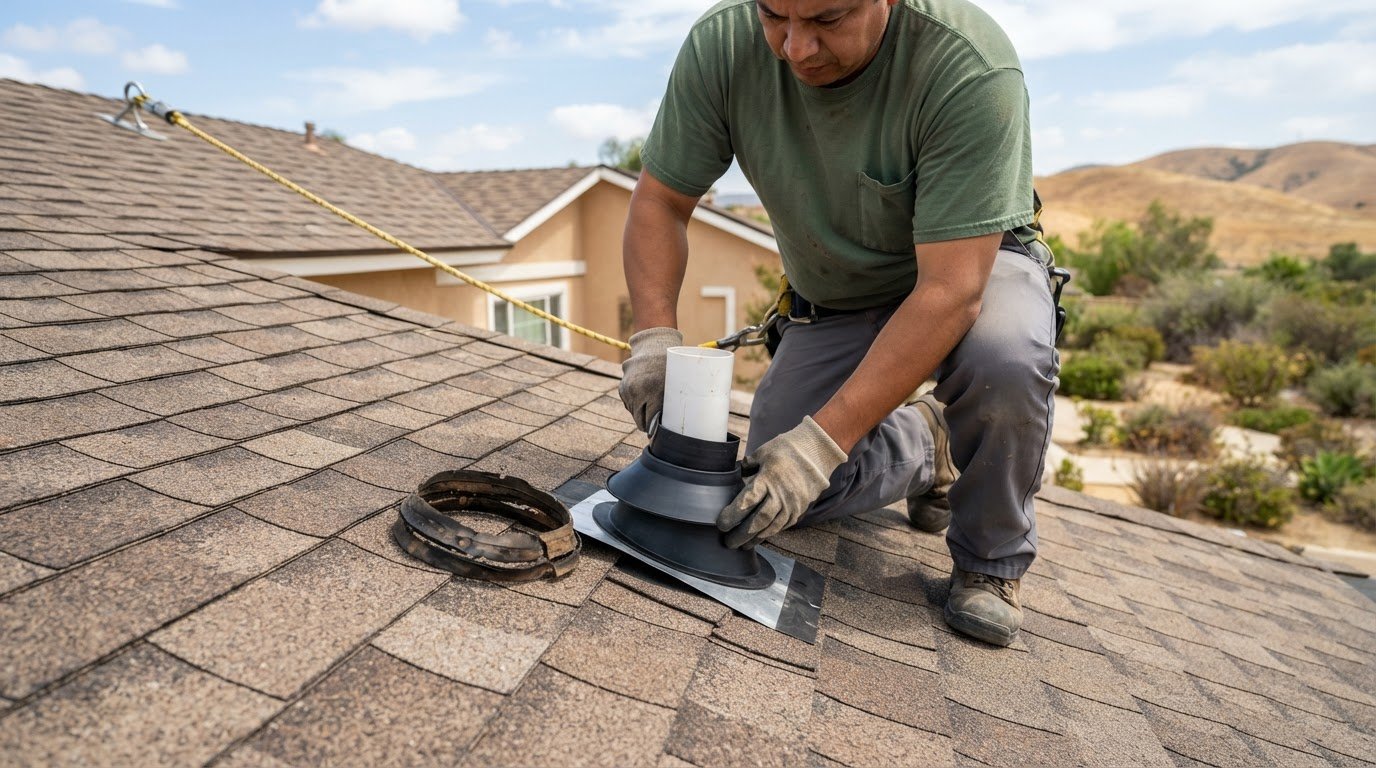
Urgent roof damage calls for a prompt response: emergency roofers in Temecula can typically respond the same day. An emergency roofer in Temecula can assess active leaks or storm damage and determine what immediate repairs are needed to help protect your home.
Roof damage can feel overwhelming, especially when water is entering your home or tiles have come loose. Acting promptly can help limit further damage, but safety comes first: stay clear of damaged areas and don’t climb onto the roof.
This guide explains what to expect when you call for urgent roof repair, what emergency work may involve, and what affects the response. You’ll also learn how to choose a licensed, insured contractor and how roof type and damage shape the next steps. From initial assessment to repairs that support your roof’s long-term condition, the focus is practical guidance for Temecula homeowners.
Key Takeaways
- Learn how urgent roofing needs can differ between residential and commercial properties, and what information helps explain the problem clearly.
- Understand how the roof’s age, material, and extent of damage help shape the choice between repair and replacement.
- Know which licensing and insurance details matter when selecting a local roofing contractor.
- See what can affect a roofer’s response timing, from the reported damage to weather and access conditions.
- Find out how emergency leak and storm-damage work can address immediate concerns while informing the next repair steps.
Do Temecula roof repair companies provide emergency repair services for urgent situations?
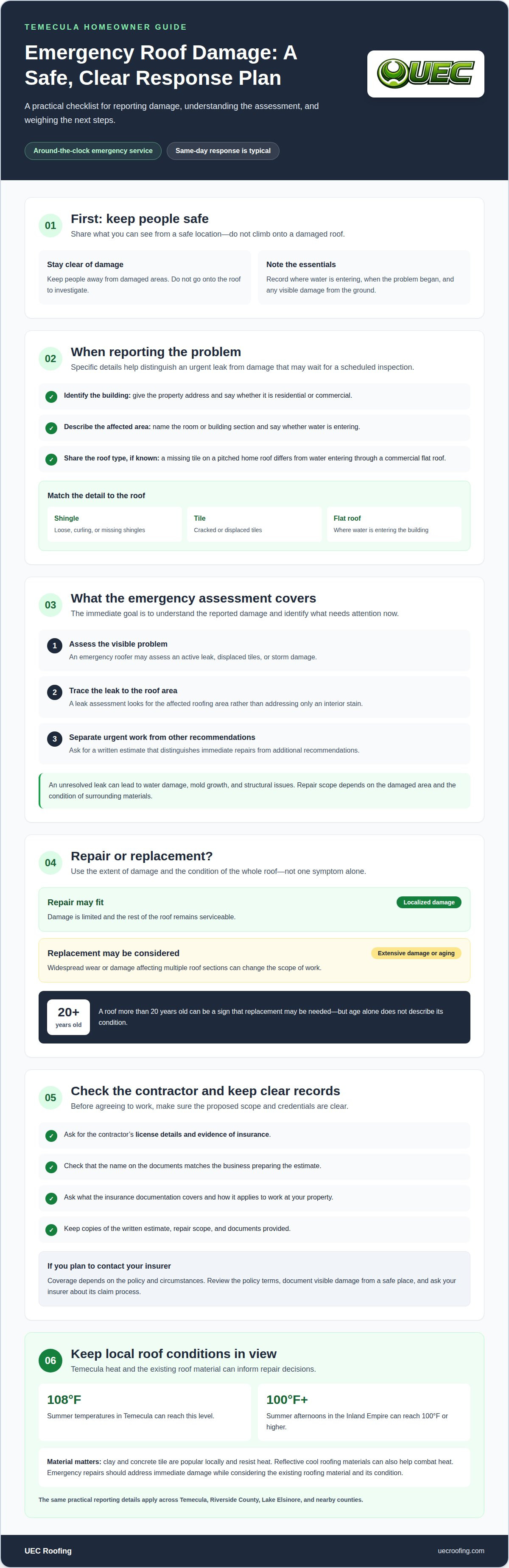
Yes. Emergency roofing service is available in Temecula around the clock, and roofers can typically respond the same day. An emergency roofer in Temecula may assess an active leak, displaced tiles, or storm damage and identify immediate repair needs. For homes and commercial properties, describe the affected roof area and whether water is entering. Those details help distinguish an urgent leak from damage that can wait for a scheduled inspection.
Residential roofing emergencies often involve a leak inside a home, missing shingles, or cracked clay or concrete tiles. Commercial calls may concern a larger roof area, such as a flat section above offices or storage space. Explain the issue and where it appears. Note the affected room or building area, visible damage from the ground, and when the problem began. Don’t climb onto a damaged roof to investigate.
Temecula’s Mediterranean climate also affects roofing choices and repair decisions. Summer afternoons in the Inland Empire can reach 100°F or higher, and summer temperatures in Temecula can reach 108°F. Clay and concrete tile are popular locally because they suit regional architectural styles and resist heat. Reflective cool roofing materials can also help combat heat. An emergency repair should address immediate damage while considering how existing roofing materials perform in local conditions.
Temecula roofers may serve properties across Riverside County. Homeowners in nearby Lake Elsinore, and in Riverside, Orange, San Diego, Los Angeles, and San Bernardino Counties, can use the same practical details when describing an urgent roofing problem. Give the property address, say whether the building is residential or commercial, and identify the roof type if known. A missing tile on a pitched home roof differs from water entering through a commercial flat roof.
- For a shingle roof, report loose, curling, or missing shingles.
- For a tile roof, describe cracked or displaced tiles.
- For a flat roof, identify where water is entering the building.
Ask for a written estimate that separates urgent repair work from other recommendations. The immediate priority is to address the reported damage; a fuller assessment can explain whether further repairs are needed. In Temecula’s heat, roof condition and material both matter. A useful assessment connects the visible problem to the roof system rather than treating one damaged tile or shingle as the whole story.
Roof repair and replacement services
Roof repair addresses localized damage, while roof replacement renews a system with widespread wear. In Temecula, the right scope depends on the roof’s age, the affected materials, and the extent of the damage.
Emergency Repair Availability
Emergency repair focuses on urgent roof problems that expose a home or business to further damage. Describe the leak’s location, when it began, and any visible damage, such as missing tiles or shingles. This information helps distinguish a localized repair from damage affecting several roof areas. Keep people away from roof damage, and share observations from a safe location.
Leak and Storm-Damage Repairs
For a roof leak, an assessment traces water entry to the affected roofing area rather than addressing only an interior stain. Storm damage can involve missing or cracked materials, displaced tiles, or lifted shingles. Prompt attention matters: an unresolved leak can lead to water damage, mold growth, and structural issues. The repair scope depends on the damaged area and the condition of surrounding materials.
Repair is often appropriate when damage is limited and the rest of the roof remains serviceable. Replacement becomes a consideration when damage is extensive or the roof is aging. A roof more than 20 years old can be a sign that replacement may be needed, but age alone doesn’t describe its condition. For example, a few damaged tiles call for a different assessment than widespread deterioration across multiple roof sections.
Homeowners insurance coverage depends on the policy and the circumstances behind the damage. Review the policy’s terms, document visible damage from a safe place, and contact your insurer about its claim process. Keep any repair estimate and written scope with claim communications. A clear record helps you understand which work addresses the reported damage and which recommendations relate to the roof’s broader condition.
Customer experience is shaped by clear communication as much as the repair itself. A useful assessment identifies the visible problem, explains the proposed work, and distinguishes urgent repairs from longer-term recommendations. Homeowners can keep a record of the reported damage and agreed scope. If replacement is considered, ask how the roof’s age, material condition, and extent of damage support that recommendation.
For a roof with active leaks or storm damage, a focused roof repair assessment can clarify the next steps and the work required.
Choosing a licensed, insured local roofer
For emergency roof work, choose a contractor who clearly explains the proposed work and provides relevant credentials. In California, discuss the roof type, visible damage, and next steps before work begins.
License and Insurance Checks
Ask for the contractor’s license details and evidence of insurance before agreeing to roofing work. Make sure the name on the documents matches the business preparing the estimate. A proposal for shingle repairs, for example, should describe the affected area and the work being considered. Clear paperwork helps you understand who is responsible for the agreed scope.
Ask what the insurance documentation covers and how it applies to work at your property. Keep copies of the estimate, written scope, and any documents provided. These records connect the contractor, the reported damage, and the repair plan.
Questions Before Hiring
Ask: “Can you explain what caused the visible damage, what work is urgent, and what can wait?” Also ask whether the estimate separates emergency work from additional repairs. These questions clarify the proposed scope without assuming that a leak or missing shingle requires replacing the entire roof.
When contacting an emergency roofer in Temecula, ask how the team will assess your roof and communicate any changes to the plan. Request a written explanation of the materials, debris removal, and work area. A clear answer should identify the next step, such as assessing damaged roofing material or documenting a leak.
Use the estimate to understand the work before it starts. It should identify the affected roof area, describe the repair, and state which materials are included. If storm debris is present, ask whether the proposed work addresses debris-related damage or only the visible leak. Keeping those items distinct makes the scope easier to follow.
Local conditions matter because Temecula’s Mediterranean climate brings hot summers and seasonal storm conditions. Ask how the assessment accounts for the roof’s existing material and condition. A cracked tile, displaced shingle, and leak near a roof transition each call for a different inspection focus. Specific explanations are more useful than a broad promise to “fix the roof.”
Before authorizing work, confirm who will explain the findings and provide any revised scope. If the inspection reveals damage beyond the reported area, ask for the reason and related estimate in writing. That gives you a clear basis for deciding whether to proceed with urgent repairs or consider broader work.
A careful selection process comes down to three practical checks:
- Match the contractor’s name to the license and insurance documents.
- Get the emergency roof work and any additional recommendations in writing.
- Ask for specific explanations tied to visible damage, such as missing shingles or storm debris.
Contractor response times and response rates
Emergency roofers in Temecula can typically respond the same day. That describes response, not necessarily completed repairs. A contractor may first assess reported damage, identify urgent concerns, and explain the work required. For example, a call about an active leak needs a different assessment from a request about a loose tile with no water entering. Describe what’s happening so the team can understand the urgency.
The assessment depends on practical details, including the property’s location, roof access, weather, and reported damage. A Temecula home with a visible leak and easy exterior access presents different assessment conditions from a commercial building with a broad roof area. Share the address, building type, and affected area when arranging an inspection. Clear details help the contractor plan the visit.
Separate the initial response from the repair schedule. An inspection can establish whether the roof needs immediate attention, while the repair itself depends on the damage, materials, and safe working conditions. Ask what the visit will cover and when you’ll receive written findings. This distinction helps you understand what happens next without assuming all work will be completed on the day of the inspection.
Quotes are most useful when they describe the work, not just the overall scope. Ask the contractor to identify the damaged section, the proposed repair, and any separate recommendations. If your roof has missing tiles and an interior leak, for example, the estimate should make clear which work addresses the visible roof damage. Written details help you understand and approve the proposed work.
Temecula’s architectural styles and roofing materials can affect an assessment. Clay and concrete tile are popular locally, while other properties have shingle or flat roofing. The contractor needs to consider the existing roof system when describing repair options. Ask how the proposed work fits the roof’s material and design, especially if visible damage is beside intact sections. This helps distinguish a targeted repair from broader recommendations.
- State whether water is entering and where the damage appears.
- Provide the Temecula property address and building type.
- Ask when the inspection findings and written quote will be provided.
- Clarify which work addresses urgent damage and which recommendations are separate.
These steps make communication about the response more useful. A clear report, a defined inspection, and a written scope help you follow the process from first contact to repair planning. If weather or roof access affects the visit, ask how that changes the next step. For an architectural tile roof, knowing whether the assessment includes adjacent materials can help explain the proposed repair.
Emergency leak and storm-damage response
An urgent roof assessment in Temecula starts by identifying where water enters and which materials need attention. The findings help determine whether leak repair or other work addressing storm damage is needed.
Before the roofer arrives, move furniture, electronics, and other belongings away from indoor drips. Place a container under the leak if the area is safe, and keep people away from wet ceilings or damaged roof areas. Don’t climb onto the roof or attempt repairs during a storm. Share clear observations from inside or the ground instead.
Useful communication starts with specific details. Tell the roofing contractor the property address, what changed, where water appears, and whether the leak is ongoing. For example, “water is entering above the hallway after wind and rain” gives more context than “the roof is damaged.” Mention visible debris or displaced materials only if you can see them safely. These details help the team prepare for an assessment.
At the property, the roofer assesses the reported area and surrounding materials. A ceiling stain can appear apart from the roof entry point, so the inspection considers how the roofing system directs water. Storm damage may affect tiles, shingles, flashing, or other roof components. The repair plan should explain the observed damage, the immediate work proposed, and any follow-up assessment needed.
Keep a simple record while the issue is active. Note when you first noticed water, which rooms are affected, and whether conditions change. Photos taken from inside or ground level can document visible signs without putting anyone on the roof. If water reaches stored items, move them only when the area is safe to access. This information supports clear communication during the roofer’s assessment.
Emergency roofing work first addresses the reported exposure and affected area. A roofer may assess the leak, repair damaged materials, and explain whether additional roof repair is needed. The appropriate work depends on the roofing system’s condition, the damage’s location, and whether surrounding materials are affected. A written scope distinguishes immediate repairs from later recommendations.
- Describe the leak’s location and when it began.
- Move belongings away from affected indoor areas when safe.
- Keep clear of roof damage and avoid DIY work on the roof.
- Share ground-level observations and photos with the roofer.
After the initial response, ask for an explanation of the findings and the next step. Clear communication connects visible storm damage to the proposed repair, helping you understand what protects the property now and what needs further attention.
UEC Roofing: leak repair
UEC Roofing provides leak repair and roof repair for Temecula properties with active leaks or visible roof damage. Its brick-and-mortar presence in Lake Elsinore and more than 2,000 successful regional projects reflect its established local work.
If a leak has stopped, a roof tune-up can address maintenance needs and support the roof’s ongoing condition. UEC Roofing’s roofing services help homeowners consider next steps based on the roof’s condition and the work it needs.
If your Temecula roof has a leak or needs repair, contact UEC Roofing to discuss the problem.
Protect your roof beyond the immediate repair
Once the immediate issue is addressed, plan for your roof’s ongoing condition. A repair can resolve a specific problem, while a roof tune-up can help identify maintenance needs before they develop into larger concerns. The right next step depends on the roof’s condition and the work it needs.
UEC Roofing provides leak repair, roofing services, and roof tune-ups for Temecula homeowners looking for practical ways to protect their property. If you need an emergency roofer in Temecula, share what you’ve observed with UEC Roofing and discuss the appropriate next step for your roof.
Contact UEC Roofing to talk through your roofing concerns. A clear conversation is a good place to start.
Frequently Asked Questions
What are the signs of a damaged roof in Temecula?
Look for water stains around roof penetrations, such as vents or flashing, and shingle edges that appear loose or curled. From the attic, notice any daylight through the roof deck. These clues can help pinpoint areas for a professional assessment. Observe only places you can view safely, and note which signs appear after rain or wind.
What services does a roofer in Temecula offer?
A roofing contractor can assess a roof’s condition, identify areas needing attention, and explain a suitable scope of work. The work may differ between a home and a commercial building because roof design, materials, and access vary. Before authorizing a project, review the written scope and confirm it clearly identifies the affected areas and proposed work.
Can I request a free roof inspection or estimate for repair work in Temecula?
You can request an inspection or estimate, but don’t assume it’s free. Inspection and estimate terms depend on the work and assessment involved. An estimate should explain the proposed scope, affected roof areas, and any separate recommendations. Review those details before approving work so you understand what the estimate covers and how it relates to the reported concern.
Can I schedule roof repair during specific weather conditions in Temecula, CA?
Scheduling depends on whether weather and roof conditions allow safe access and suitable repair work. Rain can complicate work on a wet surface, while wind may affect access and material handling. During hot Temecula afternoons, the roof surface and material can also influence work planning. Share the conditions at your property and ask how they affect the proposed schedule.
Can a damaged roof be repaired instead of replaced?
Yes, a damaged roof can be repaired when the issue is limited and the surrounding roof remains serviceable. The decision depends on the damage’s extent, the roof’s age, and the condition of nearby materials. A small affected area differs from widespread deterioration. Ask for an explanation that connects the recommended work to the observed condition, rather than relying on age alone.
How can I find a reputable roofer in Temecula?
Choose a California contractor who provides clear written terms and explains the work in plain language. Confirm the contractor’s name matches the business on the estimate, and review license and insurance documents before authorizing work. A useful proposal identifies the affected area, materials, and scope. Specific explanations tied to your roof are more helpful than broad assurances.
How quickly should I address a roof leak in Temecula, CA?
Arrange an assessment promptly, even if the leak stops when the weather clears. Water can travel inside a roof before appearing on a ceiling, so the visible mark may not be directly below the entry point. Note when moisture appears and which rooms are affected. Keep people and belongings away from unsafe areas, and share those observations with the roofer.
Which emergency roofers serve Temecula, California, 24/7?
UEC Roofing serves Temecula, but emergency service wording alone doesn’t establish round-the-clock call handling or dispatch. Look for an explicit statement that a roofer accepts calls and responds outside regular business hours. When describing an urgent issue, include the property location, whether water is entering, and the roof type. That gives the contractor clear information about the request.