
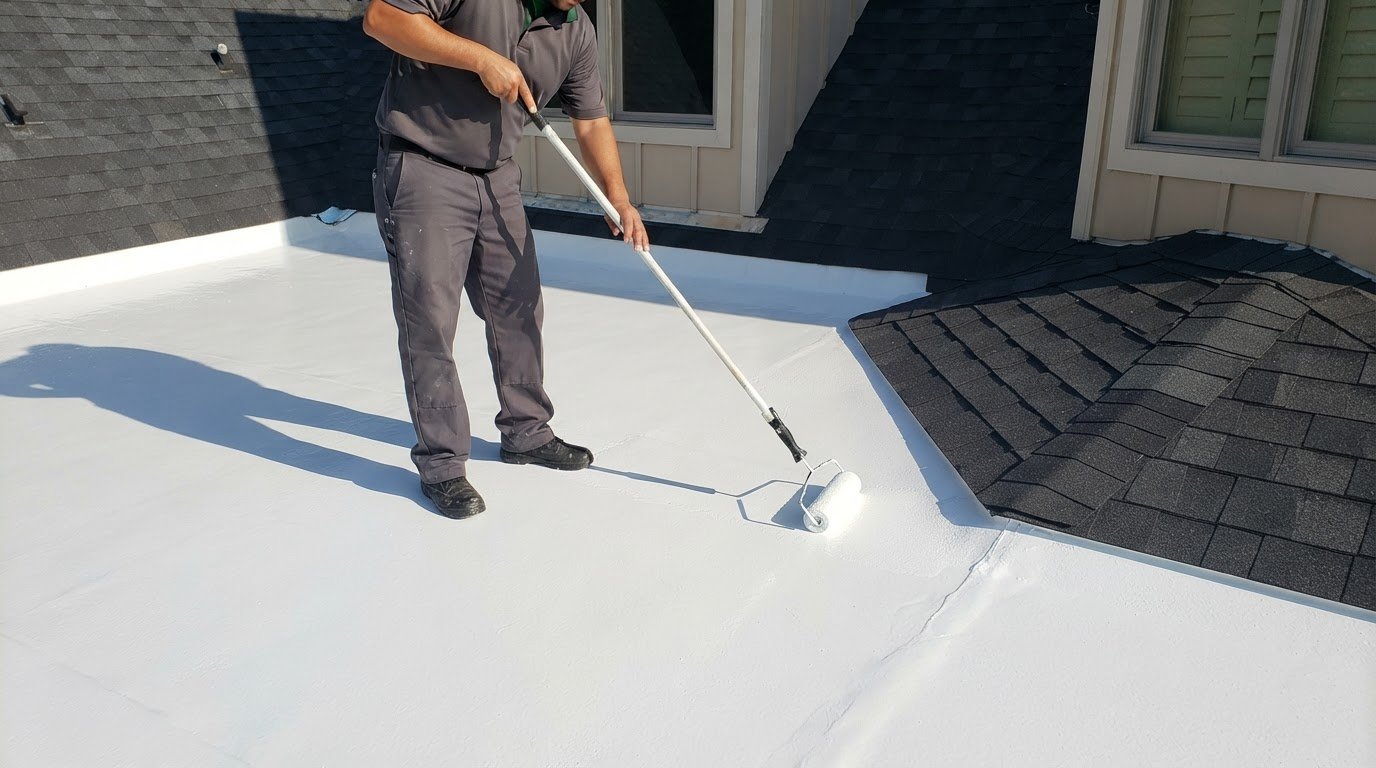
A new roof isn't always the right answer to waterproofing a roof in Murrieta. If the existing roof is aging but still structurally sound, a coating may be worth considering. If damage reaches the roof structure or underlayment, repairs or replacement may make more sense.
It’s reasonable to want a clear picture of the work and its cost before deciding. In Murrieta, strong sunlight and seasonal storms can add to roof wear, but a coating isn’t suitable for every roof or condition. The estimate depends on factors such as roof size, slope, material, and repairs needed before coating. This article explains when coating may fit, what repair and replacement involve, and how a roofing professional assesses the project and prepares an estimate.
Key Takeaways
- Coating may suit an aging roof that remains structurally sound; existing leaks or damage can affect whether repairs are needed first.
- Murrieta reroofing and roof replacement projects that meet specified thresholds must comply with California Title 24 energy standards, according to the California Energy Commission.
- An evaluation of roof type, repair history, and current condition helps determine whether coating is appropriate.
- Roof size, slope, coating material, and required repairs all influence how a waterproofing estimate is assessed.
- Murrieta’s strong sunlight and seasonal storms can accelerate roof wear, making the choice of waterproofing approach important for long-term roof care.
Roof replacement, repair, and maintenance in Murrieta
Roofing work starts by locating likely water-entry points and assessing the roof’s overall condition. The findings help determine whether targeted repairs, coating preparation, routine maintenance, or replacement is appropriate.
Murrieta had 110,949 people in the 2020 census, according to the U.S. Census Bureau. The city sits within a wider Southern California context that includes Lake Elsinore, the Inland Empire, and Riverside, Orange, San Diego, Los Angeles, and San Bernardino Counties. Across these communities, roof materials and exposure vary, so an inspection needs to focus on the property’s actual roof, not a generic regional assumption.
Roof Repairs and Coating Application
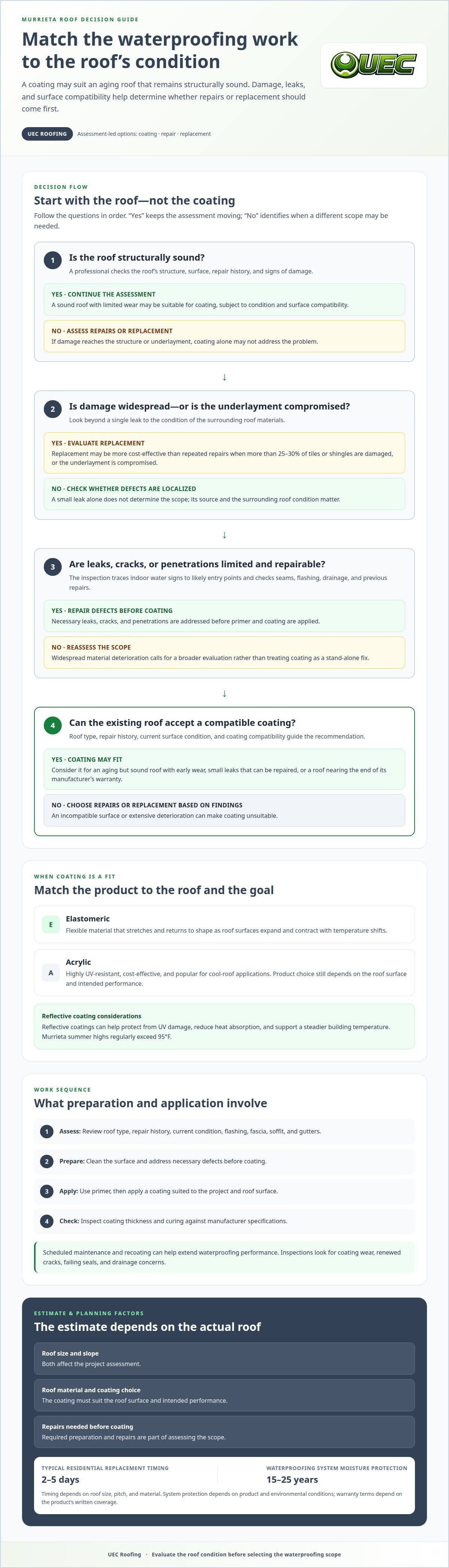
A professional inspection traces signs of water indoors back to likely entry points. The assessment considers the roof surface, penetrations, seams, flashing, drainage, and previous repairs. Existing leaks, cracks, or penetrations are repaired when necessary before primer is applied. This addresses defects before they sit beneath a new coating.
After surface preparation and primer, the coating is applied to suit the project. A final inspection checks coating thickness and curing against manufacturer specifications. The key question is whether the existing roof is sound enough for coating or needs more substantial repair. An isolated defect and widespread material deterioration call for different scopes of work.
Repair Timelines, Product Life, and Warranties
Repair timing depends on the affected area and work involved. A standard residential roof replacement in Murrieta typically takes 2-5 days, depending on roof size, pitch, and material. Roof waterproofing systems in Murrieta typically provide 15 to 25 years of moisture protection, depending on the product and environmental conditions. Warranty terms depend on the product and its written coverage; review the stated period and conditions.
Replacement may be more cost-effective than repeated repairs when more than 25-30% of tiles or shingles are damaged, or the underlayment is compromised. These conditions suggest the issue may extend beyond a localized surface defect.
Waterproofed Roof Preparation and Maintenance
Preparation starts with assessing the roof type, repair history, and current condition. Professionals address necessary defects before coating, and examine flashing, fascia, soffit, and gutters. Damaged edges or poor drainage can expose adjoining roof components to moisture. These details matter for homes in Murrieta and nearby Southern California communities.
Scheduled maintenance and recoating can help extend a roof’s waterproofing performance. An inspection looks for coating wear, renewed cracks, failing seals, and drainage concerns. If there’s an active leak, prompt detection and repair can limit further water intrusion while the rest of the roof is assessed.
When to consider coating an aging but structurally sound roof
A coating may suit a roof with early wear if its underlying structure remains sound. A professional assesses the roof type, repair history, surface condition, and signs of damage before recommending coating, repairs, or replacement.
Elastomeric and Acrylic Coatings
Elastomeric coatings are flexible materials that stretch and return to shape as roof surfaces expand and contract with temperature shifts. That flexibility can matter on a roof exposed to changing conditions in Murrieta. Acrylic coatings are highly UV-resistant, cost-effective, and popular for cool-roof applications. A professional matches the material to the roof surface and intended performance rather than treating coating types as interchangeable.
Reflective coatings can help protect a roof from UV damage, reduce heat absorption, and support a steadier building temperature. Those features can be relevant in Murrieta, where summer highs regularly exceed 95°F. The coating selection should account for the roof’s compatibility and condition, as well as the property’s heat-management priorities.
Roof Coating Suitability and Evaluation
Coating may suit an aging roof that remains structurally sound but shows early wear, small leaks, or is nearing the end of its manufacturer’s warranty. An inspection evaluates roof type, repair history, and current condition. These details help determine whether the existing surface can accept a coating and whether repairs are needed first.
In many cases, waterproofing systems can be applied over existing roofing after cleaning and preparation, subject to a compatibility assessment. This matters for shingles and other roofing materials because the coating must suit the surface beneath it. Extensive deterioration or a compromised structure points away from coating as a stand-alone solution.
Choosing Waterproofing, Repairs, or Replacement
A professional distinguishes among these options by examining the roof’s structure, surface, previous repairs, and leak locations. A sound roof with limited wear may be suitable for coating. Isolated defects may need repair before coating. Widespread material failure or structural concerns call for an evaluation for replacement.
The assessment should explain what the work addresses and why. A small leak, for example, doesn’t by itself mean the whole roof needs replacement. Its source and the surrounding condition matter too. Likewise, coating isn’t a substitute for correcting defects that could undermine the finished surface.
Roof Waterproofing Methods and Coating Risks
Murrieta’s strong sunlight and seasonal storms can accelerate roof wear, so professionals consider both exposure and roofing material when evaluating waterproofing options. Preparation includes cleaning the surface and repairing existing leaks, cracks, or penetrations when necessary. Primer and coating follow only after those needs are addressed.
Choosing an incompatible coating or applying it to a poorly prepared surface can leave defects unresolved and weaken the intended protection. DIY work also means getting onto the roof and can miss less visible damage. Professional evaluation helps match the coating to the roof, identify repair needs, and assess the finished application.
Free estimates and on-site evaluations
An on-site evaluation connects the visible roof condition to the work described in an estimate. In Murrieta, an assessment should account for roof material, slope, drainage, and exposure to strong sunlight and seasonal storms. The written scope should explain whether the work involves repair, coating preparation, or another approach, rather than treating every roof as the same project.
An estimate is most useful when it separates observations from recommendations. The evaluator records the roof’s condition, identifies areas needing attention, and explains how those findings shape the proposed work. A leak near a roof penetration, for example, may need a different repair than widespread surface wear. The estimate should make that distinction clear.
A thorough on-site review considers more than the spot where water appears indoors. Water can travel beneath roofing materials before becoming visible, so the professional traces likely entry points and checks nearby transitions. The inspection may include seams, penetrations, flashing, drainage paths, and previous repair areas. These observations help determine whether coating is an option or repairs must come first.
- Roof type and surface: Identify the material and its current condition, since coating compatibility depends on the surface.
- Repair history: Note previous leak repairs and recurring trouble spots that may affect the proposed work.
- Project scope: Distinguish preparation, repairs, primer, and coating application instead of combining them into an unclear description.
- Evaluation findings: Connect each recommended task to an observed condition, such as a damaged seam or crack.
For a Murrieta property, local climate matters to the assessment. Strong sunlight can increase UV exposure, while seasonal storms can reveal weak points around roof openings and drainage areas. A professional should explain how those conditions relate to the roof’s actual surface, rather than use climate alone to justify a treatment.
Compare the estimate’s scope, not just its total. A useful document identifies the work included, the areas being addressed, and the preparation required before coating. The price depends on the project and is provided after a quote request; roof size, slope, coating material, and necessary repairs affect the estimate. A clear explanation shows what the work addresses and how it relates to the roof’s condition.
Before approving a project, make sure the evaluation and written scope tell the same story. If the inspection identifies a repair need, the estimate should show where that work fits in the sequence. This grounds the decision in the roof’s observed condition and the work needed to prepare its surface.
Roof waterproofing costs in Murrieta
The cost of waterproofing a roof in Murrieta depends on the property and work required. A coating estimate considers roof size, slope, coating material, and any repairs needed before application. The estimate should connect each cost factor to the proposed scope, so you can see whether it includes surface preparation, repairs, primer, coating, or a combination of these steps.
Roof exposure and existing condition also shape the assessment. A roof with cracks, leaks, or damaged areas may need repairs before coating. A professional evaluates these conditions rather than treating coating as one uniform task. Two roofs of similar size, for example, may need different scopes if one has more repair needs or a different surface material.
The price depends on the project and is provided after a quote request. Roof size, slope, coating material, and required repairs affect the estimate. A clear written estimate describes the work included and identifies the areas being addressed. It should separate repair work from coating preparation and application, making it easier to understand how observed conditions relate to proposed costs.
Building requirements depend on the project scope. Full roof replacements require building permits in most California jurisdictions. Applicable Murrieta reroofing and roof replacement projects must comply with California Title 24 energy standards when they meet the specified thresholds, according to the California Energy Commission. These requirements apply to qualifying reroofing or replacement work, not automatically to every waterproofing estimate.
Roofing contractors serving Murrieta handle projects from coating assessments to replacement. When reviewing a contractor, look at licensing and insurance documentation, and read reviews describing comparable roofing work.
Before approving a roof replacement estimate, make sure the scope explains the replacement work and relevant project requirements. A coating proposal should clarify the surface condition, material, and preparation included. This distinction helps you assess whether the proposed work matches the roof’s needs, instead of comparing totals for different tasks.
- Roof dimensions and shape: Size and slope influence the area and conditions involved in the work.
- Roof material: The surface affects coating compatibility and preparation needs.
- Repair requirements: Existing leaks, cracks, or other damage can add work before coating begins.
- Project scope: Repair, coating, and roof replacement are different scopes and should be described distinctly.
A careful estimate gives Murrieta homeowners a practical basis for reviewing proposed work. Check that the written scope identifies the roof areas being assessed, explains the work sequence, and accounts for local exposure and observed defects. Those details make it easier to understand what the estimate covers and why.
What roof waterproofing methods work best in Murrieta, California’s climate?
Murrieta’s strong sunlight and seasonal storms can accelerate roof wear. The right waterproofing approach depends on the roof’s material and condition, and whether its surface can accept a coating, not on climate alone.
Roof coatings can help protect against UV damage, reduce heat absorption, and maintain a steadier building temperature. Those benefits may matter in Murrieta, where summer highs regularly exceed 95°F. A reflective coating may suit a property where reducing heat absorption is a priority, but an evaluation must first establish whether the roof surface is compatible and sound.
Acrylic coatings are highly UV-resistant and popular for cool-roof applications. They may suit a roof exposed to strong sun if its surface can accept the material. Elastomeric coatings are flexible, stretching and returning to shape as roof surfaces expand and contract with temperature shifts. That flexibility is relevant when surfaces experience temperature changes, but it doesn’t make elastomeric coating suitable for every roof.
These coating types aren’t interchangeable. A professional evaluates the roof type, repair history, current condition, and intended performance before selecting a method. A sound roof with early wear, for example, may be suitable for coating, while damage requiring repair should be addressed before primer and coating are applied. Coating can’t replace repairs to defects that could undermine the finished surface.
- Sun exposure: Consider whether UV resistance and reflective properties match the property’s needs.
- Roof material: Assess compatibility with the existing roof surface before choosing a coating.
- Current condition: Identify leaks, cracks, and other defects that require attention before application.
- Temperature movement: Consider whether a flexible elastomeric coating fits the roof’s material and condition.
Preparation matters as much as coating choice. Professionals clean and prepare the surface, then repair existing leaks, cracks, or penetrations when necessary. Primer and coating follow. A final inspection checks coating thickness and curing against manufacturer specifications. This sequence helps ensure the selected system is applied to a properly prepared roof.
Murrieta’s seasonal storms also make water-entry points and drainage relevant when choosing a method. Coating may help protect a suitable roof surface, but it doesn’t correct every underlying roofing problem. The professional assessment should connect the chosen material to the roof’s actual condition and local exposure.
For a coating recommendation grounded in the roof’s material and Murrieta exposure, request a professional roof assessment.
Murrieta, California, has a population of 111,878 residents, so roof decisions apply across a community where assessments should still be tailored to each property’s material, condition, and exposure.
UEC Roofing
UEC Roofing helps Murrieta homeowners assess roof concerns and choose practical next steps. From its brick-and-mortar location in Lake Elsinore, the company serves local communities and has completed more than 2,000 successful projects in the region.
When a roof needs attention, leak repair, roof repair, and roof tune-ups address different concerns. An evaluation connects the roof’s condition to suitable work, helping homeowners make an informed decision about protecting their property.
When you’re ready, contact UEC Roofing to discuss your roof.
Take the Next Step Toward a Sound Roof
Deciding whether waterproofing a roof in Murrieta is the right approach starts with understanding what the roof needs now and what may protect it over time. A clear evaluation turns that decision into a practical plan based on the roof’s condition, not assumptions. It’s a useful next step toward protecting your home and preserving the investment above it.
UEC Roofing provides roofing services for homeowners assessing roof concerns, including leak repair and roof tune-ups. Share what you’ve noticed, such as where a leak appears or which areas show visible wear. Those details help frame the evaluation and guide a conversation about suitable work.
Take the next step when you’re ready. Contact UEC Roofing for an evaluation and move forward with a clearer understanding of your roof’s needs.
Frequently Asked Questions
How much does roof waterproofing cost in Murrieta per square foot?
A per-square-foot estimate depends on the roof’s size, slope, coating material, and required repairs. Roof area alone doesn’t account for preparation needs or the condition of the existing surface. The project price depends on the case and is provided after a quote request. A professional assessment helps define the scope, including whether the estimate covers repairs, preparation, coating, or a combination of work.
What is the average cost to waterproof a roof on a Murrieta home?
There isn’t one average that applies to every Murrieta home, because the total reflects the specific roof and proposed work. A straightforward coating project differs from one requiring substantial repairs or extensive preparation. Request a written estimate that distinguishes those tasks. That breakdown helps explain how the roof’s condition, size, slope, and selected coating affect the project total.
What steps do professionals take to waterproof a roof, and what should homeowners know before considering DIY work?
Professionals assess the roof, identify likely water-entry points, address necessary repairs, prepare the surface, and apply primer and coating when appropriate. Homeowners considering the work should know that missed defects or incompatible materials can undermine the result. Share the location of interior stains, leak history, and previous repair details with the evaluator. That context can help focus the inspection without requiring you to access the roof yourself.
Which roof waterproofing products can a professional select to resist Murrieta’s heat, sun, and occasional heavy rain?
Professionals may assess acrylic or elastomeric coatings for a compatible roof. Acrylic coatings are highly UV-resistant and popular for cool-roof applications. Elastomeric coatings flex as roof surfaces expand and contract with temperature shifts. The right option depends on the existing roof material, its condition, and the project’s goals. Selection should account for local sun exposure while addressing the roof’s actual surface and repair needs.
How do roof coating costs compare with roof replacement costs in Murrieta?
The material gives no roof replacement cost for comparison.