
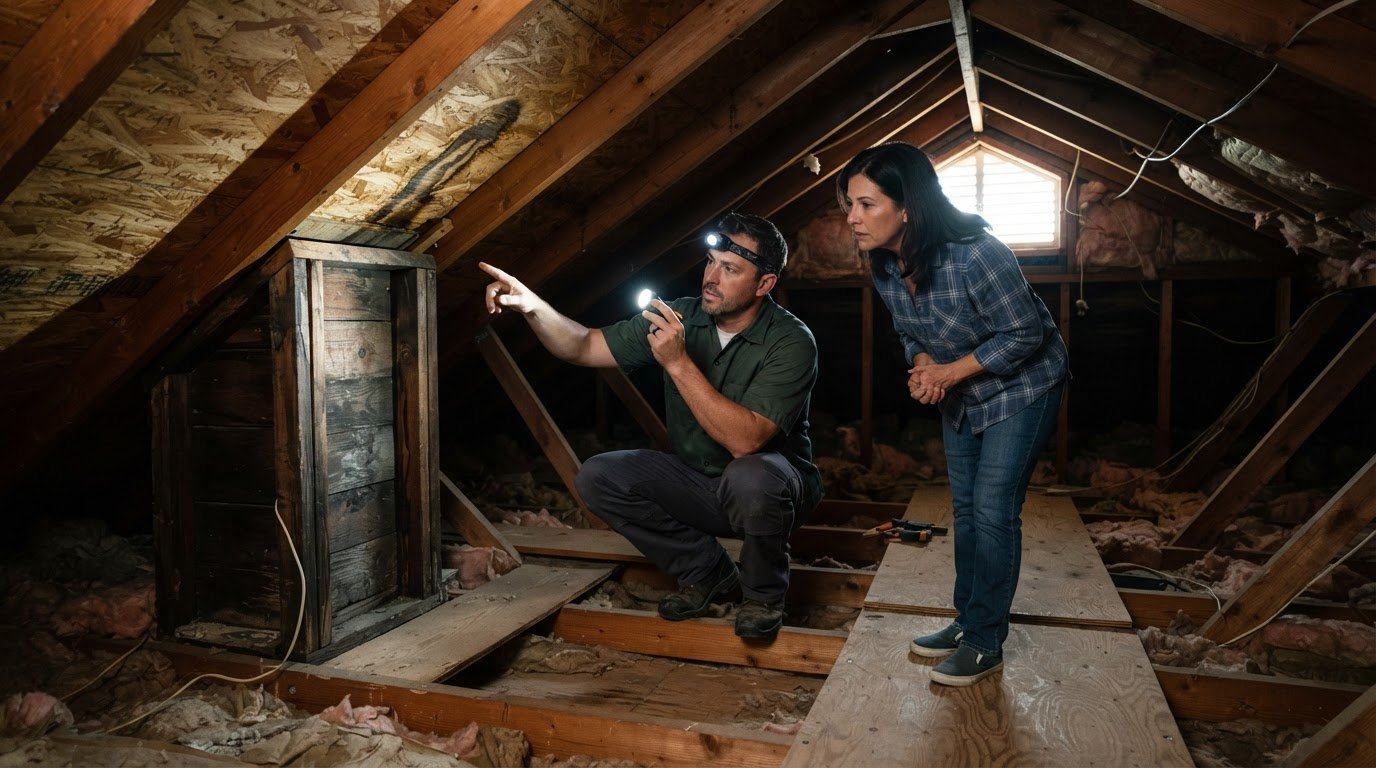
The lowest estimate isn’t automatically the safest choice. Finding a roofer I can trust in Poway starts with a clear inspection, a detailed written estimate, verified credentials, and experience with local homes.
It’s reasonable to want confidence before committing to work that protects your home. A reliable assessment explains what the roof needs, why the work is recommended, and what the estimate covers, so you can weigh options without relying on price alone.
This guide explains how to assess roofing estimates and inspection findings, review a contractor’s credentials, and consider local experience in Poway. You’ll also learn how to spot warning signs and decide whether your roof may need repair, maintenance, or replacement. The goal is a well-informed decision based on clear details and long-term protection.
Key Takeaways
- Compare written estimates by their labor, materials, and project details, not price alone.
- Use inspection findings to understand the roof’s condition and what work is actually recommended.
- Look into a contractor’s references, license, and insurance before work begins.
- Consider local experience in Poway and North San Diego County when assessing whether recommendations fit your home.
- Recognize when a roof tune-up, repair, or leak repair may address the issue and when broader work may be needed.
Estimates, inspections, and pricing transparency
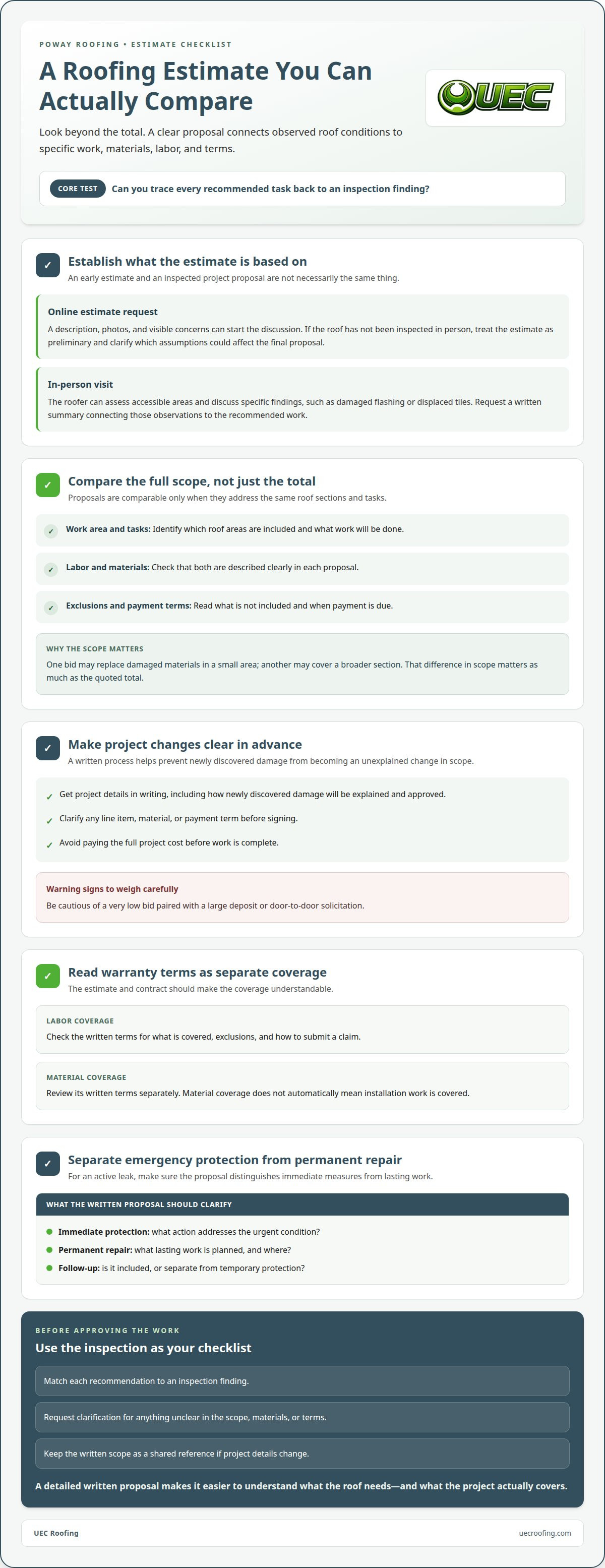
Choosing a trustworthy roofer in Poway starts with an estimate that connects observed roof conditions to clearly described work. Compare the scope, materials, labor, and terms, not just the total. A detailed proposal helps you understand the recommendation and exactly what the project covers.
Free Estimate Options
An online estimate request can start with a description of the roof, photos, and visible concerns. Treat it as preliminary if the roof hasn’t been inspected in person. An in-person visit lets the roofer assess accessible areas and discuss specific findings, such as damaged flashing or displaced tiles.
Ask what each estimate includes and whether its proposed scope is based on an inspection. If an online estimate is preliminary, clarify which assumptions could affect the final proposal. For an in-person estimate, request a written summary that connects observed conditions to recommended work. This makes the next step clearer without mistaking an early estimate for a complete project plan.
Pricing Transparency
A transparent estimate identifies the work area, labor, materials, exclusions, and payment terms. Compare proposals only after confirming they address the same roof sections and tasks. For example, one bid may cover replacing damaged materials in a small area, while another covers a broader section. The difference in scope matters as much as the quoted total.
Choosing a reliable roofer in Poway also means understanding how changes will be handled. Get project details in writing, including how newly discovered damage will be explained and approved. Avoid paying the full project cost before work is complete, and be cautious of a very low bid paired with a large deposit or door-to-door solicitation.
What warranties should a Poway roofer provide for labor and roofing materials? Written terms should distinguish labor coverage from material coverage, explain exclusions, and describe how to submit a claim. Read the warranty language alongside the estimate and contract. Don’t assume material coverage also covers installation work.
For an emergency, such as an active leak, the proposal should distinguish immediate protective measures from permanent repair. It should describe the affected area, planned work, and any follow-up. That distinction clarifies what the estimate addresses and whether temporary protection is separate from lasting repair.
Before approving the work, match each recommendation to an inspection finding. Ask for clarification on any unclear line item, material, or payment term before signing. A written scope gives both sides a shared reference if the project changes. That clarity is a practical part of choosing a trustworthy roofer in Poway.
Roof inspections and recommendations
A useful inspection connects visible roof conditions to specific recommendations. In Poway, ask where each concern is located, what condition was observed, and why repair or replacement is proposed.
For example, a roof inspection can document cracked or displaced tiles, damaged flashing, and areas where water may collect. An attic review can help identify signs of moisture and assess ventilation. Ask how each finding affects the proposed work, rather than treating a list of observations as a complete explanation.
Roof decking deserves attention if a tear-off is proposed. It’s the surface beneath the roofing materials, and its condition may only become clear once existing layers are removed. A clear recommendation explains how concealed damage will be documented and handled before additional work proceeds. That gives you a defined decision point instead of an unexplained change in scope.
Attic ventilation also matters to a roof system’s performance. Ask the inspector to describe what they observed, such as blocked vents or signs of trapped moisture, and how the recommendation addresses those conditions. Good ventilation supports roof longevity and indoor comfort, but recommendations should connect proposed changes to specific observations in your home.
Roof replacement timing depends on the roof’s condition, not one visible mark alone. Leaks, missing shingles, and visible sagging are signs that a roof may need repair and an inspection. A roofer should explain whether damage appears localized or widespread, and why repair or replacement fits the documented condition. If a tile roof has isolated broken pieces, ask whether replacement tiles can match the existing roof.
Matching materials involves more than choosing a similar color. Existing tile shape, finish, and the surrounding roof condition can affect how replacement pieces blend in. For a broader replacement, compare the proposed materials with the existing system and ask how the installation will handle transitions, edges, and penetrations. A contractor should explain practical tradeoffs, not simply recommend one option.
Do I need a building permit for roof replacement in Poway, and how do I check? Permit requirements depend on the project scope, so don’t assume every replacement follows the same process. Contact the City of Poway’s building department with the property address and proposed work, then confirm applicable requirements before scheduling installation.
Before accepting a recommendation, ask for a written summary that links each observation to the proposed next step. A useful inspection record can help you distinguish urgent damage from work that can be planned. For localized concerns, roof inspection findings can guide a focused discussion about the roof’s condition.
Roof replacement, installation, repair, maintenance, and inspection
For a Poway roofing project, the right scope depends on the roof’s observed condition. Separate immediate damage, maintenance needs, and replacement concerns before deciding what work to approve.
Roof Replacement and Installation
Replacement addresses a roofing system that needs broader work than a localized repair. The proposed scope should identify which existing materials will be removed, what will be installed, and how edges, flashing, and roof openings will be handled. These details help you understand what the installation includes and how it protects vulnerable areas.
Ask how the recommendation accounts for existing layers and visible roof conditions. If a tear-off reveals damaged decking, the contractor should explain the finding and document any proposed change before proceeding. For a tile roof, clarify whether the work includes replacing tiles, preserving usable materials, or addressing the underlayment beneath them.
Roof Repairs and Leak Repairs
A repair should address the source of the problem, not only the interior stain. For example, water entering near a roof opening may require inspection of nearby flashing and roofing materials. A written repair description should identify the affected area, explain the planned work, and state whether further inspection is needed.
Leaks, missing shingles, and visible sagging can signal a need for repair and inspection. Don’t delay addressing roof damage, since postponing repairs may allow the damage to spread and become more costly. After storm damage, document visible changes from the ground and arrange an inspection; avoid walking on the roof.
An emergency leak calls for clear communication about immediate protection and permanent repair. The work plan should distinguish temporary measures from repairs that address the source. For example, a cover may limit further water entry while the roof is assessed, but the estimate should explain what permanent work follows. Don’t treat a temporary measure as proof that the damaged area is fully repaired.
Maintenance helps identify small concerns before they affect more of the roof. A practical inspection can look for loose or cracked tiles, lifted shingles, worn flashing, debris around drainage paths, and signs of water entry. After strong winds or heavy rain, note changes visible from the ground and arrange a closer assessment if damage appears.
Repair and replacement recommendations should be based on evidence. If damage is confined to one area, ask why a broader project is necessary. If multiple areas show deterioration, ask how a targeted repair would address the wider condition. Comparing observed damage with the proposed scope helps keep the roofing project focused and understandable.
Before work begins, confirm the written scope covers affected areas, materials, installation steps, cleanup, and how newly discovered damage will be handled. These details make it easier to understand what the repair or replacement is intended to accomplish.
Checking contractor references, licensing, and insurance
References, current credentials, and insurance documents help Poway homeowners assess a roofing contractor before work begins. Review each item in relation to the proposed project and the crew performing it.
Contractor References
Ask for references from completed roofing projects similar to yours. A homeowner with a tile roof can describe how the contractor handled tile replacement, communication, and cleanup. Ask what work was completed, whether the final scope matched the agreed plan, and how questions were addressed.
Look for details, not just praise. A reference should be able to describe the work and the contractor’s follow-through. For example, ask how the contractor handled unexpected damage or explained a change to the roofing system. Poway homeowners can also consider whether the reference project involved similar roof materials and conditions.
Licensing and Insurance
Before work starts, verify that the Poway roofing contractor is licensed and insured. Industry experts advise homeowners to request license, insurance, and bond documentation, then verify those records. Keep the documents with the written project agreement so the contractor’s identity and the intended work are clear.
Ask for current insurance documentation and confirm it applies to the company and crew assigned to your home. Discuss workers’ compensation coverage directly, especially when employees will work on the roof. Documents should identify the insured business and show active coverage dates. Don’t rely only on a verbal assurance or an old certificate.
What insurance and workers’ compensation should a Poway roofing contractor carry? Request current proof of liability insurance and workers’ compensation documentation for the crew. Before work begins, confirm the named business and coverage dates on the documents.
What should a roofing contract include under California law? Homeowners should get all project details in writing when choosing a roofer like UEC Roofing. Read the complete agreement before signing, and make sure the described work matches the estimate.
Experience is most useful when it relates to your specific roofing system. Ask whether the contractor has completed comparable work on shingle, tile, or similar roofs. A clear explanation of relevant project experience can show whether the contractor understands the materials and likely repair needs.
Discuss communication and response expectations before signing. Ask who will provide project updates, how schedule changes will be communicated, and whom to contact if a leak appears during the work. For example, agree on how to report newly discovered damage and receive a clear status update.
References and documents work together. A former customer can describe how communication went, while the written agreement defines the work and insurance records identify coverage. Review all three before the crew arrives, then keep copies accessible throughout the roofing project.
Local experience serving Poway and North San Diego County
Local experience matters when recommendations need to fit a Poway home, not just a generic roofing checklist. Ask how a contractor’s work in North San Diego County relates to your roof type, property conditions, and the specific work being proposed.
Southern California includes varied communities, from Poway and San Diego County to Lake Elsinore and the Inland Empire. Experience in Riverside, Orange, Los Angeles, or San Bernardino Counties can provide regional context, but doesn’t by itself show familiarity with your home. Ask for examples that match your roof materials, design, and observed concerns.
Local knowledge should be practical and specific. Ask how a contractor’s past residential projects relate to yours. For example, a shingle roof with lifted shingles calls for a different assessment than a tile roof with cracked pieces. What matters is how the contractor identified the issue and connected it to a repair recommendation.
Poway’s weather and your roof’s exposure can shape maintenance needs. Ask how the inspection accounts for drainage, roof openings, and areas where water may enter. A reliable recommendation should explain what the contractor observed at your property, rather than rely on general assumptions about homes in San Diego County.
Local experience should also show in project communication. Before approving work, clarify who will provide updates and how schedule changes or newly discovered damage will be documented. If work reveals a condition beneath existing roofing materials, for example, you should receive a clear explanation of the finding and proposed next step.
Compare regional examples alongside the written project scope. A nearby project can illustrate craftsmanship, but it can’t replace an assessment of your roof. Look for an explanation of how the materials suit your home and how the work addresses its specific roof areas and transitions.
Whether considering a contractor familiar with Poway, Lake Elsinore, or another Southern California community, focus on relevance over broad service-area claims. Ask how the example relates to your roof type and condition. Specific, applicable experience makes local expertise easier to evaluate.
For a Poway roof concern, request a roofing assessment to discuss the condition, materials, and appropriate next steps.
The ranking methodology assigns 10% of its weight to service range and specialization. That measure can help frame a comparison, but it should not replace questions about the work proposed for your property. Ask whether the contractor regularly handles the roof material and repair or replacement needs involved, and whether the examples offered reflect similar conditions. A broad service area may show availability, while relevant specialization gives you a better basis for judging fit.
Use the conversation to distinguish general familiarity from experience that supports a specific recommendation. Ask what the contractor observed, why the proposed approach fits those observations, and what alternatives were considered. The answers should connect the roof’s condition, materials, and planned scope, rather than rely only on a nearby address or broad claims of local service. Clear, property-specific explanations make regional experience easier to assess.
UEC Roofing
Based in Lake Elsinore, UEC Roofing brings local perspective and a record of over 2,000 successful regional projects. For Poway homeowners, this experience can inform practical roofing decisions.
Whether you’re addressing a leak or planning upkeep, UEC Roofing provides leak repair, roof repair, replacement, rejuvenation, and roof tune-ups. Its systems include tile, composite shingle, metal, foam, and flat roofing. Share what you’ve noticed and your questions so the conversation can focus on your home.
Contact UEC Roofing to discuss your roofing concerns.
Make your next roofing decision with confidence
A roof decision can shape your home’s protection for years, so focus the next step on what your property needs now. Note new changes after rain or wind, keep inspection records, and track completed work. These details create a useful starting point for future maintenance and help connect recommendations to the roof’s condition.
If you’re finding a roofer you can trust in Poway, look for clear communication that continues after the initial assessment. A steady plan can address a current concern while keeping long-term care in view. UEC Roofing provides leak repair, roofing services, and roof tune-ups for homeowners considering their next step.
Contact UEC Roofing to discuss your roof and the work that may suit your home. A thoughtful decision starts with a clear conversation and a practical plan.
Frequently Asked Questions
Why Choose Us for Roofing Services in Poway?
UEC Roofing provides residential maintenance, repairs, and re-roofing focused on reliable craftsmanship and long-term performance. Describe your roof concern to start a focused discussion.
How long will my project take?
Timing depends on the project scope, roof size, materials, access, and conditions found during work. Ask for the expected sequence and how schedule changes will be communicated.
How do I verify a roofer's California contractor license in Poway?
Use California’s contractor license lookup with the roofer’s business name or license number. Before work begins, confirm the listing matches the name on the estimate and contract.
How can I check reviews, references, and complaints for Poway roofers?
Look for recurring comments about communication and workmanship, then request references for similar projects. Ask those homeowners whether the completed work matched the agreed scope.
What questions should I ask before hiring a roofing contractor in Poway?
Clarify who oversees the work, what the estimate includes, how changes are documented, and how updates are shared. Ask which labor and material warranty terms apply.
What is the average cost to replace or repair a roof in Poway, California?
Costs depend on roof size, condition, materials, access, and scope. Request a written estimate based on your roof, then compare the included work and materials rather than relying on a broad average.
How many roofing estimates should I get, and how do I compare them?
For replacement, get multiple estimates with matching scopes. Review materials, labor, exclusions, payment terms, and how proposed changes will be handled.
What are common roofing scams and warning signs to avoid in San Diego County?
Watch for unsolicited door-to-door offers, unusually low bids, pressure to decide immediately, or requests for large deposits. Verify credentials and keep written agreements and payment records.