
How to Choose a Roofing Contractor: The 2026 Southern California Homeowner’s Guide

What if the most expensive part of your new roof isn't the materials, but the mistake of hiring the wrong person to install them? For many homeowners in Riverside and San Diego, the process of how to choose a roofing contractor often feels like a gamble against unpredictable weather and complex building codes. We understand that you want more than just a leak-proof home. You want the peace of mind that comes from a stable, local partner who understands the unique demands of the Southern California environment. This guide will teach you exactly how to choose a roofing contractor who can navigate the 2026 Title 24 standards while protecting your property value.
We'll master the technical verification process together, moving beyond surface-level reviews to examine licensing, fire safety, and specialized maintenance options. By the time you finish reading, you'll know exactly how to choose a roofing contractor with the confidence of a seasoned professional. From spotting "storm chaser" red flags to evaluating the benefits of a lift and relay service, we've structured this guide to ensure your investment is protected for the long haul.
Key Takeaways
- Verify mandatory C-39 licensing and insurance requirements to protect your investment from fly-by-night operations during the Southern California rainy season.
- Navigate the updated 2026 Title 24 energy standards to ensure your new roof meets strict "Cool Roof" and wildfire safety requirements.
- Master the technical process of how to choose a roofing contractor by spotting the red flags in low-ball estimates that hide future expenses.
- Learn why a full replacement isn't always necessary for tile roofs in Riverside or Orange County and how a "Lift and Relay" can extend your system’s life.
- Identify the critical line items that must appear in every professional quote, including decking inspections and proper attic ventilation standards.
The Fundamentals of How to Choose a Roofing Contractor in Southern California
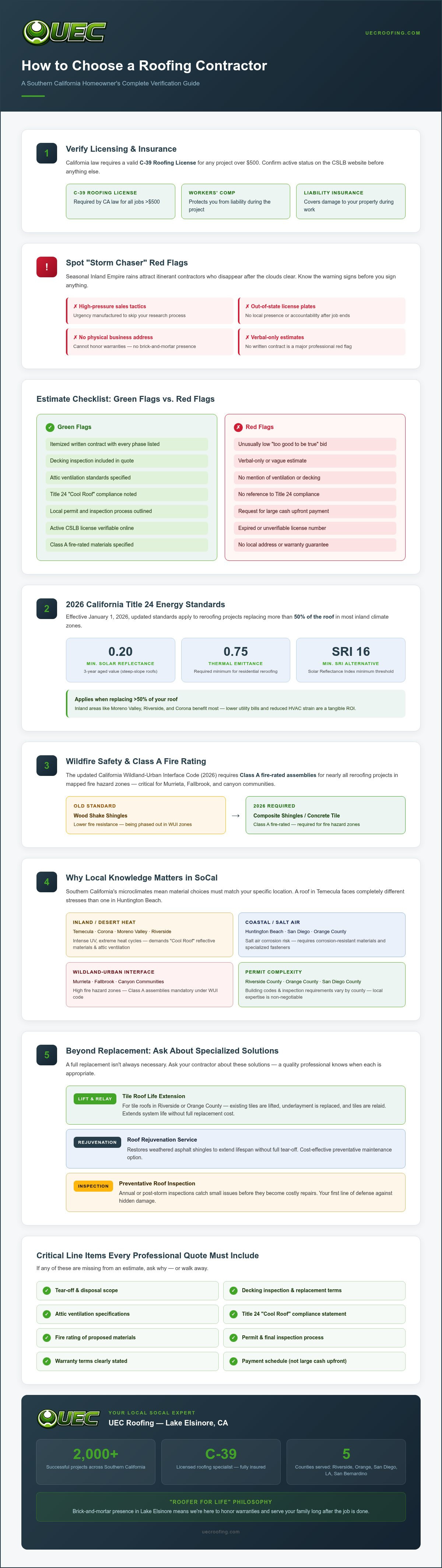
Selecting the right professional to protect your home is a major decision that impacts your property value for decades. Knowing how to choose a roofing contractor starts with understanding that California has some of the strictest trade requirements in the nation. A qualified professional must hold a valid C-39 Roofing license. This is not a suggestion; it's a legal requirement for any project valued at over $500. Beyond the license, they must carry active workers' compensation and liability insurance to shield you from financial risk during the project.
Seasonal rains in the Inland Empire often bring "storm chasers" to our neighborhoods. These itinerant workers lack a local foundation and often disappear once the clouds clear. You can spot them by their high-pressure sales tactics, out-of-state license plates, or lack of a physical business address. A local brick-and-mortar presence, like our office in Lake Elsinore, ensures we are here to honor warranties long after the job is finished. If a contractor offers a verbal estimate for a project in Riverside or San Diego Counties, consider it a significant red flag. Professional standards require detailed, written contracts that outline every phase of the work, from the initial tear-off to the final inspection.
Verifying Credentials and Local Authority
Visit the CSLB website to confirm a contractor’s license is active and free of pending citations. While a general contractor might offer to handle the work, a C-39 specialist has the dedicated training required for technical standards in roof construction. This specialization is critical for ensuring your roof can withstand the unique pressures of the California sun and wind. We operate with a "roofer for life" philosophy. This means we focus on the long-term health of your home, prioritizing quality craftsmanship over high-volume, low-quality turnover that often leads to early failure.
Local Knowledge: The Inland Empire and Coastal Factor
Southern California is a land of microclimates. A roof in the dry heat of Temecula faces different stresses than one in the salt air of Huntington Beach. A local expert understands these nuances and knows which materials will perform best in your specific zip code. They also navigate the complex world of local building permits and mandatory inspections, which can vary significantly between Riverside and Orange County. With over 2,000 successful projects across the region, UEC Roofing understands how to choose a roofing contractor who is intimately familiar with regional codes and environmental demands.
Decoding the Quote: Technical Standards and SoCal Compliance
A detailed quote should reveal a contractor's technical depth. In Southern California, the sun's intensity is more than a comfort issue; it's a structural challenge. This is why understanding how to choose a roofing contractor involves looking for "Cool Roof" technology in every estimate. These materials reflect sunlight and emit heat, keeping your home cooler and reducing the strain on your HVAC system. In high-heat zones like Corona, proper attic ventilation is equally vital. It prevents heat from being trapped in your attic, which can lead to premature material failure and higher cooling costs.
Energy Efficiency and Title 24 Compliance
Effective January 1, 2026, California Title 24 standards have become more stringent for reroofing projects. For residential properties in most inland climate zones, steep-slope roofs must now achieve a minimum 3-year aged solar reflectance of 0.20 and a thermal emittance of 0.75, or a minimum Solar Reflectance Index (SRI) of 16. These requirements apply when you replace more than 50% of your roof. For homeowners in Moreno Valley and Riverside, these upgrades aren't just about red tape. They provide a tangible return on investment through lower utility bills. You can learn more about our Roofing Services to see how we integrate these standards into every project.
Fire Resistance and Material Durability
Wildfire safety is a primary concern for residents in Murrieta, Fallbrook, and local canyon areas. As of early 2026, the updated California Wildland-Urban Interface Code requires Class A fire-rated roof assemblies for nearly all reroofing projects in mapped fire hazard zones. Moving from older wood shakes to fire-resistant composite shingles or concrete tile is a standard safety upgrade. However, the external material is only half the story. High-quality underlayment is the true backbone of a tile system. Knowing how to choose a roofing contractor requires a deep dive into these technical specifications to ensure your home is protected from both heat and embers. Specialized systems like foam or flat roofing require even more precision. Choosing a contractor who understands these nuances ensures your roof survives the next heatwave or Santa Ana wind event.
Comparing Contractor Estimates: Red Flags and Green Flags
Comparing estimates is about more than finding the lowest number. It's a critical step in learning how to choose a roofing contractor who prioritizes your home’s structural integrity. Many homeowners fall into the "low-ball" trap, where an unusually cheap quote hides the use of sub-par materials or the omission of essential labor. A professional estimate must be transparent and exhaustive. It should include specific line items for the tear-off of existing layers, a thorough decking inspection, and the full replacement of all flashing. If debris removal isn't clearly stated as part of the price, you'll likely face unexpected costs once the project begins.
Understanding the distinction between warranties is vital for your long-term peace of mind. A manufacturer’s warranty covers material defects, but it doesn't protect you from poor installation. This is why a workmanship guarantee is the true mark of a reliable professional. Before you commit, verify the contractor's current standing on the CSLB website. Ensure their workers' compensation and general liability insurance are active. These protections are non-negotiable for any project in Lake Elsinore or across the Inland Empire.
How to Spot an Incomplete Roofing Estimate
Vague language is a major warning sign. Be wary of phrases like "repair as needed" without a specified unit price for plywood or decking replacement. An incomplete estimate often omits permit fees or asks the homeowner to pull their own permits. This is a significant red flag. A legitimate professional handles the bureaucracy and includes these costs upfront. Look for specific mentions of drip edges and the exact metals used for valley flashing. If these details are missing, the contractor may be cutting corners on the most vulnerable parts of your roofing system.
The Value of Professionalism and Communication
The quality of the initial inspection often mirrors the quality of the final build. Modern professionals use drone imagery or thermal detection to identify trapped moisture and structural weaknesses that a standard ladder inspection might miss. Communication speed and transparency are also key indicators of future project management. If a company is slow to respond during the bidding phase, they're unlikely to be reliable during a complex installation. For more insights, you can read our guide on choosing a residential roofing contractor in Southern California. Transparency from the start is the best way to ensure a successful, stress-free investment.
Beyond Replacement: Evaluating Contractors on Specialized Solutions
A binary choice between a small repair and a total replacement is often a false dilemma. Many contractors push for a full replacement because it simplifies their sales process and increases project value. However, for many homes in Riverside or Orange County, a complete tear-off might be premature. Understanding how to choose a roofing contractor means seeking an expert who evaluates the specific health of your existing materials rather than defaulting to the most expensive option. Specialized solutions can often extend the life of your investment while maintaining your home's structural integrity.
Is Your Tile Roof a Candidate for Lift and Relay?
In regions like Carlsbad and Escondido, concrete and clay tiles are designed to last 50 years or more. The primary weak point is usually the felt underlayment beneath them, which often fails after two decades of exposure. If your tiles are structurally sound but you're experiencing leaks, you may be an ideal candidate for a "Lift and Relay." This technical process involves removing the existing tiles, cleaning them, and installing high-quality new underlayment before reinstalling the original tiles. It's a sustainable approach that preserves your home's aesthetic while ensuring a watertight seal. You can consult our complete guide to lift and relay roofing for a deeper technical breakdown of this service.
Roof Rejuvenation: The Modern Alternative
Asphalt shingles in high-heat zones like Winchester or Wildomar often become brittle as their natural oils evaporate under the intense sun. Roof Rejuvenation uses bio-based oils to restore flexibility and granule adhesion, potentially extending the life of an aging shingle roof by 5 to 15 years. It's a strategic solution for roofs showing signs of wear but no structural failure. When you evaluate the cost of roof rejuvenation vs replacement, the savings are often substantial. A knowledgeable professional will help you determine if this modern treatment is the right fit for your property.
Determining the right course of action requires a professional eye and a commitment to honesty. Our team prioritizes the solution that makes the most sense for your property and your budget. If you want to explore these alternatives, reach out to schedule a comprehensive Roof repair assessment today.
Finalizing Your Decision: Why UEC Roofing is Your Roofer for Life
Selecting a partner for your home’s most critical defense is the final step in the process of how to choose a roofing contractor. At UEC Roofing, we operate under a "Roofer for Life" philosophy. This means we don't just look for the most expensive contract; we look for the most durable solution for your specific needs. Whether it's a minor leak repair or a complex installation, our goal is to build a relationship based on trust and craftsmanship. With over 2,000 successful projects completed across Riverside, San Diego, and Orange Counties, we’ve refined a process that eliminates the anxiety of hidden costs and technical errors.
The UEC Inspection and Diagnostic Process
Our inspections go beyond a quick walk on the shingles. We perform a comprehensive diagnostic that includes the attic space, all flashing points, and the roof surface to find the actual root cause of any issues. You'll receive a detailed photo report so you can see exactly what our experts see. This transparency ensures you have all the facts before making a decision. We provide a clear, fixed-price estimate that reflects our deep understanding of Southern California’s unique climate challenges and the 2026 building codes. We prioritize a no-pressure consultation, giving you the space to choose between repair, rejuvenation, or replacement based on your home's actual condition.
Financing and Planning for Your Project
We understand that a major project requires careful planning and financial clarity. You can explore our guide on Southern California roof replacement cost to help manage your budget effectively. Our brick-and-mortar office in Lake Elsinore isn't just a physical location; it's a promise that we'll be here for the entire lifespan of your roof. We serve Lake Elsinore, Temecula, Murrieta, and the surrounding regions with efficient turnaround times and uncompromising quality standards.
Knowing how to choose a roofing contractor shouldn't be a stressful experience. When you partner with us, you're choosing a team that treats your investment with the respect it deserves. Protect your family and your property value with a system built for the long haul. Contact us today to schedule your professional inspection and see why thousands of your neighbors trust UEC Roofing for their long-term protection.
Securing Your Investment with Confidence
Mastering how to choose a roofing contractor comes down to verifying technical expertise and local reliability. We've explored why 2026 Title 24 compliance and Class A fire ratings are non-negotiable for homeowners in Riverside and Orange Counties. You now understand that specialized solutions like a "Lift and Relay" or roof rejuvenation can often save your budget while extending your home's protection. These alternatives demonstrate that a professional partner focuses on the right solution rather than the most expensive one. Quality workmanship is the only way to ensure your roof survives the intense Southern California sun and seasonal rains.
UEC Roofing brings the authority of over 2,000 successful projects in Southern California to every diagnostic inspection. As specialists in tile, shingle, and specialized systems, we operate from our brick-and-mortar office in Lake Elsinore to ensure we're always available when you need us. We don't just install roofs; we provide long-term peace of mind through craftsmanship and transparency. Your home is your most valuable asset. It's time to choose a partner who treats it with the same care and respect that you do.
Get Your Transparent Roofing Quote from UEC Roofing Today
Frequently Asked Questions
How do I verify a roofing contractor’s license in California?
You must visit the Contractors State License Board (CSLB) website and enter the contractor’s license number or business name. Confirm that they hold an active C-39 Roofing license and that their workers’ compensation and general liability insurance are current. This verification is a critical step in learning how to choose a roofing contractor who is legally authorized to work on your home.
Why are roofing quotes in Southern California higher than the national average?
Our regional costs reflect California’s strict building codes, including the 2026 Title 24 energy standards and mandatory Class A fire ratings. Higher labor rates and the technical requirement for "Cool Roof" materials also contribute to the difference. These standards ensure your roof can withstand extreme heat and wildfire risks common in the Inland Empire and coastal regions.
What is the difference between a roof tune-up and a full replacement?
A roof tune-up is a preventative maintenance service that involves sealing penetrations, replacing broken tiles, and clearing debris to extend the life of your existing system. A full replacement involves a total tear-off down to the wood decking and the installation of a completely new roofing assembly. Tune-ups are ideal for roofs in good structural shape that need minor attention to prevent leaks.
Does a new roof quote include the cost of permits and inspections?
A professional estimate should always include the cost of all necessary building permits and municipal inspections. If a contractor asks you to pull your own permits or leaves them out of the quote, it's a significant red flag. Legitimate professionals handle the entire administrative process to ensure your project remains compliant with local city and county regulations.
How many quotes should I get before choosing a roofing contractor?
We recommend obtaining three detailed quotes to compare the scope of work and the quality of materials proposed. This allows you to see if a contractor is cutting corners on essential line items like flashing or underlayment. Focus on the technical depth of the inspection and the company’s local reputation rather than simply selecting the lowest price provided.
What happens if a contractor finds more damage after the roof is torn off?
The contractor should document the newly discovered damage with clear photos and provide a written change order for the repairs. Professional contracts often include a "per sheet" price for plywood decking replacement to ensure you know exactly what the cost will be before the work begins. This transparency prevents unexpected financial surprises during the construction phase.
Is roof rejuvenation a real alternative to getting a new roof?
Roof rejuvenation is a scientifically backed maintenance solution that restores essential oils to aging asphalt shingles. It's a viable alternative if your roof is structurally sound but the shingles have become brittle from sun exposure. This treatment can add 5 to 15 years of life to your system, though it cannot fix active leaks or underlying structural failure.
How long is a roofing quote valid before the price changes?
Most roofing quotes are valid for 30 days due to the frequent fluctuations in material costs and labor rates in the California market. If you wait longer than a month to sign a contract, the contractor may need to provide an updated estimate to reflect current market pricing. Always check the expiration date on your written proposal to secure the quoted rate.