
How Much Is a New Roof in 2026? Costs, Factors, and What to Expect
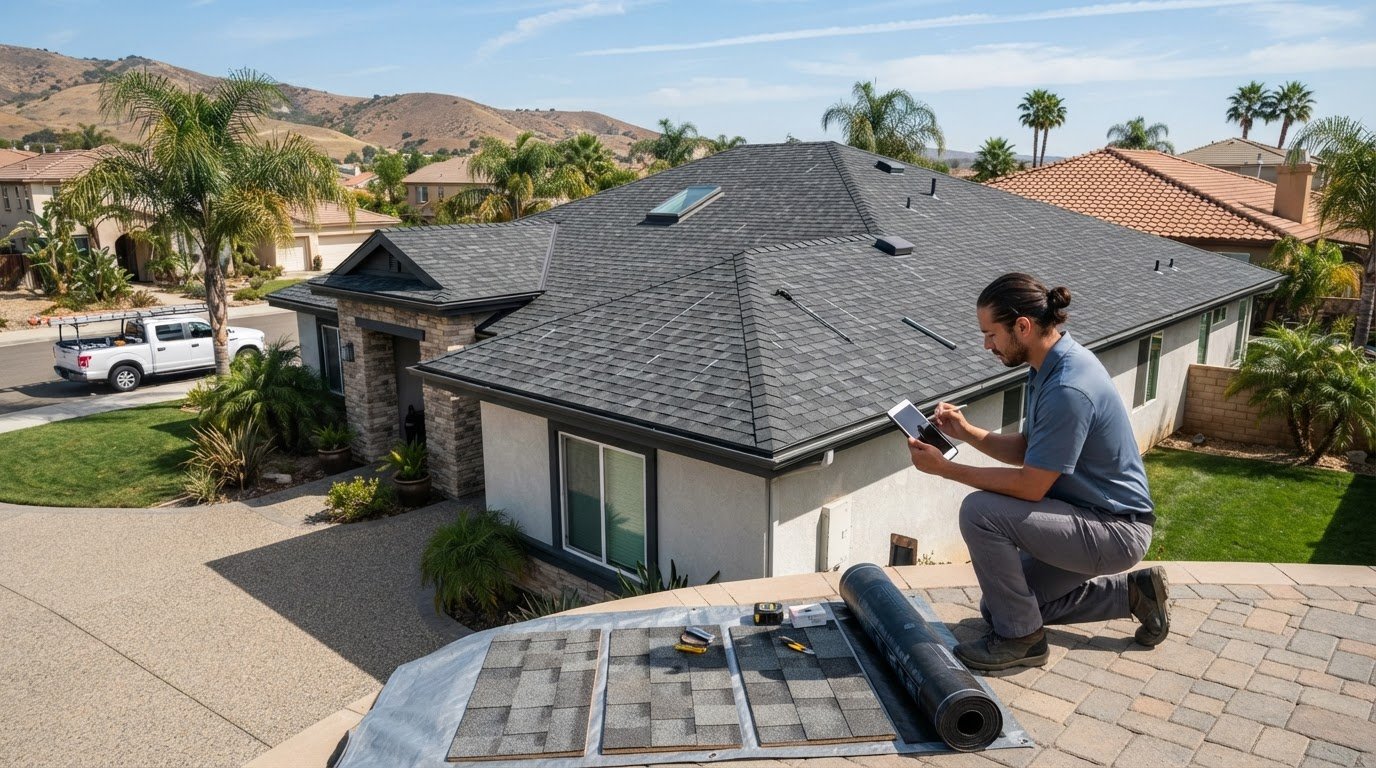
What if the best answer to “how much is a new roof” starts with a closer look at your home, not a generic figure? It’s natural to want a clear estimate before making a major decision. Useful planning begins with understanding the roof’s condition, the system being considered, and the work your property actually needs.
This guide explains how to review a roofing estimate, compare project scopes, and prepare for an assessment. You’ll learn which details can affect the proposed work and what questions to ask before deciding on a long-term roofing plan for your Southern California home.
Key Takeaways
- To understand how much is a new roof for your home, focus on its condition, design, selected system, and the work included in the estimate.
- Review the written scope for removal, preparation, and related work identified during the inspection.
- Southern California sun, heat, and seasonal weather make durability and maintenance important parts of roof planning.
- An inspection can help determine whether full replacement, targeted repair, or rejuvenation fits the roof’s condition.
- UEC Roofing provides roofing services in Lake Elsinore, the Inland Empire, and communities across the region.
How Much Is a New Roof? Why One Estimate Cannot Fit Every Home
A dependable answer to “how much is a new roof” starts with the property itself. The roof’s condition, shape, slope, accessibility, selected roofing system, and work included in the agreed scope all influence the estimate. Online averages may offer broad context, but they can’t account for the details of a specific home in Southern California.
A roof replacement estimate should describe the materials, preparation, installation, and related work proposed for your property. Look for a scope that connects the work to inspection findings, rather than a number without an explanation of what it covers.
Why online roof replacement averages can mislead
Homes that look similar from the street can have different roof areas, slopes, access challenges, and existing conditions. A steep roof or one with limited access may need a different installation plan than a simpler roof. Existing materials and the condition of the surfaces beneath them can also affect removal and preparation. These differences are why a broad average may not match your project.
General national summaries may not reflect the labor, materials, or project requirements involved in roofing work across Lake Elsinore, the Inland Empire, and nearby communities. Material choice is only one part of the decision. For a general overview of types of roofing materials and roof components, it helps to understand how systems differ. The right choice still depends on the home and proposed scope.
What a homeowner should expect from an estimate
A useful estimate sets out the roofing work proposed for the property and the preparation needed to complete it. A site assessment helps identify visible conditions that may affect the work, including the roof’s layout, existing materials, and areas needing attention. The written scope should make it easier to understand what is included and how the proposed system fits the home.
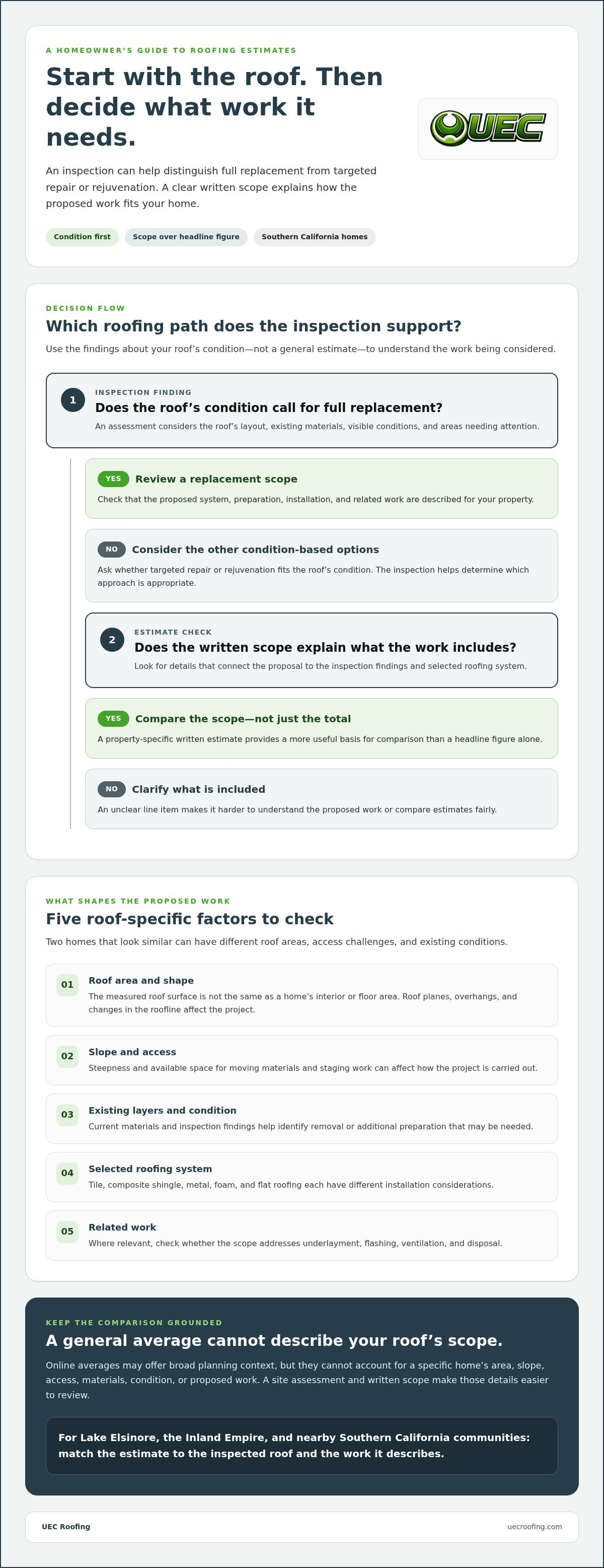
As you review the estimate, look for a clear description of the selected roofing system and the work required to prepare and install it. Check whether removal, underlayment, flashing, ventilation, and disposal are addressed where relevant. If the roof has areas that need further attention, the scope should explain how those findings relate to the proposed work. This gives you a more useful basis for comparing estimates than the headline figure alone.
A general cost guide offers broad planning context; an inspected, written estimate describes the work proposed for your specific roof.
For wider budgeting context, UEC Roofing’s Southern California roof replacement cost guide can help explain common planning considerations. Use it as background, then rely on a property-specific assessment to understand the scope for your home.
What Factors Shape a New Roof Estimate? Understand the Scope
A roof estimate reflects more than the visible surface. It accounts for how much roof needs work, its shape and slope, access for the crew, existing materials, the selected roofing system, and preparation or related work identified during inspection. Reviewing these details helps you understand what the proposed project covers, not just its final figure.
- Roof area and shape: The measured roof surface differs from a home’s interior or floor area. Multiple planes and changes in the roofline affect the amount and arrangement of materials.
- Slope and access: Roof steepness and the space available for moving materials and staging work can affect how the project is carried out.
- Existing layers and condition: Current roofing materials and visible damage help determine what removal or additional preparation may be needed.
- Selected system: Tile, composite shingle, metal, foam, and flat roofing have different installation considerations.
- Related work: Review whether underlayment, flashing, ventilation work, and disposal are included in the written scope.
Two roofs of similar size can require different scopes because their layout, access, existing materials, and condition may not be alike.
Roof size, shape, slope, and access
Home floor area is not a substitute for measuring the roof. Slopes, overhangs, and intersecting roof planes affect its actual surface area, so measurements and an inspection are needed to define the project. A straightforward roof shape may call for a different installation plan than a home with several roof sections. Steepness and access can also affect labor and staging.
When reviewing a proposal, check that the measured area and described roof sections match the home. If a roof has multiple slopes, valleys, or transitions, make sure the scope explains how the work accounts for those features. This helps you compare proposals based on the actual roof rather than an approximate figure based on the home’s floor plan.
Materials, removal, and supporting work
UEC Roofing provides tile replacement and lift and relay services, as well as new roof installations. Roofing systems such as tile, composite shingle, metal, foam, and flat roofing have different installation considerations. Homeowners comparing options can learn more about different roofing types and their lifespan, then consider how each option fits the home and project priorities.
Existing materials and inspection findings help determine the preparation and removal involved. If damaged areas are uncovered as work progresses, they may call for additional preparation. The estimate should explain what work is planned and how necessary related work is addressed.
Check the written scope for specific descriptions of underlayment, flashing, ventilation, and disposal. These details show how the work extends beyond the roofing surface. If a line item is unclear, ask for a plain-language explanation of what it covers before comparing project scopes.
For homeowners weighing how much is a new roof, this checklist connects the proposed work to the property rather than relying on roof size alone. A roof inspection and estimate from UEC Roofing can help clarify the condition and scope for a Southern California home.
How Southern California Conditions Affect New Roof Planning
A roof in Southern California should be planned for the conditions around the home, not just its appearance. Strong sun and heat can expose roofing materials to ongoing weathering, while seasonal weather makes sound installation and routine maintenance important. These considerations matter around Lake Elsinore and the Inland Empire, as well as Riverside, Orange, San Diego, Los Angeles, and San Bernardino Counties.
Local conditions don’t determine a single roofing choice for every home. Exposure can vary with the property’s setting, roof orientation, surrounding trees, and design. A thoughtful replacement plan considers these details alongside the homeowner’s priorities for durability, energy efficiency, and upkeep. That context helps answer how much is a new roof by clarifying which system and work suit the property, rather than assuming one solution fits the region.
Regional exposure and long-term roof performance
Sun exposure and heat are practical factors to discuss when selecting a roofing system. Materials respond differently to their environment, and roof design affects how those conditions reach the surface. A system suitable for one home may not be the best fit for another with different exposure or roof geometry. Rather than relying on a broad lifespan claim, consider the material, installation scope, and maintenance needs together.
Maintenance planning is part of protecting the value of a replacement. Ask how to monitor the completed roof over time and what signs of wear or damage deserve attention. Noticing changes, such as visible damage or a new leak, can help you arrange an assessment and understand whether maintenance or repair is appropriate. A roof is a long-term investment in the home, so the plan should account for care after installation, not just the work on installation day.
Ventilation and fire resistance in the project scope
Attic ventilation is a design consideration that should be evaluated in relation to the home and its existing roof assembly. It isn’t an automatic result of replacing roofing materials. Discuss whether ventilation work is part of the proposed scope, what conditions it addresses, and how it fits the overall roof design. Clear answers help distinguish the roofing surface from supporting work that may also be considered.
Fire resistance is another relevant consideration for Southern California homeowners, particularly when reviewing material options. The suitable choice depends on the property and project details. Don’t assume a general statement about a material settles what is appropriate for a specific home. Any location-specific requirements should be established for the project rather than inferred from county or regional generalities.
- Discuss exposure: Identify areas of strong sun, shade, and other conditions around the roof.
- Plan for upkeep: Understand the maintenance considerations associated with the proposed system.
- Clarify design elements: Review whether ventilation and fire resistance have been considered in the scope.
These conversations help homeowners make an informed roofing decision based on the property’s conditions and long-term needs.
Should You Replace the Roof or Consider Repair and Rejuvenation?
A roofing problem doesn’t automatically mean the entire roof needs to be replaced. The right scope depends on the roof’s overall condition, how widespread the affected areas are, and what an inspection finds. A targeted repair may address a localized issue, while broader wear or recurring problems may call for a closer look at replacement. Rejuvenation is another option to evaluate when it suits the roof’s condition.
The goal is to address the underlying condition, not simply choose the option that appears least expensive at first. A limited repair may not resolve a wider problem, while full replacement may be more work than the roof needs. A professional assessment helps put the choices in context. UEC Roofing’s roof rejuvenation versus replacement guide offers further perspective on comparing these approaches.
When a repair may be worth assessing
Localized damage, such as a leak that appears to affect one area, is a reason to assess repair. It isn’t proof that the rest of the roof is sound or that replacement is unnecessary. An inspection should identify the likely source and extent of the problem, then determine whether focused work fits the roof’s wider condition.
For example, a leak may be visible indoors while its source is elsewhere on the roof. Addressing only the visible sign without understanding the cause may leave the underlying issue unresolved. Homeowners dealing with leaks can see how a specific repair project was approached in this Riverside roof leak repair case study.
When replacement deserves serious consideration
Widespread wear or recurring issues across different areas are reasons to request an expert assessment of the roof as a whole. These signs don’t establish a diagnosis on their own, and they can’t determine remaining service life without inspection. The assessment should connect observed conditions to the recommended work and explain why a broader scope may be appropriate.
Replacement addresses the roof as a larger project. Repair focuses on a specific problem or affected area. Rejuvenation is an option to evaluate when the roof’s condition makes that approach suitable. It isn’t a substitute for every replacement, and its appropriateness depends on inspection findings. Ask for the reasoning behind the recommended scope so you can understand what each option is intended to address.
- Repair: Consider it for a defined, localized issue after its source and extent are assessed.
- Replacement: Evaluate it when inspection findings point to broader wear or recurring concerns.
- Rejuvenation: Discuss it when the roof’s condition makes it relevant, rather than assuming it fits every roof.
For homeowners asking how much is a new roof, determining whether replacement is the right scope is an important part of understanding the project. UEC Roofing provides leak repair, roof repair, rejuvenation, and replacement. Arrange a roof inspection and discuss the appropriate next step based on your roof’s condition.
How to Get a Clear New Roof Estimate from UEC Roofing
A clear estimate begins with understanding the roof and the work it needs. UEC Roofing provides roof inspections, leak repairs, tune-ups, felt replacement, tile replacement, lift and relay services, roof rejuvenation, and new roof installations. The company serves homeowners in Lake Elsinore, Menifee, Temecula, Canyon Lake, Corona, Moreno Valley, Winchester, Wildomar, Murrieta, Riverside, Orange, Anaheim, Huntington Beach, Fallbrook, Vista, Escondido, Carlsbad, San Diego, El Cajon, and Poway.
Take these steps to move from a general question about how much is a new roof to a project-specific discussion:
- Arrange an inspection. An on-site assessment gives UEC Roofing an opportunity to review the roof’s condition and the concerns you’ve noticed.
- Review the findings. Discuss the observed condition and any areas that may affect the work. The inspection helps identify appropriate next steps.
- Discuss the scope. Review the proposed work and clarify what it covers, including preparation and related tasks that apply to your roof.
- Consider the roofing system. Talk through the proposed system in relation to the home, its conditions, and your priorities for durability and maintenance.
What to prepare before discussing the project
A few notes can make the conversation more useful. Write down visible concerns, any leaks, and repairs you know about. If you have records or details about previous roofing work, share them. Consider what matters most to you, such as addressing a recurring issue, planning for durability, or understanding maintenance needs.
Bring questions about materials and the scope of work. You might ask which roofing system is proposed, what preparation is included, and how inspection findings relate to the recommendation. These details keep the discussion grounded in your property, rather than assumptions based on a home’s age or appearance. The roof’s actual condition informs the next steps.
From inspection findings to a considered decision
UEC Roofing provides replacement alongside roof repair, rejuvenation, and maintenance. An assessment can help determine which type of work suits the roof’s condition and the affected areas. The goal is to understand the need before settling on a scope. A defined proposal can then explain what work is planned and how it addresses the inspection findings.
Review the proposed scope carefully. Make sure you understand the system being considered, the work it includes, and any related preparation. If a description is unclear, request a plain-language explanation so you can make an informed decision about the investment in your home. This is especially helpful when weighing a complete replacement against more targeted work.
UEC Roofing serves Lake Elsinore and communities throughout the region, helping homeowners consider a new roof, repair, rejuvenation, or maintenance based on the property’s needs. Contact UEC Roofing to discuss a roof inspection and the right next step for your home.
Make Your Next Roofing Decision with Confidence
A roofing decision is easier to make when the recommendation reflects your home’s condition and the proposed work is clear. Consider how the scope protects your property and fits your priorities for caring for the home over time. That gives an estimate meaning beyond a figure on a page.
If you’re still asking how much is a new roof, connect the assessment, chosen system, and written scope into a plan that makes sense for your property. Keep the inspection notes and estimate with your home records. They can serve as a useful reference when planning future roof maintenance or discussing changes later.
A thoughtful roofing decision doesn’t need to be rushed. Take time to understand the recommendation and choose a path that fits your home. Contact UEC Roofing to arrange an inspection and discuss your roofing needs, whether you’re considering repair, rejuvenation, or replacement.
Frequently Asked Questions
How much is a new roof in Southern California?
The cost depends on the individual project, so a general online figure can’t establish what your home’s roof will cost. Before reviewing an estimate, note the roofing concerns you’ve observed and gather any records of prior work. That context makes the project discussion more specific. An inspection and written estimate are needed to understand the work proposed for your home.
What is usually included in a new roof estimate?
An estimate should identify the work being proposed and make it possible to understand what the project covers. Check that the described work relates to your roof and that exclusions or conditions are clear. Look for details on removal, preparation, installation, and related work such as underlayment, flashing, ventilation, or disposal when applicable. If a term or line item is unfamiliar, request a plain-language explanation before making a decision.
Does roof size determine how much a new roof costs?
Roof size is one factor, but it doesn’t determine the full project by itself. A home’s floor area isn’t a reliable substitute for measuring the roof, so avoid using real-estate or floor-plan square footage to estimate roofing quantities. Share any existing roof measurements if you have them, but rely on a project assessment for the actual scope.
Can I repair my roof instead of replacing it?
A repair may be suitable for a localized problem, but the location of a ceiling stain alone doesn’t establish where water is entering. Note when the leak appears, which rooms are affected, and whether you’ve noticed changes after rain. Share those observations during an assessment. They can help direct attention to the concern, while the roof’s overall condition informs whether focused repair is appropriate.
Is roof rejuvenation an alternative to a new roof?
It can be an option to discuss, but suitability depends on the existing roof and what the work is intended to address. Before deciding, ask for a clear explanation of how the proposed rejuvenation relates to the roof’s observed condition and how it differs from replacement. The option should be considered on its own merits, not assumed to fit every roof or resolve every roofing issue.
How long does it take to get a new roof estimate?
The time can vary depending on the property and the information needed to assess it. To make the inspection discussion more focused, have access details ready and gather records of prior roofing work if available. Note any areas of concern so they can be discussed during the assessment. UEC Roofing can explain the proposed next steps after reviewing the roof.
What roofing systems can UEC Roofing replace in Southern California?
UEC Roofing provides new roof installations and specializes in tile replacement and lift and relay services. The right roofing system depends on the home and project considerations. During an assessment, discuss the proposed system and your priorities for appearance, maintenance, and durability. Inspection findings help guide the conversation about the appropriate work.
For a property-specific next step, contact UEC Roofing to discuss a roof inspection and the roofing work your home may need.