
Fixing a Tile Roof Leak in Murrieta: Homeowner Guide
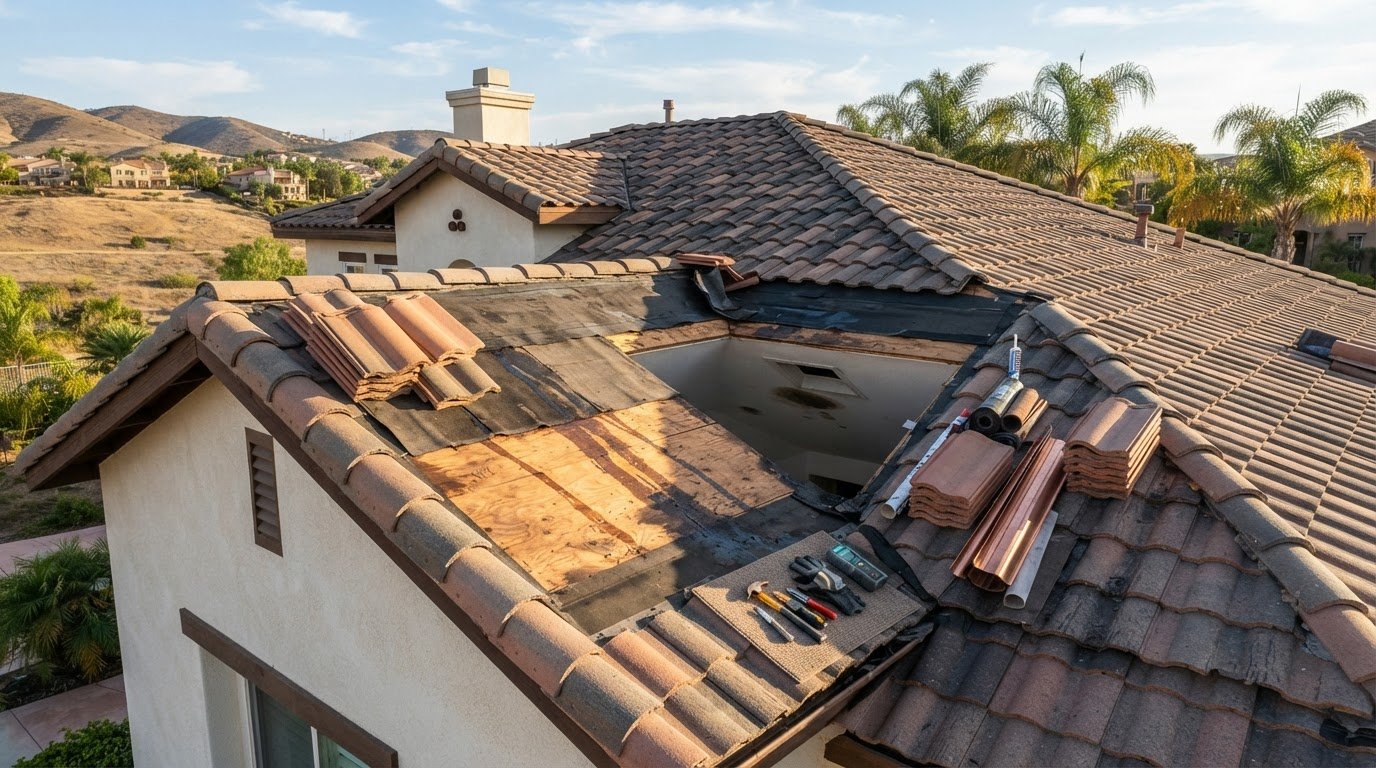
What if the ceiling stain is nowhere near the point where water enters your roof? With tile roofing, water can travel beneath the tiles before it appears indoors, so the visible damage may not show where the leak began. Fixing a leak in a tile roof Murrieta homeowners depend on starts with finding the source, not just treating the symptom.
A leak can put ceilings and other interior areas at risk, and it’s understandable to wonder whether a small repair will be enough. Murrieta’s hot, dry summers and Santa Ana winds make it important to assess the roof beneath the tiles, including its underlayment. Damaged or displaced tiles may be part of the problem, but they don’t always tell the whole story.
This guide explains what to do while you arrange a professional assessment and how to compare a localized repair, tile replacement, and lift-and-relay work. You’ll learn how an inspection can help match the repair to your roof’s condition, so you can make an informed choice for your home.
Key Takeaways
- If a leak appears after rain, contain drips, move belongings, and document interior damage while you arrange an inspection.
- Fixing a tile roof leak in Murrieta starts with tracing where water enters and checking the materials beneath the tiles.
- Compare localized repair, lift and relay, and full replacement according to the roof’s condition and the scope of the problem.
- Record when the leak occurs, which rooms are affected, and any roof changes visible from the ground to help prepare for an assessment.
- UEC Roofing provides leak repair, tile replacement, felt replacement, and lift-and-relay services for Murrieta homeowners from its Lake Elsinore base.
A tile roof leak in Murrieta: what to do first
After rain, a new ceiling stain or steady drip in your Murrieta home can be unsettling. Focus first on limiting interior damage and keeping people safe. Don’t climb onto the roof to look for a loose tile. Wet tile can be slippery, and stepping on fragile tiles can cause damage or a fall.
What should you do when water is coming through the ceiling?
Take practical steps indoors while arranging an assessment. If water is near a light fixture, outlet, or other electrical equipment, keep clear and avoid touching wet switches or devices. Don’t enter an area if the ceiling appears to be sagging or unsafe.
- Place a bucket or other suitable container beneath active drips, and move furniture, electronics, and valuables out of the affected area.
- Take clear photos of stains, peeling paint, damp flooring, or other visible changes. Note when you first saw the water and whether it appeared during or after rainfall.
- If water is pooling, protect nearby belongings with towels or a plastic covering, but don’t puncture the ceiling or attempt a repair from inside.
- Observe the roof only from a safe position on the ground. Don’t walk on tile, use a ladder in wet conditions, or try to shift tiles yourself.
These observations can help a roofing professional understand what happened, but they don’t identify the entry point by themselves. Record what you notice rather than attempting a risky inspection.
Why can a tile roof leak appear far from its source?
Tile roofs are layered systems. Rain passes over the tile surface, while the materials beneath help protect the roof structure. Water that gets beneath the tiles may travel along the roof before reaching the ceiling, so an interior stain can appear some distance from the point where water entered.
A ceiling stain marks where water became visible indoors, not necessarily where it entered the roof. Repairing the area directly above a stain without tracing the water’s path may miss the source. Cracked, displaced, or missing tiles can be clues, but the visible symptom alone can’t establish the cause.
For a general overview of tile materials and roof designs, see Roof tile. Identifying a leak requires assessing the particular roof and its condition. When fixing a leak in a tile roof in Murrieta, follow the evidence rather than assuming the ceiling stain points straight up to the roof opening.
How a professional diagnoses and fixes a Murrieta tile roof leak
A reliable repair begins by tracing the path water took, not simply replacing the tile nearest an interior stain. Tile roofs have multiple layers and transitions, so an on-roof assessment helps distinguish a localized defect from a problem affecting materials beneath a wider area. The findings guide the repair scope.
A professional diagnosis generally follows a clear sequence:
- Inspect the reported leak area. The roofer considers the location and pattern of interior signs, along with your notes about when water appeared.
- Trace possible water entry. The inspection follows relevant roof areas instead of assuming the ceiling stain sits directly below the opening.
- Assess the roof layers. Tiles, flashing, and the condition of underlayment or felt may be evaluated where relevant to the leak.
- Define the repair scope. Recommendations reflect the observed condition, including whether the issue appears localized or calls for broader work.
This step-by-step approach avoids treating a visible clue as a confirmed diagnosis. It also gives you a clearer explanation of what needs attention and why.
Which tile-roof areas may contribute to a leak?
Cracked, displaced, or missing tiles may leave a vulnerable area, but they aren’t the only possible contributors. A roofer may also assess flashing, the material used around roof transitions and penetrations, where water can enter if it isn’t functioning as intended. Underlayment, sometimes called felt, is another part of the assembly to examine. Its condition can help show whether the concern is limited to tiles or involves a layer beneath them.
These areas need to be considered in context. A visible tile defect may be close to the entry point, or it may be unrelated to the interior symptom. Likewise, a stain alone doesn’t establish that flashing or felt has failed. Careful inspection connects what’s visible on the roof with the reported leak.
What happens during a professional leak repair?
Once the likely area has been identified, a roofer accesses it carefully and evaluates the tiles and materials beneath as needed. If the inspection points to a damaged tile, tile replacement may be appropriate. If the felt needs attention, felt replacement may be part of the repair. The work should match the findings rather than assume one repair fits every leak.
Inspection findings determine whether a leak calls for a localized repair or work on materials beneath the tiles. This distinction matters when weighing a focused fix against a more comprehensive solution. For a Murrieta tile roof, a clear explanation of the observed condition helps you understand the proposed scope before work begins.
UEC Roofing provides tile roof leak repair and related tile-roof services for Murrieta homeowners. An assessment can help determine which repair approach fits the roof’s condition.
Tile repair, lift and relay, or replacement: comparing options for Murrieta homes
A roof leak doesn’t automatically mean the whole tile roof needs extensive work. A focused repair may be suitable when inspection finds a limited defect. Broader work may be considered if the materials beneath the tiles show more widespread deterioration. The right scope depends on the roof’s condition, not the appearance of one stain or a single damaged tile.
| Approach | Scope | Assessment basis | Issue it may address |
|---|---|---|---|
| Localized repair | Work in a limited area, such as tile or felt repair | Inspection identifies a specific, contained defect | Isolated damage or a localized leak source |
| Lift and relay | Tiles are lifted so work can be done beneath them, then relaid as appropriate | Assessment finds a broader concern with underlying materials while tiles may remain usable | Underlayment or felt issues across a wider area |
| Full replacement | The existing roof is replaced | Inspection finds broader concerns with the roof, including tiles that are extensively damaged | Roof conditions that call for a more comprehensive solution |
When may a localized tile or felt repair be considered?
A focused repair may be appropriate when inspection points to limited damage rather than a problem across a larger roof area. The roofer also needs to evaluate the materials beneath the tiles. Replacing a visible tile may address that tile’s condition, but it doesn’t establish that the source of the leak has been resolved. The scope should follow the evidence.
For homeowners fixing a leak in a tile roof in Murrieta, the distinction matters: a repair should address the diagnosed issue without assuming that a small visible defect tells the whole story. On the other hand, one localized leak doesn’t prove that lift and relay or full replacement is needed.
When is lift and relay or replacement worth discussing?
Lift and relay is a broader option. Tiles are lifted to allow work on the roof beneath them, then relaid as appropriate. It may be discussed when inspection identifies underlying concerns beyond one isolated spot and the tiles can be reused. Full replacement may be considered if the assessment finds broader roof concerns or tiles that are damaged beyond practical repair.
These approaches differ in scope, so an assessment should explain what was found and why a particular option fits. UEC Roofing’s Lift and Relay Roofing Service guide and Roof Replacement Cost in Southern California guide offer further reading on those project types.

Preparing for a tile roof leak inspection in Murrieta
A few clear observations can help make a roof inspection more focused. You don’t need to diagnose the problem or access the roof yourself. Gather what you’ve noticed indoors and from a safe position on the ground. For a Murrieta tile roof, this information gives the roofer useful context to compare with the roof’s actual condition.
What information helps a roofer assess a leak?
Before the inspection, jot down when the leak first appeared and whether rain came beforehand. If you’ve seen the stain change, note what changed and when. Share any relevant repair history, such as prior tile or felt work, if you have it. These details provide context but don’t replace an on-roof assessment.
- Timing: Record when you first noticed water and whether it appeared during rainfall, afterward, or at another time.
- Rain context: Note whether rain had recently occurred and, if you observed it, whether the leak began during a particular period of rain.
- Interior locations: List the rooms and ceiling or wall areas affected. Note whether the stain has spread, darkened, or dried between observations.
- Ground-level changes: From a safe location, note any tile that appears cracked, shifted, or missing. Don’t climb a ladder or walk on the roof for a closer look.
- Roof history: Share records or details of previous roof repairs, inspections, or other work if available.
Keep notes factual. “Water appeared in the hallway after rain” is more useful than guessing which roof component failed. Photos of changing interior signs can help show the pattern over time.
How can Southern California conditions shape the assessment?
Murrieta and the Inland Empire experience dry periods as well as seasonal rain. That weather pattern is useful context when discussing when a leak appears, but it doesn’t prove what caused it. A roofer should assess your roof materials and their condition, including the areas relevant to the reported symptoms, rather than infer a diagnosis from the season alone.
This distinction supports a sound repair decision. An inspection can connect your observations with visible roof conditions and determine whether the work should remain focused or address a broader concern. After the leak is addressed, a roof tune-up may help you plan ongoing maintenance. UEC Roofing’s Roof Tune-Up Service guide offers related information on this preventive step.
Have your observations ready? Contact UEC Roofing to arrange a tile-roof leak inspection for your Murrieta home.
UEC Roofing's tile leak repair process for Murrieta homeowners
A dependable tile-roof repair starts with understanding the roof’s condition, not choosing a repair before assessing the cause. UEC Roofing serves Murrieta from its Lake Elsinore base, with experience across the Inland Empire and Southern California, including Riverside, Orange, San Diego, Los Angeles, and San Bernardino Counties. The company reports more than 2,000 successful projects in the region. UEC Roofing also serves Menifee, Temecula, Lake Elsinore, Canyon Lake, Corona, Anaheim, Moreno Valley, Winchester, Wildomar, Murrieta, Riverside, Orange, Huntington Beach, Fallbrook, Vista, Escondido, Carlsbad, San Diego, El Cajon, and Poway.
How UEC matches the repair to the roof's condition
UEC Roofing assesses the reported leak area and affected roofing materials to determine an appropriate scope. If the issue is limited, leak repair or tile replacement may be suitable. If the assessment finds that felt beneath the tiles needs attention, felt replacement may be appropriate. Lift and relay is a broader approach for work beneath tiles across a wider area.
These options address different findings. A focused repair and broader underlayment work aren’t interchangeable, and a leak alone doesn’t mean the roof needs to be lifted and relaid. The recommendation should be based on observed conditions, with an explanation of how the proposed work addresses them. Homeowners can also review UEC Roofing’s Expert Roof Leak Repair in Riverside CA case study for related repair context.
UEC Roofing’s tile-roof services include:
- Leak repair for identified sources of water intrusion.
- Tile replacement when assessment finds tiles that need replacing.
- Felt replacement when the material beneath the tiles requires attention.
- Lift and relay when the scope calls for lifting tiles to address roofing materials underneath.
Each option has a different scope. An inspection connects the roof’s condition to the work being considered, so you can understand why a particular approach is recommended.
What to do next if your Murrieta tile roof is leaking
Keep a record of interior water signs, including where they appear and when you notice them. Photos and notes about rainfall can provide useful context. Stay off the roof, especially when tiles may be wet or fragile, and leave roof access and diagnosis to a professional.
UEC Roofing’s Lake Elsinore base supports its work throughout the Inland Empire and surrounding Southern California communities.
UEC’s approach is grounded in careful assessment, quality workmanship, and respect for the home a roof protects. The aim is to build a lasting relationship and be your roofer for life, with recommendations shaped by the roof’s actual condition.
Take the next step toward a sound repair
Once you notice a leak, turn your observations into a clear plan. A professional inspection can connect what you’ve seen inside with the roof’s condition and explain which repair scope fits the findings. That gives you a practical basis for deciding how to protect your home instead of relying on guesswork.
For a Murrieta tile roof leak, a careful assessment can also help guide future maintenance priorities. Keep your notes and photos handy, and raise any questions about the roof’s condition or proposed work during the discussion.
UEC Roofing provides tile-roof inspections and repair services, including tile replacement, felt replacement, and lift and relay. Request a tile roof leak inspection in Murrieta and take the next step with a team committed to lasting workmanship and a roofer-for-life relationship.
Frequently Asked Questions
Can a cracked tile cause a roof leak?
Yes, a cracked tile can let rain reach roofing materials beneath it, but the crack alone doesn’t confirm the source of water inside your home. Don’t apply sealant or attempt to lift nearby tiles as a temporary fix. That can make inspection harder or cause additional damage. Note the tile’s location from the ground, if visible, and share that observation during the assessment.
How do roofers find the source of a leak under a tile roof?
Roofers use your observations and a close assessment of relevant roof areas to identify where water may be entering. Details such as when the leak occurs, whether it recurs, and any previous roof work can help focus the inspection. If there’s safe access, a roofer may also look for signs inside the attic. Findings guide the recommended repair rather than a guess based on one symptom.
Can you replace a few roof tiles without replacing the whole roof?
Yes, a few tiles can be replaced without replacing the entire roof when the inspection supports a limited repair. The roofer considers the surrounding tiles and the condition of the roof beneath them before defining the work. If you have spare tiles left from previous work, mention that during the assessment. They may inform the repair discussion, but the roof’s condition determines the appropriate scope.
When does a leaking tile roof need lift and relay?
Lift and relay may be appropriate if the assessment finds that roofing materials beneath the tiles need attention beyond a small, isolated area. The extent and condition of the affected area matter; a leak alone doesn’t determine the scope. Ask for an explanation of which part of the roof the proposed work addresses and how the inspection findings support the recommendation.
What should I do if my tile roof leaks during rain in Murrieta?
Keep people and belongings away from the affected spot, and don’t touch wet electrical fixtures, switches, or outlets. If the ceiling appears to sag or bulge, stay clear of the area. Don’t place a tarp or attempt a repair from the roof during rain. Record the time and room where water appeared, then share those details when arranging an inspection.
Can water from a tile roof leak appear far from the damaged area?
Yes, the place water becomes visible indoors may not identify the roof area that needs repair. Don’t use the stain’s position alone to decide where to remove tiles or apply a patch. Instead, note its edges and whether the mark changes after the next rainfall. Those observations can help show whether the area remains damp or the stain is drying.
How soon should I arrange an inspection after finding a tile roof leak?
Arrange an inspection promptly, especially if water is still entering or the affected area grows after rain. Don’t wait for a stain to disappear before documenting it; a dated photo can preserve useful information about its size and appearance. If you need help fixing a leak in a tile roof in Murrieta, contact UEC Roofing to request an inspection and discuss your roof’s condition.