
Warning Signs of Roof Damage: A Southern California Homeowner’s Guide
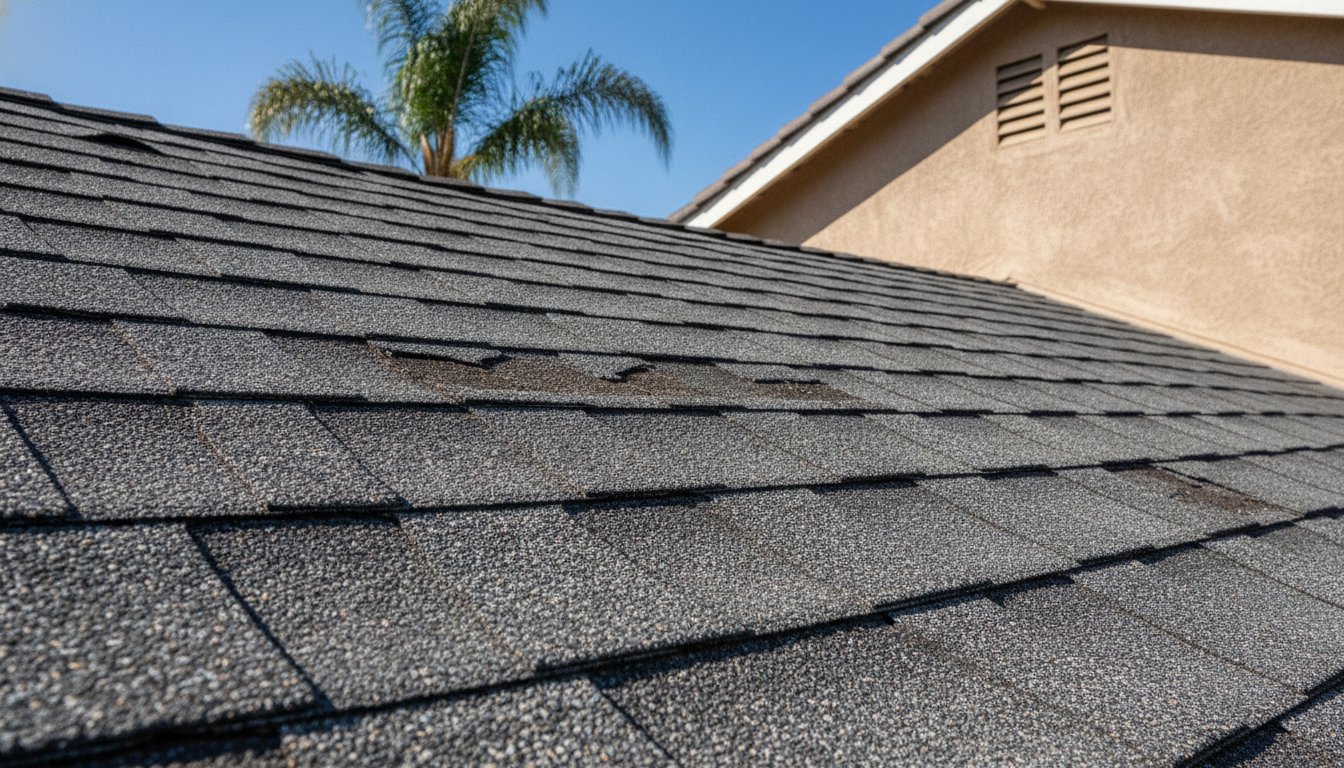
What if the biggest threat to your roof isn't a sudden winter storm, but the constant Southern California sun that's been baking your shingles for months? While many homeowners in the Inland Empire and Riverside County wait for a leak to appear before checking their home's exterior, the most dangerous issues are often invisible from the driveway. Identifying the early warning signs roof damage creates is the only way to avoid the massive expense of a premature replacement. We understand the anxiety that comes with the approaching rainy season, especially when you aren't sure if a few missing granules are a minor fix or a sign of total failure.
You deserve an honest assessment of your home's protection. In this guide, we'll provide clear criteria to help you distinguish between simple maintenance needs and structural red flags. We'll also explain how regional factors, like the updated 2025 Energy Code and local fire safety standards in San Diego and Los Angeles, affect your options. By the end, you'll have the confidence to make an informed decision for your property and your budget. Whether you're in Lake Elsinore or San Bernardino, our goal is to ensure your roof remains a reliable shield for your family.
Key Takeaways
- Understand the unique impact of high UV radiation and Santa Ana winds on Southern California roofs, even when it hasn't rained for months.
- Learn to spot the visible warning signs roof damage leaves behind, from "sand" in your gutters to subtle shingle curling that indicates aging.
- Identify the hidden interior signals of a failing system, such as moisture trails on attic rafters and "shiners" that compromise your home's integrity.
- Discover why a minor maintenance issue can quickly escalate into a full replacement if left unaddressed through just two seasons.
- Gain clarity on the professional inspection process and how to partner with a local expert who values long-term craftsmanship over high-pressure sales.
Understanding the Unique Threats to Southern California Roofs
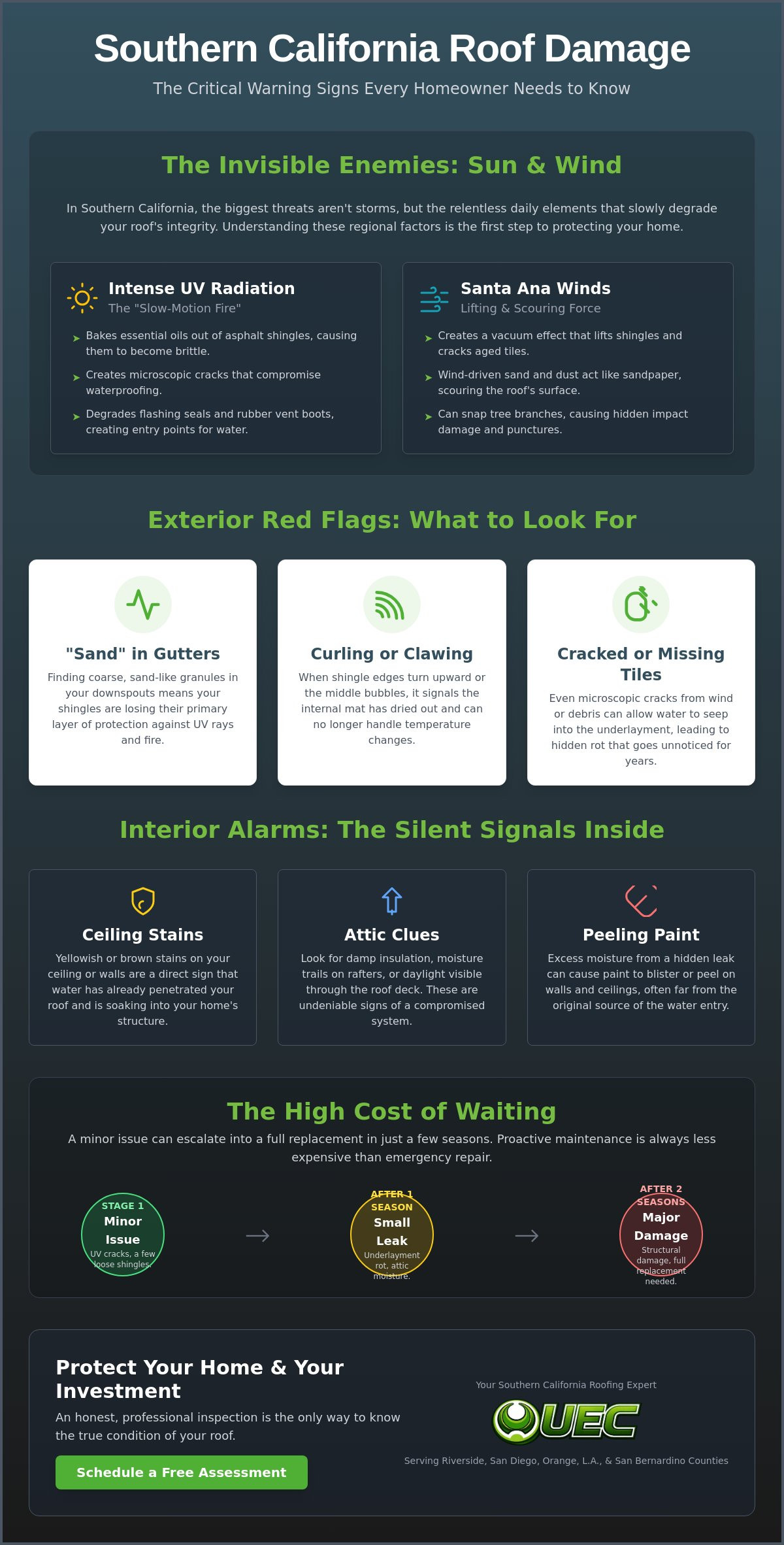
In many parts of the country, homeowners measure the life of their roof by how well it handles snow loads and heavy rain. In Southern California, the primary enemy is far more subtle. The intense UV radiation in the Inland Empire and surrounding counties acts like a slow-motion fire, gradually baking the life out of your roofing materials. This environmental stress is why identifying the early warning signs roof damage produces is so critical for residents in Riverside and San Bernardino Counties. While the primary functions of a roof are to provide insulation and weather protection, our specific climate forces these structures to endure extreme thermal expansion. Your roof expands under the 100-degree afternoon sun and contracts rapidly during the cool nights, stressing every joint and seal on your home.
Beyond the sun, our region faces the unique pressure of Santa Ana winds. In areas like Lake Elsinore and Temecula, these high-velocity gusts don't just blow through; they create a vacuum effect that can lift shingles and crack aged tiles. Many homeowners live with a "false security" during the long dry season. Because it rarely rains between May and October, it's easy to ignore the roof. By the time the first major winter storm hits, those small UV cracks and wind-loosened tiles have become significant entry points for water. This delay often turns a simple repair into an expensive emergency.
UV Degradation and Material Brittleness
Asphalt shingles rely on specialized oils to remain flexible and waterproof. The relentless sun in Orange and San Diego Counties literally cooks these oils out of the material. Once this happens, shingles become brittle and lose their protective granules. You might notice your roof looks "bald" or has developed a shiny, metallic appearance. This brittleness also affects flashing seals and the rubberized boots around your vents. When these components lose their elasticity, they crack. A roof that looks fine from the ground might actually be a sieve waiting for a rare downpour to cause a major leak.
Wind Scouring and Debris Impact
Wind damage in Southern California isn't always about shingles flying off into the neighbor's yard. Often, it's about "scouring." This occurs when wind-driven dust and sand act like sandpaper, wearing down the surface of your roof. It's a common issue in the wind corridors of the Inland Empire. We frequently see the following wind-related warning signs roof damage has occurred:
- Granule stripping: High winds pull the protective stone coating off asphalt shingles, leaving the mat exposed.
- Tile displacement: Strong gusts lift tiles, breaking the head-lap seal and allowing debris to collect underneath.
- Mechanical damage: Overhanging tree branches in Riverside neighborhoods scrape and puncture the roofing membrane.
During a wind event, these branches can snap, causing microscopic cracks in clay and concrete tiles that are invisible to the untrained eye. These small fractures eventually allow water to reach the underlayment, leading to rot that remains hidden for years.
Visible Exterior Indicators of Asphalt and Tile Roof Damage
Identifying warning signs roof damage starts with a focused visual walk-around of your home's perimeter. For asphalt shingle roofs, look for curling or "clawing." This occurs when the edges of the shingle turn upward or the middle starts to bubble. It indicates the internal organic mat has dried out and can no longer lay flat against the roof deck. Missing shingles are an obvious emergency, leaving your home's structure completely unprotected from the elements. In the Inland Empire, where temperatures swing wildly, these physical deformities are clear signals that your roof can no longer handle thermal expansion.
The "Sand in the Gutters" Test
Shingle granules are more than just aesthetic. These small stone chips provide the primary fire resistance for your home, which is vital in Southern California's Fire Hazard Severity Zones. Granule loss is the primary indicator that a shingle has lost its waterproofing capability. If you find what looks like coarse sand at the bottom of your downspouts or inside your gutters, your roof is reaching the end of its functional life. Knowing how to stop roof from leaking often starts with addressing this surface wear before the first winter storm hits. Without these granules, the asphalt mat is exposed to UV rays that cause rapid deterioration.
Tile-Specific Red Flags
Tile roofs are dominant in Lake Elsinore and Riverside County, but they are often misunderstood by homeowners. A cracked or slipped tile is often just the "tip of the iceberg" for underlayment failure. While the tile sheds the bulk of the water, the underlying felt paper provides the actual seal. When tiles break or shift, they expose this sensitive felt to UV rays that cause it to rot and crack. If your tiles are still in good condition but you notice leaks, you might benefit from a lift and relay roofing service. This process preserves your expensive tiles while replacing the failed waterproofing beneath them, extending the life of your investment without the cost of a full new system.
Metal components are just as critical as the shingles or tiles themselves. Rusted or separated flashing around chimneys, skylights, and roof valleys is a common entry point for water. We also recommend looking for these structural red flags:
- Damaged Flashing: Look for cracks in the sealant or rust on the metal around roof penetrations.
- Slipped Tiles: Check for gaps in the tile pattern that leave the underlayment exposed to the sun.
- Sagging Rooflines: Visible dips in the ridge or field of the roof suggest structural moisture damage or failed support beams.
These are serious warning signs roof damage has progressed into the bones of your house. If you see any of these indicators, it's wise to have a professional roofing contractor provide a thorough assessment to protect your property value.
Silent Interior Warning Signs: What Your Attic and Ceilings Are Telling You
While exterior checks are vital, the most reliable warning signs roof damage has occurred often hide inside your attic. You don't need to wait for a puddle on the living room floor to know there's a problem. Dark spots or "water trails" along the rafters are clear indicators that water is bypassing your shingles or tiles. Another subtle sign is the presence of "shiners." These are nails that missed the rafter during installation and now protrude into the attic space. In the cool mornings of the Inland Empire, these cold nails collect condensation from the air. This moisture eventually drips onto your insulation and ceiling, causing mysterious spots that seem to appear out of nowhere.
Identifying Active vs. Historic Leaks
Not every stain indicates a current emergency, but every stain tells a story. You can use a moisture meter or a simple "touch test" to determine if a spot is currently damp. A dry, brittle stain might be from a past repair, yet you shouldn't ignore it. In our climate, dry water stains found in the summer still require immediate professional attention. They represent a structural vulnerability that will inevitably fail during a roof leak after rain event. Peeling paint or bubbling wallpaper near your ceiling line are also strong indicators that moisture is trapped behind the drywall, even if the surface feels dry to the touch.
Attic Ventilation and Heat Traps
In cities like Anaheim or Corona, the heat doesn't just come from the sun above. Poorly ventilated attics act as heat traps, essentially "cooking" your roof from the inside out. When heat can't escape through ridge vents or solar fans, it bakes the underside of your roof deck. This accelerates the breakdown of asphalt shingles and the underlayment of tile roofs. It's a leading cause of premature material failure in Southern California. Look for these signs of poor ventilation and heat damage:
- Mold or mildew growth: Check attic sheathing for dark patches, which can occur even in dry desert climates if moisture is trapped.
- Blackened wood: Look for discoloration around the eaves or ridge line where air should be flowing.
- Spiking energy bills: A sudden increase in cooling costs often means your AC is struggling against a 140-degree attic.
- Damaged insulation: Heat-damaged insulation often looks matted down or has changed color due to moisture absorption.
These internal issues often lead to structural decay before you ever see a drop of water in your kitchen. Taking the time to inspect your attic twice a year is a proactive way to catch warning signs roof damage before they lead to a total system failure. If you notice any of these symptoms, your roof's lifespan is likely being cut short by avoidable heat stress.
The Danger of Deferred Maintenance: When a Repair Becomes a Replacement
Many homeowners in Southern California view roof maintenance as a seasonal task. Because we can go six months without a cloud in the sky, it's easy to ignore the warning signs roof damage leaves behind during the long summer months. This delay triggers what we call the "Snowball Effect." What starts as a minor leak repair can easily spiral into a full replacement within just two seasons. When moisture finally penetrates the roofing membrane and reaches the plywood deck, the scope of work changes instantly. You're no longer just replacing shingles or tiles; you're rebuilding the structural foundation of your home. In the Inland Empire and Riverside County, the cost of repair can triple once structural rot sets in.
Repair vs. Rejuvenation vs. Replacement
Understanding where your home stands on the spectrum of health is vital for your budget. A localized patch is often sufficient for a single broken tile or a small area of wind-damaged shingles. If your asphalt roof is aging but the structure is sound, Roof Rejuvenation can restore flexibility to the shingles and extend their life. However, if the warning signs roof damage has caused include widespread sagging or rotted fascia boards, a full new roof is the only safe path forward. Our team specializes in identifying the exact "point of no return" to ensure you don't spend money on a repair that won't last.
The Cost of Waiting for the Rainy Season
Waiting for the first major storm in San Diego or Orange County is a high-stakes gamble. This is when the "Emergency Premium" kicks in. During the first heavy rain, every roofing contractor in the region is flooded with calls, making it difficult to secure a timely inspection. Preventative inspections in the summer are the most cost-effective way to manage Southern California roofing. A proactive roof tune up can often extend a system's life by 3 to 5 years by addressing small vulnerabilities before they fail. This service focuses on sealing penetrations, replacing cracked tiles, and clearing debris from critical drainage points.
Taking care of your investment now prevents the stress of a mid-winter crisis. If you suspect your roof is nearing the end of its life, it's time to consult with a trusted roofing contractor who prioritizes honest assessments over quick sales. Our Lake Elsinore team has seen how a single afternoon of preventative care can save a homeowner thousands in avoided interior damage.
Taking Action: Professional Inspections and UEC Roofing Solutions
Spotting the initial warning signs roof damage creates is a vital first step, but a visual check from the ground can't replace a professional evaluation. Our inspection process is designed to give you a complete picture of your home's health without the pressure of a high-stakes sales pitch. We combine modern drone technology for high-resolution aerial views with traditional attic walks to inspect rafters, sheathing, and ventilation. This thorough approach allows us to see what others might miss, ensuring your family stays protected during the next Santa Ana wind event or winter storm.
At UEC Roofing, we operate with a "Roofer for Life" philosophy. This means we prioritize honesty and long-term stability over quick replacements. If a simple roof repair or a specialized roof tune up can safely extend the life of your system, that's exactly what we'll recommend. With deep roots in Lake Elsinore and a track record of over 2,000 successful projects across the Inland Empire, our reputation is built on quality craftsmanship and transparent communication. We treat your investment with the respect it deserves, focusing on durable solutions that stand up to the unique environmental stresses of our region.
Why a Local Specialist Matters
Southern California presents a complex landscape of building codes and environmental requirements. Whether it's navigating the 2025 Energy Code (Title 24) requirements for cool roofs in Los Angeles or adhering to strict Wildland-Urban Interface (WUI) standards in San Bernardino County, local expertise is non-negotiable. We understand the specific HOA requirements common in Riverside and Orange Counties, especially regarding tile color matching and material weight. Having a brick-and-mortar team in Lake Elsinore means you have direct access to professionals who know your neighborhood's specific challenges and are available for long-term support.
Your Next Steps for a Secure Home
Don't wait for a ceiling stain to confirm your roof is failing. Taking proactive steps now is the most effective way to avoid the high cost of emergency services. If your tile roof is aging, specialized services like felt replacement can often save the existing tiles while restoring the waterproof barrier underneath. This "lift and relay" approach is a cost-effective alternative to a full new roof when the structural tiles remain sound. We encourage you to schedule an assessment while the weather is clear to ensure your home is hardened against future risks. Contact UEC Roofing for a professional inspection today.
Secure Your Home Before the Next Storm
Your roof is the most critical investment protecting your property value and your family's safety. We've discussed how the Southern California sun can be just as destructive as any winter rainstorm. From shingle granule loss to hidden attic moisture, identifying the warning signs roof damage creates is the best way to prevent a minor repair from becoming an expensive replacement. Don't let the dry season give you a false sense of security. Addressing these issues now ensures your home remains resilient against the unique environmental pressures of our region.
As local, brick-and-mortar experts based in Lake Elsinore, we bring specialized knowledge to every inspection. Our team has completed over 2,000 successful projects across Southern California, specializing in advanced solutions like tile lift and relay and roof rejuvenation. We take pride in our role as your long-term partner in home maintenance. Let us help you gain peace of mind with an honest, professional assessment of your roof's current condition.
Protect your home today; schedule your expert roof inspection with UEC Roofing. We look forward to providing the quality craftsmanship your home deserves.
Frequently Asked Questions
What are the most common warning signs of roof damage in Southern California?
Common warning signs roof damage creates include shingle curling, tile slippage, and excessive granule loss. Because of our intense UV exposure, you should also look for brittle materials and cracked vent seals. These environmental stressors often lead to leaks that remain hidden until the first major storm hits. Regular checks of your home's perimeter in the Inland Empire can help you identify these issues before they become emergencies.
Can I tell if my roof is damaged without climbing on top of it?
You can identify several red flags from the safety of the ground. Use a pair of binoculars to scan for "bald spots" on shingles or tiles that have slipped out of their original pattern. Pay close attention to the ridge line of your home; any visible dipping or sagging suggests structural moisture damage. If you see debris collected in roof valleys, it's a sign that drainage is compromised and needs professional attention.
How much granule loss in my gutters is considered "normal" vs. "dangerous"?
A light dusting of granules is expected on brand new roofs, but finding "sand" piles in your gutters is a dangerous sign of shingle failure. These granules protect the asphalt mat from UV rays and provide fire resistance. Once they wash away, the sun bakes the underlying material, making it brittle and prone to cracking. Significant accumulation at the base of your downspouts means your roof has lost its primary defense against the elements.
Why does my tile roof leak even if the tiles look perfectly fine?
Leaks in tile roofs are often caused by the deterioration of the underlying felt paper, not the tiles themselves. While tiles are designed to last decades, the underlayment typically fails much sooner due to heat and age. If the felt is cracked or rotted, water will seep through to your roof deck even if every tile looks perfect. This is why a lift and relay service is so effective for homeowners in Riverside and Orange Counties.
Is a ceiling stain always a sign that I need a completely new roof?
A ceiling stain is a serious warning sign, but it doesn't always require a total replacement. It often indicates a specific failure point, such as cracked flashing around a chimney or a failed vent boot. A professional inspection can determine if the issue is localized and repairable. Catching these leaks early prevents the moisture from spreading and causing the widespread rot that eventually necessitates a new roof for your property.
How often should a homeowner in Riverside or San Diego have their roof inspected?
Homeowners in Riverside and San Diego should schedule a professional inspection every two to three years. Our unique climate, characterized by extreme heat and high-velocity Santa Ana winds, accelerates material wear. If your home is older than ten years, annual checks are even more important. Regular maintenance helps you stay ahead of the warning signs roof damage produces, ensuring your investment remains secure for its full intended lifespan.
What happens if I ignore minor roof damage during the dry summer months?
Ignoring minor damage during the dry season allows the "Snowball Effect" to take hold. Thermal expansion causes small cracks to grow as the roof heats and cools each day. By the time the first winter rain arrives, what was a minor repair in July has often become a multi-thousand dollar emergency. Proactive summer maintenance is the most cost-effective way to protect your home from the inevitable arrival of the Southern California rainy season.
Does my homeowners insurance typically cover the types of damage found in SoCal?
Homeowners insurance typically covers sudden and accidental damage, such as a tree limb falling or wind-driven rain from a major storm. It rarely covers damage caused by age, lack of maintenance, or normal wear and tear. This is why documented regular inspections are so valuable for homeowners. They prove you've maintained the property, which can be critical if you ever need to file a claim for legitimate storm-related damage in the future.