
Tile Roof Lift and Relay Cost: 2026 Southern California Pricing Guide
The most expensive solution for a leaking roof isn't always the best one, and for many homeowners in the Inland Empire, a full replacement is often a waste of perfectly good materials. If your tiles are structurally sound but your ceilings show water spots, the real issue lies beneath the surface. Understanding the tile roof lift and relay cost is the first step toward securing your home without the sting of an unnecessary total overhaul. You shouldn't have to pay for new tiles when your existing ones are built to last a century.
We understand the anxiety that comes with every winter rain cloud over Riverside or Orange County, especially when contractors provide conflicting, high-pressure quotes. It's frustrating to feel like you're being overcharged for a problem that has a simpler fix. This guide will show you how a professional lift and relay can save you 40% to 60% compared to the cost of new tiles while still delivering a leak-free, 30-year solution backed by a new warranty. We'll examine 2026 pricing factors across Southern California, explain Title 24 cool roof requirements, and help you decode the specific line items in a professional estimate so you can protect your family and your property value with confidence.
Key Takeaways
- Learn why your current clay or concrete tiles likely have decades of life left even if you're experiencing recurring leaks.
- Understand the specific labor and material factors that determine your tile roof lift and relay cost in the current Southern California market.
- Discover how this process provides a full system restoration and a new warranty without the waste of a total tear-off.
- Identify how local building codes and roof complexity in areas like the Inland Empire can influence your professional estimate.
- See why a detailed attic inspection is the only way to get an accurate quote and avoid unexpected mid-project expenses.
What is a Tile Roof Lift and Relay and Why Does It Save Money?
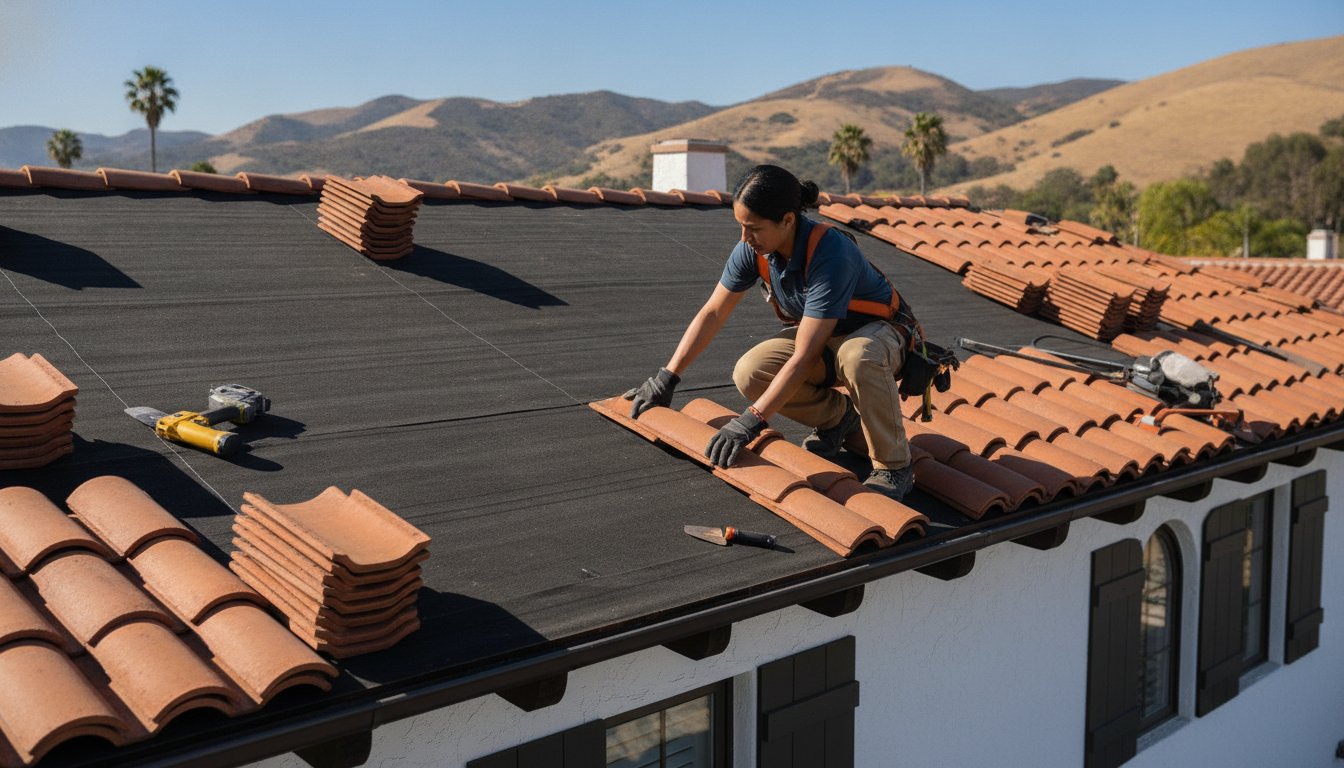
A tile lift and relay is a systematic restoration process where we carefully remove your existing roof tiles, stack them on the roof, and strip away the old, failing underlayment. Once the roof deck is clean and inspected, we install a new, high-grade waterproofing system before reinstalling your original tiles. This method is the most efficient way to manage your tile roof lift and relay cost because it leverages the incredible durability of tile roofing materials. While concrete and clay tiles are designed to last 75 years or more, the organic felt paper underneath is only rated for about 20 to 30 years. By reusing your existing tiles, you eliminate the single most expensive material expense of a full replacement.
This approach isn't just about saving money; it's about smart resource management. There are three primary reasons why this service is the preferred choice for homeowners in the Inland Empire:
- Material Savings: You aren't paying for thousands of new tiles that you don't actually need.
- Reduced Disposal Fees: Since the tiles stay on-site, you avoid the high costs of hauling away and dumping heavy debris.
- Environmental Responsibility: This process keeps tons of viable roofing material out of Southern California landfills, supporting local sustainability goals.
The Role of Underlayment in Southern California
Our local climate is uniquely harsh on roofing systems. The intense UV radiation from the Southern California sun and the abrasive Santa Ana winds cause standard organic felt to become brittle and crack. In 2026, we've moved away from these outdated materials in favor of high-performance synthetic underlayment. This material acts as a robust secondary water barrier. Even if a tile slips or breaks during a heavy storm, the synthetic layer keeps your home dry. It doesn't rot or degrade like traditional paper, providing the long-term stability your investment deserves. As you calculate your potential tile roof lift and relay cost, remember that you're investing in a 30-year solution rather than a temporary fix.
Signs Your Roof is a Candidate for a Lift and Relay
Determining if your home is a candidate for this service requires a professional eye, but there are clear warning signs. If you see "slipping" tiles that have shifted out of place, it often means the fasteners or the underlayment itself is failing. Exposed felt that looks dark, crumbly, or wavy is a major red flag. Most importantly, consider the age of your roof. If your home in Orange County or Riverside was built 20 to 30 years ago and hasn't had major work, your underlayment is likely reaching its end-of-life. If you're dealing with repeat leaks in the valleys or around chimneys despite minor repairs, it's time for a full system restoration rather than another temporary patch.
Estimating Your Tile Roof Lift and Relay Cost in 2026
Calculating your tile roof lift and relay cost involves more than just looking at the square footage of your home. In Southern California, roofing professionals measure projects in "squares," which represent 100 square feet of roof surface. While the price per square for a lift and relay is significantly lower than a full replacement, the labor involved is actually more intensive. Our crews must carefully hand-lift each tile, stack them safely on the roof, and then precisely reinstall them after the underlayment is replaced. This meticulous process ensures that your existing investment is preserved while meeting current California roofing codes.
Material costs for this project include high-performance synthetic underlayment, new battens, flashing, and bird stops. Using synthetic materials is a standard in 2026 because they offer superior durability compared to old-fashioned felt. One major advantage of a relay is the reduction in disposal fees. Since we aren't tearing off and hauling away thousands of pounds of tile, your dumpster and landfill costs are lower than they'd be for a new installation. It's a cleaner, more efficient way to restore your home's protection.
Lift and Relay vs. Full Replacement Cost Comparison
Homeowners in the Inland Empire and San Diego often see savings of 30% to 50% when choosing a lift and relay over a total replacement. Reusing your tiles provides an exceptional return on investment because you're essentially getting a brand-new waterproofing system for a fraction of the price. For a deeper look at total overhaul pricing, you can review our guide on roof replacement cost to see why the lift and relay is such a cost-effective alternative for roofs with healthy tiles.
The "Hidden" Costs: Flashing and Wood Repair
While the tile roof lift and relay cost is predictable, certain factors can adjust the final quote. Once the tiles are removed, we often discover dry rot in the roof deck that was invisible from the ground or attic. Replacing damaged plywood is essential for structural integrity. Additionally, we replace all lead or galvanized flashings during the process. These components are critical for preventing leaks around chimneys and vents. The pitch and height of your roof also play a role; steeper or multi-story homes require more labor hours and specialized safety equipment. If you're unsure about the current state of your underlayment, our team can provide a thorough professional inspection to identify these issues before they become emergencies.
Is a Lift and Relay Worth It? Value vs. Longevity
Deciding between a patch job and a full system restoration is a pivotal moment for any homeowner. A professional lift and relay isn't a temporary fix; it's a comprehensive solution that provides a 30-year outlook for your property. By replacing the entire underlayment, we can offer a "new roof" leak-free warranty that typical repairs simply can't match. This process transforms your existing tile assembly into a high-performance system that meets modern Class A fire-rating standards, which is essential for homes in the fire-prone hills of the Inland Empire.
Aesthetic consistency is another major factor, particularly for residents in highly regulated communities. Homeowners Associations (HOAs) in Temecula and Carlsbad often have strict guidelines regarding tile color and profile. Finding new tiles that perfectly match a 20-year-old roof is nearly impossible. A lift and relay allows you to maintain your home’s original character and curb appeal while completely refreshing the waterproofing layer underneath. It bypasses the lengthy HOA approval process required for changing roofing materials entirely.
If you're considering solar panels, a lift and relay is almost mandatory for older tile roofs. With Southern California electricity rates averaging between $0.32 and $0.38 per kWh in 2026, many homeowners are leveraging the 30% federal tax credit for solar installations. Installing expensive panels over a 25-year-old underlayment is a recipe for disaster. Performing a relay first ensures your roof will outlast the 25-year lifespan of your new solar array, preventing the need to pay thousands later to remove and reinstall panels for a roof leak. This strategic planning keeps your total tile roof lift and relay cost manageable by avoiding future redundant labor.
When to Choose a Lift and Relay Over a Simple Repair
We generally recommend the "Rule of Three" for our clients. If your roof has three or more active leak areas, or if you've already paid for multiple minor repairs in the last two years, chasing leaks is no longer financially sound. At this point, the underlayment has likely become brittle across the entire surface. You can learn more about this decision in our guide on roof replacement vs repair. A relay stops the cycle of damage and protects your home's interior and structural wood from ongoing moisture exposure.
When a Lift and Relay is NOT Recommended
This process isn't the right fit for every home. If your tiles have become extremely brittle due to age or poor manufacturing, the breakage rate during the "lift" phase will be too high. In these cases, the labor costs and the price of replacement tiles can quickly exceed the cost of a full replacement. Additionally, if your roof uses obsolete tile profiles that are no longer manufactured, we may suggest a new roof to ensure you have a system that can be easily maintained in the future. Finally, if a professional inspection reveals significant structural sagging or widespread deck rot, a full tear-off is necessary to address the underlying safety issues.

Factors That Influence Your New Roof Quote in SoCal
Southern California's regulatory environment is one of the most stringent in the nation, and these local requirements directly impact your project estimate. Building permits for a roof project in this region typically range from $200 to $800. In Orange County, homeowners should budget between $300 and $600 for these specific fees. Beyond administrative costs, the physical design of your home is a major variable. A simple gable roof is straightforward, but homes with complex valleys, multiple dormers, or steep pitches require significantly more labor hours. Each transition point in the roof deck requires specialized flashing and precision to prevent future moisture intrusion.
Access and staging are also critical components of your tile roof lift and relay cost. If our crew can safely stack tiles on the roof during the underlayment replacement, labor costs remain efficient. However, if limited space or structural concerns require ground storage and the double-handling of heavy materials, the quote will reflect that extra work. Additionally, California's Title 24 energy efficiency standards must be met. These "cool roof" requirements often dictate the use of specific underlayment and reflective materials that help reduce household cooling costs by 10% to 25% during the intense heat of the Inland Empire summer.
The Impact of Solar Panels on Your Quote
Many homeowners in San Bernardino and Riverside Counties have already invested in solar to combat rising electricity rates. If you have existing panels, you must account for a professional "detach and reset" service. We never recommend relaying a roof around solar mounts; this creates dangerous weak points in your home's waterproofing system. We coordinate closely with solar contractors to ensure the new underlayment is properly flashed around every single penetration, maintaining the integrity of your 30-year solution.
Local Building Codes and Inspections
Local inspectors in Lake Elsinore and Riverside are particularly focused on nailing patterns and seismic considerations. High-wind areas in the Inland Empire require specific fastening methods to ensure tiles don't shift during intense Santa Ana wind events. Hiring a trusted roofing contractor Southern California ensures your project meets these rigorous safety standards and passes every city inspection without delay. If you're ready to see how these factors apply to your specific home, we invite you to request a comprehensive quote assessment from our Lake Elsinore team today.
Getting an Accurate Quote: Why the Inspection Matters
Receiving a quote over the phone for a tile roof is a significant risk for any homeowner. Every roof in the Inland Empire has unique wear patterns, and a generic estimate cannot account for the specific condition of your underlayment or the structural integrity of your roof deck. When you are evaluating the tile roof lift and relay cost, you need a contractor who takes the time to look beyond the surface. A professional inspection is the only way to ensure your quote is accurate and free from expensive mid-project surprises.
A thorough attic inspection is a non-negotiable part of our process. By examining the underside of the roof deck, we can identify water staining, mold growth, or sagging plywood that might be invisible from the outside. This step is crucial because it determines whether a lift and relay is truly viable or if deeper structural repairs are necessary. We believe in total transparency, providing a detailed line-item quote so you know exactly where your investment is going. This clarity allows you to compare different Southern California contractors based on the actual scope of work rather than just a bottom-line number.
UEC Roofing’s Inspection Process
We utilize a combination of drone technology and physical walkthroughs to assess your home safely. Drones allow us to capture high-resolution imagery of the entire surface without walking on brittle tiles unnecessarily. However, a physical check is still required to test the integrity of "bird stops" and eave closures. These small components are vital for keeping pests and debris out of your roofing system. Our goal is to provide a roof repair estimate that holds up from the first day of the project to the final inspection. We look for evidence of failing fasteners and slipped tiles that indicate a systemic underlayment failure.
Selecting a "Roofer for Life"
Choosing the right partner means looking for long-term stability. Always verify that your contractor holds a valid California license and carries full workers' compensation and liability insurance. This protects you from legal and financial risks during the project. At UEC Roofing, we take immense pride in our brick-and-mortar presence in Lake Elsinore. We aren't a "storm chaser" firm that disappears once the rainy season ends. With over 2,000 successful projects completed across Riverside, San Diego, and Los Angeles Counties, our track record is your guarantee of quality. We don't just want to fix your roof today; we want to be your trusted roofing partner for life. When you compare quotes, look for this level of local commitment and professional conduct to ensure your tile roof lift and relay cost translates into decades of security for your property.
Securing Your Home’s Future with Confidence
Choosing a lift and relay means you're investing in the long-term stability of your home without the unnecessary expense of brand-new materials. Your existing tiles are often built to last a century; by upgrading the waterproofing layer to modern synthetic standards, you gain a 30-year solution. This approach meets strict Title 24 energy requirements while preserving the specific aesthetic appeal your HOA demands.
As you finalize your budget, remember that the tile roof lift and relay cost is an investment in your property’s resale value and your family’s safety. With over 2,000 successful projects completed across Riverside, San Diego, and Orange Counties, our team brings the specialized knowledge required for Southern California’s unique climate. We understand the local building codes and the specific challenges posed by Santa Ana winds and intense UV exposure.
Don't let another rainy season bring anxiety about recurring leaks. Our team in Lake Elsinore is ready to provide the transparency and craftsmanship you deserve. Request your free Southern California tile roof inspection and quote today. We're here to help you protect your most important investment for decades to come.
Frequently Asked Questions
How much does a tile roof lift and relay cost per square foot in 2026?
The tile roof lift and relay cost in Southern California typically ranges between $10 and $15 per square foot as of 2026. This rate includes the careful removal of your existing tiles, the installation of high-performance underlayment, and the precise reinstallation of the original materials. Since labor represents the majority of this expense, factors like roof pitch and the height of your home in Orange County or Riverside can influence the final estimate.
Can I reuse my existing tiles if they are 30 years old?
Yes, most 30-year-old concrete or clay tiles are still in excellent structural condition and are perfect candidates for a relay. These materials are engineered to last 75 years or more, meaning they haven't even reached the halfway point of their lifespan. During our inspection in Lake Elsinore, we check for excessive brittleness to ensure the tiles can withstand being handled and re-stacked without breaking during the process.
How long does the lift and relay process take for a standard home?
A standard lift and relay project for a typical Southern California home usually takes between 3 and 7 business days to complete. The timeline depends heavily on the size of your roof and the complexity of features like valleys and chimneys. We work efficiently to ensure your home is dried-in with new underlayment as quickly as possible, minimizing the time your property is exposed to the elements during the process.
Will a lift and relay stop all my roof leaks?
A professional lift and relay is designed to stop all leaks by replacing the actual waterproofing layer of your roof. While tiles shed the majority of water, the underlayment is the true barrier that prevents moisture from entering your home. By installing a new, high-grade synthetic system and replacing all flashings, we address the root cause of recurring leaks rather than just patching the surface symptoms.
Is a lift and relay cheaper than a full tile roof replacement?
Choosing a lift and relay is significantly more cost-effective, typically saving homeowners 30% to 50% compared to a full replacement. By reusing your existing tiles, you avoid the high cost of new materials and the heavy disposal fees associated with hauling away tons of debris. It provides the same 30-year protection as a new roof while leveraging the investment you've already made in your current tile assembly.
Does a lift and relay come with a warranty?
Yes, a professional relay includes a comprehensive leak-free warranty that covers both workmanship and the new underlayment materials. Because we are performing a full system restoration rather than a minor repair, we can offer long-term protection that gives you peace of mind. Our track record of 2,000 successful projects in the Inland Empire ensures that we stand behind our work for the long haul.
What happens if the contractor finds broken tiles during the lift?
If broken tiles are discovered, we replace them with matching pieces from our extensive local inventory. It's normal for a small percentage of tiles to have existing damage or break during the lifting process. We account for this in our initial tile roof lift and relay cost assessment to ensure the finished roof is aesthetically consistent and structurally sound before we leave the job site.
How often should a tile roof be lifted and relayed?
Most tile roofs require a lift and relay every 20 to 30 years, which matches the typical lifespan of standard roofing underlayment. In our harsh Southern California climate, intense UV heat and Santa Ana winds can accelerate the degradation of older organic felt. Performing this restoration proactively prevents major internal water damage and extends the total life of your roofing system well beyond the 50-year mark.