
Tile Roof Cost in Southern California: 2026 Homeowner’s Investment Guide
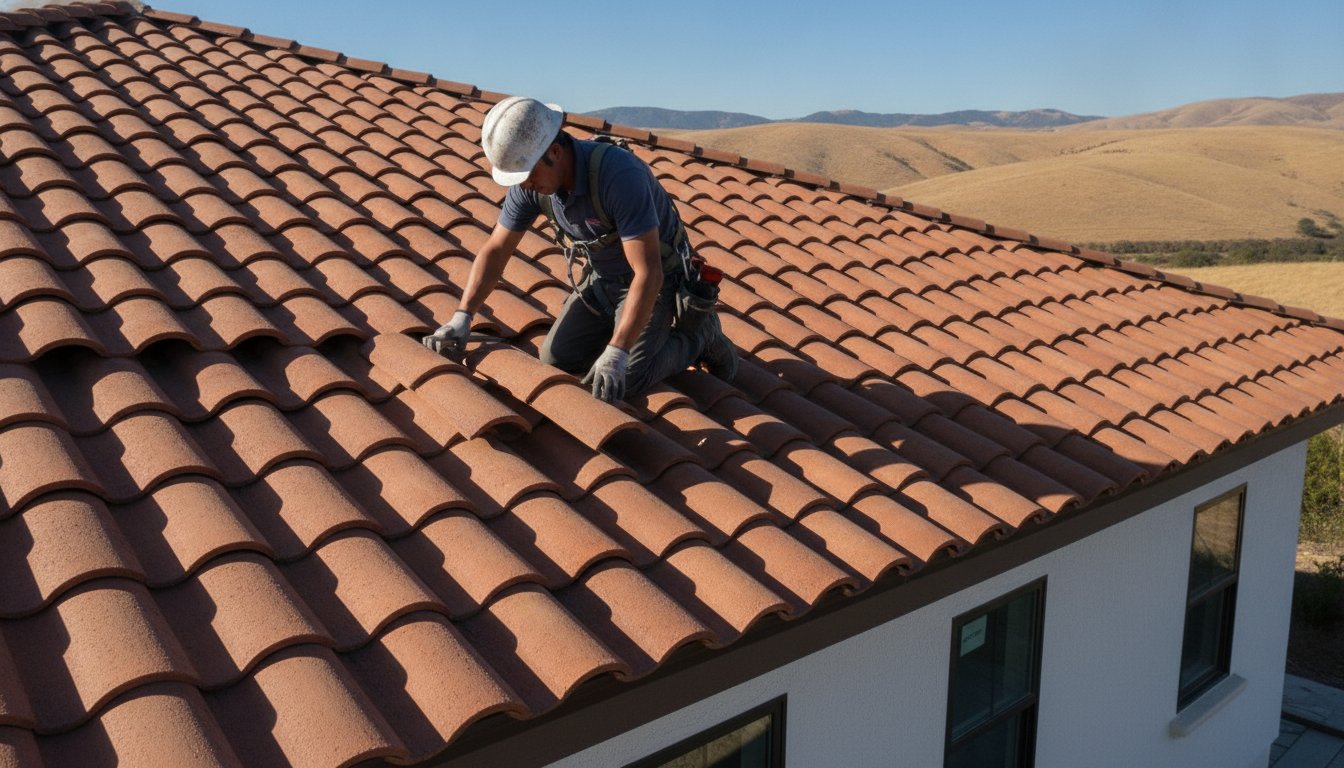
What if the most significant expense for your home's exterior was actually a 50-year asset that paid for itself through energy efficiency and increased property value? Many homeowners across Southern California find that estimating a realistic tile roof cost in 2026 is a major source of stress. Between meeting new Title 24 "cool roof" mandates and navigating the strict Class A fire-rating codes in Los Angeles and San Bernardino Counties, the numbers can feel overwhelming. You want a roof that protects your family without overpaying for unnecessary full replacements.
We understand that a roof is a critical investment for your property and your peace of mind. This guide promises to clarify the current 2026 pricing landscape for clay and concrete materials while showing you how to extend your roof's life through professional maintenance. You will learn the specific differences between material types, the impact of local labor rates from Lake Elsinore to San Diego, and why our specialized "Lift and Relay" method is often the smartest way to save money. We will cover everything from structural reinforcement needs to the latest energy-efficient standards across the Inland Empire and beyond.
Key Takeaways
- Learn why tile is a 50-year asset and how its long-term durability provides superior protection for homes throughout the Inland Empire.
- Compare the 2026 tile roof cost for clay, concrete, and composite materials to determine which option fits your architectural style and budget.
- Identify the hidden factors that influence your estimate, including structural reinforcement and the critical role of high-quality underlayment.
- Explore the "Lift and Relay" process as a cost-effective alternative that preserves your original tiles while restoring your roof's integrity.
- Gain a clear roadmap for selecting a qualified local contractor who understands the unique fire codes and weather patterns of Southern California.
Understanding the Real Value and Cost of Tile Roofing in 2026
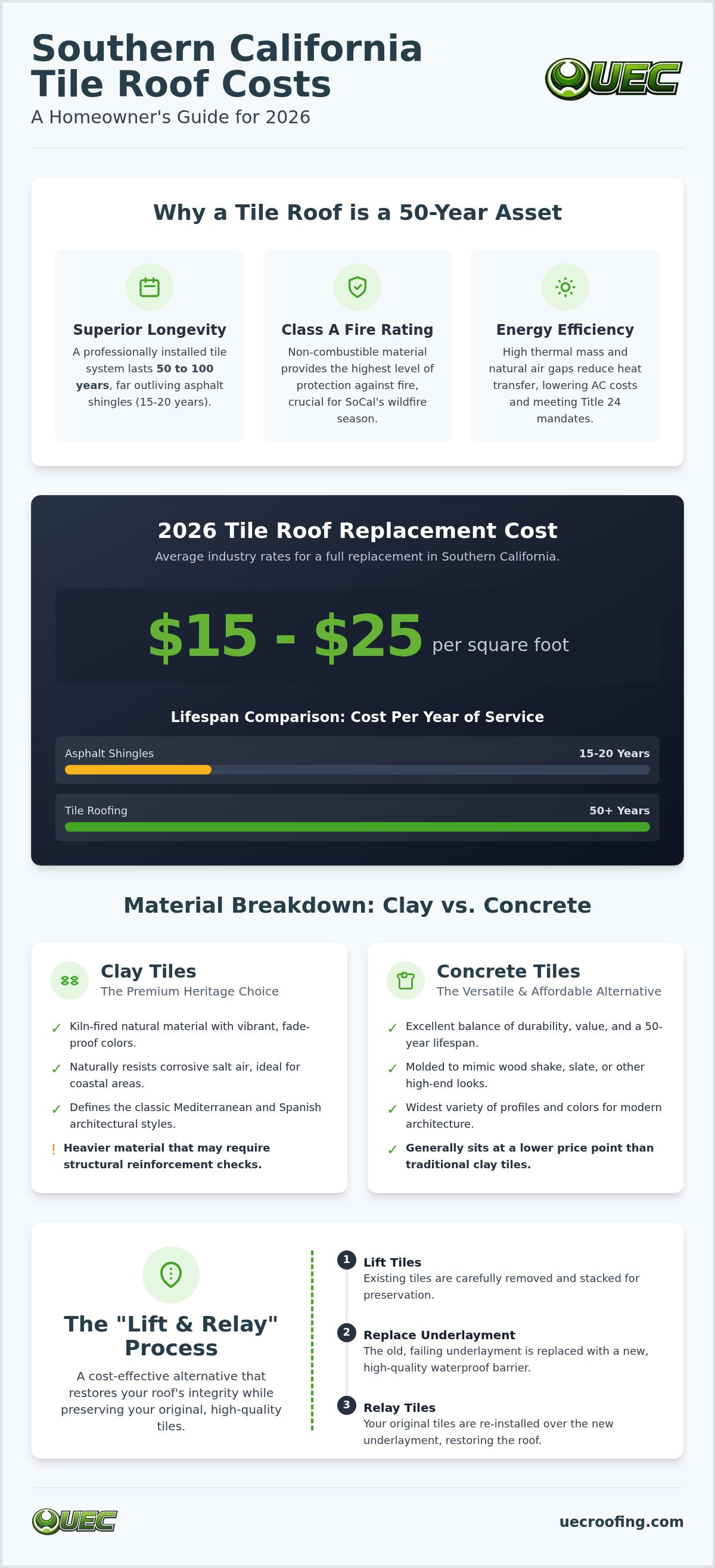
Choosing a new roof is one of the most significant decisions you'll make for your home. In Southern California, tile roofing isn't just a design choice; it's a strategic asset. While the initial tile roof cost often gives homeowners pause, looking at the long-term numbers reveals a different story. Most asphalt shingle roofs require replacement every 15 to 20 years. In contrast, a professionally installed tile system can easily last 50 to 100 years. When you calculate the cost per year of service, tile often proves to be the most economical option available.
Homeowners in Riverside and San Diego Counties see a direct correlation between tile roofing and property value. The aesthetic appeal of Mediterranean or Spanish architecture is a staple of the region. Beyond looks, these systems provide a level of protection that cheaper materials simply cannot match. Understanding the history and materials of roof tiles helps illustrate why this material remains the gold standard for durability and longevity.
Why Tile is the Southern California Standard
Safety is a primary concern for families in the Inland Empire. Many neighborhoods in Los Angeles and San Bernardino Counties are designated as high fire hazard zones. Tile roofing carries a Class A fire rating, the highest level of protection against external fire spread. This isn't just a benefit; it's often a legal requirement for new builds and major renovations. The material is non-combustible, providing a critical barrier against flying embers during wildfire season.
Energy efficiency is another major factor in the SoCal heat. Tiles have high thermal mass, meaning they absorb heat during the day and release it slowly at night. This prevents the attic from reaching extreme temperatures, which reduces the load on your air conditioning system. The natural air gap created under the tiles acts as an extra layer of insulation. This is especially vital during the intense sun and dry Santa Ana winds that define our local environment.
2026 Price Trends for Roofing Materials
The economic landscape of 2026 has introduced new variables into the tile roof cost equation. Supply chain shifts and evolving logistics have stabilized some material prices. However, labor rates across Orange County and Lake Elsinore continue to reflect a shortage of skilled craftsmen. Industry averages for a full tile replacement in Southern California currently range between $15 and $25 per square foot. These rates reflect the specialized expertise required to handle heavy materials and ensure a watertight seal that meets modern building codes.
Material Breakdown: Clay, Concrete, and Composite Tile Pricing
Material selection is the primary driver of your overall tile roof cost. In regions like Riverside and Orange County, homeowners often choose between traditional clay, versatile concrete, or modern composite materials. Each option carries distinct installation requirements. You aren't just paying for the tiles themselves. You're investing in the specialized labor required to ensure these heavy systems remain watertight for decades. Whether you prefer the classic look of Spanish S-tiles or the clean lines of a flat shake profile, the choice impacts your home's structural needs.
Clay Tiles: The Premium Heritage Choice
Clay represents the gold standard for Southern California's coastal architecture. These tiles are kiln-fired from natural materials, ensuring that their vibrant reds and oranges never fade under the intense sun. Homeowners in San Diego often prefer clay because it naturally resists the corrosive effects of salt air. However, clay is exceptionally heavy. Installing a clay system often requires a structural engineering check to ensure your home's frame can support the load. We follow strict industry standards for tile roofing to ensure these premium systems are installed with the precision they deserve.
Concrete Tiles: The Versatile and Affordable Alternative
Concrete is the most common choice for modern developments across the Inland Empire. It offers a balance of durability and value that's hard to beat. Because concrete is molded, it can mimic the texture of wood shake or high-end slate without the associated maintenance headaches. It provides a reliable 50-year lifespan while generally sitting at a lower price point than clay. If you're looking for a specific aesthetic for your home in Lake Elsinore, concrete provides the widest variety of colors and profiles.
While traditional materials are the norm, composite tiles are gaining traction. These synthetic options provide the look of stone or clay without the immense weight. They're ideal for older homes that can't support heavy masonry. Understanding how material choice influences your final tile roof cost is essential for long-term planning. If you're unsure which material fits your property, speaking with a professional roofing contractor can help you make a confident decision.
Key Factors Influencing Your Tile Roof Replacement Estimate
Contractors often quote just the visible materials, but the actual tile roof cost is heavily influenced by what stays hidden. In 2026, permitting fees in San Diego and Orange County can fluctuate based on specific municipal requirements for energy efficiency and fire safety. Beyond permits, the physical complexity of your roof's architecture is a massive variable. A roof featuring multiple valleys, hips, and penetrations like skylights or chimneys requires significantly more labor time. Each intersection needs custom flashing and careful tile cutting to ensure a watertight fit that lasts for decades.
The Critical Role of Underlayment (Felt Replacement)
The reality of tile roofing is that the tiles themselves rarely fail. Instead, it's the secondary water barrier beneath them that degrades over time. This is why tile roof repair often centers on felt replacement. While traditional organic felt was the standard for years, modern synthetic underlayments offer superior durability and heat resistance. At UEC Roofing, we prioritize high-quality underlayment because it's the only way to prevent future leaks in the harsh Southern California sun. Investing in premium underlayment now prevents a total system failure ten years down the line.
Structural Reinforcement and Weight Requirements
If you're transitioning from asphalt shingles to a tile system, your home's frame must be professionally evaluated. Standard concrete tiles can weigh between 900 and 1,200 pounds per roofing square. This weight often requires a structural engineer's certification and potential reinforcement of rafters or supports. These modifications add to your total tile roof cost but are non-negotiable for the safety of your family. A helpful tip for Lake Elsinore homeowners is to look into "lightweight" concrete options. These can sometimes bypass the need for extensive structural work while maintaining the classic Mediterranean aesthetic.
Every comprehensive estimate should account for several "hidden" line items that impact the final price:
- Removal and proper disposal of old roofing materials.
- Installation of new, heavy-duty metal flashing at all transition points.
- Replacement of damaged fascia boards or starter strips.
- Attic ventilation upgrades to meet 2026 California building codes.
Precision at these junctions is what separates a mediocre installation from a 50-year roofing system. We believe in providing transparent quotes that include these factors upfront, so you aren't surprised by change orders halfway through the project. Understanding these variables gives you the confidence to choose a solution that truly protects your property value in Riverside and the surrounding counties.
Cost-Saving Alternatives: Tile Roof Lift and Relay vs. Full Replacement
Many homeowners assume a major leak requires a complete overhaul. This isn't always true. If your tiles are structurally sound, you can significantly reduce your tile roof cost by choosing a lift and relay roofing service. This specialized process involves carefully removing your existing tiles and setting them aside. We then strip the old, failed underlayment and install a new, high-performance barrier. Finally, we relay your original tiles back into place. It's a sustainable approach that prevents thousands of pounds of debris from entering Southern California landfills while restoring your roof's integrity.
This method is particularly popular in Riverside and San Diego Counties where older, high-quality clay tiles are common. You're essentially keeping the "armor" of your roof while replacing the "skin" that actually keeps the water out. It's a smart, ethical way to manage your property without the waste of a full tear-off. We've performed this service across the Inland Empire with exceptional results, proving that you don't always need to start from scratch to get a reliable result.
When to Choose Lift and Relay Over Replacement
This method is most effective for roofs in the 20 to 30-year age range. At this stage, the underlayment has often reached the end of its life due to the intense heat in Orange County and Lake Elsinore. While the felt paper becomes brittle and cracks, the tiles themselves often remain in excellent condition. By opting for a lift and relay, you can typically save between 20% and 40% compared to the price of a full new installation. It addresses the root cause of leaks without the unnecessary expense of purchasing new materials.
Roof Rejuvenation: The Modern Maintenance Option
For roofs that aren't quite ready for a relay, rejuvenation offers a proactive path. Understanding roof rejuvenation vs replacement is key to maximizing your investment. Specialized treatments can restore flexibility to older materials and add years to their service life. At UEC Roofing, we evaluate every property to see if maintenance can delay a full project. Our goal is to be your roofer for life by prioritizing what your home actually needs. If you're concerned about your current tile roof cost, contact our team for a thorough inspection to see if a lift and relay is right for you.
Planning Your Investment: How to Get an Accurate Local Quote
A professional estimate for a new tile system involves more than just a bottom-line number. In Southern California, your quote must account for specific regional regulations like Title 24 energy standards and local fire zone requirements. When you calculate your potential tile roof cost, ensure the contractor includes line items for debris disposal, city permits, and secondary materials like flashing and vents. Vague estimates often lead to expensive change orders once the project begins. Choosing a residential roofing contractor in Southern California who understands these nuances is the best way to protect your investment. The "cheapest" bid often lacks these critical details, leading to corner-cutting that results in premature leaks and structural issues.
Vetting Your SoCal Roofing Contractor
Trust is built on transparency and a proven history. Always verify that your roofer maintains a physical brick-and-mortar office in the region, such as our location in Lake Elsinore. A local address ensures the company will be there to honor their warranty years after the job is finished. Ask for specific references from completed projects in San Diego or Riverside to gauge their quality of work. We recommend checking for active licenses and comprehensive insurance coverage before signing any contract. At UEC Roofing, we take pride in our track record of over 2,000 successful projects. This experience allows us to provide accurate assessments that reflect the true tile roof cost without hidden surprises or technical oversights.
Financing and Warranties for Your New Roof
A high-quality roof is a significant financial commitment. Many homeowners utilize financing options to spread the investment over several years, making premium materials more accessible. It's also vital to distinguish between a manufacturer’s warranty and a workmanship warranty. The manufacturer covers material defects, but the workmanship warranty protects you against installation errors. A workmanship warranty is only as good as the company providing it, which is why local stability matters. We believe in being your "roofer for life," which means providing long-term stability through ethical business practices and reliable craftsmanship.
If you aren't ready for a full replacement, a professional roof tune-up can often resolve minor issues and extend the life of your current system. Contact our team today for a comprehensive inspection and an honest evaluation of your roofing needs.
Securing Your Home’s Future with a Quality Tile Investment
Investing in a tile roofing system is a strategic way to protect your property value. The total tile roof cost in 2026 depends on material choice, structural needs, and specific local codes. By prioritizing professional installation and exploring alternatives like a lift and relay, you can maximize your investment while ensuring your home remains energy efficient and fire resistant. These systems are built for longevity, providing peace of mind for decades to come.
With over 2,000 successful projects completed across Riverside, Orange, and San Diego Counties, UEC Roofing is your trusted local partner. We're locally owned and operated in Lake Elsinore with the specialized expertise required for Southern California’s unique environment. Our team focuses on craftsmanship and reliability to ensure your home stays protected. Contact UEC Roofing today for a professional tile roof inspection and estimate in Southern California. We look forward to helping you make the best decision for your home and family.
Frequently Asked Questions
How much does a tile roof cost per square foot in Southern California?
Industry averages in 2026 typically range between $15 and $25 per square foot for a full installation. This tile roof cost includes the tiles, underlayment, and specialized labor required to meet regional building codes. Factors like roof pitch and local permit fees in San Diego or Los Angeles will influence the final price. We recommend getting a detailed inspection to account for your home's unique architectural complexity and structural requirements.
Is a clay tile roof more expensive than a concrete tile roof?
Clay tile is generally the more expensive option due to the natural materials and intensive kiln-firing process. While concrete tiles provide a durable and cost-effective alternative, clay offers superior color longevity and salt-air resistance for coastal properties. In 2026, many homeowners in Orange County choose concrete for its versatility in mimicking other styles. However, clay remains the premium choice for traditional Mediterranean architecture and long-term resale value.
Does my house need structural reinforcement for a tile roof?
Most homes transitioning from lightweight shingles to heavy tile require a structural engineer's certification. Concrete and clay tiles can weigh over 900 pounds per square, which is significantly more than asphalt. If your existing rafters aren't rated for this load, you'll need to add supports or choose specialized lightweight tiles. This ensures your home remains safe and compliant with 2026 California building standards across the Inland Empire and beyond.
How long will a new tile roof last in the Inland Empire?
A professionally installed tile roof can last between 50 and 100 years with proper maintenance. The tiles themselves are incredibly resilient against the intense sun and dry winds common in Riverside and San Bernardino Counties. While the underlayment may need attention after 25 to 30 years, the durable exterior provides a lifetime of protection. This longevity makes the initial tile roof cost a wise investment compared to materials that fail every two decades.
What is a "lift and relay" and can it save me money?
A lift and relay is a cost-saving service where we remove your existing tiles, replace the failed underlayment, and reinstall the original tiles. This process is ideal when your tiles are in good condition but the waterproof barrier beneath has degraded. It can save you 20% to 40% compared to a full replacement by eliminating the need for new materials. It's a sustainable solution we frequently perform for homeowners in Lake Elsinore.
Why are tile roofs so popular in Riverside and Orange County?
Tile roofs are the regional standard because of their exceptional fire resistance and thermal mass. In high-heat areas like the Inland Empire, tiles help regulate indoor temperatures, reducing cooling costs during the summer. Additionally, their Class A fire rating is essential for meeting strict building codes in designated fire zones. The aesthetic also complements the Spanish and Mediterranean architectural styles that define the Southern California landscape and boost property values.
Can I install a tile roof over my existing asphalt shingles?
No, you cannot install tile over existing shingles. A proper installation requires a clean deck to inspect for wood rot and to ensure the new underlayment adheres correctly. The combined weight of two roofing systems would likely exceed the structural capacity of your home. We always perform a full tear-off to meet 2026 California building codes and to provide a workmanship warranty that protects your investment for the long term.
What is the most common cause of leaks in a tile roof?
The most common cause of leaks is the failure of the underlayment, not the tiles themselves. Over time, the intense Southern California heat causes organic felt paper to become brittle and crack. Debris buildup in valleys or around penetrations like chimneys can also trap water, leading to localized leaks. Regular maintenance and specialized rejuvenation treatments can address these issues before they turn into major structural damage, ensuring your roof remains watertight for decades.