
The Dangers of a Leaking Roof: Debunking Myths and Protecting Your SoCal Home
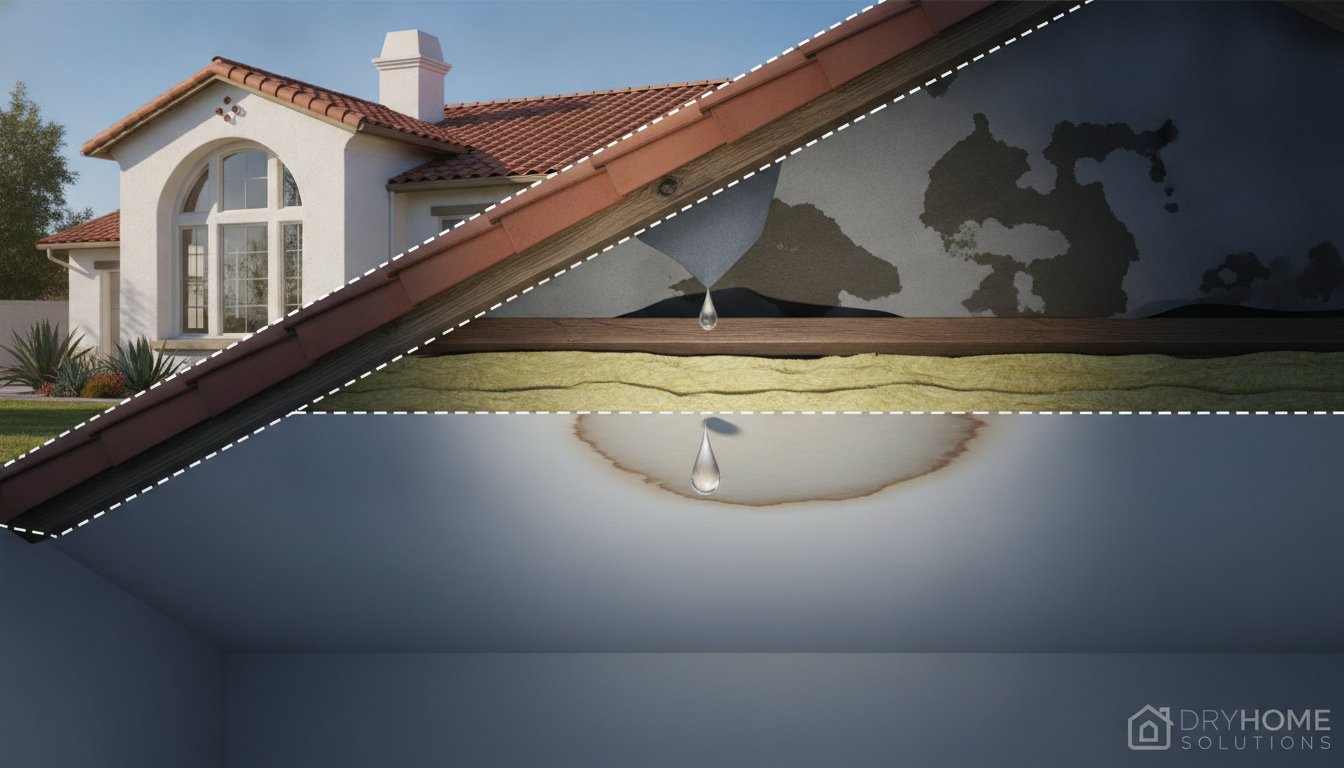
What if the most destructive phase of a roof leak isn't the rainy season, but the long, dry Southern California summer that follows? Many homeowners in Lake Elsinore and across the Inland Empire assume that if it isn't raining, the problem has stopped. It's a common mistake to view a small ceiling spot as a minor annoyance rather than a structural warning. The reality is that the dangers of a leaking roof are often most severe when they're out of sight. While the sun shines on Riverside and San Bernardino Counties, trapped moisture can fuel mold growth and accelerate dry rot behind your walls.
We understand the hesitation to call for professional help. You might worry about high repair costs or feel confused about whether to patch or replace your system. This guide will provide the clarity you deserve. Discover why ignoring a minor leak is a high-stakes gamble with your home’s structure, family health, and long-term value. We will show you how to identify hidden damage and find a trustworthy partner to protect your property for life.
Key Takeaways
- Debunk common myths by learning why slow, hidden seepage often causes more structural rot than major, obvious punctures.
- Understand the true dangers of a leaking roof, including compromised load-bearing rafters and unexpected fire hazards caused by attic moisture.
- Recognize how the Southern California sun can degrade your roof's protective underlayment even if your exterior tiles appear undamaged.
- Learn to spot the subtle warning signs of water damage, from bubbling wallpaper and peeling paint inside to slipped shingles on your roof.
- Discover proactive maintenance solutions like roof rejuvenation and tile lift and relay services designed to protect your home’s value for the long term.
More Than a Drip: Debunking Common Myths About Roof Leaks
A common misconception among Southern California homeowners is that a roof leak is only a problem when you need a bucket to catch the water. This mindset is dangerous. While a major puncture from a fallen branch is obvious, slow seepage often proves more destructive over time. This type of leak quietly saturates insulation and structural timber without ever showing a single drop on your floor. It's a silent threat to your home’s integrity.
When we discuss the dangers of a leaking roof, we must distinguish between a simple surface issue and a systemic roof failure. A surface leak might involve a cracked tile or a loose shingle that needs a simple fix. A systemic failure occurs when the underlying waterproof barrier has reached the end of its lifespan across the entire structure. In the Inland Empire, our long dry spells create a false sense of security. Just because it hasn't rained in months doesn't mean your roof is healthy. It simply means the damage is currently hidden from view.
The 'Rainy Season Only' Misconception
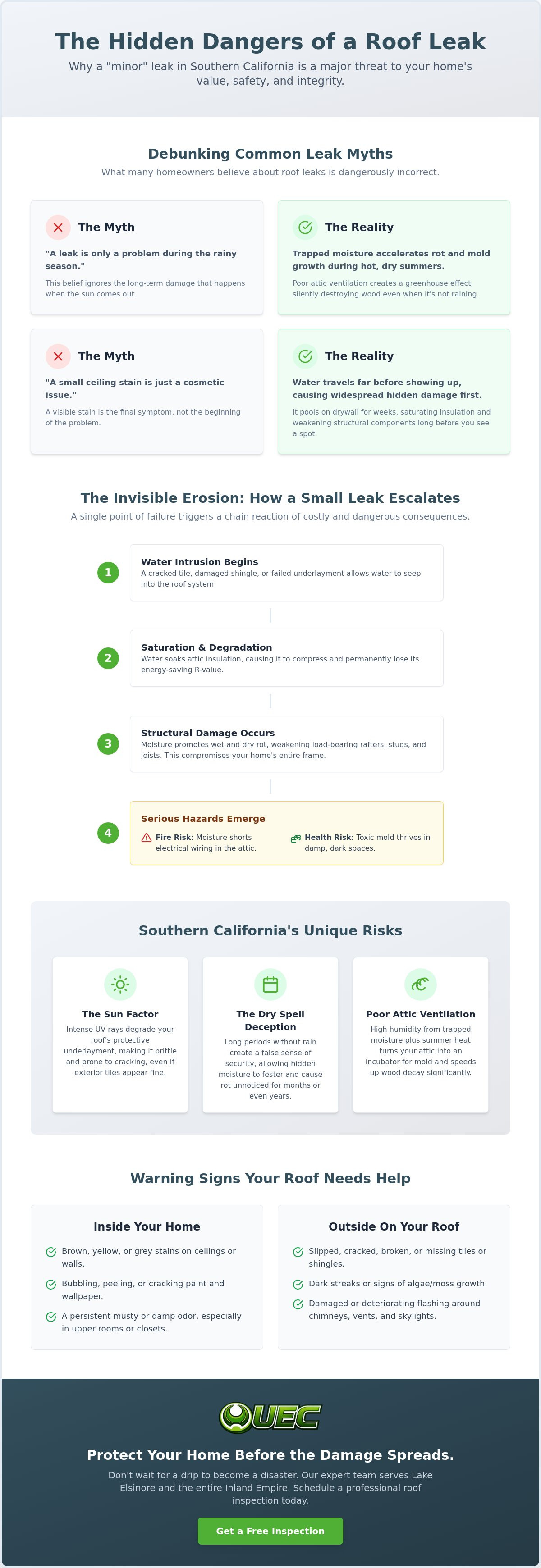
Many residents in Riverside and Lake Elsinore believe their roof only works during the winter months. This is a costly mistake. Moisture trapped in your attic from a previous storm continues to damage wood during our scorching 100-degree summers. High humidity levels combined with poor attic ventilation create a greenhouse effect. This environment accelerates wood rot and allows mold to thrive, even when the sky is clear and the ground is dry.
Why Ceiling Stains Are Just the Tip of the Iceberg
By the time a brown stain appears on your ceiling, the water has already traveled a long distance. Gravity and the slope of your rafters dictate how water travels, often leading it far away from the original entry point. Water frequently pools on top of ceiling drywall for weeks. It weakens the material and creates a heavy, sagging mess before it finally breaks through.
Secondary water damage is the primary cost driver in roof repairs.
- Saturated attic insulation that permanently loses its R-value and energy efficiency.
- Electrical systems and junction boxes compromised by moisture, creating fire risks.
- Internal wall framing and load-bearing studs that begin to warp or decay.
Professional leak repair is about more than stopping a drip. It's about preserving the entire ecosystem of your home and preventing long-term structural decay that compromises your property value.
The Invisible Erosion: How Water Compromises Your Home’s Integrity
The dangers of a leaking roof extend far beyond a few ruined ceiling tiles. Water is a persistent solvent. It slowly eats away at the load-bearing capacity of your rafters. When wood remains damp, it loses the structural stiffness required to support the weight of heavy clay tiles or composite shingles. This invisible erosion happens behind your drywall and above your head, often going unnoticed until the damage requires major structural intervention.
Electrical safety is another critical concern that many homeowners overlook. Most Southern California attics house complex wiring networks and junction boxes. Water and electricity are a deadly combination. Moisture can easily seep into light fixtures or electrical outlets, causing short circuits or hidden sparks. This creates a legitimate fire hazard that persists even after the rain stops. Protecting your family means addressing these vulnerabilities before they escalate into an emergency.
Energy efficiency also takes a massive hit when a leak occurs. Your attic insulation relies on air pockets to maintain its R-value. Once fiberglass or cellulose insulation becomes saturated, it compresses and loses its ability to regulate temperature. This forces your air conditioning to work harder during the intense Inland Empire summers. Under the 2026 California Building Energy Efficiency Standards, maintaining a high-performing thermal envelope is essential for both comfort and compliance. A small leak can effectively destroy the investment you've made in your home's energy performance.
Compromised Structural Integrity and Wood Rot
Southern California homes are susceptible to both wet rot and dry rot. Wet rot occurs when timber is actively saturated by a leak. Dry rot is more deceptive; it thrives in the humid, stagnant air of a poorly ventilated attic after a leak has supposedly dried out. Over time, this decay leads to sagging rooflines and compromised wall studs. These structural failures significantly decrease your property value and can make a home difficult to sell in competitive markets like Orange County or San Diego.
Health Risks and Interior Air Quality
Toxic mold and mildew can begin growing in as little as 24 to 48 hours after water exposure. These spores don't stay in the attic. They often travel through your HVAC system, circulating throughout your living spaces. This creates significant health risks from mold for family members with asthma, allergies, or respiratory issues. It's a sobering fact that professional mold remediation often costs significantly more than the roof leak repair Riverside CA itself. Catching a leak early is the only way to prevent these expensive and dangerous biological hazards. If you suspect moisture is entering your home, scheduling a professional Roof tune up can identify these hidden threats before they compromise your air quality.
Southern California Specifics: Why 'Minor' Leaks Are Major Risks Here
Many homeowners in San Diego and the Inland Empire fall for the "Tile Roof Myth." They look up, see a sea of perfectly aligned clay or concrete tiles, and assume their home is protected. This is a dangerous assumption. In Southern California, the dangers of a leaking roof often start long before a tile ever slips. Tiles are merely the outer armor. The true waterproofing happens at the underlayment level. When the sun cooks this layer through small cracks or gaps, the entire system begins to fail from the inside out.
The intense UV radiation in places like Corona and Lake Elsinore is relentless. It dries out the organic components in traditional roofing materials. This creates a brittle surface that cracks under the slightest thermal expansion. When the winter rains finally arrive, they don't hit a flexible barrier; they hit a shattered one. This moisture intrusion leads to the health risks of mold, which can compromise your family's safety even during our driest months.
The Critical Role of Roof Felt and Underlayment
Think of your roof tiles as a shield and the felt underlayment as the skin beneath it. If the skin is compromised, the shield can't prevent infection. Aging felt becomes paper-thin and loses its ability to shed water. This is why roof felt replacement is a critical maintenance step for older homes. Without a functional waterproof barrier, even the most expensive tiles are purely decorative. Professional roofing services focus on this hidden layer to ensure long-term stability.
Regional Weather Patterns from Temecula to San Diego
Our local microclimates present distinct challenges. In San Diego County, coastal salt air accelerates the corrosion of metal flashing and fasteners. Conversely, the extreme inland heat in Riverside and San Bernardino Counties causes rapid expansion and contraction of roofing materials. This "thermal shock" creates micro-fractures that invite leaks. These cracks might seem insignificant during a drought, but they are the primary entry points for water damage.
The Santa Ana winds add another layer of risk. High-velocity winds create pressure differentials. If a small leak has already weakened the bond between your roof and the structure, these winds can exert enough lift to tear away sections of your roof. This is why a professional inspection is vital before the wind season begins. Sudden flash storms in the Inland Empire can overwhelm aging drainage systems in minutes, turning a minor oversight into a major flood.
Identifying the True Signs Your Roof Needs Professional Repair
Spotting the dangers of a leaking roof early requires a keen eye for detail. Most homeowners wait for a brown stain on the ceiling, but water damage often manifests in more subtle ways first. Look for peeling paint or bubbling wallpaper near your ceiling corners. These are clear indicators that moisture is migrating through your wall cavities. If you notice a persistent musty odor in certain rooms, it's likely that mold is already colonizing damp drywall or insulation.
Your monthly utility bill can also serve as a diagnostic tool. If you see a sudden, unexplained spike in cooling costs, your roof's thermal barrier might be breached. Saturated insulation loses its ability to block the Inland Empire heat. This forces your air conditioning to run longer to compensate for the lost R-value. A professional leak repair can often restore this efficiency before the damage spreads to your home's structural framing.
The Homeowner’s 5-Point Inspection Checklist
You don't need to climb a ladder to perform a basic safety check. Use this simple checklist to monitor your home's health:
- Check your gutters: Look for "shingle sand" (granules) or small tile fragments. This indicates that your roofing material is reaching the end of its functional life.
- Use binoculars: From the ground, scan for slipped tiles or damaged valley flashing. These gaps are open invitations for water intrusion.
- Inspect flat sections: If your home has flat roof areas common in Southern California, look for "alligatoring." This is a pattern of deep cracks in the surface that resembles reptile skin.
- Look for light: On a sunny day, enter your attic and turn off the lights. If you see pinpricks of daylight through the boards, water will surely follow.
- Monitor the perimeter: Check the ground around your home for fallen mortar or broken tile corners after a wind event.
When to Call a Professional Roofing Contractor
Distinguish between a routine Roof tune up and a major structural repair. A tune-up might involve replacing a few cracked tiles or resealing pipes. However, if you see sagging rooflines or widespread felt failure, you need a comprehensive solution. Partnering with an experienced residential roofing contractor Southern California ensures you get an accurate diagnosis rather than a temporary patch.
DIY roof repairs are often a high-stakes gamble. Walking on tiles incorrectly can cause more damage than the original leak. Most homeowners lack the specialized tools to identify the true source of water travel. Fixing a symptom while ignoring the cause leads to more expensive professional fixes later. If you've spotted any red flags, contact our team for a professional Roof repair assessment today.
Protecting Your Investment: Proactive Solutions from UEC Roofing
At UEC Roofing, we believe your roof is the most critical component of your home’s structural health. Our team doesn't just look for quick fixes. We aim to be your "roofer for life" by providing solutions that prioritize long-term stability over temporary patches. Having successfully completed over 2,000 projects throughout Riverside and San Diego Counties, we understand the specific environmental stressors that lead to the dangers of a leaking roof in our region. We treat every project as a vital investment in your family's safety and property value.
Prevention is always more affordable than restoration. While a major leak requires immediate Roof repair, many issues can be caught early through a professional Roof tune up. This proactive service involves a thorough inspection of flashing, seals, and tile alignment. It's designed to extend the lifespan of your system and prevent the emergency leaks that often strike during unexpected Inland Empire flash storms. Our goal is to ensure your home remains a fortress against the elements, regardless of the season.
Roof Rejuvenation: A Cost-Effective Alternative
One of our most effective offerings for extending roof longevity is a roof rejuvenation treatment. This science-driven process is a cost-effective alternative to a full replacement for qualifying homes. It uses a specialized bio-based oil to restore the flexibility of aging shingles and tiles. This treatment can add 5 to 15 years to your roof's life by replenishing the essential oils lost to decades of intense Southern California UV exposure. Rejuvenation is an excellent choice if your underlayment is still functional but your surface materials have become brittle and prone to cracking.
The UEC Commitment to Southern California Homeowners
Our brick-and-mortar presence in Lake Elsinore reflects our deep roots in the community. We take immense pride in serving homeowners across the Inland Empire, as well as Orange, Los Angeles, and San Bernardino Counties. We don't rely on flashy marketing; instead, we build our reputation on craftsmanship and professional conduct. We believe that quality workmanship is the best insurance you can have against future water damage.
- Specialized Tile Services: From individual Tile replacement to full Lift and Relay systems.
- Comprehensive Repairs: Expertise in Felt replacement and structural leak repair.
- Local Expertise: Deep knowledge of California building codes and Title 24 energy standards.
Don't wait for the next storm to test your home's integrity. Contact our team today for a comprehensive inspection. We provide the honest, expert guidance you need to protect your investment and enjoy lasting peace of mind.
Secure Your Home’s Future Today
Ignoring the dangers of a leaking roof is a risk no Southern California homeowner should take. What starts as a minor drip can quickly evolve into structural decay, toxic mold growth, and compromised electrical systems. Your roof is more than just tiles or shingles; it's a complex protective system that requires specialized care to withstand our unique regional climate. We've seen how the intense sun and Santa Ana winds can turn a small vulnerability into a major emergency.
With over 2,000 successful projects across the region, UEC Roofing brings the expertise of a seasoned professional to every inspection. We are locally owned and operated in Lake Elsinore, serving as specialized tile and lift-and-relay experts for families from Riverside to San Diego. We take pride in our craftsmanship and our commitment to being your roofer for life. Our team treats your home with the respect it deserves.
Don't wait for the next storm to protect your home. Schedule your professional roof inspection with UEC Roofing today. Let’s ensure your property remains safe, dry, and valuable for years to come.
Frequently Asked Questions
How long can I wait to fix a leaking roof?
You should address a leak immediately to prevent escalating damage. Waiting even a few weeks allows moisture to penetrate your home's structural framing and saturate your insulation. In the Inland Empire heat, damp wood quickly becomes a breeding ground for dry rot and structural decay. Delaying repairs often turns a simple patch into an expensive structural project, so it is best to call a professional the moment you suspect water intrusion.
Is a small roof leak covered by homeowners insurance?
Coverage typically depends on the root cause of the moisture intrusion. Most policies cover sudden, accidental events like windstorm damage or a fallen tree limb. However, insurance rarely pays for leaks caused by lack of maintenance or general wear and tear. It's important to review your specific policy and maintain records of regular inspections to support any future claims you might need to file for your Southern California home.
Can a leaking roof cause a fire?
Yes, a leak can pose a significant fire hazard in your attic. Water often travels along rafters until it encounters electrical wiring, light fixtures, or junction boxes. This contact can cause short circuits, which may lead to sparks and hidden fires within your attic or walls. Addressing the dangers of a leaking roof includes protecting your home's electrical integrity and ensuring your family's safety from these hidden risks.
Does a roof leak always mean I need a new roof?
A leak does not always require a full replacement of your roofing system. Many issues are localized and can be resolved through a professional "Roof repair" or a comprehensive "Roof tune up." We only recommend a new roof when the underlying felt has failed systemically or the materials have reached the end of their functional life. Our goal is always to find the most ethical and long-term solution for your situation.
How do I find a roof leak in my attic?
Start by inspecting your attic during a rainstorm with a high-powered flashlight. Look for damp spots, mold growth, or water stains along the rafters. If it isn't raining, look for pinpricks of daylight coming through the roof boards on a sunny day. Remember that water often travels far from its entry point. You should follow the moisture trail upward to find the true source of the breach.
What are the health risks of living under a leaky roof?
The most serious health risks come from persistent mold and mildew growth. These biological hazards release spores into your HVAC system, which then circulate throughout your living spaces. This can lead to coughing, nasal congestion, and severe respiratory issues for family members with asthma or allergies. Protecting your indoor air quality is one of the most important reasons to address any moisture intrusion in your Southern California home immediately.
Why is my roof leaking only during heavy rain?
Heavy rain often creates enough volume to overwhelm aged drainage systems or damaged flashing. During intense storms, wind-driven rain can be forced upward under tiles or shingles that usually stay dry. This explains why you might not see a drip during a light drizzle but experience significant issues during a typical Southern California flash storm. These events often expose vulnerabilities that have been hidden from view for many months.
How much does a typical roof leak repair cost in Southern California?
Repair costs are determined by the complexity of the leak and the roofing materials involved. Factors such as the height of your home, the type of tiles or shingles, and the extent of any secondary structural damage will influence the final investment. We provide detailed assessments to ensure you understand exactly what is required to restore your roof's integrity. Quality workmanship is the best way to protect your home's value for life.