
Roof Leak After Rain: The Ultimate Southern California Homeowner Checklist
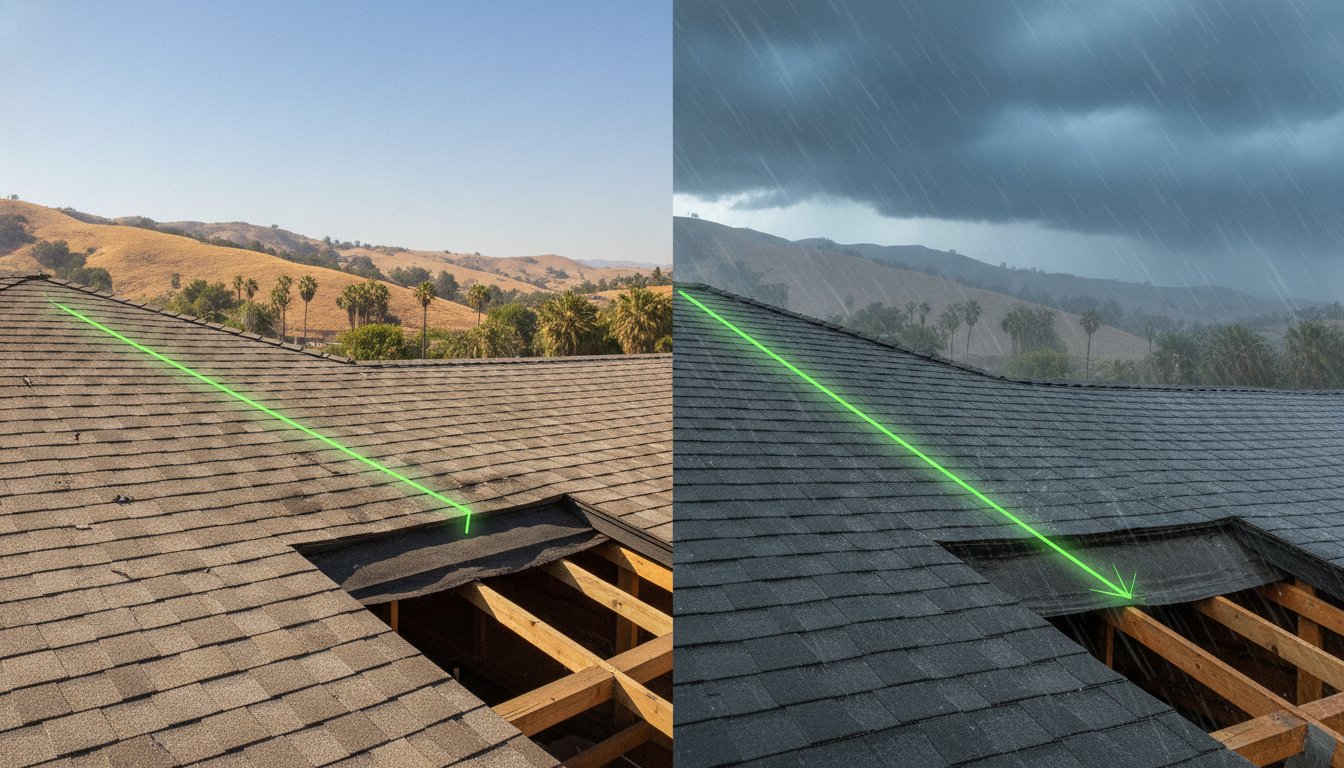
Most homeowners believe a heavy downpour is the primary cause of damage, but the truth is that a roof leak after rain is usually just the final stage of a "dry-rot cycle." In Southern California, our intense summer sun bakes and cracks materials like asphalt shingles and underlayment long before the first clouds arrive. By the time you notice water in your attic or a stain on your ceiling, the moisture has finally found the path created by months of UV exposure and thermal expansion.
We understand the anxiety that comes with discovering water intrusion, especially the fear of hidden mold or uncertainty over repair costs. You deserve a clear path forward that prioritizes the safety of your home and your family. This checklist provides a professional step-by-step plan to identify, mitigate, and repair damage after a storm. You'll learn how to assess your roof's condition under the latest 2026 California Building Standards and determine if you need a minor repair or a full replacement to ensure long-term stability for your property in the Inland Empire or coastal counties.
Key Takeaways
- Understand why a roof leak after rain often continues even after the clouds clear, including how water travels along rafters and saturates attic insulation.
- Learn how to conduct a safe, ground-level exterior inspection and identify subtle interior moisture signals before they turn into major structural repairs.
- Discover immediate mitigation steps to protect your property, including how to safely relieve water pressure to save your home's drywall.
- Identify the most common Southern California culprits for roof failure, from sun-baked flashing to clogged gutters that cause perimeter rot.
- Explore specialized regional solutions like the "Lift and Relay" method and Roof Rejuvenation to extend the life of your investment and prevent future leaks.
Why Your Roof Leaks After the Rain Stops
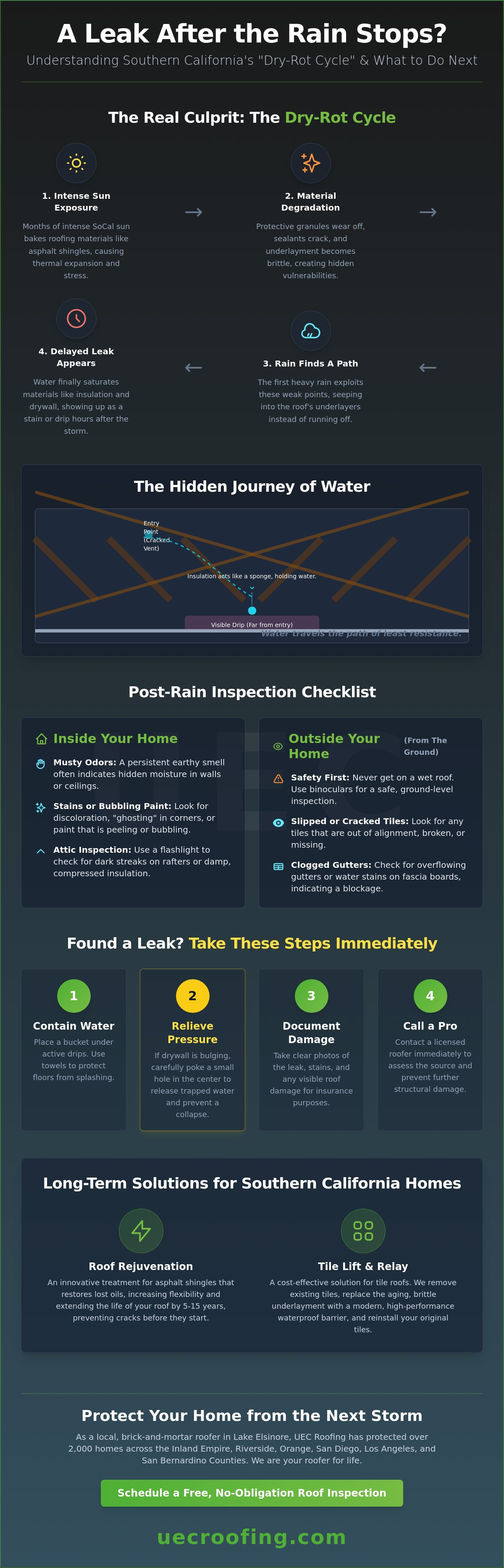
In Southern California, a roof leak after rain is rarely a sudden accident. It's the culmination of what we call the "dry-rot cycle." During our long, scorching summers in areas like Lake Elsinore and the Inland Empire, roofing materials endure relentless thermal expansion and contraction. This stress creates micro-fissures in shingles and compromises the sealants around your flashing. When the winter storms finally arrive, the water doesn't just fall through a hole; it finds these pre-existing weaknesses that have been developing for months.
Many homeowners are surprised to see water dripping from their ceiling hours after the clouds have cleared. This delay happens because water is opportunistic and rarely follows a straight path. It enters through a compromised point, such as a cracked pipe boot or a slipped tile, and then begins a slow journey through your home's structural layers. By the time you notice a stain, the moisture has likely already saturated your internal materials.
The Science of Water Migration in Your Attic
Gravity and roof pitch dictate where a leak actually manifests on your ceiling. Water often enters at a high point, like a chimney or a ridge vent, and then travels along the top of a rafter. It might move ten feet horizontally before finally dropping onto your drywall. This migration is why a stain in your living room doesn't always mean the damage is directly above it.
Your attic insulation also plays a major role in this delayed reaction. Fiberglass and cellulose materials act like a giant sponge. They can hold a significant amount of water during a heavy downpour, masking the problem while the storm is active. Once the material reaches its saturation point, it begins to release that moisture as a steady drip, leading to a roof leak after rain has already passed. This trapped moisture between the roof deck and the underlayment is particularly dangerous, as it can lead to wood rot and mold growth in the dark, unventilated corners of your attic.
Southern California Weather Patterns and Roof Stress
Our regional weather patterns put unique strain on local homes from San Diego to Riverside. The transition from 100-degree heat to a sudden "Atmospheric River" creates a thermal shock that aging materials simply can't handle. When heavy downpours hit, they quickly overwhelm gutter systems and flashing that have been weakened by the sun. Over a 10-year period, intense UV rays break down the chemical bonds in asphalt shingles, causing them to lose the protective granules that shield the underlying waterproof layers. Once this protection is lost, the underlying felt becomes brittle and loses its elasticity, making it prone to snapping when the next big storm arrives.
The Post-Rain Roof Leak Checklist: Inside and Outside
Once the sky clears over the Inland Empire, your first priority is a thorough assessment. Don't wait for a visible drip to appear in your living room. A roof leak after rain often starts as a silent threat, hidden behind drywall or buried in attic insulation. We recommend starting your inspection with your senses. Trust your nose first; a persistent musty or earthy smell in a specific room often indicates water is trapped within the wall cavities or ceiling joists. This moisture can quickly lead to mold growth if it isn't addressed immediately.
Documentation is your best tool for insurance claims and contractor estimates. Take high-quality photos of every anomaly you find, both inside and out. These images provide a clear timeline of the damage and help professionals pinpoint the entry point. If you spot any of the following warning signs, scheduling a professional roof repair assessment is the most reliable way to protect your home's long-term value.
Interior Warning Signs You Might Miss
Water doesn't always drip; sometimes it pools. Look closely at your ceilings and walls for "bubbling" paint or wallpaper. This happens when water is trapped behind the surface, creating a literal balloon of moisture. In the attic, use a high-powered flashlight to scan the rafters. Look for dark streaks, which are clear indicators of water travel. Check your insulation for compression or dampness. Even if the wood looks dry, saturated insulation acts like a sponge and will continue to cause damage long after the storm has passed. Look for "ghosting" in the corners where walls meet the ceiling, as these faint gray or black stains are often the first signs of a slow, persistent leak.
Exterior Visual Cues for Homeowners
Safety is paramount. Perform your exterior inspection from the ground using a pair of binoculars. In Southern California communities like Riverside and San Diego, tile roofs are incredibly common. Look for tiles that have slipped out of alignment, or "star" cracks caused by fallen debris. For homes with composite shingles, look for "balding" areas where the protective granules have washed away. You'll often find these granules piled up in your gutters or at the base of your downspouts. Don't forget to inspect the flashing around chimneys, skylights, and plumbing vents. The intense sun in Los Angeles and Orange County often causes these seals to crack or pull away from the roof surface, creating an easy entry point for the next roof leak after rain.
Common Culprits: Why SoCal Roofs Fail After Rain
Southern California's weather patterns create a perfect storm for roofing failures. We often experience months of extreme heat followed by intense "Atmospheric Rivers" that dump several inches of water in a matter of hours. This transition is when a roof leak after rain becomes most apparent. The long dry spells allow debris to collect and materials to degrade without any warning signs, leaving your home vulnerable when the first major storm hits.
Clogged gutters and downspouts are frequently the primary cause of perimeter damage. When water cannot flow freely away from your roof, it pools at the edge and backs up under the first few courses of shingles or tiles. This leads to fascia rot and water intrusion into your eaves. Similarly, the rubber seals around your pipe boots are highly susceptible to UV damage. The intense sun in San Bernardino and Riverside Counties bakes these seals until they crack. A single cracked vent boot can cause thousands in interior damage by allowing water to slide directly down the pipe into your ceiling joists.
The Hidden Danger of Aged Underlayment
In Southern California, many homeowners mistakenly believe that their tiles are the actual roof. In reality, tiles act as the "armor" that protects the house from sun and impact, while the underlying felt is the "waterproof skin." Over time, this felt becomes brittle and loses its ability to shed water. You might see a roof leak after rain even if your tiles appear to be in perfect condition. If your underlayment has reached the end of its lifespan, a professional felt replacement is often necessary to restore the system's integrity without replacing the entire roof.
Flashing and Sealant Degradation
Flashing is the metal material installed around roof penetrations, such as chimneys and skylights. It is the weakest link in any roofing system. In the Inland Empire, the constant expansion and contraction of these metal components during 100-degree days eventually breaks the caulk seals. Proper "step flashing" is vital where the roof meets exterior walls to ensure water is channeled away from the structure. When these seals fail, water finds its way behind the siding and into your home's framing, often going unnoticed until significant structural damage has occurred.
Immediate Steps to Take When You Spot a Leak
Discovering a roof leak after rain is a stressful experience that requires quick, decisive action to protect your home's structural integrity. Your immediate goal is to minimize water damage to your interior and prevent the spread of moisture. Start by identifying the drip point and placing a bucket or container underneath it. If you notice a bulge or a "bubble" in your ceiling drywall, don't wait for it to burst. Use a small screwdriver or a drill to poke a hole in the center of the bulge. This relieves the water pressure and allows the moisture to drain into your bucket, often saving the entire drywall panel from collapsing under the weight of trapped water.
Safety must remain your highest priority during this process. We strongly advise that you never climb onto a wet roof after a storm. Surfaces in Southern California, particularly tile and metal, become incredibly slick when damp. Professional roofing contractors use specialized safety gear and fall protection to navigate these risks. Instead of a DIY repair, focus on documenting the damage from the ground and contacting a professional for an inspection or a leak repair service to address the root cause.
Minimizing Interior Water Damage
Once you've contained the primary drip, move all furniture, rugs, and electronics away from the affected area. If water is entering near a light fixture or an electrical outlet, shut off the power to that circuit at your breaker box immediately to prevent fire hazards. Moisture is a catalyst for mold growth, which can begin in as little as 24 to 48 hours. Use high-powered fans and dehumidifiers to circulate air and dry out the space. In the humid aftermath of an Inland Empire storm, these steps are critical for maintaining a healthy indoor environment.
Why a Professional Inspection is Non-Negotiable
A "patch" is rarely a permanent solution for a roof leak after rain. While a temporary tarp might stop the immediate flow, it doesn't address the underlying issues like degraded underlayment or cracked flashing. Professional roofers utilize moisture meters and thermal imaging to find hidden pockets of water that aren't visible to the naked eye. Attempting a DIY fix can also lead to unintended consequences, such as voiding your manufacturer's warranty or complicating future insurance claims. A comprehensive roof tune-up is often the more ethical and cost-effective choice, ensuring your investment remains secure for years to come.
Long-Term Solutions: Preventing the Next Leak
Stopping a roof leak after rain is only the first step in a comprehensive home protection plan. To truly secure your property's value, you need a strategy that addresses the unique environmental stressors of the Inland Empire. Our region's intense UV exposure and persistent dry heat mean that standard roofing solutions often fall short. We focus on durability and professional craftsmanship to ensure that your roof remains a secure investment for your family for decades to come.
Eventually, every roof reaches a point where repairs are no longer sustainable. If you find yourself dealing with recurring moisture issues or widespread material failure, it may be time to consider a new roof installation. Transitioning from constant patching to a full replacement ensures your home complies with the latest 2026 California Building Standards, including energy-efficient "cool roof" requirements that reduce cooling costs. For roofs that are aging but still structurally sound, we also offer Roof Rejuvination to extend the system's lifespan without the disruption of a full teardown.
Specialized Tile Roof Care
For the many tile roofs across Riverside and San Diego Counties, we often recommend a tile roof lift and relay. This specialized process involves carefully removing your existing tiles, replacing the degraded underlayment, and then reinstalling the original tiles. It's an ecologically responsible and cost-effective way to restore your "waterproof skin" while keeping the aesthetic of your home intact. With over 2,000 successful projects in the region, UEC Roofing understands the specific failure patterns of local homes. We prioritize professional tile replacement over simple caulking, as temporary sealants quickly succumb to the Southern California sun.
The Value of Preventative Maintenance
Consistency is the key to longevity. We suggest setting up a recurring inspection schedule every year before the rainy season typically begins in November. This preventative approach allows our team to clear debris and check for heat-damaged flashing before a roof leak after rain ever occurs. Proper attic ventilation is another critical factor we assess. It reduces the heat stress on your roofing materials, preventing them from becoming brittle prematurely. UEC Roofing acts as your "roofer for life" in Lake Elsinore and beyond, providing the steady guidance you need to maintain your property with confidence.
Secure Your Southern California Home Today
Managing a roof leak after rain is about more than just a quick fix; it's about making a strategic investment in your home's longevity. By following this guide, you now know how to contain water pressure to save your drywall, identify the subtle signs of underlayment failure, and distinguish between a simple repair and a necessary replacement. These steps are vital for protecting your property in the unique climate of the Inland Empire and surrounding counties.
UEC Roofing provides the steady, reliable partnership you need to navigate these challenges with confidence. As a local brick-and-mortar authority in Lake Elsinore with over 2,000 successful projects in Southern California, we specialize in expert systems like the tile roof lift and relay. We don't just fix problems; we build lasting relationships based on honesty and superior craftsmanship. Schedule your professional roof inspection with UEC Roofing today! We look forward to earning your trust and becoming your roofer for life, ensuring your home remains secure through every season.
Frequently Asked Questions
Is a roof leak after rain an emergency?
Yes, any water intrusion is a high-priority situation that requires immediate attention. A roof leak after rain can quickly compromise your home's structural integrity or create dangerous electrical hazards if water reaches light fixtures. Taking fast action prevents minor drips from escalating into expensive repairs or widespread mold issues.
How much does it cost to fix a roof leak in Southern California?
Repair costs depend on the type of material, the extent of the damage, and the height of the roof. A simple shingle fix is a different process than a complex tile restoration or a specialized lift and relay. We recommend a professional inspection to get a precise quote tailored to your home's specific requirements and regional building codes.
Can I just tarp my roof myself after it rains?
Climbing on your roof after a storm is highly discouraged due to the extreme risk of slipping on wet tiles or shingles. You might also accidentally break more materials, worsening the situation and potentially voiding your warranty. It's much safer to have a professional roofing contractor handle emergency tarping with the correct safety gear and fall protection.
How do I find exactly where my roof is leaking?
Locating the exact source involves inspecting your attic for water trails along the rafters or staining on the underside of the roof deck. Because water follows the path of least resistance, the entry point on the roof is often several feet away from the visible stain on your ceiling. Professionals use moisture meters and thermal imaging to pinpoint these hidden leaks accurately.
Will my homeowners insurance cover a roof leak after a storm?
Most policies cover a roof leak after rain if the damage resulted from a sudden, catastrophic event like high winds or fallen branches. If the leak occurred because of a lack of preventative maintenance or general wear and tear, your insurance company might deny the claim. Always document the damage thoroughly with photos and consult with your provider for specific coverage details.
How long do I have to fix a leak before mold starts to grow?
Mold growth typically starts within 24 to 48 hours of moisture exposure in warm, unventilated spaces like an attic. This rapid timeline is why drying out the affected area with fans and dehumidifiers is a critical first step. Delaying a repair allows mold spores to spread through your insulation and drywall, leading to much higher remediation costs.
What is the most common cause of roof leaks in Riverside and San Diego?
The primary culprit in Riverside and San Diego is the "dry-rot cycle" caused by intense UV exposure. Years of Southern California sun bake the underlying felt underlayment until it becomes brittle and cracks. When the first heavy rain hits, water slides through these cracks and into your home, even if the exterior tiles look perfectly intact.
Should I repair or replace my roof if it starts leaking?
This decision depends on the age of your roof and the frequency of the leaks. If the damage is localized and your roofing materials are relatively young, a professional repair or a roof tune-up is usually the best path. However, if your underlayment has failed across the entire surface or the roof is over 20 years old, a full replacement is often the more ethical and long-term solution.