
Roof Flashing Repair Cost: 2026 Southern California Homeowner’s Guide
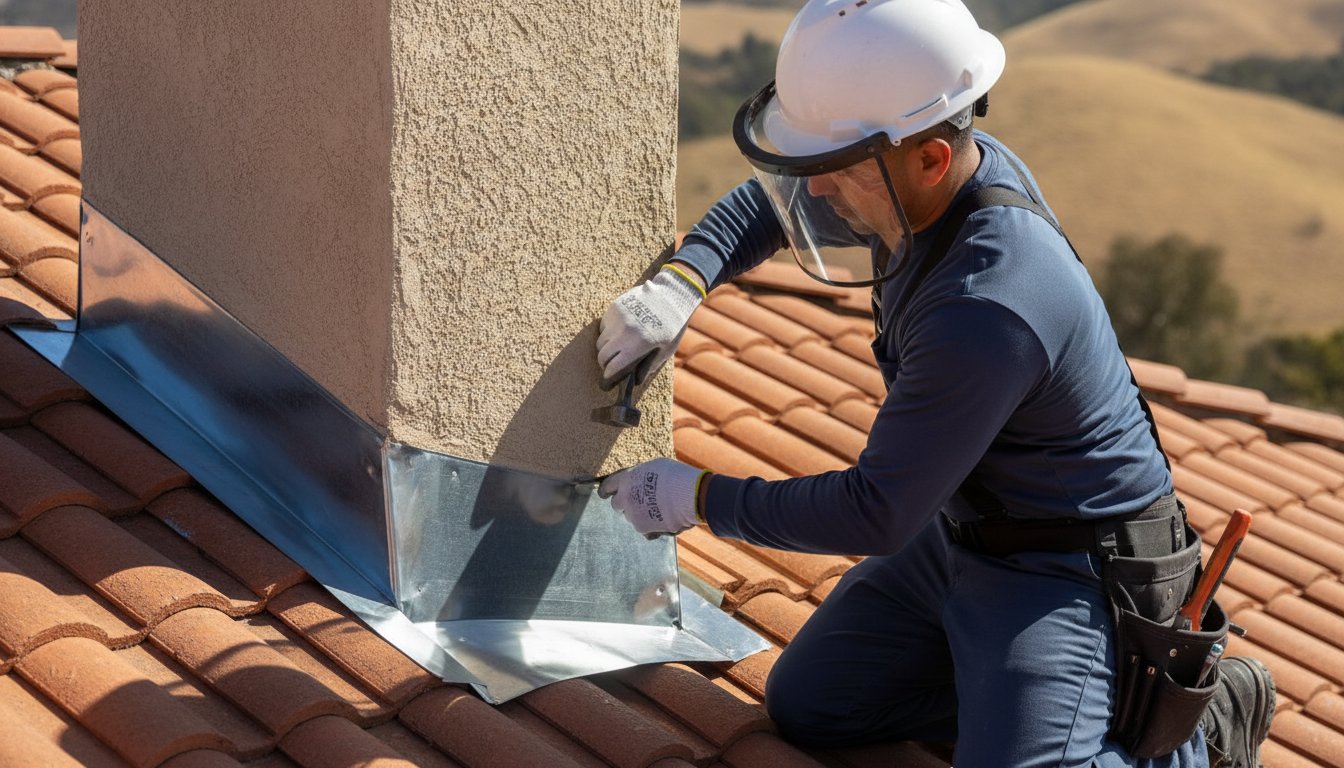
This guide provides a transparent look at the real-world factors driving roof flashing repair cost in 2026. Whether you are dealing with a rusted chimney collar in Riverside or damaged valley flashing in San Diego, you deserve to know what goes into a professional fix. We will explore how different materials, roof pitches, and Southern California's intense weather patterns influence your investment. You will gain the confidence to secure a leak-free home that stands strong against the next Santa Ana wind event or winter storm.
Key Takeaways
- Identify the critical failure points on your roof where flashing protects against Southern California's rare but heavy winter rains.
- Understand the specific factors like roof pitch and material selection that determine your final roof flashing repair cost.
- Learn why a comprehensive roof tune up is often a smarter, more cost-effective alternative to simple sealant patches.
- Compare the long-term benefits of professional-grade materials like galvanized steel against the risks of temporary DIY fixes.
- Gain clarity on estimated pricing for common repairs around chimneys, skylights, and vent pipes to avoid being overcharged.
Understanding Roof Flashing and Southern California Failure Points
Roof flashing is the unsung hero of your home's defense. While shingles cover the broad surfaces, flashing handles the difficult transitions where water is most likely to penetrate. What is roof flashing? At its core, it is a thin layer of weather-resistant material installed to direct water away from seams and joints. In Southern California, from Lake Elsinore to the coast, this metal protection is critical for chimneys, skylights, valleys, and dormers. If these components fail, your roof flashing repair cost can rise significantly as hidden water damage takes hold inside your walls.
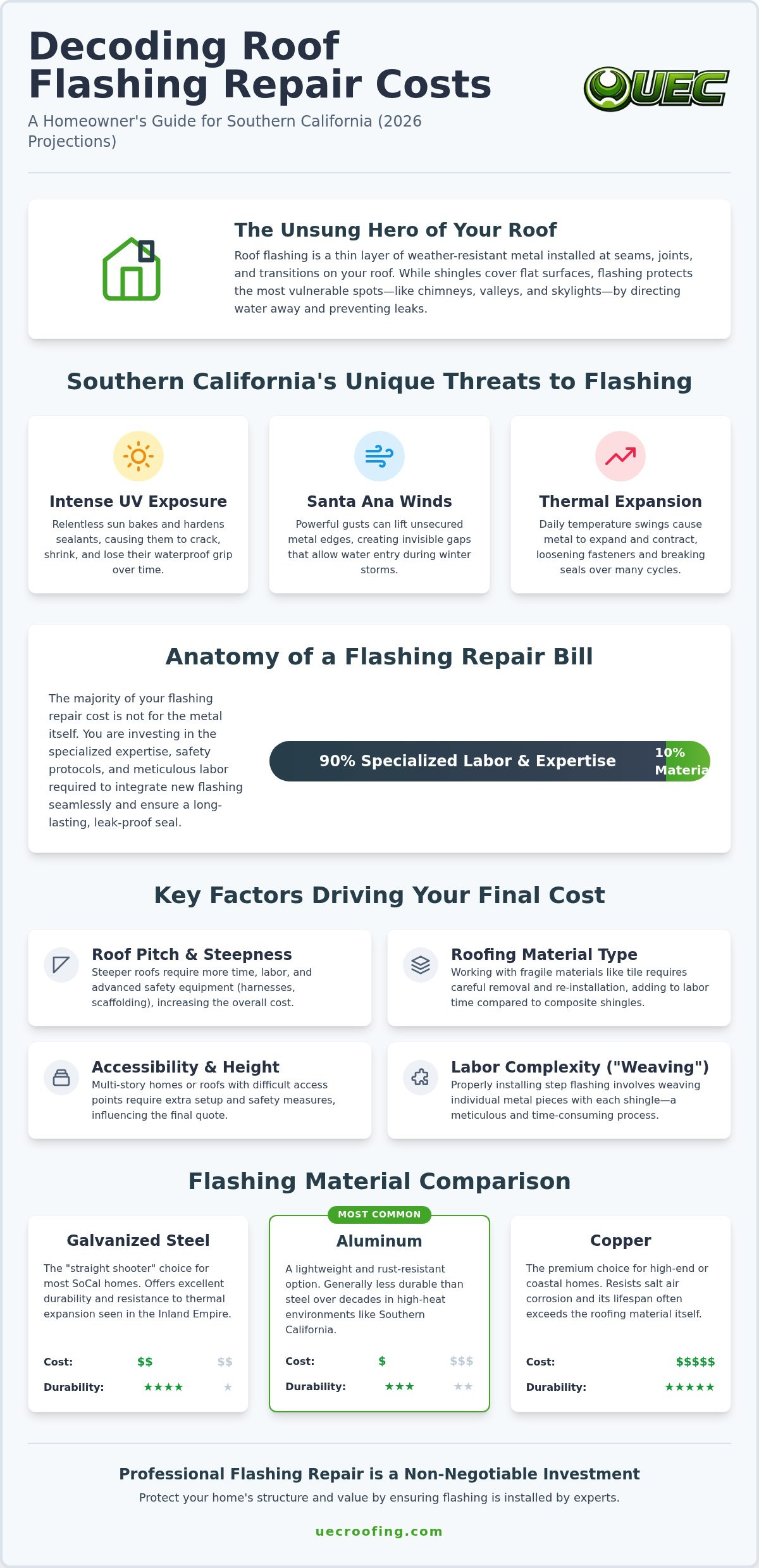
The local sun is a relentless enemy. Our high UV index bakes the sealants that bond flashing to your roofing material until they become brittle and lose their grip. Meanwhile, Santa Ana winds pose a different threat. These powerful gusts can lift metal edges that weren't perfectly secured, creating gaps that are invisible from the ground. These "hidden" leaks are often the most dangerous because they rot your structure for months before you ever notice a drip on your ceiling.
The Role of Flashing in Your Roof’s Integrity
Effective roofing relies on the principle of water shedding rather than just waterproofing. Flashing acts as the primary director in this system. It ensures rain moves off vertical surfaces, like a chimney or a dormer wall, and safely onto the shingles. This protects the underlying felt underlayment and the wooden decking from moisture. Since flashing is the most frequent source of roof leaks, maintaining its integrity is the best way to prevent catastrophic structural rot.
Why SoCal Weather Accelerates Flashing Failure
Our climate in the Inland Empire and across Los Angeles and Orange Counties puts immense stress on metal. Thermal expansion is a daily occurrence. Metal flashing expands during 100-degree afternoons and contracts quickly as the desert air cools at night. This constant movement can back out nails and tear through old, hardened sealants.
Vent pipes are particularly vulnerable. The rubber boots, or vent flashings, often succumb to dry rot under the California sun. They lose their flexibility and crack. Because we often experience long dry spells, these small failures go unnoticed. When a rare, heavy winter storm finally hits, water exploits these gaps immediately. Proactive maintenance is the only way to manage your roof flashing repair cost and protect your property value over the long term.
Factors That Drive Roof Flashing Repair Cost in 2026
Your repair estimate might surprise you if you only look at the price of metal. Expertise is the primary driver of roof flashing repair cost in 2026. A professional roofer isn't just selling you a piece of steel; they're selling the precision required to keep water out of your attic. Most homeowners assume the metal itself is the biggest expense. It isn't. Roughly 90% of your estimate covers the specialized labor needed to integrate that metal into your existing roof structure.
Safety and accessibility also play huge roles in the final quote. If your home in Los Angeles has a steep pitch or multiple stories, your contractor must use specialized safety equipment. Harnesses, scaffolding, and extra man-hours for roof navigation all influence the final number. It takes significantly longer to work on a 45-degree slope than it does on a standard ranch-style home in Lake Elsinore. A reputable Roofing contractor will always factor these safety requirements into a transparent estimate.
Material Costs: Aluminum, Steel, and Copper
Choosing the right material involves balancing durability with your budget. Galvanized steel is the "straight shooter" choice for most Southern California homes. It offers excellent resistance to the thermal expansion we see in the Inland Empire. Aluminum is another common option. It's lightweight and rust-resistant, though it's generally less durable than steel over several decades in high-heat environments.
For high-end architectural homes or coastal properties in Huntington Beach and Carlsbad, copper is the premium choice. Copper develops a protective patina over time. It resists salt air corrosion better than almost any other metal. While the material cost is higher, its lifespan often exceeds that of the roofing material itself. It's a long-term investment in your property's value and aesthetic appeal.
Labor Complexity and "The Weaving Process"
The real difficulty lies in how new flashing integrates with your existing roof. We don't just lay metal on top; we weave it into the layers. This is especially true for step flashing. Each individual shingle requires its own piece of metal. This prevents water from traveling sideways under your roofing material. It's a slow, methodical process that requires a steady hand and a deep understanding of water flow.
Tile roofs, which are staples in San Bernardino and Riverside Counties, present unique challenges. A technician must carefully remove heavy tiles without causing breakage. They then replace the underlying metal and relay the tiles in their original positions. If your chimney requires counter-flashing, this might even involve masonry work to cut a groove into the brick. This level of craftsmanship ensures your home remains dry during the rare but heavy rains that hit our region.
Repair vs. Replacement: Evaluating Your Best Long-Term Solution
Deciding whether to patch a leak or overhaul your system is a pivotal moment for any homeowner. A simple sealant refresh might seem attractive for its low initial price. In the intense heat of the Inland Empire, these patches are often just temporary bandages. A full metal replacement is the standard for long-term reliability. We often recommend a roof tune up to address these vulnerabilities before they cause internal damage. This proactive approach keeps your roof flashing repair cost manageable by catching minor corrosion before it requires a full structural intervention.
For homeowners with asphalt shingles, the roof rejuvenation vs replacement debate often comes down to the condition of the flashing. If your metal is still sound but your shingles are brittle, rejuvenation can extend your roof's life. If the flashing is rusted through, the entire system's integrity is compromised. We focus on providing solutions that protect your family and your property value for the long haul.
The "Lift and Relay" Solution for Tile Roofs
Tile roofs are iconic across Orange and San Diego Counties. While the clay or concrete tiles can last for half a century, the flashing and felt underlayment often fail much sooner. Our lift and relay roofing service is a specialized Southern California solution for this exact problem. We carefully remove your existing tiles, replace the failed flashing and underlayment, and then reinstall the original tiles. This provides the protection of a new roof at a fraction of the cost of a full tile replacement.
When to Walk Away: Signs You Need a New Roof
There comes a point where repairing individual sections is no longer ethical or cost-effective. Widespread flashing failure is usually a symptom of a systemic issue. If you see leaks around multiple chimneys and valleys, your roof's water-shedding capability has likely reached its limit. At this stage, your total roof flashing repair cost would be better spent toward a permanent solution. Investing in a new system stabilizes your roof replacement cost by avoiding the cycle of endless, expensive patches. We pride ourselves on being straight shooters. If a repair won't last through the next winter storm, we'll tell you.
Common Flashing Repair Scenarios and Estimated Pricing
Your total roof flashing repair cost depends heavily on which part of the system has failed. Every penetration on your roof is a potential entry point for water. Some fixes are straightforward; others require significant structural work. We categorize these by the time and expertise needed to restore your home's integrity. Whether it's a simple vent pipe or a complex chimney system, we prioritize long-term solutions over quick patches. We don't guess when it comes to your protection; we provide a thorough assessment to identify every vulnerability.
Pipe boot replacement is the most frequent and typically the most affordable fix. These rubber collars around your plumbing vents are directly exposed to the intense Southern California sun. In the Inland Empire, the UV rays cause the rubber to crack and pull away from the pipe. Replacing these is a standard part of our Roofing Services, ensuring a tight seal before the next rain hits. We often see these failures on homes that are only ten years old because the rubber simply can't handle our local heat index.
Chimney and Skylight Flashing Challenges
Chimneys are notoriously difficult because they involve multiple metal components that must work in harmony. The system includes:
- Base Flashing: The L-shaped metal that sits beneath the shingles and against the chimney wall.
- Counter-Flashing: The metal tucked into the masonry joints to cover the top of the base flashing.
- Crickets: Small peaked structures built behind large chimneys to divert water flow.
If your chimney is wider than 30 inches, a cricket is essential for preventing water from pooling. Skylights present a similar challenge. We always use manufacturer-specific flashing kits rather than generic metal. This precision prevents leaks and protects the expensive glass and frame from damage during the installation process. If you suspect a leak around these areas, it's vital to have a professional inspection before the roof flashing repair cost escalates into a full interior remodel.
Valley and Eave Flashing (Drip Edge)
Valleys are the most destructive failure points because they carry the highest volume of water. When valley flashing fails, it isn't just a drip; it's a flood. Repairing these areas requires us to "undo" a significant square footage of shingles or tiles to reach the underlying metal. This labor-intensive process is the only way to ensure the new flashing is correctly layered. We've seen many "caulk and walk" repairs in San Bernardino and Riverside Counties fail within months because they didn't address the underlying metal layers.
Eave flashing, or the drip edge, is equally vital for your home's health. It's the metal strip that hangs over the edge of your roof. Its job is to lead water into the gutters and away from your fascia boards. If this is missing or damaged, your wood trim will rot. Protecting these critical transition points is why we've successfully completed over 2,000 projects across Southern California. We treat every eave and valley with the respect your investment deserves.
Why Professional Flashing Repair is a Non-Negotiable Investment
Choosing to cut corners on your roof flashing repair cost by hiring an unlicensed handyman often leads to a "caulk and walk" scenario. This is a common trap for Southern California homeowners. An amateur might apply a thick bead of sealant over a rusted valley or a cracked chimney collar and call it fixed. In reality, they've only hidden the problem. True craftsmanship involves removing the failure, addressing the underlying wood, and installing new metal that meets current California building codes. It's a precision job that requires a professional eye to ensure your home stays protected for years, not just weeks.
Properly installed flashing also works in tandem with your attic ventilation system to manage the extreme Inland Empire heat. When flashing is correctly integrated, it doesn't just block water; it maintains the seal of your roof deck, allowing your vents to draw hot air out efficiently. This prevents the "oven effect" that can bake your shingles from the inside out. For complex issues, relying on a roof leak repair Riverside CA specialist ensures that every detail, from ventilation to waterproofing, is handled with care.
The Dangers of DIY Flashing Repairs
Attempting a DIY fix on your roof is a significant risk. Improper nailing is the most frequent mistake we see. If you drive a nail through the wrong part of a step flashing piece, you've actually created a new, direct path for water to enter your home. Beyond the technical errors, the physical danger is real. High-pitched roofs in Riverside or Murrieta are unforgiving. A single slip on a steep tile or shingle surface can be life-changing.
Many homeowners also reach for roofing tar as a quick solution. While it might stop a drip for a few days, tar is a temporary band-aid that eventually cracks under the intense SoCal sun. It creates a messy, difficult-to-remove layer that often makes the eventual professional repair more expensive. We believe in doing the job right the first time, using permanent materials that withstand our regional weather patterns.
UEC Roofing: Your "Roofer for Life" in Southern California
Our roots are firmly planted in Lake Elsinore. We aren't a "storm chaser" company that disappears after the rainy season. As a brick-and-mortar business with over 2,000 successful projects in the region, we take immense pride in our reputation. We approach every inspection with a methodical, "straight shooter" attitude. You won't find aggressive sales tactics here; instead, you'll get a transparent quote and an honest assessment of your roof's condition.
A professionally warranted repair provides the peace of mind you need when the next Santa Ana wind event hits. We stand behind our workmanship because we know the quality of the materials and the skill of our technicians. When you invest in a professional repair, you aren't just fixing a leak. You're securing your property value and ensuring your family stays dry during our rare but heavy winter storms. We aim to be your trusted partner for the life of your roof.
Secure Your Home Against the Next Storm
Understanding the real-world factors behind roof flashing repair cost empowers you to make informed decisions for your property. We've explored how Southern California's intense UV rays degrade sealants and why precision weaving is necessary for long-term protection. Whether your home features a tile, shingle, or flat roof system, the transition points around chimneys and valleys remain your first line of defense against water damage. Investing in quality craftsmanship now prevents the structural rot that often follows a temporary patch approach.
As trusted local experts with a brick-and-mortar presence in Lake Elsinore, we bring the experience of over 2,000 successful projects to every inspection. We serve homeowners across Riverside, Orange, and San Bernardino Counties with the goal of being your roofer for life. Don't wait for a ceiling stain to appear before taking action. Your roof is a critical investment in your family's safety and your home's long-term value. Request a Professional Roof Inspection from UEC Roofing Today. We're here to ensure your peace of mind through every season.
Frequently Asked Questions
Is roof flashing repair covered by homeowners insurance?
Insurance coverage typically depends on the root cause of the damage. If a sudden event like a Santa Ana windstorm or a fallen branch damages your flashing, your policy may cover the restoration. However, insurance companies rarely pay for repairs caused by age or neglected maintenance. It's a good idea to document the damage with photos and contact your agent to discuss your specific policy details before starting work.
How long does a typical roof flashing repair take to complete?
Most localized flashing repairs are completed within two to four hours. If your project involves complex chimney counter-flashing or multiple roof valleys, it may require a full day of labor. The time depends on the accessibility of the area and the specific roofing material. Tile roofs often take longer because technicians must carefully remove and relay the surrounding tiles to ensure a watertight seal without causing breakage.
Can I just put new flashing over the old metal?
You should never install new flashing directly over old, damaged metal. This "nail-over" method is a shortcut that traps moisture and prevents a proper bond with the roof deck. A professional must remove the existing flashing to inspect the underlying wood for dry rot or structural damage. Starting with a clean surface is the only way to ensure the new waterproof barrier remains effective for the long term.
What happens if I ignore a small flashing leak?
Ignoring a minor leak leads to catastrophic structural damage and toxic mold growth. Small gaps in your flashing allow water to seep into your walls and attic, often rotting the wooden framing before you see a ceiling stain. By the time a leak becomes obvious, your total roof flashing repair cost will likely include expensive drywall and framing restoration. Addressing small issues immediately protects your home's overall property value.
Do I need to be home for a roof flashing inspection?
You don't need to be home for an external roof inspection. Our technicians can access the roof and document any flashing failures while you go about your day. However, many homeowners in the Inland Empire prefer to be present to review the photos and discuss the findings in person. This allows for a transparent conversation about the repair process and ensures you have a clear understanding of the necessary steps.
How often should I have my roof flashing inspected in Southern California?
We recommend a professional roof inspection at least once a year. The intense Southern California sun and daily temperature swings cause metal to expand and contract rapidly. This thermal movement eventually pulls nails loose and cracks sealants. Scheduling an annual checkup before the winter rain season helps identify these vulnerabilities. It's a proactive way to manage your roof flashing repair cost and prevent unexpected emergencies.
What is the most durable material for roof flashing in coastal areas like San Diego?
Copper and stainless steel are the most durable options for homes in San Diego or Huntington Beach. These materials provide superior resistance to salt air corrosion, which can eat through standard galvanized steel in a few years. While the initial investment for premium metals is higher, their longevity often matches the lifespan of the roof itself. Choosing salt-resistant materials is a smart, long-term strategy for protecting coastal real estate.