
Roof Felt Replacement: The Complete Homeowner’s Buying Guide for 2026
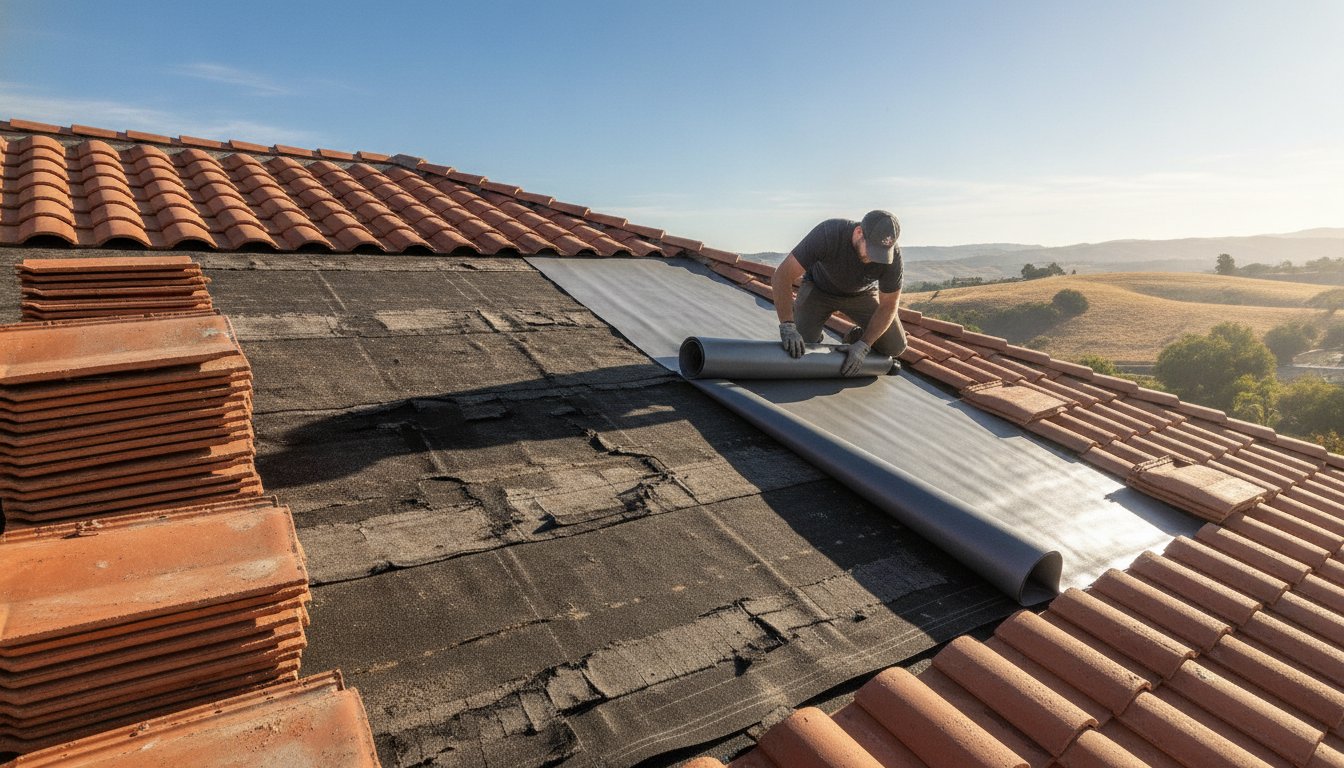
Replacing your entire roof might actually be the most expensive mistake you make this year. It is a common frustration for homeowners in Lake Elsinore and throughout the Inland Empire to assume that a few leaks require a total overhaul. You want to protect your family and your property value, but the thought of a massive, unbudgeted expense is understandably daunting.
The truth is that while your tiles act as a shield, the underlayment does the heavy lifting. A professional roof felt replacement using the "lift and relay" method can often save you thousands of dollars while providing a leak-free home for decades. In this 2026 guide, we will break down how to identify hidden water damage before it becomes a crisis. You will learn about the latest Title 24 energy requirements for Southern California and how our team, with over 2,000 successful projects across Riverside, Orange, and San Diego counties, ensures transparent pricing. We are here to help you extend your roof's lifespan without the unnecessary waste of a full replacement.
Key Takeaways
- Understand why your roof's underlayment is the primary waterproof barrier and how the "baked roof" effect in Southern California causes it to fail.
- Identify the critical warning signs, such as slipping tiles or recurring leaks, that indicate you need a professional roof felt replacement.
- Learn how the "Lift and Relay" process saves you money by reusing your existing clay or concrete tiles while installing a new, durable protective layer.
- Explore the key factors that determine project costs in 2026, from roof pitch and square footage to the specific requirements of California's latest building codes.
- Discover how choosing a local specialist with a track record of 2,000+ successful projects ensures your home remains leak-free for the long term.
What is Roof Felt and Why Does it Fail in Southern California?
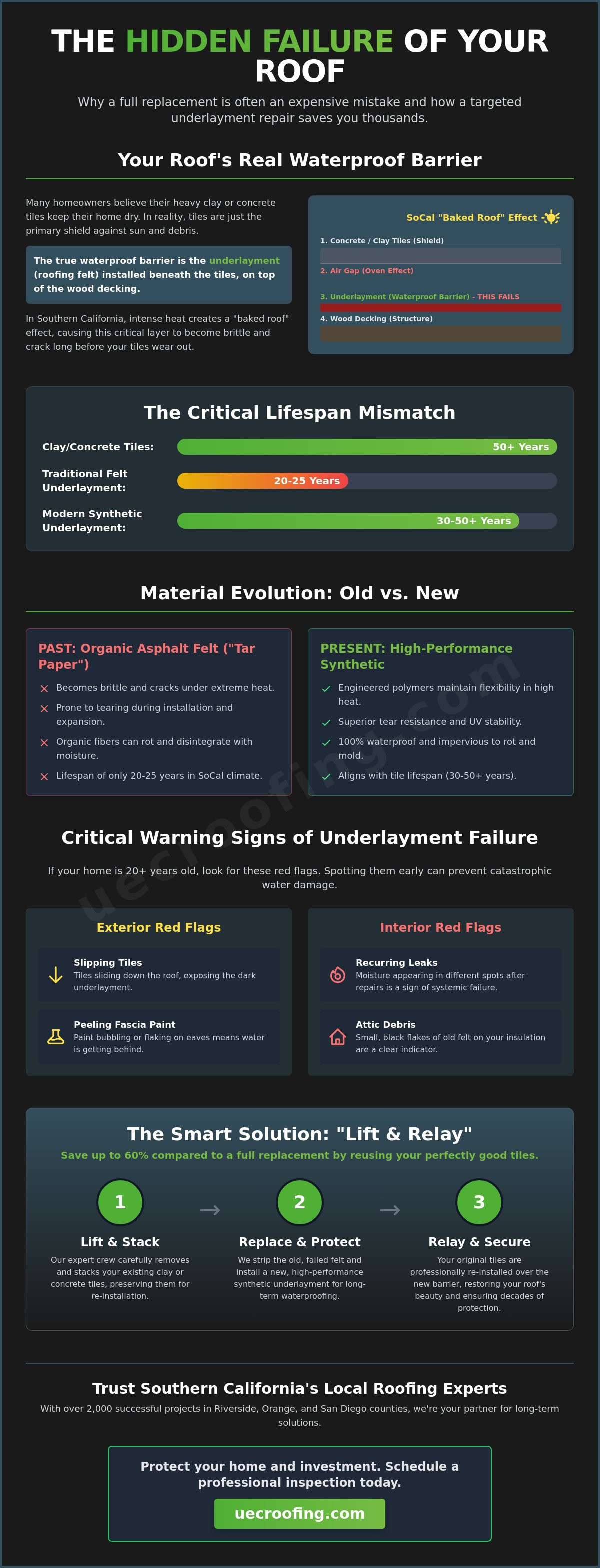
Many homeowners believe their heavy concrete or clay tiles are what keep the rain out. In reality, tiles are just the first line of defense. The true waterproof barrier is the roofing felt, or underlayment, installed directly onto the wood decking. While tiles are designed to shed water through head-lap and specialized drainage channels, they aren't completely airtight. Wind-driven rain and debris often find their way underneath. When that happens, you rely entirely on the underlayment to guide water safely into the gutters. Without this layer, your plywood deck is exposed to moisture, leading to rot and structural damage.
There's a significant lifespan gap in Southern California roofing. High-quality tiles can easily last 50 years or more. However, traditional asphalt-saturated felt often begins to fail after 20 to 25 years. This discrepancy is the primary reason why a roof felt replacement becomes necessary. You essentially have a perfectly good tile "shield" protecting a waterproof layer that has turned to dust. It's a common scenario in older Inland Empire developments where the tiles remain beautiful, but the protection underneath has expired.
The Impact of Extreme Heat on Underlayment
The Inland Empire presents a unique challenge for roofing materials. In cities like Temecula and Riverside, summer temperatures often soar past 100 degrees. This creates a "baked roof" effect. The space between your tiles and the roof deck becomes a literal oven, reaching temperatures far higher than the ambient air. This intense heat causes the essential oils in organic felt to evaporate. Over time, the once-flexible material becomes brittle and paper-thin. It eventually cracks during the natural thermal expansion of your home. This leads to leaks even if every tile on your roof looks perfectly intact from the street.
Organic Felt vs. Synthetic Underlayment
For decades, #30 asphalt felt, historically known as Tar paper, was the industry standard. While it served its purpose, modern Southern California homes benefit from high-performance synthetic membranes. Unlike organic felt, synthetic options are engineered from woven polymers that don't break down under heat. These materials offer superior tear resistance and UV stability, which is vital during the installation process. Synthetic underlayment doesn't "perish" or rot like older organic fibers found in many Riverside County properties. By upgrading during your roof felt replacement, you finally align the lifespan of your underlayment with the decades of protection your tiles provide. This ensures your home stays dry without needing another major intervention for another 30 to 50 years.
Warning Signs: When Should You Replace Your Roof Felt?
Don't wait for a ceiling collapse to check your roof's health. In Southern California, many homes built during the construction boom of the early 2000s are now reaching a critical tipping point. If your property in Riverside or San Bernardino County is 20 to 25 years old, your original asphalt felt has likely reached the end of its functional life. Even if your tiles look perfect from the curb, the barrier underneath is often brittle and failing. Understanding these red flags can save you from the high cost of structural repairs later.
One of the most obvious signs is recurring leaks. If you've paid for multiple small repairs but moisture keeps appearing in new spots, it's a sign of systemic failure. A single patch won't fix a "baked" underlayment that is cracking across the entire roof deck. You should also walk your property and look for "slipping" tiles. When tiles shift or slide down the roof slope, they expose the dark underlayment to direct UV rays. This exposure accelerates the need for a roof felt replacement. Finally, check your fascia boards and eaves. Peeling paint or soft, dark spots on the wood often mean water is bypassing the drip edge because the felt has curled or disintegrated. The Asphalt Roofing Manufacturers Association notes that proper underlayment is vital for steep-slope systems to manage moisture effectively.
Interior vs. Exterior Red Flags
In San Diego homes, look for "ghosting"—faint, yellowish stains on your ceiling. These are early warnings of a breach. If you can safely access your attic, look for dark streaks on the rafters or small, black flakes of paper on the insulation. These flakes are pieces of your perishing underlayment. Outside, dark streaks on your exterior stucco often indicate that water is running behind the tiles rather than over them. If you've noticed these red flags, a professional roof inspection can help determine if a lift and relay is the right move for your home.
The Danger of Ignoring Failed Underlayment
Ignoring these signs leads to structural wood rot and mold growth in your attic space. A single Riverside rainstorm can turn a minor drip into a major ceiling repair or a total loss of insulation. Beyond the physical damage, failed underlayment hurts your home's resale value. Professional inspectors in Orange County will flag brittle felt immediately. This often requires a full roof felt replacement before a sale can close, putting your equity at risk. Taking action now ensures your home remains a stable investment for years to come.
The Lift and Relay Process: A Deep Dive into Professional Felt Replacement
In Orange and San Diego Counties, the "Lift and Relay" method is the gold standard for maintaining tile roofs. It addresses the core problem: your tiles are still good, but your underlayment is failing. Instead of a wasteful full replacement, we perform a systematic roof felt replacement that preserves your investment. This process is precise and requires a high level of craftsmanship to ensure the new system remains watertight for decades.
- Step 1: Tile Removal. Our team carefully removes your existing concrete or clay tiles. We stack them neatly on the roof or on pallets to avoid damage.
- Step 2: Surface Preparation. We strip away the old, brittle felt. This is the only way to properly inspect the plywood deck for hidden dry rot or structural damage.
- Step 3: Component Installation. We install new flashing, drip edges, and high-performance synthetic underlayment. This creates a superior waterproof seal.
- Step 4: Reinstallation. We relay the original tiles using new, rot-resistant batten strips and corrosion-resistant fasteners.
Why Reusing Tiles Saves Homeowners Thousands
Concrete and clay tiles are incredibly durable. While the felt underneath perishes, the tiles themselves often have decades of life remaining. By choosing a lift and relay, you avoid the massive cost of purchasing new materials. We carefully match your existing style to replace only the few tiles that may have broken over time. This maintains your home's aesthetic consistency while significantly reducing landfill waste. It's a responsible, eco-friendly choice for Southern California homeowners who value quality over unnecessary consumption.
Upgrading Your Roof's Infrastructure
A professional roof felt replacement is the perfect time to address the "hidden" parts of your roof. We replace old valley metal and chimney flashings that are often the source of slow leaks. We also install new batten strips designed to elevate the tiles. This creates essential airflow, which prevents moisture buildup and keeps your roof deck cool. This process ensures your home meets the 2025 Title 24 energy standards, which took effect on January 1, 2026. These updates improve thermal emittance and help lower your cooling costs during those intense Inland Empire summers. By focusing on these infrastructure details, we ensure your roof performs at its peak for another generation.
Roof Felt Replacement Cost and Planning for 2026
Planning for a roof felt replacement in 2026 involves more than just checking material prices at a local hardware store. Most generic guides fail to account for the specialized labor and strict regulatory environment in Southern California. Your final estimate depends on several variables that a simple online calculator cannot capture. This is a critical investment in your home's stability, and understanding the components of the quote is the first step toward a successful project.
Roof pitch is a primary factor. Steeper roofs require additional safety equipment and more time for our crews to navigate safely. The square footage of your home and the weight of your specific tile type also dictate the labor hours needed for a careful lift and relay. In the Inland Empire, labor costs reflect the high level of expertise required to handle clay and concrete tiles without causing damage. While a simple patch might seem cheaper today, a comprehensive lift and relay provides a much higher return on investment. This process can extend your roof's life by another 25 to 30 years, effectively resetting the clock on your home's protection.
What Determines Your Specific Estimate?
Accessibility plays a major role in your project planning. Two-story homes require advanced scaffolding and fall protection systems that one-story properties do not. We also have to consider the condition of your wood deck. Once we lift the tiles, we often find hidden rot that must be repaired to ensure a stable foundation for the new felt. Additionally, you must account for city-specific permit fees. For example, standard residential roofing permits in Los Angeles typically range from $200 to $800 as of 2026. Similar fees apply across San Bernardino and Orange Counties, ensuring your project meets all local safety and energy codes.
Comparing Replacement vs. Rejuvenation
It is essential to know when a roof rejuvenation treatment is a viable option. If your felt is still pliable and only the top layer needs attention, rejuvenation can be a cost-effective choice. However, if the underlayment is brittle and cracking, a full roof felt replacement is the only permanent solution. When you compare the total roof replacement cost to a lift and relay, the savings are significant. Reusing your existing tiles eliminates one of the largest material expenses in roofing. To get an accurate picture of your home's needs, request a detailed estimate from our Lake Elsinore team.
Why UEC Roofing is Your Trusted Partner for Felt Replacement
Choosing a contractor for your roof felt replacement is a decision that affects your home's safety for decades. At UEC Roofing, we don't believe in temporary fixes or high-pressure sales tactics. Our "Roofer for Life" philosophy is built on the foundation of quality craftsmanship and long-term reliability. We treat every home in Lake Elsinore and the surrounding Inland Empire as if it were our own. This commitment to excellence has allowed us to complete over 2,000 successful projects across Riverside, Orange, and San Diego Counties.
Our deep roots in Lake Elsinore give us a unique advantage. We understand the specific environmental stresses that Southern California weather places on your property. From the intense UV radiation in San Bernardino to the coastal humidity in Los Angeles, we know how these factors accelerate underlayment failure. We provide transparent, honest assessments. If your roof only needs a minor repair, we will tell you. We only recommend a full lift and relay when it is truly the most responsible path to protecting your family and your property value.
The UEC Roofing Quality Guarantee
We take immense pride in our methodical approach to tile handling. Our crews are trained to minimize breakage during the removal process, ensuring we preserve as many of your original clay or concrete tiles as possible. We exclusively use premium, high-heat resistant underlayment materials that exceed standard building codes. These advanced membranes are specifically engineered to withstand the "baked roof" effect common in our region. When the job is done, our professional cleanup team ensures your property is left in better condition than we found it. We respect your investment and your time.
Ready to Protect Your Investment?
Don't wait for the next major rainstorm to discover a leak. A proactive approach is always more cost-effective than an emergency repair. Before the change in seasons, consider a professional roof tune up to identify potential weak spots in your underlayment. Our team is ready to provide a comprehensive health inspection for your home in Riverside or Orange County. We will walk you through every detail of the process and provide a clear, fair estimate for your project. Contact UEC Roofing today for an honest felt replacement estimate.
Invest in Your Home’s Long-Term Stability
Your roof is the most important shield for your property and family. As we’ve discussed, waiting for visible leaks often means dealing with hidden wood rot and expensive structural repairs. A professional roof felt replacement using the lift and relay method is the most financially responsible way to reset your roof’s lifespan without the waste of a total replacement. This process preserves your durable tiles while upgrading the critical waterproof barrier underneath.
UEC Roofing brings local expertise from our brick-and-mortar headquarters in Lake Elsinore. We’ve successfully completed over 2,000 projects across the Inland Empire, Orange County, San Diego, Los Angeles, and San Bernardino. We specialize in the precise art of tile lift and relay; this ensures your home meets the latest 2026 Title 24 standards while staying dry for another generation. Our team provides the honest, transparent guidance you need to make an informed decision. Don't leave your property's safety to chance.
Secure your home's future with a professional roof felt inspection from UEC Roofing.
We take pride in our craftsmanship and look forward to being your roofer for life.
Frequently Asked Questions
How long does a typical roof felt replacement take for a Southern California home?
A typical residential project usually takes 3 to 5 business days to complete. This timeframe covers everything from tile removal to final cleanup. Larger homes or complex roof pitches might require more time. We work efficiently to minimize disruption. Our crews prioritize a clean worksite throughout the process. We maintain high standards of craftsmanship every day.
Can I replace the felt myself if I have a ladder and some tools?
We strongly advise against attempting a DIY roof felt replacement. Tile roofs are notoriously heavy and fragile; walking on them without proper training often leads to broken tiles and personal injury. Professional safety harnesses and specialized tools are essential for working on steep slopes. A mistake during installation can void your home's warranty and lead to significant structural damage that insurance won't cover.
Is synthetic underlayment better than traditional asphalt felt for tile roofs?
Synthetic underlayment is significantly better than traditional asphalt felt for Southern California homes. These modern polymer membranes are engineered to withstand the intense Inland Empire heat without becoming brittle. They offer superior tear resistance and moisture protection compared to organic fibers. By choosing synthetic, you ensure your underlayment's lifespan matches the long-term durability of your clay or concrete tiles.
What happens if a roofing contractor finds rot under the old felt?
We immediately replace any rotted plywood or fascia boards before installing the new underlayment. Stripping the old felt is the only way to uncover these hidden structural issues. We provide a clear assessment of the damage and perform the necessary repairs to ensure your roof deck is solid. This prevents mold growth and guarantees that your new waterproof barrier performs exactly as intended.
Does a lift and relay service come with a warranty?
Yes, a professional lift and relay service typically includes a workmanship warranty. We stand behind our quality standards. Our goal is to ensure your home remains leak-free for the next 25 to 30 years. This coverage protects your investment and provides the long-term security you expect. We believe in doing the job right the first time.
Will my insurance cover the cost of roof felt replacement?
Homeowners insurance typically covers underlayment replacement only if the damage is caused by a sudden, covered peril like a windstorm. Most policies don't cover age-related failure or general wear and tear. If your felt has simply reached the end of its functional life after 20 years, it's considered a maintenance expense. It is best to consult with your agent to understand your specific coverage.
How do I know if my tiles are still in good enough condition to reuse?
We determine tile condition through a hands-on inspection of their structural integrity. Most concrete and clay tiles are designed to last 50 to 75 years. We look for signs of severe erosion, deep cracks, or significant flaking on the surface. If the tiles are structurally sound, they are excellent candidates for reuse, which saves you thousands on material costs during the project.
Is it better to replace the whole roof if I'm planning to install solar panels?
It is much better to perform a roof felt replacement before you install solar panels. Solar systems are long-term investments designed to stay in place for 20 to 25 years. If your underlayment fails while the panels are installed, you'll face the massive expense of removing and reinstalling the entire solar array. Coordinating these projects now ensures your roof is ready for the lifespan of your new energy system.