
Roof Felt Replacement Cost: 2026 Southern California Homeowner's Guide
What if your leaking roof didn't actually need a complete, five-figure replacement? For many homeowners across Los Angeles and San Diego, the tiles are still in excellent condition, but the protective layer underneath has reached its breaking point. It's common to feel overwhelmed when researching the roof felt replacement cost, especially with 2026 energy regulations and various material options entering the mix. You want a solution that protects your family without unnecessary expenses.
We understand that your home is your most significant investment. This guide will clarify the lift and relay process, a signature service we've perfected over 2,000 local projects from our base in Lake Elsinore. You'll learn how to estimate your project based on roof size, why modern synthetic materials are worth the upgrade, and how to spot the red flags that lead to hidden costs. We're here to provide the transparency you need to choose a stable, long-term solution for your property in the Inland Empire, Riverside, Orange, or San Bernardino Counties.
Key Takeaways
- Learn why the Southern California "heat-soak" effect destroys traditional asphalt felt and why the underlayment is your home's most critical water barrier.
- Understand the primary variables that determine your roof felt replacement cost in 2026, including roof pitch and the transition to superior synthetic materials.
- Discover the "Lift and Relay" method, a strategic approach that preserves your existing tiles while renewing the waterproof layer for significantly less than a full replacement.
- Get a clear breakdown of pricing trends across the Inland Empire, Orange County, and San Diego to help you budget accurately for your specific location.
- Find out why choosing a local expert with a proven track record of over 2,000 projects ensures your roof meets 2026 Title 24 standards.
Understanding Roof Felt and Why It Fails in Southern California
Many homeowners believe their heavy clay or concrete tiles are what keep their homes dry. In reality, tiles act as the first line of defense, while the underlayment serves as the primary water barrier. What is roofing felt? Historically, it is a paper or fiberglass base saturated with asphalt. While it serves as a critical secondary skin, it is also the most vulnerable component of your roofing system. In our region, understanding the factors behind its degradation is the first step in evaluating your potential roof felt replacement cost.
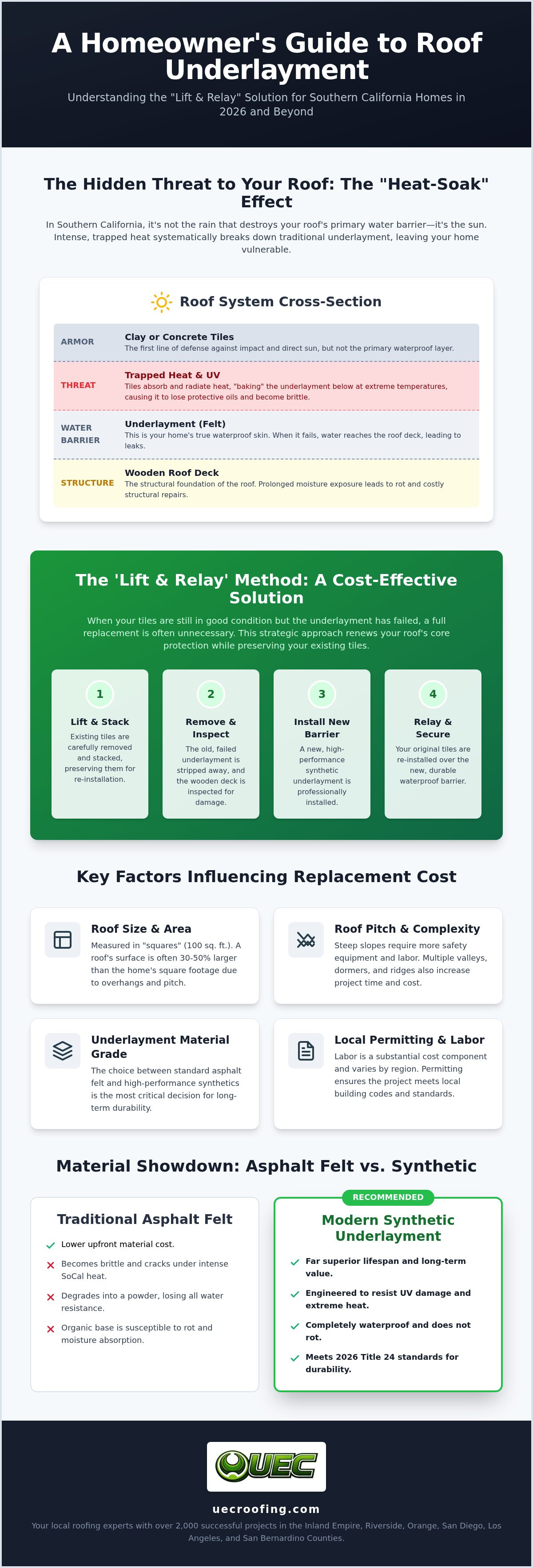
Southern California's climate presents a unique challenge known as the "heat-soak" effect. Tiles absorb intense UV radiation all day, trapping heat in the small air gap between the tile and the underlayment. This environment can reach temperatures far exceeding the ambient air. Over time, this constant baking causes traditional organic asphalt felt to lose its essential oils. It becomes brittle, loses its flexibility, and eventually turns into a powdery residue that can no longer repel water. When you see brittle edges or powdery debris in your gutters, the waterproof barrier has likely failed.
The Role of Underlayment in Tile Roofing Systems
Think of your roof tiles as armor and the felt as the skin underneath. While the armor takes the brunt of the impact, the skin provides the actual waterproofing. During heavy winter rains in the Inland Empire and San Bernardino, wind often drives water between tile gaps. If your underlayment is compromised, this water settles directly onto your wooden roof deck. Proper attic ventilation is vital here. Without it, heat remains trapped in the attic space, cooking the felt from the bottom up while the sun cooks it from the top down. This double-sided heat exposure significantly shortens the lifespan of standard materials. When homeowners ask about the roof felt replacement cost, they are often surprised to learn how much their attic's climate impacts the final quote.
Why 2026 is a Turning Point for Roof Maintenance
We've seen a shift in regional weather patterns, with more intense rain events following prolonged heatwaves in areas like Riverside and Lake Elsinore. This volatility has led many local building departments to favor high-performance synthetic underlayments over traditional organic options. Unlike asphalt felt, synthetics are engineered to resist UV damage and maintain their integrity during extreme weather. Thermal shock is the physical stress and eventual cracking caused when roofing materials rapidly expand and contract during the intense temperature swings common in Southern California. By 2026, choosing a synthetic upgrade has become the standard for homeowners seeking long-term security and durability.
Key Factors Influencing Roof Felt Replacement Cost in 2026
Estimating your roof felt replacement cost involves more than just looking at the total square footage of your home. Professional contractors measure roofs in "squares," which represent 100 square feet of surface area. While your living space might be 2,000 square feet, your roof's actual surface area is often 30% to 50% larger due to overhangs and the pitch. A 20-square roof requires more material and time than a 15-square roof, making this the most basic starting point for any quote.
The pitch of your roof is a major cost driver. Steep slopes require specialized safety harnesses and slower, more meticulous movement. A complex roof with multiple valleys, dormers, and ridges in Anaheim or San Bernardino will naturally demand more labor than a simple ranch-style home in Lake Elsinore. Logistics also play a role. If your property in San Diego has limited street access or narrow clearances, the extra time needed for material loading and debris removal will reflect in the final estimate.
Material Grade: Asphalt vs. Synthetic
Traditional #30 asphalt felt has been the industry standard for decades. It's cost-effective but struggles with the intense Southern California sun. Synthetic underlayment is our preferred recommendation for modern homes. It's lighter, stronger, and doesn't rot or become brittle like organic materials. High-temperature "peel and stick" underlayments provide the highest level of protection. These self-adhered membranes seal around every nail penetration, creating a truly watertight barrier that justifies the higher initial investment and can influence the total roof felt replacement cost by providing a significantly longer service life.
Labor and Local Permitting in Southern California
Labor typically accounts for a substantial part of the total project. Rates fluctuate across the region, with coastal Orange County often seeing higher labor costs than the Inland Empire. Beyond the crew's time, you must budget for city permits. These aren't just red tape; they ensure your project adheres to California building code requirements. In 2026, while supply chains have leveled out, the demand for high-efficiency materials continues to influence local pricing. Getting a professional roofing contractor to evaluate your specific needs is the best way to avoid surprises.
The 'Lift and Relay' Method: A Cost-Effective Solution
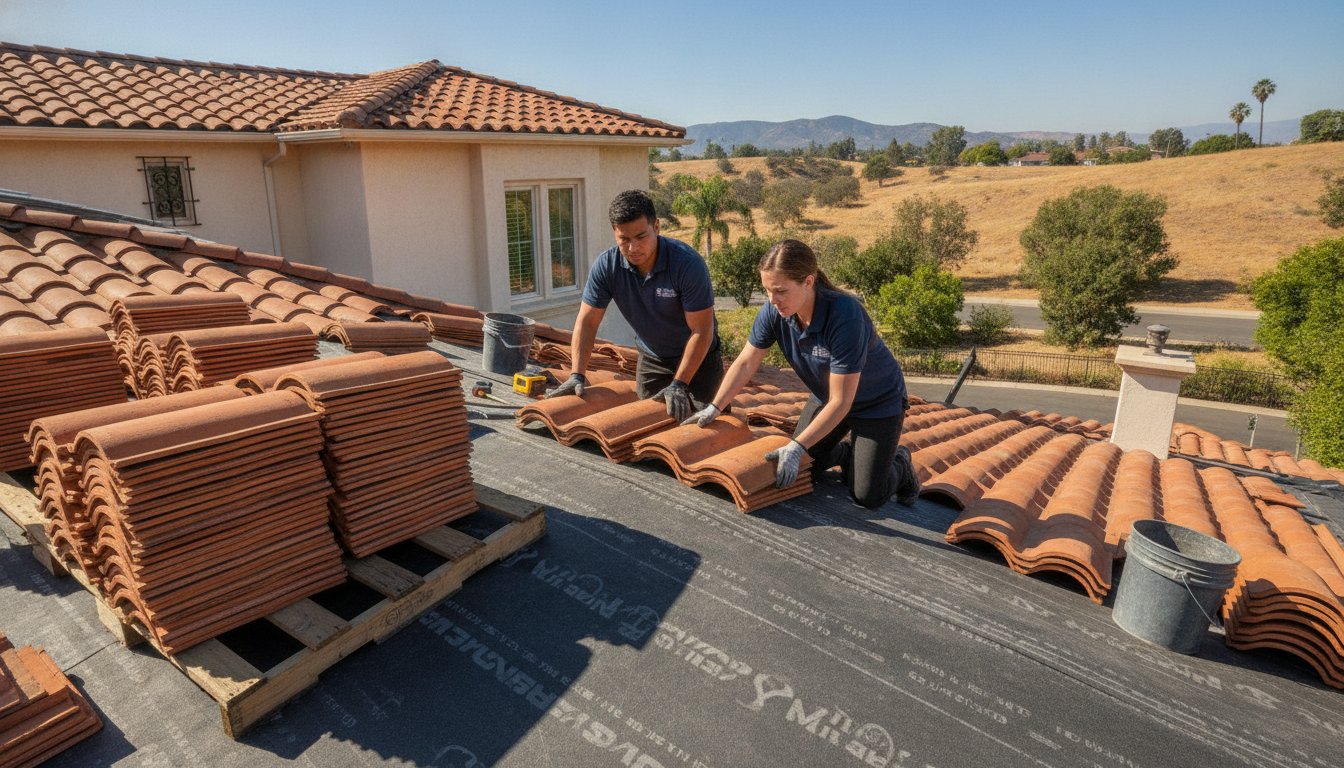
A "Lift and Relay" is the most strategic way to manage your roof felt replacement cost when your tiles are still structurally sound. Unlike a full replacement, this method involves carefully removing your existing clay or concrete tiles and stacking them safely on the roof deck. Once the old, brittle underlayment is stripped away, we install a modern, high-performance barrier before precisely reinstalling your original tiles. It's a specialized process that honors the longevity of Southern California roofing materials while securing the home's interior. Our Lake Elsinore team sees this as the ultimate middle-ground solution for the Inland Empire.
Choosing this method typically costs about 50% to 65% of a full tile roof replacement. You aren't paying for heavy new materials that you don't need. Instead, your investment goes toward expert labor and premium underlayment. We follow industry best practices for roof underlayment to ensure every valley and penetration is sealed to modern standards. This approach is the "straight shooter" choice for homeowners in Riverside and Orange Counties who value honesty over high-pressure sales tactics.
When is a Lift and Relay Possible?
This service is ideal for concrete or high-quality clay tiles that haven't reached the end of their aesthetic life. We begin with a thorough inspection of the tile condition. If the tiles are crumbling or severely delaminated, a relay might not be viable. We also check for structural wood rot beneath the failed felt. If the deck is soft, those sections must be replaced before the new underlayment goes down. For a deeper dive into the technical details, explore our lift and relay roofing service guide. It's about doing the job right the first time.
Long-Term ROI of Proper Underlayment Replacement
Investing in a professional underlayment swap can extend your roof's functional life by 20 years or more. It prevents the "double cost" of interior repairs, where a small leak eventually destroys drywall, insulation, and paint. By addressing the felt before it fails completely, you protect your home's equity. When evaluating the roof felt replacement cost, homeowners often find that saving their existing tiles is the most financially responsible path. A professional lift and relay preserves the unique aesthetic value and weathered patina of original Southern California tiles that new materials simply cannot replicate. Our team has completed over 2,000 successful local projects, ensuring your home remains a stable sanctuary for decades to come.
Estimating Your Investment: Regional Cost Breakdowns
Geographic location significantly influences your total roof felt replacement cost. In the Inland Empire, including Riverside and our home base in Lake Elsinore, market rates for labor and materials remain relatively stable. However, homeowners in coastal Orange County or San Diego often face higher estimates. This is frequently due to stricter coastal building requirements, higher local labor rates, and the logistical challenges of working in densely populated neighborhoods with limited street access. Understanding these regional shifts helps you set a realistic budget for your property.
Beyond the surface area, hidden factors can impact the final quote. When tiles are lifted, we often discover damaged batten strips or corroded flashing that must be addressed. Batten strips are the wood pieces that hold your tiles in place. If they are rotted from years of underlayment failure, they must be replaced to ensure a level roof surface. Similarly, reusing old metal flashing is a gamble that rarely pays off. Integrating new, high-quality flashing during the felt replacement process is a standard practice for local experts who prioritize long-term durability. For those not yet ready for a full project, a professional roof tune up can sometimes identify these issues early and delay a massive failure.
Standard vs. Premium Replacement Estimates
A "budget" felt replacement often cuts corners by using thin organic felt and skipping the replacement of critical transition metals. These projects frequently fail within a few years because they don't account for the Southern California heat. A premium UEC Roofing installation utilizes high-temperature synthetic underlayment, new lead or galvanized flashing, and meticulous sealing around all vents and chimneys. This comprehensive approach ensures the secondary water barrier is just as tough as the tiles themselves. Compare these costs to a full roof replacement cost to see your potential savings. You will likely find that a strategic lift and relay offers the best value for protecting your home's equity.
Getting an Accurate Quote in Southern California
Estimates provided over the phone are often misleading. A roofer cannot see tile slippage, debris buildup in valleys, or the true state of your roof deck from a satellite image. A physical inspection is the only way to identify the specific needs of your roof system. We look for signs of "tile creep" and evaluate how previous repairs might affect the current project. We provide transparent, expert-driven estimates that reflect the actual conditions of your home. This honesty prevents mid-project "surprises" that can inflate your budget unexpectedly. Contact our Lake Elsinore team for a professional inspection to get a clear, reliable breakdown for your home.
Why Professional Installation is Your 'Roofer for Life' Security
Choosing a contractor based solely on the lowest bid often leads to "tailgate contractors" who operate without proper licensing or city permits. While unpermitted work might seem like a way to lower your immediate roof felt replacement cost, it creates significant long-term liabilities. If the work doesn't meet 2026 Title 24 standards, you may face hurdles when selling your home in Los Angeles or filing insurance claims in San Bernardino County after a major weather event. Professional installation ensures every layer of your roof is documented, permitted, and compliant with local Southern California building codes.
A critical part of a professional installation involves evaluating attic ventilation. As we established earlier, trapped heat is the primary enemy of underlayment. During a felt replacement, our team often recommends adjusting intake and exhaust vents to ensure air flows freely beneath the roof deck. This preventative measure protects your new investment and can noticeably improve your home's energy efficiency. By addressing the root cause of underlayment failure, we help you break the cycle of frequent, expensive repairs.
The UEC Roofing Difference in Lake Elsinore
Our team brings deep local expertise to every project across the Inland Empire. We aren't a high-pressure sales organization; we are a stable, brick-and-mortar business based in Lake Elsinore with a reputation built on honesty. While we are renowned for tile lift and relay services, our expertise covers the full spectrum of roofing needs. We provide roof replacement, repair, and rejuvenation for specialized systems including tile, composite shingle, metal, foam, and flat roofing. With over 2,000 successful local projects completed, we understand how to implement durable solutions that thrive in our specific regional environment.
Next Steps for Your SoCal Home
You shouldn't wait for a ceiling stain to appear during the next heavy rain in Orange County or San Diego. Scheduling a preventative roof tune up is the most effective way to identify brittle underlayment before it reaches a breaking point. If your tiles are still in good condition, we can help you prepare for a professional lift and relay that restores your home's waterproof barrier for a fraction of the cost of a full replacement. Taking action now preserves your property value and provides the security that comes with having a trusted roofer for life. Contact UEC Roofing today for a professional felt inspection and estimate.
Protecting Your Southern California Investment for the Long Term
Your roof is the most critical shield for your home and your family's safety. We've explored how a strategic "Lift and Relay" can significantly manage your roof felt replacement cost while providing a waterproof barrier that lasts for decades. By choosing high-performance synthetic materials and ensuring proper attic ventilation, you aren't just fixing a temporary leak; you're future-proofing your property against the unique heat-soak challenges found throughout Riverside and Orange Counties.
With over 2,000 successful local projects completed, our Lake Elsinore team brings the specialized expertise and honesty you deserve. We take pride in our brick-and-mortar status and our deep roots in the Southern California community. You don't have to face the next rainy season with uncertainty or fear of hidden fees. Secure your home with a professional roof felt inspection from UEC Roofing. Our straight shooter approach ensures you get the right solution for your specific needs. Let's work together to make sure your roof remains a stable, reliable asset for your life.
Frequently Asked Questions
How much does it cost to replace roof felt under tiles in Southern California?
The roof felt replacement cost for a Southern California home depends on the roofing squares and pitch. While Los Angeles or Orange County rates vary, this investment protects against intense thermal cycles. A physical inspection is the only way to get a firm number that accounts for your roof's unique complexity and regional labor standards.
Can I replace the felt without replacing my roof tiles?
You can replace the underlayment without new tiles if your clay or concrete tiles are structurally sound. This "Lift and Relay" process is a specialty of ours across the Inland Empire. It allows us to install a modern waterproof barrier while reusing high-value tiles, making it a sustainable and budget-friendly choice for local homeowners.
How long does roof underlayment typically last in Riverside and San Diego?
In the dry heat of Riverside and San Diego, traditional asphalt underlayment usually lasts about 20 years. If your home was built in the early 2000s, your water barrier is likely reaching its end of life. Upgrading to synthetic materials during a replacement can extend that protection significantly, often lasting 30 years or more.
What is the best type of roofing felt for the California heat?
Synthetic underlayment is the best option for California’s extreme temperature swings. Unlike organic felt, it doesn't dry out or crack when heat builds up under tiles. It’s also much more resistant to tearing, providing a more reliable seal for homes in wind-prone areas like San Bernardino County or Lake Elsinore.
Is roof felt replacement covered by homeowners insurance?
Homeowners insurance rarely covers the roof felt replacement cost if the work is due to normal wear and tear. However, if your underlayment was damaged during a sudden event like a severe windstorm, you might have a valid claim. We recommend reviewing your specific policy terms with your insurance provider before starting any major maintenance.
How long does the lift and relay process take for an average home?
An average lift and relay for a Southern California residence takes between three and five days. This timeframe allows our crew to remove tiles, inspect the wood deck, and install the new barrier. Larger homes in Los Angeles with complex rooflines may require additional time for safe material handling and proper staging.
What happens if I don't replace my brittle roof felt?
Ignoring brittle felt allows water to seep through cracks and saturate your wooden roof deck. This leads to structural rot, mold, and damage to interior ceilings. By the time you see a spot on your ceiling, the repair costs have usually doubled because you’re now fixing both the roof and the drywall.
Do I need a permit for roof felt replacement in Orange County?
Yes, building permits are mandatory for felt replacement in Orange County and the Inland Empire. These permits ensure work meets local fire resistance and energy efficiency standards. As a professional roofing contractor, we handle the entire permitting and inspection process so your project remains fully compliant with California's strict building codes.