
How to Temporarily Stop a Roof Leak in Orange: A 2026 Emergency Guide
Imagine waking up to the rhythmic "plink-plink-plink" of water hitting your hardwood floors during a midnight rainstorm. You know that every drop represents potential damage to your home's structure and your family's comfort. It's a stressful, high-stakes moment where you feel the urge to act fast, yet the slick roof and dark skies make safety a major concern. We understand that your priority is protecting your investment while keeping your loved ones safe from the elements.
In this emergency guide, you'll learn exactly how to temporarily stop a roof leak Orange homeowners often encounter during our unpredictable Southern California weather. We'll walk you through the immediate, safe steps to contain water intrusion before a professional roofer can arrive on-site. From managing active drips inside your living room to understanding when it's safe to apply a temporary patch, this 2026 update provides the clarity you need during a crisis. We'll show you how to minimize interior damage today so you can focus on a long-term, reliable solution tomorrow.
Key Takeaways
- Prioritize your safety by inspecting the attic first and never climbing onto a wet roof during a Southern California storm.
- Contain active drips immediately using the "pencil trick" to drain bulging ceilings and prevent large-scale interior water damage.
- Master the proper way of how to temporarily stop a roof leak Orange residents rely on, such as securing heavy-duty tarps with 2x4 strips rather than loose weights.
- Recognize that temporary fixes can trap moisture and accelerate mold growth, making a professional inspection essential once the weather clears.
- Transition from emergency mitigation to long-term protection by partnering with a local expert for a comprehensive roof diagnostic and permanent repair.
Immediate Safety: What to Do When You Spot a Leak
Panic is a natural response when water starts entering your home. However, the most critical decision you'll make is to stay grounded. Your roof is a complex system designed to shed water, but when it fails, it creates a high-risk environment. Before you grab a ladder, you need a plan that prioritizes your physical safety and protects your property from further interior damage. Taking a methodical approach ensures you don't turn a home repair issue into a medical emergency.
The Golden Rule of Wet Roof Safety
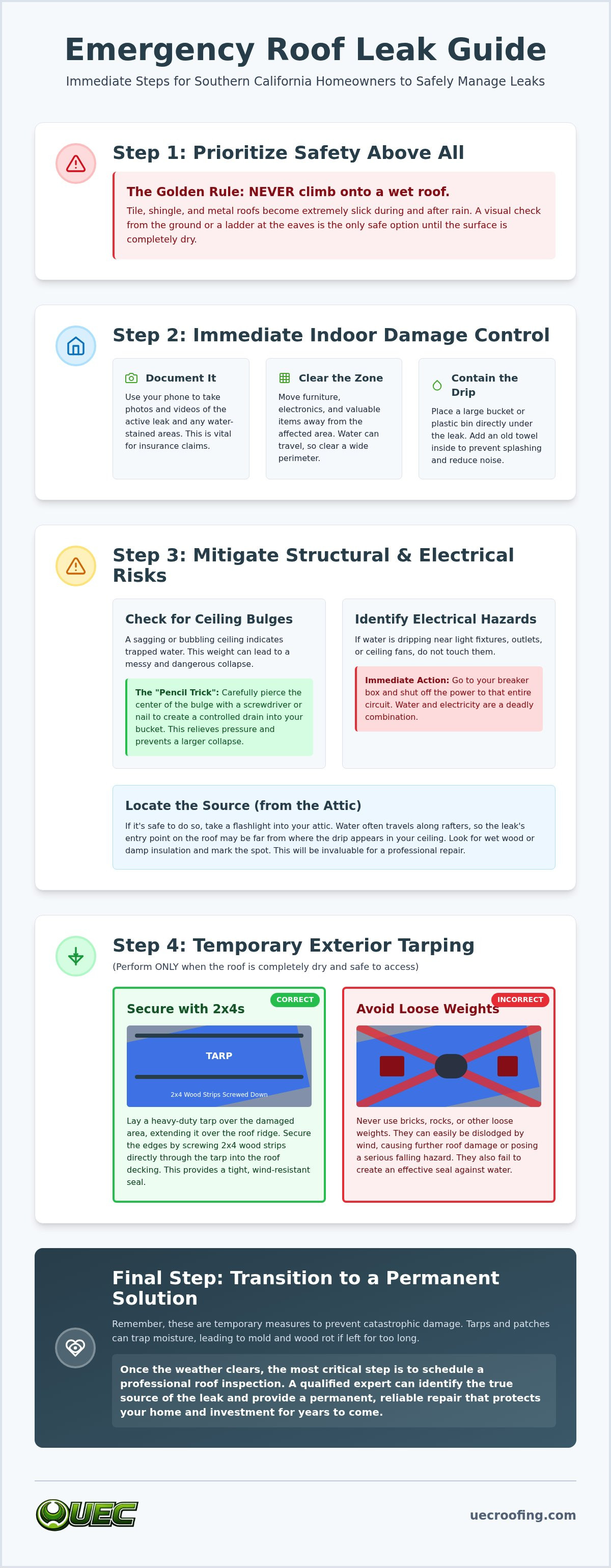
Many homes in Orange County and the Inland Empire feature beautiful tile roofs. While these materials are durable, they become incredibly slick when wet. Even a light drizzle turns a clay or concrete tile roof into a hazard. If you're researching how to temporarily stop a roof leak Orange, remember that exterior work must wait for a dry window. You can use a ladder for a visual inspection from the eaves, but never step onto the roof surface while it's raining. Your goal right now is mitigation, not a heroic but dangerous climb.
Before you start any physical work, follow these critical steps:
- Document the damage: Use your phone to take photos and videos of the active leak. This evidence is vital for insurance claims and helps professionals see exactly how the water is behaving.
- Clear the zone: Move electronics, furniture, and rugs away from the drip. Water can spread quickly across a ceiling, so clear a larger area than you think is necessary to prevent secondary damage.
- Protect the floor: Place a sturdy bucket or plastic bin under the leak. If the water is splashing, place an old towel in the bottom of the bucket to dampen the sound and prevent spray.
Finding the Source from the Inside
The attic is your most valuable tool for discovery during a storm. Water is deceptive; it rarely drips straight down from the entry point. It often enters through a gap in the roof flashing around a chimney or plumbing vent and then runs down a rafter. It might travel ten feet horizontally before finally soaking through your insulation and ceiling.
Take a high-powered flashlight into the attic and look for "shimmer" on the wood or damp insulation. Once you find the entry point, mark it with a permanent marker or a piece of tape. This simple act provides a roadmap for our team to implement a permanent fix later. Understanding how to temporarily stop a roof leak Orange starts with this internal investigation, ensuring you address the true source rather than just the symptom. By identifying the origin point now, you'll be better prepared to apply a tarp or patch once the weather clears.
Interior Damage Control: Managing Water Inside Your Orange Home
Once you've safely identified the leak source from the attic, your focus must shift to the living space below. Managing water intrusion effectively is a critical part of knowing how to temporarily stop a roof leak Orange residents often deal with during heavy seasonal rains. Without swift interior action, a minor drip can quickly escalate into structural damage or a hazardous ceiling collapse. Your goal is to contain the mess and stabilize the environment until the weather permits an exterior fix.
Start by scanning the area for electrical risks. If water is traveling near light fixtures, ceiling fans, or wall outlets, shut off the power to that circuit at the breaker box immediately. Water and electricity are a lethal combination; never touch a wet switch or plug. Once the area is electrically safe, place heavy-duty plastic bins or buckets under the active drips. If the ceiling is already saturated, you may need to take more direct action to prevent a total failure of the drywall.
Relieving Ceiling Pressure Safely
A bulging ceiling is a sign that water is pooling on top of the drywall. This weight will eventually cause the entire section to fail, leading to a messy and expensive cleanup. You can prevent this by using a simple drainage technique. Take a screwdriver or a long nail and poke a small hole in the very center of the bulge. This allows the trapped water to drain in a controlled stream into your bucket. Always stand to the side of the bulge while doing this. You don't want to be underneath it if the drywall is more compromised than it looks.
Protecting Your Assets
While the water drains, take steps to safeguard your belongings. If furniture is too heavy to move, drape it in heavy-duty plastic sheeting to prevent wood staining or fabric rot. In the attic, remove any saturated insulation. Wet fiberglass or cellulose traps moisture against your wooden rafters, which can lead to rapid wood rot in our warm Southern California climate. Starting the drying process now with high-powered fans and dehumidifiers is the best way to prevent mold growth before you can schedule a professional leak repair.
Keep a detailed log of your actions. Note the time the leak was discovered and exactly what you did to mitigate the damage. This proactive approach shows insurance adjusters that you took reasonable steps to protect the property. Once the interior is stable and the rain subsides, you can then focus on the exterior measures needed to secure your home's envelope.
Temporary Exterior Fixes: Tarping and Emergency Patches
Once the weather clears and the roof surface is completely dry, you can address the exterior. Knowing how to temporarily stop a roof leak Orange homes experience during heavy downpours involves more than just throwing a cover over the shingles. In Southern California, our clay and concrete tile roofs require specific care. You can't just walk on them without risking further breakage, and standard adhesive tapes will peel off instantly under the intense Pacific sun. A methodical exterior approach is the only way to ensure your home remains dry until a professional arrives.
How to Properly Tarp a Roof Section
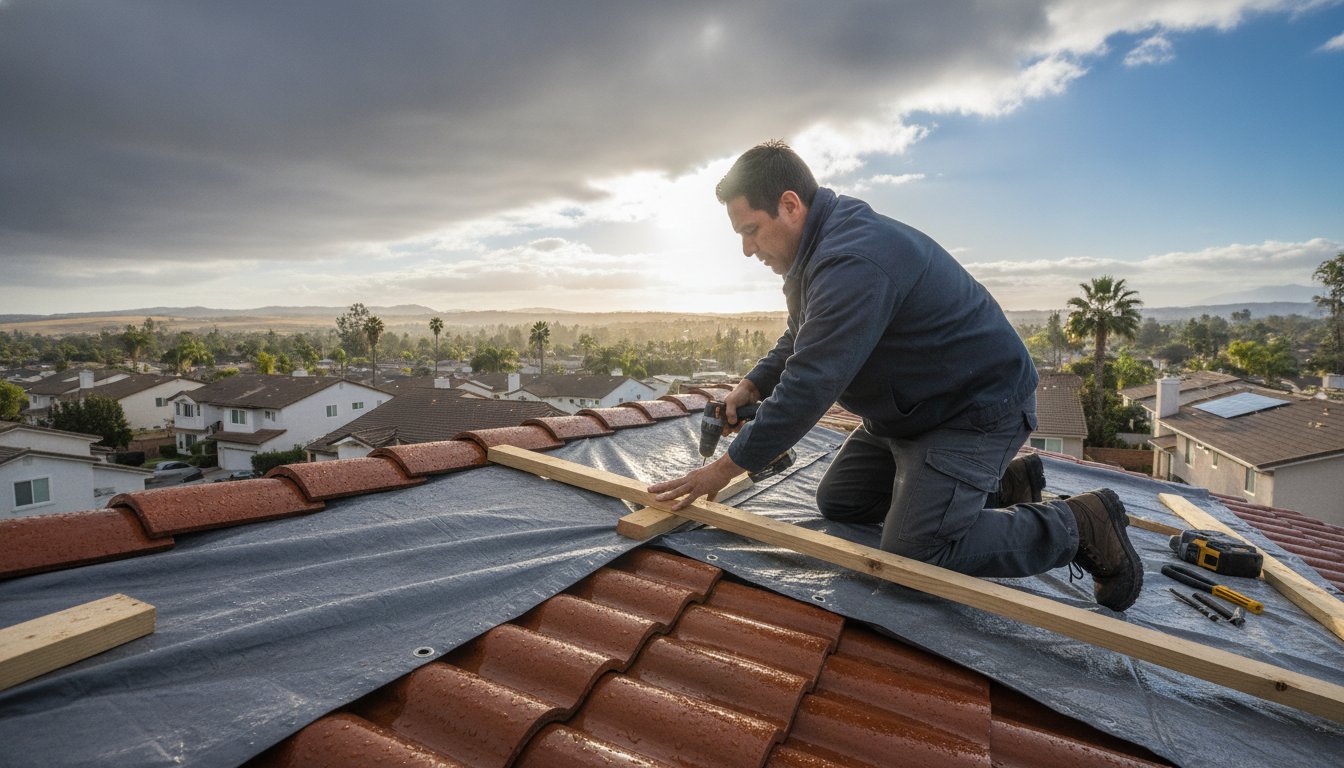
A heavy-duty polyethylene tarp is the gold standard for emergency mitigation. Don't settle for the thin, blue versions found at general retailers; look for a silver or black reinforced tarp that offers higher tear resistance. The most common mistake is weighing the edges down with bricks or loose rocks. These will slide during a gust of Santa Ana wind, potentially causing more damage or even injury. Instead, wrap the edges of the tarp around 2x4 wooden strips.
Fasten the tarp to the wood first, then secure the strips to the roof deck using screws or use heavy sandbags to create a continuous seal against the wind. It's critical that the top edge of the tarp extends over the roof ridge. If you stop the tarp mid-slope, water will simply run under the plastic and into the existing puncture. A tarp should never be left on for more than 30 days due to UV degradation.
Using Emergency Leak Sealants
For smaller leaks around chimneys or vents, emergency roofing cement is an effective stopgap. Look for "wet-surface" or "wet patch" compatible compounds at hardware stores in Orange or Lake Elsinore. These specialized products are designed to bond even when the substrate is damp. Focus your efforts on the metal flashings and valley areas, as these are frequent failure points in older Inland Empire homes.
- Identify the failure: Look for cracked sealant or rusted metal around vents.
- Apply generously: Use a trowel to spread the cement over the gap, extending it several inches beyond the leak.
- Avoid tape: Never use duct tape or plastic wrap, as these fail within hours of UV exposure.
Be aware that these patches are a short-term fix. They are inherently brittle and will crack as your home naturally shifts with temperature changes. While they provide immediate relief, they are not a substitute for professional roof repair. Learning how to temporarily stop a roof leak Orange is about buying time, not avoiding the necessary craftsmanship required for a permanent solution.
Understanding the Risks: Why Temporary Fixes Are Not Permanent
While knowing how to temporarily stop a roof leak Orange is a vital skill for emergency mitigation, it's a double-edged sword. A tarp or a quick patch is a defensive move designed to buy you time, not a permanent victory over the elements. Homeowners often fall into the trap of believing a dry ceiling means the problem is solved. In reality, an unaddressed leak continues to degrade your home's skeleton even when you can't see the water dripping. Relying on a temporary fix for too long can transform a simple repair into a full-scale structural restoration.
The Danger of Trapped Moisture
In our unique Southern California climate, the sun is as much of a threat as the rain. When you place a heavy tarp over a damp roof, the intense afternoon heat creates a "greenhouse effect" underneath the plastic. This traps moisture against your roof deck and rafters with nowhere to escape. During the humid periods that follow our seasonal storms, this environment becomes a breeding ground for black mold in your attic. This growth can happen surprisingly fast, often within 24 to 48 hours. It's important to remember that the underlayment, rather than just the visible tiles or shingles, is usually where the true failure lies. A tarp hides this decay from view while the wood continues to soften.
When a Patch Isn’t Enough
Many homes in the Inland Empire and Orange County feature tile roofs that require specialized care. If the underlying felt has become brittle or torn due to age, no amount of surface sealant will provide a lasting solution. In these cases, we often recommend a lift and relay roofing service. This process involves removing your existing tiles, replacing the failed underlayment, and then reinstalling the original tiles. It's a comprehensive approach that addresses the systemic failure rather than just the symptom.
Applying "patch on a patch" only complicates the eventual professional repair. These layers of DIY sealant can actually hide the true source of the intrusion, making a future roof leak repair Riverside CA more difficult and expensive to diagnose. There's also the financial risk to consider. Insurance adjusters are trained to spot neglected maintenance. If they determine that a temporary fix was left in place for months without a permanent follow-up, they may deny claims for secondary damage like wood rot or ceiling failure. Don't let a short-term solution lead to a long-term financial burden. Contact us today for a professional roof repair to ensure your home remains secure for years to come.
Professional Leak Repair in Orange: The UEC Roofing Standard
Once you've stabilized the situation and learned how to temporarily stop a roof leak Orange storms have caused, it's time for a permanent resolution. UEC Roofing approaches every project with a "Roofer for Life" mindset. We don't just patch a hole; we restore the integrity of your entire roofing system. With over 2,000 successful projects in the region, we understand the unique demands that Southern California weather places on tile, composite shingle, and flat roofing systems. Our goal is to provide a steady, trust-building experience that prioritizes the long-term stability of your home.
Our Expert Diagnostic Process
A proper repair begins with an exhaustive diagnostic phase. We go beyond the surface to inspect your attic and ventilation systems. This ensures that moisture isn't trapped where it can cause wood rot or mold growth. Our team provides transparent estimates that pinpoint exactly where your system is failing. We perform every repair to exceed local building codes. This commitment to craftsmanship ensures maximum durability against future Santa Ana winds and seasonal downpours. We treat your property with the respect and care it deserves, focusing on quality over flashy marketing.
Protecting Your Investment in Orange
Choosing between roof rejuvenation vs replacement is a critical decision for homeowners with aging roofs. Rejuvenation can often extend the life of your shingles by restoring flexibility, while a full replacement might be necessary if the structural felt has failed. Our brick-and-mortar office in Lake Elsinore serves as our hub for providing high-quality service throughout Orange County. We take immense pride in being a local expert that understands the specific environmental needs of our community.
We recommend a proactive roof tune up to identify weak spots before they become emergency leaks. This preventative maintenance is the best way to ensure your roof remains a critical asset for protecting your family. Move beyond the stress of knowing how to temporarily stop a roof leak Orange and invest in a permanent fix. We invite you to schedule a professional inspection to transition from a temporary patch to a lifetime of security. Our team is ready to provide the reliable, expert-driven solutions you need to protect your property value.
Securing Your Home for the Long Term
Managing a roofing emergency requires a steady hand and a clear plan. By prioritizing your safety and focusing on interior containment, you've already taken the most important steps to protect your property. Knowing how to temporarily stop a roof leak Orange residents face during storm season allows you to mitigate damage while waiting for a professional assessment. Remember that a tarp is only a short-term shield. Trapped moisture and failed underlayment require the expert touch of a seasoned professional to prevent structural decay.
At UEC Roofing, we bring the expertise of over 2,000 successful roofing projects in Southern California to every home we visit. As specialized tile roof experts with a local brick-and-mortar presence, we don't just offer quick patches. We provide long-term stability and craftsmanship you can trust. Don’t let a temporary fix become a permanent problem; contact UEC Roofing today for a professional inspection in Orange. We're here to ensure your roof remains a secure investment for your family's future. You've handled the emergency successfully; now let us handle the permanent restoration.
Frequently Asked Questions
How long can I leave a tarp on my roof in Orange?
A heavy-duty tarp should never be left on a roof for more than 30 days. The intense Southern California sun causes rapid UV degradation, making the plastic brittle and prone to tearing. Additionally, tarps trap heat and moisture, which can accelerate wood rot or mold growth in your attic. Once the immediate storm passes, schedule a professional assessment to move toward a permanent repair.
Will my homeowners insurance cover a roof leak in Southern California?
Most policies cover leaks caused by sudden events like Santa Ana winds or severe storms. However, insurance companies often deny claims resulting from long-term neglect or normal wear and tear. You are legally required to mitigate damage, which is why knowing how to temporarily stop a roof leak Orange homeowners can perform safely is essential for protecting your future claim eligibility.
Can I use a garden hose to find a roof leak?
You can use a garden hose to simulate rain, but only once the roof is completely dry and safe to access. Start at the lowest point of the suspected leak area and move upward slowly. Have a second person in the attic with a flashlight to watch for water intrusion. This method helps pinpoint the entry point without waiting for the next seasonal rainstorm.
What is the best emergency roof patch for tile roofs?
The most effective emergency patch for tile roofs is a high-quality, wet-surface compatible roofing cement. These compounds bond to damp materials and provide a flexible seal around flashings and vents. Avoid using duct tape or plastic wraps, as they fail quickly under heat. Remember that these sealants are brittle and will eventually crack, making them strictly temporary solutions for Southern California homes.
How much does a professional roof leak repair cost in Orange?
Professional repair costs vary based on the roofing material, the height of the home, and the extent of the water damage. Factors like the current price of materials and local labor rates in the Inland Empire also influence the final investment. While we don't provide flat rates without an inspection, a targeted repair is always more cost-effective than allowing a leak to cause structural wood rot.
Is it safe to walk on a tile roof to fix a leak?
It's generally unsafe for homeowners to walk on tile roofs, especially when wet or damaged. Clay and concrete tiles are brittle and can easily crack under the weight of an inexperienced person, creating even more leak points. Furthermore, the steep pitches common in Orange County homes increase the risk of a dangerous fall. It's always best to perform inspections from a ladder or the ground.
What should I do if my ceiling is sagging from a leak?
You must relieve the water pressure immediately to prevent a total ceiling collapse. Use a screwdriver or a long nail to poke a small hole in the center of the sagging area, allowing the water to drain into a bucket. Move all furniture and electronics out of the splash zone. This controlled drainage is much easier and cheaper to repair than a large section of fallen drywall.
How do I know if I need a repair or a full roof replacement?
The decision depends on the age of your roof and the condition of the underlayment. If your tiles are in good shape but the felt underneath has failed, a lift and relay service might be the right choice. However, if a large portion of the roof is compromised or the system has exceeded its expected lifespan, a full replacement is often the most reliable investment for your home.