
How to Stop a Roof From Leaking: A Homeowner’s Guide to Immediate and Long-Term Fixes
Imagine waking up at 2:00 AM to the steady, rhythmic sound of water hitting your bedroom floor during a sudden Southern California rainstorm. It is a moment of pure panic for any homeowner in Riverside or San Diego. You aren't just looking at a puddle; you're seeing potential mold growth and ceiling damage happening in real time. Knowing how to stop roof from leaking during an active storm is the difference between a minor cleanup and an expensive restoration project.
We understand that a leaking roof feels like a direct threat to your family's comfort and your most significant investment. It's natural to feel overwhelmed by the uncertainty of repair costs or the unique mechanics of Southern California tile roofs. This guide provides you with a clear, tactical plan to manage an active leak immediately while planning for a permanent, high-quality fix. We will cover everything from emergency mitigation to the long-term benefits of proper underlayment and 2026 Title 24 compliance. You'll gain the confidence to move from a state of emergency to a position of long-term security for your Lake Elsinore home.
Key Takeaways
- Learn how to manage an active emergency safely by containing water damage without the risk of climbing onto a slick roof.
- Master the techniques for tracing leaks back to their source, providing you with the essential knowledge on how to stop roof from leaking at common failure points like vents and chimneys.
- Identify the specific Southern California environmental factors, such as UV degradation and Santa Ana winds, that compromise your roof’s integrity.
- Determine when a minor repair is manageable and when professional expertise is required to protect your home’s structural value and safety.
- Discover how preventative strategies like a "Roof Tune-Up" can transform your roofing from a constant worry into a secure, long-term investment.
Emergency Actions to Stop Active Roof Leaks Immediately
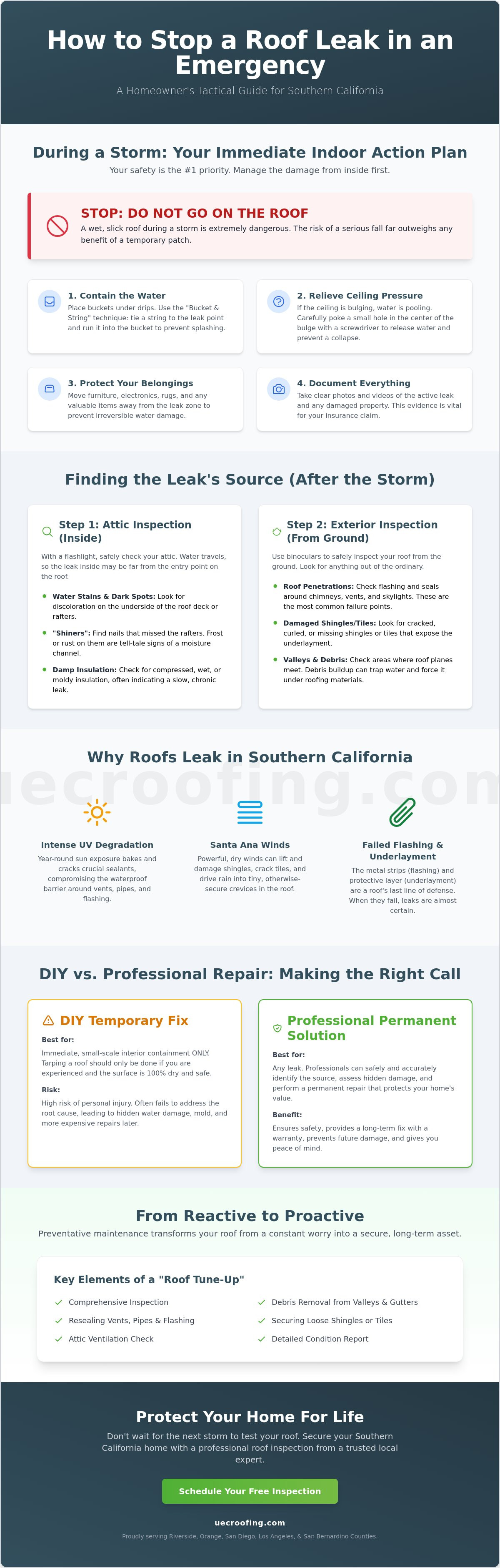
When water starts dripping through your ceiling, your first instinct is likely to grab a ladder and get on the roof. Stop. Climbing a wet roof during a Southern California storm is incredibly dangerous. Roof surfaces in the Inland Empire become slick instantly; the risk of a fall far outweighs the benefit of a temporary patch. Your priority is to manage the water from inside until the weather clears and a professional can perform a proper roof flashing inspection. Knowing how to stop roof from leaking damage inside your home begins with containment, not climbing.
Before you start the cleanup process, document everything. Take clear photos and videos of the active leak and any damaged property. This evidence is vital for insurance claims in Riverside or San Diego Counties. Once the evidence is captured, you can focus on protecting your interior space from further degradation.
Managing Interior Water Damage
Move your furniture, electronics, and rugs away from the drip zone immediately. If you notice the ceiling is sagging or bubbling, water is pooling behind the drywall. This weight can cause a sudden, catastrophic ceiling collapse. You can prevent this by creating a "controlled leak." Use a small screwdriver to poke a hole in the center of the bulge. This relieves the pressure and directs the water into a single stream. To minimize splashing, use the "Bucket and String" technique. Tie a piece of heavy string to the leak point and run it into a bucket. The water will follow the string silently, preventing a mess on your floors.
Temporary Exterior Mitigation
Once the rain subsides and the roof surface is completely dry, you can consider temporary fixes. If you have clear access to your attic, you might apply emergency "leak stopper" compounds to the underside of the roof decking. This is often more effective than trying to find the entry point on top of the shingles while they are still damp. Learning how to stop roof from leaking permanently requires a professional, but a tarp can buy you time. For those in wind-prone areas like San Bernardino, use the "T-joint" method by wrapping the top edge of the tarp around a 2x4 board and securing it on the opposite side of the roof ridge. Always follow strict ladder safety protocols. Ensure your ladder is on level ground and extends at least three feet above the roofline to maintain stability.
How to Find the Source of Your Roof Leak
Finding the entry point is the most challenging part of learning how to stop roof from leaking. Water is opportunistic. It rarely travels in a straight line from the roof surface to your ceiling. Instead, it enters through a small gap, travels along a rafter or a piece of plywood, and only drips once it hits a low point or an obstruction. This means the puddle on your floor might be ten feet away from the actual hole in your roof. Effective troubleshooting requires a methodical approach that starts from the inside out.
Inspecting the Attic Space
Wait for a safe opportunity to head into the attic with a high-powered flashlight. Look for "shiners." These are nails that missed the rafter during the original construction. They are easy to spot because they often have white water stains or rust around them, acting as a direct conduit for moisture. Scan the underside of the roof deck for reflective trails or dark, damp spots on the wood. If you notice compressed insulation or smell a persistent musty odor in your Lake Elsinore home, you are likely dealing with a chronic leak rather than a one-time event.
Exterior Visual Inspection
Many Southern California homeowners in the Inland Empire deal with intense UV damage. The sun bakes roof sealants until they crack and pull away from the structure. Focus your ground-level inspection on "penetration points" like plumbing vents, chimneys, and skylights. Check the valleys where two roof sections meet; these areas handle the highest volume of water and are prone to debris buildup that diverts water under the shingles. Look for curled shingles or cracked tiles that might be hiding a failure in the underlying felt. If the source remains elusive, a professional leak repair assessment can save you from the frustration of unnecessary patchwork.
For stubborn leaks that only appear during heavy rain, try the garden hose test. This requires two people and a bit of patience. One person stays in the attic with a light while the other slowly wets the roof, starting from the eaves and working upward toward the ridge. Spend at least five to ten minutes on each specific section before moving higher. This process mimics a local rainstorm and helps you pinpoint exactly where the water breaks through the barrier, allowing for a targeted and effective repair.
Common Causes of Roof Leaks in Southern California
Southern California's climate presents a unique set of challenges that differ significantly from the rest of the country. While homeowners in the Midwest might worry about ice dams, residents in Riverside and San Diego face the relentless power of the sun. Intense UV radiation is often the primary culprit behind roofing failure. Over time, the sun's rays break down the chemical bonds in roofing sealants and asphalt shingles, causing them to become brittle and lose their waterproofing capabilities. This degradation is a major reason why homeowners eventually need to know how to stop roof from leaking after a long, dry summer. When the first rain finally arrives, these brittle materials are unable to expand or contract, leading to immediate fractures.
The geography of the Inland Empire also introduces the threat of Santa Ana winds. These powerful gusts can lift or tear shingles that have already been weakened by heat. Furthermore, the region's dry periods allow debris like leaves and pine needles to accumulate in roof valleys and gutters. When a storm hits, this buildup creates a natural dam. This forces water to back up under the roofing material rather than flowing safely into the drainage system. In desert climates, the extreme daily temperature swings cause constant thermal expansion and contraction, which eventually pulls apart the joints and seals of even the most well-installed systems.
Tile Roof Underlayment (Felt) Failure
Many homeowners in Lake Elsinore assume their concrete or clay tiles are the primary defense against water. In reality, tiles act as "armor" designed to protect the underlying waterproof layer from the sun. The actual barrier is the felt underlayment. In the extreme heat of the Inland Empire, standard felt typically has a 20-year lifespan before it becomes paper-thin and prone to tearing. Once this layer fails, the tiles alone cannot keep your home dry. Understanding the felt replacement process is essential for maintaining the long-term integrity of a tile roofing system.
Flashings and Penetrations
Seismic activity across San Bernardino and Los Angeles Counties can shift a home's structure just enough to crack chimney flashings. These metal transitions are critical for directing water away from joints. Similarly, rubber pipe boots often dry-rot within a few years of installation due to extreme temperature swings. Skylights are also frequent failure points because their frames expand and contract at different rates than the surrounding roof, eventually breaking the watertight seal. Identifying these specific local issues is the first step in learning how to stop roof from leaking for good.
DIY vs. Professional Roof Repair: Evaluating Your Options
Deciding between a DIY approach and hiring a professional is a choice that affects your home's long-term stability. Your roof is a complex system of layers designed to work in harmony. While a tube of roofing cement from a local hardware store is a common recommendation, it's rarely a permanent solution for structural issues. Minor surface repairs might seem simple, but they often mask deeper problems like saturated insulation or wood rot. Learning how to stop roof from leaking requires an honest assessment of the damage and your own technical comfort level.
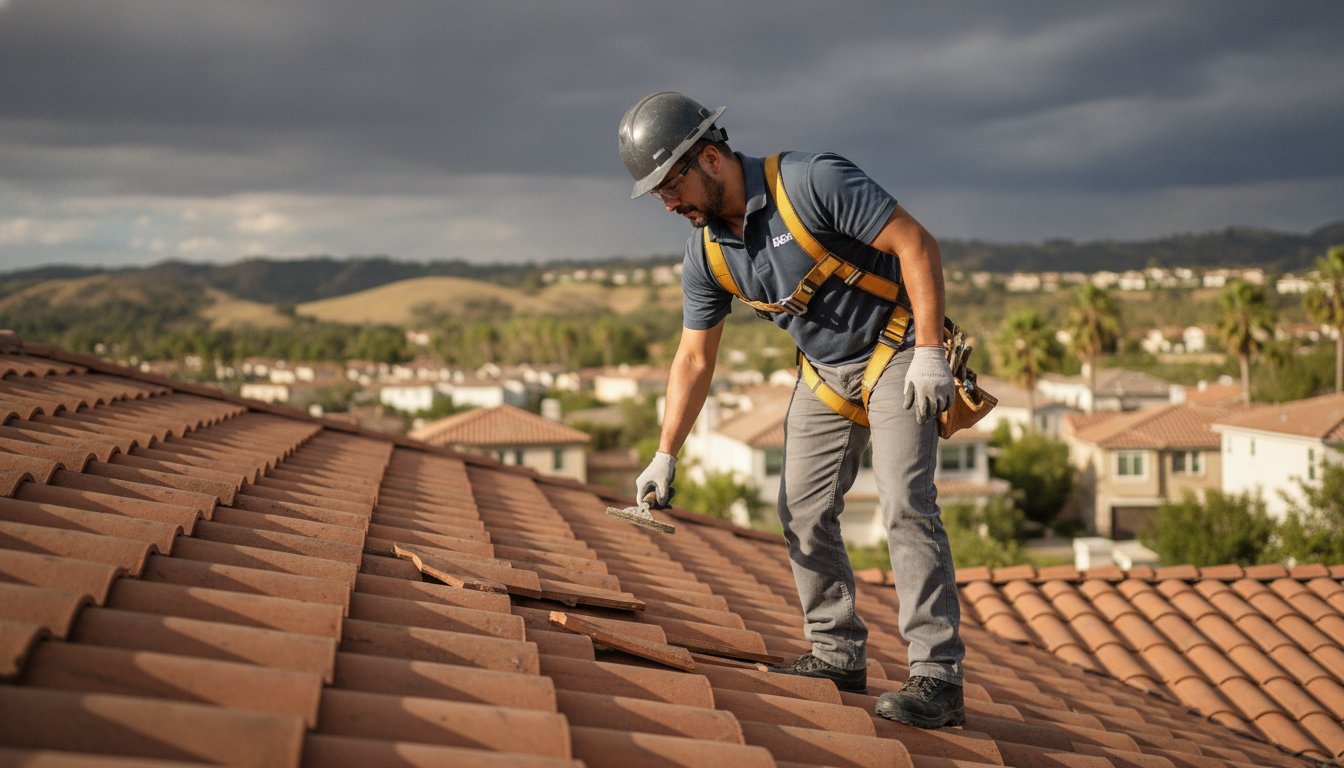
Safety remains the most significant factor for homeowners in San Diego and Orange County. Many residential properties in these areas feature steep pitches or fragile clay tiles that are easily cracked by improper foot placement. Professional crews utilize specialized safety harnesses, ridge hooks, and walk-boards to navigate these surfaces without personal risk or further property damage. They also have access to industrial-grade underlayments and sealants that are more durable than retail alternatives, ensuring the repair withstands the intense Southern California sun.
When a DIY Fix is Appropriate
Small, visible issues can often be handled with basic tools if you can access the area safely. You might consider a DIY repair for the following:
- Replacing a single asphalt shingle that has been lifted by the wind.
- Clearing a clogged gutter or downspout to prevent water from backing up under the eaves.
- Applying a small amount of high-quality solar-rated sealant to a visible nail pop.
When to Call a Professional Roofer
Most roofing systems in the Inland Empire require specialized knowledge to repair correctly. You should contact an expert Roofing contractor if you encounter any of the following scenarios:
- Any leak involving tile or flat roof systems, as these require specific "lift and relay" techniques.
- Evidence of multiple leak points or widespread interior water damage.
- Leaks located near electrical fixtures, solar panel mounts, or major structural beams.
Attempting to "patch" a complex leak often leads to more expensive repairs later. A temporary fix that fails during the next storm can result in thousands of dollars in avoidable drywall and flooring restoration. If you are unsure about the source or scale of the problem, a professional inspection is the most reliable way to protect your investment and ensure your home remains compliant with local building codes.
Long-Term Solutions: Preventing Future Roof Leaks
A reactive approach to home maintenance is always the most expensive strategy. Once you have managed the immediate crisis, the focus must shift to permanent stability. Preventing the next failure is the most effective way to address how to stop roof from leaking over the long term. In Southern California, this means moving beyond simple patchwork. It involves a strategic plan that accounts for the Inland Empire's intense UV exposure and seasonal wind events. By implementing a professional maintenance schedule, you transform your roof from a source of anxiety into a reliable shield for your family and property.
The key to longevity is consistent, expert oversight. Homeowners in San Diego and Riverside Counties often face extreme weather transitions. A roof that survived a dry summer might fail during the first winter downpour because of unseen thermal stress. Establishing a baseline of health for your roofing system allows you to make informed decisions rather than panicked ones when the clouds gather.
The Value of a Professional Roof Tune-Up
Many homeowners believe their only options are a minor DIY fix or a total overhaul. A professional Roof Tune-Up serves as the critical middle ground. At UEC Roofing, our tune-up process is a comprehensive health check for your home. We inspect every penetration point, secure loose shingles, and clear debris from critical drainage paths. This proactive care identifies small vulnerabilities before they become catastrophic failures during the next major rainstorm. In Lake Elsinore and surrounding Riverside County, this preventative step has saved local homeowners thousands of dollars in avoidable interior restoration costs.
Roof Rejuvenation and Life Extension
If your roof is aging but remains structurally sound, Roof Rejuvenation offers a sophisticated alternative to early replacement. This treatment restores the essential oils to asphalt shingles, returning the flexibility they had when first installed. This is vital in desert climates where shingles become brittle and prone to cracking. A single treatment can extend the life of your roof by five to ten years. Beyond longevity, rejuvenation improves fire resistance and enhances energy efficiency, helping your home meet the rigorous standards expected in modern Southern California construction. It's a principled way to maximize your initial investment.
There are times when the structural integrity of the system is too compromised for repairs. When underlayment has completely degraded or widespread wood rot is present, a full roof replacement becomes the only ethical recommendation. Modern replacements allow you to take advantage of 2026 Title 24 energy standards, potentially lowering your cooling costs while increasing your home's market value. Whether through maintenance or a new installation, the goal remains the same: total peace of mind for the life of your home. Knowing how to stop roof from leaking starts with a single repair but ends with a commitment to quality craftsmanship.
Secure Your Home Against the Next Storm
A leaking roof is more than a simple maintenance chore; it's a direct challenge to your home's safety and long-term value. We've explored how to manage immediate water damage and why finding the actual entry point requires a methodical, expert approach. From the Santa Ana winds to the intense sun of the Inland Empire, your roof faces unique local pressures that demand specialized care. Understanding how to stop roof from leaking involves moving from temporary patches to professional-grade solutions like tile lift and relay services or preventative tune-ups.
As a local authority with a brick-and-mortar presence in Lake Elsinore, UEC Roofing brings the experience of over 2,000 successful projects to every Southern California home. We specialize in the complex mechanics of tile roofing and high-performance systems designed specifically for our regional environment. Don't wait for the next storm to test your home's defenses. Contact UEC Roofing today for a professional roof inspection and leak repair quote. We're here to ensure your roof remains a reliable investment and a source of peace of mind for years to come.
Frequently Asked Questions
Is a roof leak an emergency that needs immediate attention?
Every active roof leak is considered an emergency because water damage to structural beams and electrical systems happens quickly. In Riverside and San Bernardino, even a small drip can lead to significant ceiling damage if left unaddressed. Taking immediate action prevents the high costs associated with mold remediation and long-term wood rot in your attic space.
How much does it typically cost to fix a roof leak in Southern California?
Roof repair costs in Southern California vary based on the material, the size of the failure, and local permit requirements. While minor repairs for asphalt shingles are generally less involved, specialized tile roof work in San Diego or Orange County requires more labor. It's best to request a professional inspection from a licensed contractor for an accurate quote tailored to your specific roofing system.
Can I use a tarp to stop a roof leak while it is still raining?
You should never attempt to tarp a roof while it is actively raining or while the surface is still wet. The risk of slipping and falling is too high, especially on the steep pitches common in many Inland Empire neighborhoods. Wait for dry conditions and a clear sky before attempting any exterior mitigation to ensure your personal safety while managing the situation.
How do I know if my tile roof needs a lift and relay or just a repair?
A simple repair is appropriate for a single broken tile, but a lift and relay is necessary when the underlying felt underlayment has reached the end of its life. If your home is over 20 years old and experiencing multiple leaks, the underlayment is likely brittle and failing. A professional can determine if the "armor" of your tiles is still protecting the waterproof barrier below.
Will my homeowners insurance cover a roof leak repair?
Homeowners insurance typically covers roof leaks caused by sudden, accidental events like windstorms or falling branches, but it rarely covers damage from lack of maintenance or age. If your leak is the result of long-term wear and tear, you'll likely be responsible for the repair costs. Review your policy to see if it includes coverage for "sudden and accidental" water damage before filing a claim.
How long can I wait to fix a roof leak before mold starts to grow?
Mold can begin to grow on damp building materials within 24 to 48 hours of moisture exposure. This makes it critical to dry out the interior of your home as soon as you identify how to stop roof from leaking damage inside. Using fans and dehumidifiers while waiting for a professional roofing contractor is a smart way to prevent health risks and further property degradation.
What is the most common place for a roof to leak?
The most common places for a roof to leak are at "penetrations" where the roofing material meets a vent, chimney, skylight, or valley. These areas rely on specific sealants and metal transitions to stay watertight. Over time, the intense Southern California sun causes these seals to crack and pull away, creating an easy entry point for water during the rainy season.
Can a roof leak be fixed from the inside of the house?
A roof leak cannot be permanently fixed from the inside; the repair must occur on the exterior to stop water from entering the structure. While you can use interior sealants as a very short-term emergency measure to redirect water into a bucket, the only way to ensure a long-term solution is to address the source on the roof surface. Interior patches only trap moisture inside the wood, leading to rot.