
How to Extend Tile Roof Lifespan in Corona: The Homeowner’s Guide
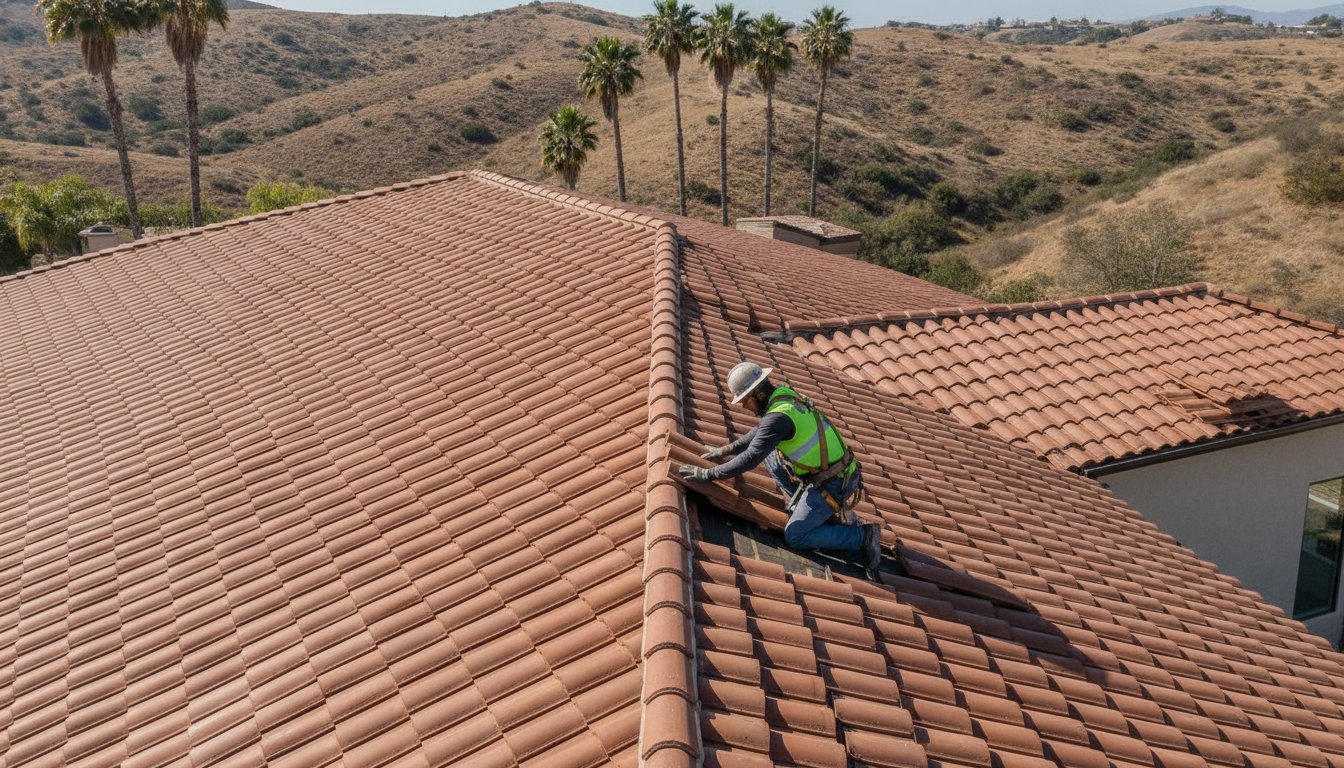
Your heavy concrete or clay tiles are built to last for half a century, yet the waterproof felt underneath often fails after just two decades. This discrepancy is the key to understanding how to extend tile roof lifespan Corona residents need to master to avoid unnecessary costs. It's a common concern across Riverside County, especially when Santa Ana winds threaten to expose hidden vulnerabilities in an aging system.
We recognize the stress that comes with potential leaks and the high price of Southern California construction. You deserve a solution that prioritizes honesty and craftsmanship over high-pressure sales. This guide provides a professional roadmap to maintaining your home, focusing on specialized services like our Lift and Relay process and roof rejuvenation that add years of service without a full tear-off.
With a track record of over 2,000 successful projects in Lake Elsinore and the Inland Empire, we've seen how proactive care transforms a roof's trajectory. We'll show you how a methodical roof tune-up can provide total peace of mind before the rainy season arrives. Let's explore the expert strategies that protect your family and preserve your property value for the long haul.
Key Takeaways
- Understand the "50-year tile, 20-year felt" paradox and why your waterproof barrier usually fails long before the tiles do.
- Discover how to extend tile roof lifespan Corona through professional maintenance that addresses the brittle underlayment caused by intense heat.
- Learn why a seasonal roof tune-up and clearing debris from valleys are essential steps to prevent water backup and hidden leaks.
- Explore specialized restoration options like the Lift and Relay process, which provides a long-term solution without the cost of a full replacement.
- Recognize the value of local expertise in Riverside County to ensure your roof remains a stable investment for your family and property.
The Reality of Tile Roof Lifespan in Corona’s Climate
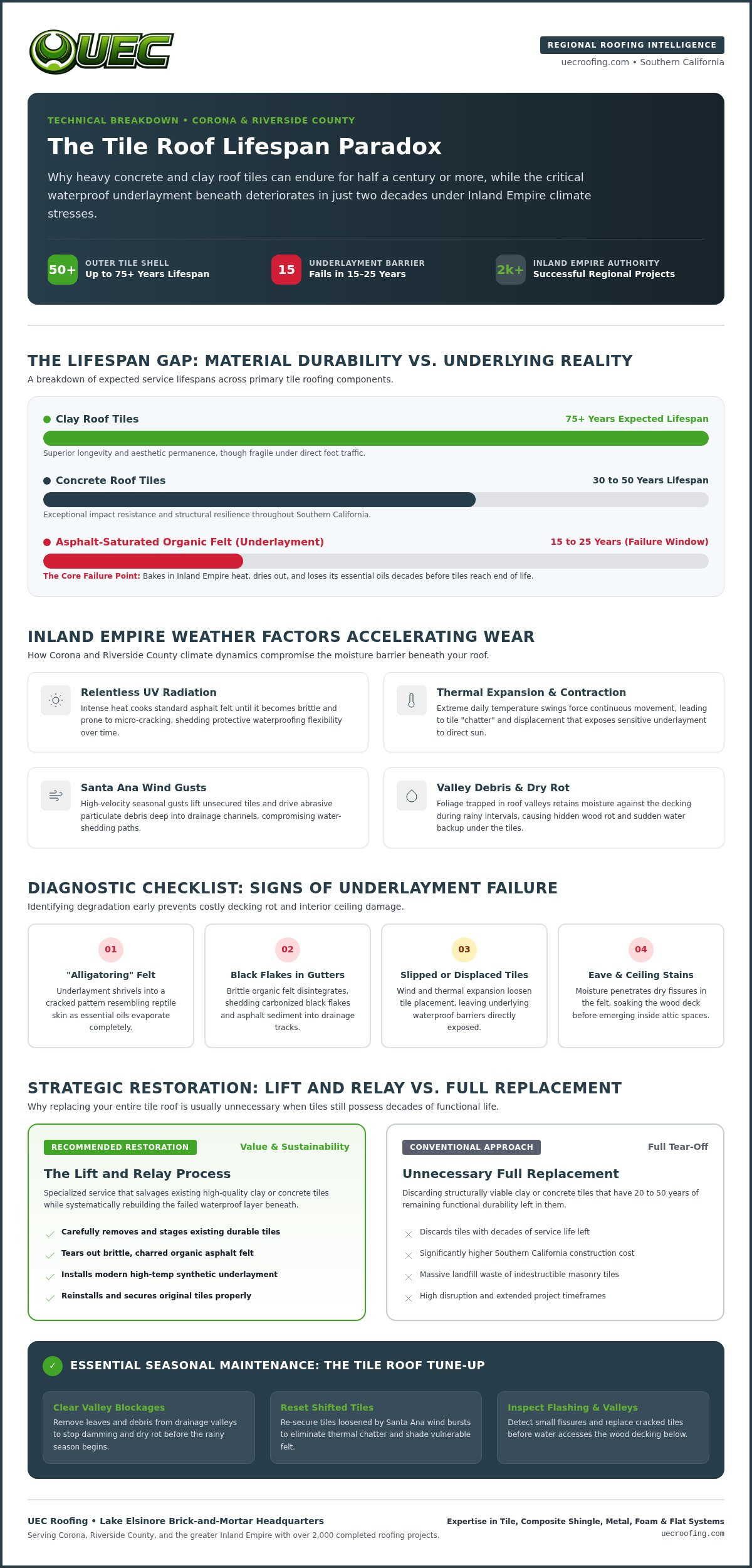
Corona homeowners choose tile for its aesthetic appeal and superior fire resistance. It's the standard for Southern California for good reason. However, there's a significant gap between the durability of the tiles and the system supporting them. While clay and concrete roof tiles are engineered to withstand the elements for 50 years or more, the underlying asphalt felt often fails much sooner. This creates a "20-year paradox" where the visible part of your roof looks perfect while the waterproof barrier beneath is disintegrating. Understanding this relationship is the first step in learning how to extend tile roof lifespan Corona homes require to stay dry.
The Inland Empire experiences extreme temperature swings that lead to constant thermal expansion and contraction. This movement can cause tiles to shift or "chatter," which eventually exposes the vulnerable underlayment to direct sunlight. During the fall months, Santa Ana winds bring a different set of challenges. These high-velocity gusts can lift individual tiles or drive abrasive debris into the drainage channels, compromising the securement and water-shedding ability of the entire system.
Inland Empire Weather Factors
The UV radiation in Riverside County is relentless. It bakes the roofing felt until it becomes brittle and prone to cracking. When the seasonal rains finally arrive, water finds these small fissures instantly. We often see "dry rot" in roof valleys where accumulated debris has trapped moisture against the wood. It's a common but preventable issue that stems from the unique intersection of local heat and wind patterns.
Standard Life Expectancy vs. Reality
Clay tiles generally offer superior longevity compared to concrete, but both are susceptible to the same underlayment failure. You might notice aesthetic wear like color fading or small chips, but these are rarely structural concerns. True warning signs include slipped tiles, visible felt that looks like charred paper, or water stains on your ceiling. Distinguishing between minor aesthetic wear and a structural failure is where professional expertise becomes invaluable for protecting your property value.
- Clay Tiles: Can last 75+ years, but are more fragile under foot traffic.
- Concrete Tiles: Typically last 30 to 50 years and offer high impact resistance.
- Underlayment: Often fails between 15 and 25 years due to heat exposure.
The Underlayment Gap: Why Tiles Aren’t the Whole Story
While the heavy tiles on your home receive all the attention, they aren't actually what keeps your attic dry. That responsibility falls to the roofing felt, or underlayment, hidden beneath the surface. According to the Tile Roofing Industry Alliance, tiles can last over 50 years, but the asphalt-saturated organic felt used in many older Corona homes has a much shorter shelf life. In the intense heat of the Inland Empire, this material eventually "cooks," losing its essential oils and flexibility. When you're researching how to extend tile roof lifespan Corona property owners must look deeper than the surface to ensure their investment remains sound.
A single cracked tile might seem like a minor cosmetic issue. However, if the underlayment below is brittle, that small gap allows water to reach the wood deck directly. This is why roof felt replacement is often the most cost-effective way to save a roof that still has decades of life left in its tiles. Replacing the foundation of the roof allows you to keep your existing tiles while gaining a brand-new waterproof barrier that can last another generation.
Signs of Underlayment Failure
Failure isn't always obvious from the ground. "Alligatoring" is a common term we use to describe felt that has cracked and shriveled into a pattern resembling reptile skin. By the time you see water stains on your eaves or interior ceilings during a Riverside County rainstorm, the damage is already well underway. Often, the tiles themselves look perfect, but they're sitting on a foundation that has turned to dust. If you notice any debris or black flakes in your gutters, it's likely your underlayment is shedding material.
Modern Underlayment Upgrades
Industry standards have evolved significantly. Modern synthetic underlayments offer much better heat resistance and tear strength than traditional paper products. For homes in wind-prone areas like Corona, we often recommend dual-layer systems that provide an extra level of security against wind-driven rain. These upgrades are essential for preventing a future roof leak repair and ensuring your home remains protected during the winter months. If you suspect your underlayment is reaching its limit, a professional inspection can clarify whether it's time for a proactive refresh.
Proactive Maintenance Strategies for Corona Homeowners
Maintaining a tile roof isn't a "set it and forget it" task. To understand how to extend tile roof lifespan Corona residents must adopt a seasonal approach to care. The transition from the scorching Inland Empire summer to the winter rains is the most critical time for an inspection. Scheduling a roof tune up ensures that small issues don't escalate into structural failures during a downpour.
Water management is the primary goal of maintenance. When leaves, dust, and wind-blown debris accumulate in your roof valleys, they create "dams." These dams force water to back up under the tiles, placing immense pressure on the aging underlayment we discussed earlier. Clearing these channels and your gutters allows water to exit the roof surface quickly, reducing the time your waterproof barrier is submerged. This simple step prevents the "flash leaks" common in Riverside County storms.
The US EPA provides extensive data on cool roofing and thermal performance, which is particularly relevant in our hot microclimate. Keeping your roof clean and your attic ventilation clear helps the system shed heat effectively. This reduces the thermal stress on your roofing felt and keeps your home more energy efficient during 100-degree days.
Annual Maintenance Checklist
- Slipped tiles: Look for gaps or "stair-stepping" after Santa Ana wind events.
- Debris removal: Clear organic matter from valleys and behind chimneys where moisture traps.
- Flashing inspection: Check seals around vents and pipes for cracks or peeling sealant.
- Ventilation check: Ensure attic soffits and ridge vents are unobstructed to prevent heat buildup.
Professional vs. DIY Maintenance
While it's tempting to climb a ladder and fix a tile yourself, the risks often outweigh the savings. Tile roofs are notoriously fragile. Walking on them incorrectly can crack dozens of tiles, creating more leaks than you started with. Professional teams have the specialized tools and training to navigate the surface safely. We identify early warning signs that the average homeowner might miss, potentially saving you from a $10,000 repair bill later. Our team takes pride in being a protective guide for your home's most critical investment.
Advanced Lifespan Extension: Lift and Relay vs. Rejuvenation
When your roof approaches the two-decade mark, the standard recommendation from many companies is a total replacement. This is often an unnecessary expense that ignores the inherent durability of your existing tiles. For homeowners exploring how to extend tile roof lifespan Corona offers two sophisticated alternatives: the Lift and Relay process and professional rejuvenation. These services focus on the components that actually fail, allowing you to bypass the high cost of new tile materials while securing your home for decades to come. It's a transparent, ethical approach to roofing that prioritizes your investment over quick sales.
The Lift and Relay Process
We consider the Lift and Relay to be the gold standard for tile restoration in the Inland Empire. During this process, our team carefully removes your existing tiles and stacks them safely. We then strip away the brittle, failing underlayment and install a modern, high-performance waterproof barrier. Once the foundation is secure, we reinstall your original tiles. This method effectively resets the clock on your roof lifespan. It's a methodical approach that preserves your home's aesthetic and saves thousands in material costs. Having completed over 2,000 projects in Riverside County, we've refined this technique to ensure maximum durability against both heat and wind. It's a comprehensive solution that treats the root cause of leaks rather than just the symptoms.
Roof Rejuvenation Benefits
If your tiles are showing signs of surface wear but the underlayment is still functional, roof rejuvenation is an excellent preventative measure. This treatment uses eco-friendly, bio-based oils that penetrate the materials to restore lost flexibility and water-shedding capabilities. In the drought-prone environment of Southern California, rejuvenation also enhances fire resistance by preventing the tiles from becoming overly porous and brittle. The ideal timing for this service is before the first signs of major leaks appear. It's a proactive step that keeps your system pliable and resilient. Catching the roof at the right time can add significant years of service without the disruption of a major construction project. If you want to know if your roof is a candidate for these specialized services, schedule an inspection with our experts today.
Partnering with a Local Expert for Long-Term Protection
Choosing the right partner is the final, essential step in learning how to extend tile roof lifespan Corona families depend on. A roof isn't just a collection of tiles. It's a critical investment that protects your property value and your loved ones. Working with a residential roofing contractor in Southern California who understands our specific microclimate is vital. From our brick-and-mortar base in Lake Elsinore, we provide rapid, reliable service to homeowners in Corona, Riverside, and throughout the Inland Empire. We know exactly how the local winds and heat cycles affect different tile profiles over time.
Our "Roofer for Life" philosophy is built on the idea that we are your long-term partners in home maintenance. We don't believe in high-pressure sales or recommending a full replacement when a specialized repair will suffice. We treat every home with the respect and care it deserves. This means focusing on quality workmanship that stands the test of time and building relationships based on trust. We believe in providing solutions that offer the best return on your investment.
The Value of a Professional Inspection
The most effective way to map out your roof's future is through a comprehensive assessment. During a professional inspection, we look beyond the surface. Our experts evaluate the integrity of your underlayment, the security of your tiles, and the efficiency of your attic ventilation. We provide a detailed report that gives you a clear understanding of your roof's current health. In Corona's competitive real estate market, having a documented history of professional maintenance can significantly increase your property value. It proves to future buyers that the home has been cared for by experts who prioritize stability. We look for the subtle signs of wear that lead to major leaks, ensuring your home remains a dry sanctuary during the rainy season.
UEC Roofing’s Track Record
With over 2,000 successful projects completed across Riverside County and the surrounding areas, our reputation is rooted in transparency. We've built our business on the principle of "repair first." We only recommend a new roof when it's the most ethical and safe option for the homeowner. This honest approach has made us a trusted name from San Bernardino to Orange County. We invite you to join our community of protected homeowners who enjoy peace of mind every year. By choosing a local expert who takes immense pride in their craftsmanship, you're ensuring that your tile roof remains a source of security for decades to come. Our deep roots in the community mean we'll be here to stand by our work for the long haul.
Securing Your Home’s Future in Corona
Your tile roof is one of the most significant investments you'll make for your property. While the tiles themselves are resilient, the foundation beneath them requires expert attention to survive the Inland Empire's unique climate. By prioritizing regular maintenance and addressing the underlayment gap through services like a Lift and Relay, you can avoid the high cost of a total replacement. Mastering how to extend tile roof lifespan Corona homeowners need is simply a matter of professional, proactive care.
Our team has successfully completed over 2,000 projects across Riverside County, specializing in the specific challenges posed by Santa Ana winds and extreme heat. As local experts based in Lake Elsinore, we're dedicated to being your "Roofer for Life" through transparent advice and superior craftsmanship. We believe in protecting your family and your property value with solutions that last for the long haul.
Protect your investment today. Schedule a professional tile roof inspection with UEC Roofing. Let's ensure your home remains a safe and secure sanctuary for decades to come.
Frequently Asked Questions
How long does a typical tile roof last in Corona, CA?
A typical tile roof in Corona can physically endure for 50 to 100 years, but the waterproof underlayment reaches its limit much sooner. In the Inland Empire, intense heat degrades the roofing felt within 20 to 25 years. This is why regular inspections are necessary to determine if you need a lift and relay service. Understanding this distinction is key to learning how to extend tile roof lifespan Corona property owners need for long-term protection.
Can I walk on my tile roof to clean the gutters myself?
We strongly advise against homeowners walking on their tile roofs. Tiles are brittle and easily crack under the weight of an inexperienced person, creating new leak points. Beyond the risk of damaging the roof, the steep pitches and dusty surfaces make it a significant safety hazard. It's much safer and more cost-effective to hire a professional who has the training and equipment to navigate the surface without causing additional breakage or risking a dangerous fall.
What is the average cost of a lift and relay service compared to a new roof?
A lift and relay service is significantly more affordable than a full roof replacement because it reuses your existing tiles. Since concrete and clay tiles are the most expensive part of a roofing system, keeping them saves a substantial amount on material and disposal fees. This specialized process allows you to replace the failing underlayment while maintaining your home's original aesthetic. It's an efficient way to reset your roof's clock without the high price of a total tear-off.
Does roof rejuvenation really work on older tile systems?
Roof rejuvenation is a highly effective treatment for extending the life of asphalt-based roofing components. The bio-oil solution penetrates the material to restore essential oils baked out by the Riverside County sun. This process returns flexibility to the underlayment and helps prevent the brittleness that leads to cracking. It's most successful when applied to systems that are still functional but showing early signs of aging. It's a proactive way to keep your roof pliable and resilient.
How often should I have my tile roof inspected in the Inland Empire?
You should schedule a professional inspection at least once a year in the Inland Empire. The best time for this "roof tune-up" is in the late summer or early fall before the rainy season begins. It's also wise to have a quick assessment after significant Santa Ana wind events. These high-velocity gusts can shift tiles or drive debris into valleys, creating hidden vulnerabilities that only a trained expert can detect before a major storm hits your home.
Will insurance cover tile roof repairs caused by Santa Ana winds?
Insurance coverage for Santa Ana wind damage depends on your policy and whether the damage was sudden or the result of long-term neglect. If a storm lifts tiles or causes a branch to fall, it's often a covered peril. However, if a leak occurs because the underlayment was 30 years old and brittle, insurance might view it as a maintenance issue. We recommend reviewing your policy and having a professional inspection to document your roof's current condition.
What are the signs that my tile roof underlayment has failed?
Identifying underlayment failure requires looking for specific red flags. You might see water stains on your interior ceilings or moisture damage along the exterior eaves. Another common sign is finding black, brittle flakes of felt in your gutters after a rainstorm. If you notice several slipped tiles or areas where the tiles look uneven, it's likely the underlying foundation is no longer providing a stable surface or a reliable waterproof barrier for your Corona property.
Is concrete tile better than clay for homes in Southern California?
Both materials are excellent choices for Southern California, but they offer different benefits. Clay tiles are exceptionally durable and can last over a century, though they're more fragile and expensive. Concrete tiles are more affordable and offer superior impact resistance against falling debris. Both provide the Class A fire rating required in many parts of Riverside County. Your choice often comes down to the architectural style of your home and your specific budget for the roofing project.