
How Long Does Roof Rejuvenation Last in Vista? What Homeowners Should Know
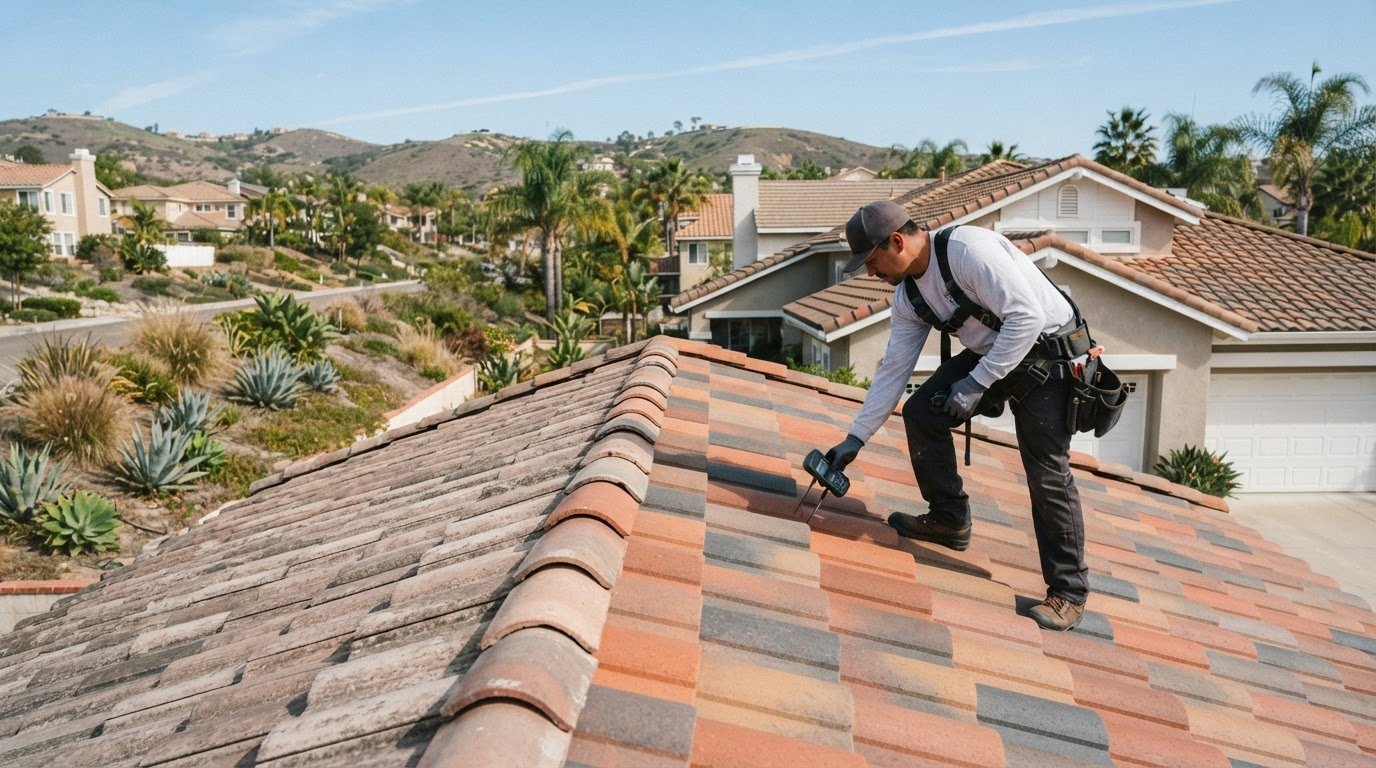
When asking how long does roof rejuvenation last Vista homeowners want a clear answer, but a single timeline can’t account for a roof’s material, age, condition, and repair history. Before deciding whether treatment is worthwhile, it helps to understand what rejuvenation is intended to do and whether the roof needs repairs first.
In Vista, the right approach depends on the roof itself. Rejuvenation may be one part of longer-term roof care, but its performance depends on the roof’s condition and any maintenance or repairs it needs. This guide explains what can affect results, what to review before choosing rejuvenation, and when repair or replacement may be a better fit. The same roof-specific considerations are useful for homeowners in nearby Southern California communities, including Lake Elsinore, Menifee, Temecula, Riverside, and Murrieta.
Key Takeaways
- There’s no single lifespan that applies to every roof. Treatment performance and the roof’s remaining service life are separate questions.
- To assess how long does roof rejuvenation last Vista homeowners should consider, start with the roof’s material, visible condition, and repair history.
- Active leaks and structural concerns need attention beyond rejuvenation. Repair, treatment, and replacement address different needs.
- Before an assessment, note past leaks, repairs, and visible changes so the roof’s history can inform the recommendation.
- UEC Roofing provides rejuvenation, maintenance, repair, and replacement, with recommendations focused on the roof’s condition and long-term protection.
How long does roof rejuvenation last in Vista, and why is there no single answer?
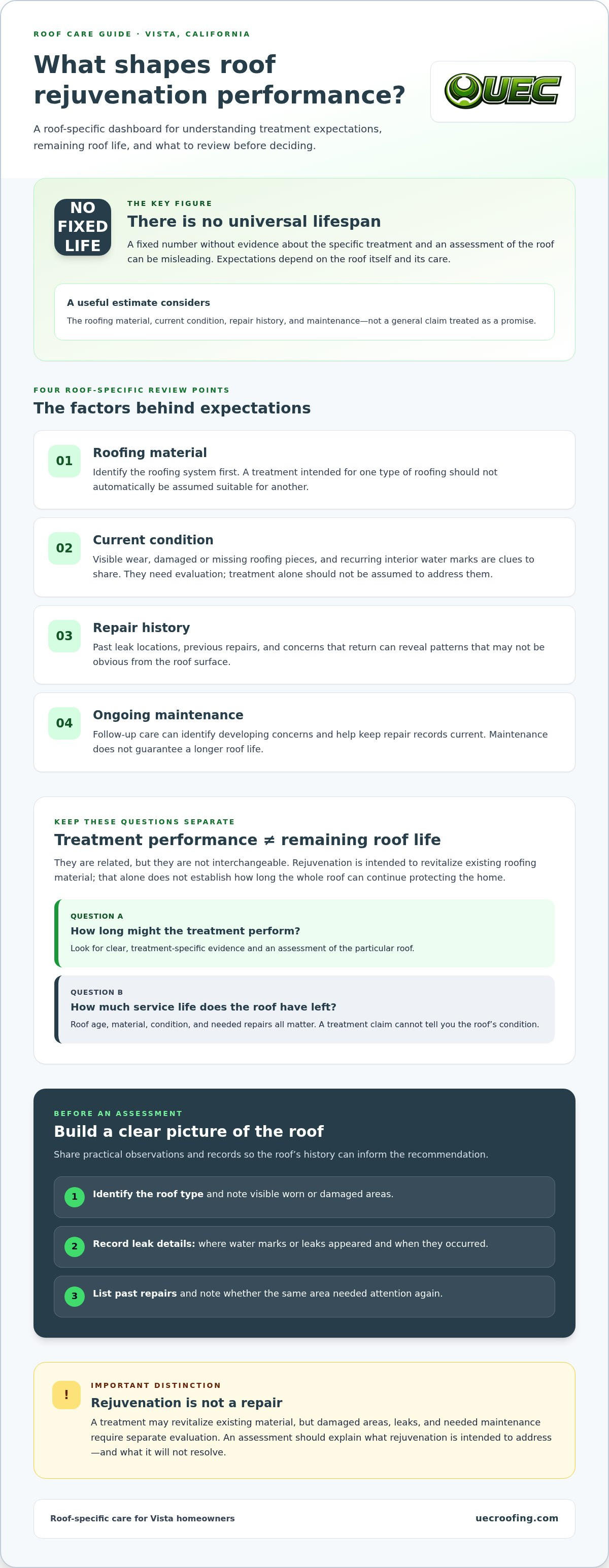
Roof rejuvenation has no universal lifespan. The answer to how long does roof rejuvenation last Vista homeowners can expect depends on the roof and the treatment being considered. A fixed number without evidence about the specific treatment and roof would be misleading. Any estimate should account for the roofing material, its current condition, and its repair and maintenance history.
Two questions are often confused: how long a treatment performs and how much service life the roof has left. They’re related, but they’re not interchangeable. Rejuvenation is intended to revitalize existing roofing material. That alone doesn’t establish how long the entire roof can continue protecting the home. The roof’s age, material, condition, and any needed repairs all matter.
Vista homeowners should also distinguish an estimate from a guarantee. A number without clear, treatment-specific evidence and an assessment of the roof may not reflect the conditions on a particular home. For background on asphalt shingles and their construction, see this overview of asphalt shingle lifespan. The roof’s actual condition still needs to be assessed individually.
What does roof rejuvenation mean for an aging roof?
Rejuvenation is a treatment intended to revitalize existing roofing materials as part of ongoing roof care. It doesn’t serve the same purpose as a repair. If a roof has damaged areas, those may need separate repairs. Treating the roof and correcting a specific defect are different tasks, so one shouldn’t be assumed to do the work of the other.
That distinction matters when deciding what the roof needs now. Consider a treatment recommendation alongside the roof’s condition, not as a substitute for identifying visible damage or needed maintenance. A useful assessment should explain both what rejuvenation is intended to address and what it will not resolve.
Why can’t every roof be given the same lifespan estimate?
Roof age is only one part of the picture. Material condition, previous repairs, and maintenance history also shape expectations. For example, a roof with a documented repair history gives an assessor more information than one with unknown past issues. The roofing material matters, too: a treatment intended for one type of roofing shouldn’t automatically be assumed suitable for another.
Rejuvenation lifespan depends on the roof’s material, current condition, repair history, and care, not on a universal number. A useful estimate considers those roof-specific factors and avoids presenting a general claim as a promise. In Vista, an assessment can help homeowners understand whether rejuvenation fits the roof’s needs and remaining service life.
What affects roof rejuvenation performance on a Vista home?
For a Vista roof, performance depends on what an inspection finds, not simply on the treatment label or the home’s location. Roofing material, visible wear, existing damage, and previous repairs all affect whether rejuvenation is appropriate and what a homeowner can reasonably expect. A roof with consistent wear presents a different picture from one with damaged sections or recurring leaks.
Material is an important starting point. Rejuvenation treatments aren’t automatically suitable for every roofing system. Identify the roof type before weighing treatment against repair or another option. An assessment should also consider whether previous work addressed the underlying issue and whether new signs of trouble have appeared since.
How roof condition and repair history shape expectations
From the ground, note visible changes such as damaged, missing, or worn roofing pieces. Also record any recurring interior water marks and previous leak repairs. These observations can inform an on-site assessment, but they don’t establish treatment suitability on their own. Rejuvenation isn’t a substitute for repairing a leak or damaged roofing. Known problems need to be evaluated separately before deciding on treatment.
Before an inspection, write down where leaks have appeared, when repairs were made, and whether the same area has needed attention more than once. A repair history may reveal patterns that aren’t obvious from the roof surface alone. This context helps distinguish routine wear from an issue that needs direct repair and makes the treatment discussion specific to the home.
- Roof material: Record the roofing type, since treatment suitability depends in part on the system already in place.
- Visible condition: Note worn or damaged areas rather than assuming treatment will address them.
- Repair history: Share past leak locations and repairs, especially if a concern has returned.
A lifespan claim can’t tell you the roof’s condition. An on-site evaluation gives a roofing professional the opportunity to examine the material and identify repairs or maintenance to consider first. Homeowners in the San Diego area can consult licensed professionals at higherlevelsroofing.com to inspect roof wear and address issues before deciding on treatment.
Why ongoing roof maintenance matters after treatment
Rejuvenation doesn’t remove the need for ongoing attention. Periodic professional maintenance can identify developing concerns, such as new damage or a repair that needs follow-up. Maintenance can’t guarantee a longer roof life, but addressing issues as they’re found supports informed care. UEC Roofing offers monthly and yearly maintenance programs for commercial properties. Homeowners can also arrange roof maintenance suited to their residential property.
Use each maintenance visit to review changes since the last assessment and keep a record of repairs. That record gives future evaluations a clearer starting point. For another perspective on the options, see the Southern California roof rejuvenation versus replacement guide. A roof-specific evaluation from UEC Roofing’s roof maintenance team can help identify whether rejuvenation, repair, or another solution best fits the roof’s current needs.
Is roof rejuvenation worth considering, or does the roof need repair or replacement?
Rejuvenation, repair, and replacement address different roofing needs. Rejuvenation treats existing roofing material. Repair targets a specific defect. Replacement is a broader solution when the roof’s overall condition calls for it. The right choice in Vista depends on an assessment of the roof, not on the assumption that one option can solve every problem.
Rejuvenation shouldn’t be treated as a fix for an active leak, damaged roofing, or structural concerns. Those issues need direct evaluation. A repair may address a localized defect, but it won’t necessarily resolve broader wear elsewhere. If deterioration is widespread, treatment or isolated repairs may not be the most suitable path.
When a roof assessment should consider repair first
Leaks, damaged tiles, and worn roofing areas need inspection to identify the source and extent of the problem. For example, a water mark inside the home may point to a roof concern that needs investigation. Applying rejuvenation over the affected area doesn’t identify or fix the cause. Repairs address specific defects, but they don’t automatically restore the overall condition of the roof. UEC Roofing provides leak repair and tile replacement as part of its roofing services.
Before choosing treatment, make sure the assessment addresses known problem areas and any repairs that may be needed. This keeps the decision focused on protecting the home instead of expecting rejuvenation to resolve a defect it isn’t intended to fix. For homeowners in other regions seeking trusted roofing care and repairs, local specialists such as trueroofing-cork.com provide a similar focus on thorough assessments before undertaking work.
When replacement may be the more suitable path
Replacement may be appropriate when isolated repairs or treatment no longer address the roof’s needs. That decision should follow a review of the roof as a whole, including its material, condition, and repair needs. There’s no single age threshold that determines when replacement is right, and remaining service life shouldn’t be predicted without evidence from the specific roof.
A side-by-side comparison helps clarify what each option can and cannot address:
- Rejuvenation: A treatment for existing roofing material when the roof’s condition makes it appropriate.
- Repair: Work to address a specific issue, such as a leak or damaged tile.
- Replacement: A comprehensive solution to consider when the roof’s broader condition warrants it.
For Vista homeowners wondering how long does roof rejuvenation last Vista roofs may benefit from, first determine whether rejuvenation is suitable at all. The roof rejuvenation and replacement decision guide offers broader context, while the Southern California roof replacement planning guide covers replacement considerations. A roof-specific assessment can help clarify whether treatment, repair, or replacement best fits the home’s needs.
How can Vista homeowners assess a roof rejuvenation recommendation?
A sound recommendation should explain the condition of the roof in front of you, not rely on a broad lifespan claim. Vista homeowners can make an assessment more useful by gathering the roof’s history, noting visible changes, and discussing repairs before weighing rejuvenation. This connects the recommendation to the home’s condition and clarifies what the proposed work is intended to address.
What information should homeowners gather beforehand?
Before an assessment, organize what you already know. You don’t need to inspect the roof yourself or climb onto it. A brief record can help direct attention to areas that need a closer professional evaluation.
- Review the roof history. Note known leak locations, past repairs, and whether a concern returned after earlier work.
- Record visible changes from the ground. Write down anything you’ve noticed, such as a change in the roof’s appearance or a roofing piece that looks damaged. Don’t climb onto the roof to investigate.
- Describe recurring concerns. Include when an issue appears, which part of the home is affected, and whether it has happened more than once.
- Have the roof assessed. Share your notes so they can guide the inspection. Your observations provide helpful context, but they don’t replace a professional evaluation.
This preparation is especially useful when a home has changed hands or repair records are incomplete. If you don’t know the roof’s full history, say so. Clear gaps in the record are better than assumptions about past work or current condition.
What should a useful assessment explain?
A helpful assessment describes the observed roof condition in straightforward terms, identifies repair needs, and explains why a particular option fits. The reasoning should connect the roof’s material and condition to the recommendation instead of presenting a generalized timeline as a prediction for that home.
Use these points to evaluate the recommendation:
- Condition: What was observed, and which areas need attention?
- Repairs: Are there specific defects to address before considering treatment?
- Recommended work: Why does rejuvenation, repair, or replacement suit the roof’s needs?
- Expectations: What is the work intended to do, and what should not be assumed from a lifespan estimate?
UEC Roofing’s licensed, experienced team can assess the roof and explain options in relation to its condition. A roof tune-up can also be part of a maintenance discussion; the 2026 Southern California roof tune-up guide provides further context. For background on what to consider during an assessment, see the UEC Roofing website, and bring your notes about leaks, repairs, and visible changes.
Roof rejuvenation in Vista: plan for roof-specific care with UEC Roofing
Choosing roof rejuvenation is one part of protecting a home, not a decision to separate from the roof’s overall care. For Vista homeowners, the practical next step is to connect the roof’s observed condition with the work it needs now and the care that may support its performance over time. First, understand the condition of the roof and the purpose of the recommended work.
How UEC Roofing fits rejuvenation into long-term roof care
UEC Roofing provides roof rejuvenation, maintenance, repair, and replacement. These options address different needs, and a roof-specific assessment helps determine which approach fits. Rejuvenation may be considered as part of ongoing care, while repairs address identified defects and replacement offers a broader solution when the roof’s overall condition calls for it. UEC Roofing uses quality materials from trusted manufacturers and focuses on long-term roof performance and protection.
Regular maintenance can help identify developing issues and bring them to attention. It can’t guarantee that repairs will be avoided, but it gives homeowners a clearer understanding of the roof’s condition as it changes. Keeping notes about past work and new concerns can also make future maintenance more informative.
Take the next step for your Vista roof
Before an assessment, gather useful details about the roof. Note known leaks, previous repairs, and changes you’ve observed from the ground. Sharing what you’ve noticed helps focus the discussion, while a professional evaluation establishes the roof’s condition and suitable options.
Homeowners asking how long does roof rejuvenation last Vista roofs can expect should begin with a roof-specific evaluation. The recommendation should reflect the condition found, not a universal lifespan claim. For a practical discussion about your roof, contact UEC Roofing about your roof.
Make your next roof decision with confidence
Roof care is easier to plan when you understand what your roof needs now. Instead of relying on a broad lifespan claim, use an inspection to make an informed decision about protecting your home and planning future maintenance. A roof-specific evaluation gives you a practical basis for weighing rejuvenation against other work, without assuming a treatment can address every concern.
If you’re still asking how long does roof rejuvenation last Vista homes can expect, the most useful next step is to discuss your roof’s specific condition. Share any known concerns and ask for an assessment that explains the options in straightforward terms. UEC Roofing’s licensed, experienced team provides roof rejuvenation, maintenance, repair, and replacement to support roof performance and protection.
Arrange an inspection for your Vista roof with UEC Roofing to understand the roof’s condition and decide on the work that best fits its needs.
Frequently Asked Questions
How long does roof rejuvenation last in Vista?
There’s no dependable fixed duration that applies to every treatment and roof. Before relying on a number, look for the specific treatment it describes and the evidence or conditions behind that claim. The question how long does roof rejuvenation last Vista homeowners ask can’t be answered accurately by a broad promise alone. Keep any written estimate with the roof’s service records so future evaluations can consider what was done and when.
Does roof rejuvenation add years to a roof’s life?
Don’t assume it adds a guaranteed number of years. A roof’s service life is different from a treatment’s stated performance, so consider them separately. For a useful discussion, ask what the treatment is designed to accomplish, what the estimate is based on, and whether it applies to the entire roof or only particular areas. A clear explanation helps set realistic expectations without turning an estimate into a promise.
Can roof rejuvenation fix an active leak?
No. If water is entering the home, protect the affected interior area and arrange an evaluation to identify the source. Note when you first noticed the problem and whether it appears near a ceiling fixture, wall, or window. Those details can help describe the situation, but they don’t locate the entry point. Don’t assume a treatment will stop water intrusion or delay attention while waiting to see whether the leak changes.
Is roof rejuvenation suitable for every type of roof?
No. Treatment directions and intended roofing materials matter. If a roof has more than one material or has had sections replaced, make a note of those areas so the assessment can distinguish them. A recommendation should identify which portions are being considered, rather than treating the roof as a single uniform surface. This helps clarify the scope of the proposed work before you decide how to proceed.
Should I rejuvenate or replace my aging roof?
Compare the scope of work for each option with the roof’s overall needs. Before deciding, review the written proposal for the areas included, the work described, and any repairs addressed separately. If you’re comparing options, make sure you’re comparing the same portions of the roof and the same identified concerns. This is more useful than relying on age alone or a general statement about treatment.
How can I maintain my roof after rejuvenation?
Keep a file with the treatment details, inspection notes, repair records, and relevant paperwork. After storms or other events that concern you, note what you observed and arrange professional attention if you suspect new damage. Follow the maintenance timing recommended for your roof rather than assuming one schedule suits every home. Organized records make it easier to track changes and explain the roof’s history during later assessments.
Can I tell from the ground whether my roof needs rejuvenation?
A ground-level view can’t confirm that treatment is appropriate. From a safe location, you may notice an obvious change in the roofline or a section that looks different, but those observations can’t show the condition of hidden components or establish what work is needed. Share what you can see with a roofing professional and leave close inspection to them. Don’t climb onto the roof to get a better view.