
How Long Does a Tile Roof Last? A Guide for Southern California Homeowners
What if the most durable part of your home is actually hiding a failure that could cost you tens of thousands of dollars? Most homeowners in Lake Elsinore and across the Inland Empire choose tile because it is built to withstand the intense Southern California sun. You likely bought your home assuming the roof would outlast your mortgage. However, when asking how long does a tile roof last, the answer isn't as simple as the age of the tiles themselves.
It's a common frustration to see beautiful clay or concrete tiles on the outside while dealing with persistent leaks on the inside. We understand the stress of facing a massive replacement estimate when your tiles look perfectly fine. This guide explains the critical difference between tile durability and underlayment failure. You'll learn how to identify if a lift and relay is a viable option for your property in Riverside, Orange, or San Bernardino Counties. We'll show you exactly how to protect your investment and double your roof's lifespan through professional maintenance and the latest 2026 fire safety standards.
Key Takeaways
- Understand the critical difference between your roof's "outer shell" and the waterproofing system to avoid paying for a full replacement you may not need.
- Discover exactly how long does a tile roof last in Southern California by comparing the 100-year durability of clay tiles against the 20-year lifespan of underlayment.
- Learn how intense UV exposure and extreme temperature swings in the Inland Empire cause fasteners and seals to fail prematurely.
- Identify the visual warning signs of a failing system, such as slipped tiles or concrete spalling, before they lead to costly interior water damage.
- Explore how a professional "Lift and Relay" service can double your roof's life by reusing your existing tiles with a fresh waterproofing layer.
The Real Lifespan of a Tile Roof: Shell vs. System
You see the tiles. They look solid. You assume the roof is fine. This is the biggest misconception among homeowners in Lake Elsinore, the Inland Empire, and Los Angeles County. A tile roof is a multi-layered assembly, not a single piece of armor. If the bottom layer fails, the top layer cannot save your home from water damage. It is a "straight shooter" reality that every homeowner must accept: your roof is only as good as its weakest component.
In Southern California, the answer to how long does a tile roof last depends on whether you are talking about the "shell" or the "system." The tiles themselves are incredibly durable. They are designed to withstand decades of sun. However, the waterproofing system beneath those tiles operates on a much shorter timeline. While the outer layer might endure for 50 to 100 years, the invisible layers beneath are often on a 20 to 30 year clock. Understanding this gap is the key to maximizing your investment.
Clay vs. Concrete Tile Durability
When exploring different types of roof tiles, it is important to understand how materials age differently in our climate:
- Clay Tiles: These remain the gold standard for longevity in Riverside and San Bernardino Counties. They are naturally porous but remain color-fast for decades and resist punishing heat with ease.
- Concrete Tiles: These offer a more affordable alternative for many families. They are heavier and provide excellent fire resistance, but they face different aging profiles and can experience "slumping" or color fading over 50 years.
Both materials are Class A fire-rated, which is essential for meeting the 2026 California building codes in fire-prone regions.
The Underlayment: The Invisible 20-Year Clock
The underlayment is the true hero of your roofing system. Most older homes in Orange and San Diego Counties were built using standard organic felt. This material is essentially paper soaked in asphalt. After 20 years of Southern California heat, it becomes brittle and cracks, losing its ability to shed water effectively. Modern installations often utilize synthetic underlayments which offer superior tear resistance and a longer life. Underlayment failure is the primary cause of leaks in roofs where the tiles still look perfect. Even if your clay tiles have another 50 years of life, your underlayment likely needs attention much sooner. This is why how long does a tile roof last is a question with two distinct answers.
Southern California Factors That Affect Tile Longevity
The Southern California climate is beautiful, but it is also a relentless adversary for your home's exterior. When homeowners ask how long does a tile roof last, they must account for the localized weather patterns of the Inland Empire and coastal regions. In Riverside and San Bernardino Counties, the primary threat is not rain, but the sun. Intense UV radiation acts like a slow-moving fire, gradually degrading the chemical bonds in your roofing seals and underlayment.
Thermal expansion and contraction also play a significant role. Our region often experiences 40-degree temperature swings between a scorching afternoon and a cool desert night. This cycle causes the tiles and their fasteners to expand and contract at different rates. Over time, this mechanical stress can loosen fasteners or cause micro-cracks in concrete tiles. For those living along the coast in San Diego or Huntington Beach, salt air adds another layer of complexity by accelerating the corrosion of metal flashings and fasteners.
UV Degradation and Heat Stress
The "Inland Empire heat" does more than just make your AC work harder. It effectively cooks the roofing felt from both sides. Without proper attic ventilation, heat builds up in the attic space, reaching temperatures far higher than the outside air. This accelerates the drying out process, turning flexible underlayment into a brittle, paper-like substance that cracks at the slightest movement. Adhering to California building codes for roofing ensures that modern installations account for these thermal loads. Also, choosing tiles with a high Solar Reflectance Index (SRI) can significantly reduce surface temperatures, protecting the system beneath.
Wind and Rain: The Mechanical Failure Points
Mechanical stress often comes from our infamous Santa Ana winds. High-velocity gusts can lift "slipped" tiles, creating gaps where water can enter during the next storm. In areas like Lake Elsinore, heavy seasonal rains often expose hidden cracks that developed during the dry summer months. Debris buildup is another common culprit. Leaves and twigs often collect in roof valleys or behind chimneys, creating "dams." These dams force water to back up under the tiles and sit directly on the felt. If you haven't had a professional roof tune up lately, these small debris piles could be shortening the answer to how long does a tile roof last for your specific home.
Warning Signs Your Tile Roof is Reaching the End
Many homeowners in Riverside County assume that if there isn't a puddle on the living room floor, their roof is healthy. This is a dangerous gamble. A tile roof often fails silently, with damage accumulating long before it manifests as a ceiling stain. We'll give it to you straight: waiting for a drip is the most expensive way to manage your property. Determining how long does a tile roof last on your specific home requires looking past the surface to identify early warning signs of system fatigue.
Visible cracks or "spalling" on the edges of concrete tiles are common indicators of age. Spalling occurs when the material begins to flake or crumble, often due to decades of thermal expansion. You should also pay close attention to the metal flashing around chimneys and vents. If these components are rusted or deteriorating, the seal is already compromised. In our experience across 2,000 successful projects in the Inland Empire, these small metal failures are often the gateway for significant water intrusion.
The Danger of Slipped Tiles
Slipped tiles are more than just an aesthetic issue. They often occur because the fasteners have corroded or the initial installation didn't account for the steep pitches common in Lake Elsinore homes. When a tile shifts, it exposes the dark underlayment beneath to direct UV rays. This accelerates the degradation process we discussed earlier. A single slipped tile can reduce the lifespan of the entire roof section by years. If you spot a gap in your roof's "armor," it requires immediate attention to prevent a localized underlayment blowout.
Internal Warning Signs
The best way to inspect your roof is often from the inside. Grab a flashlight and head into your attic during a bright day. Look for "pinholes" of light peeking through the roof deck. These indicate gaps where water will eventually follow. You should also check the rafters for water staining or efflorescence. Efflorescence is a white, chalky buildup on the underside of tiles caused by water evaporating and leaving minerals behind. If you notice "soft spots" in the roof deck while walking or observing from the ground, the structural wood may already be compromised. Catching these signs early allows for a roof repair rather than a total tear-off.

How to Extend Your Tile Roof's Lifespan
Extending the life of your roof isn't about luck. It's about strategy. While you can't change the climate in Riverside or San Bernardino, you can control how your home responds to it. If you're asking how long does a tile roof last, the answer is often determined by your maintenance schedule. A proactive approach can double the functional life of your roofing system. Annual inspections and minor adjustments prevent small issues from becoming catastrophic failures.
Replacing a single broken tile immediately is the simplest way to protect your investment. When a tile breaks, the underlayment is exposed to UV rays and heat. This causes the felt to fail years ahead of schedule. We also recommend exploring roof rejuvenation treatments for aging concrete tiles. These treatments restore the protective surface and help maintain the structural integrity of the material, especially for roofs that have faced decades of Inland Empire sun.
The Lift and Relay: The Ultimate Restoration
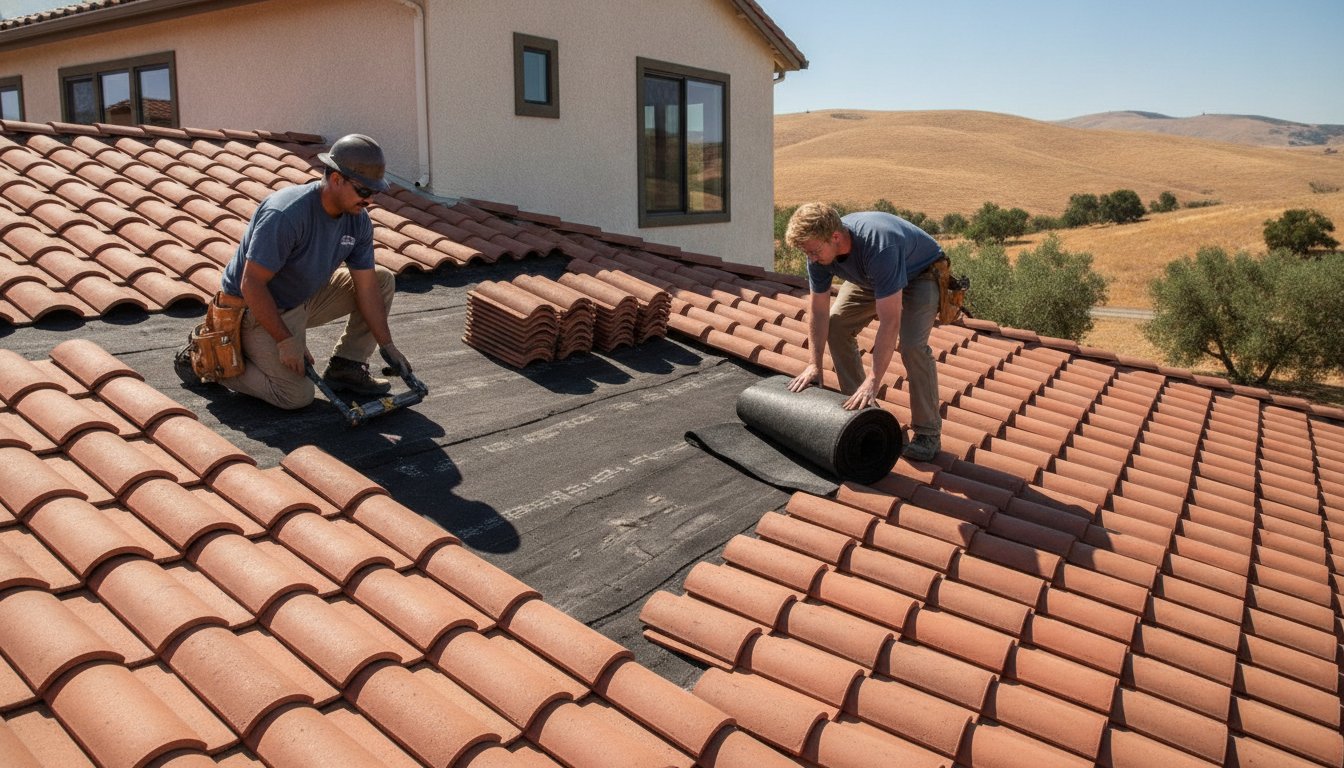
The Lift and Relay is the ultimate restoration tool for Southern California homeowners. It's a common misconception that a failing underlayment requires a total tear-off. If you're wondering how long does a tile roof last when the tiles are still good, the answer is found in this restoration process. We carefully remove the existing tiles and set them aside. We then install a modern, high-performance waterproofing layer. Finally, we re-install your original tiles. This process provides the protection of a new roof replacement at a fraction of the cost because you aren't paying for new materials. It's an efficient way to reset the clock on your entire roofing system.
Preventative Maintenance Checklist
Preventative care is the backbone of a long-lasting roof. You must ensure that valleys are clear of debris and that bird stops are intact. Bird stops prevent pests from nesting under your tiles, where their debris can trap moisture and rot the roof deck. Timely felt replacement is also critical. If your underlayment is over 20 years old, replacing it now prevents the structural wood damage that comes with a major leak. Following regular maintenance tips can easily add 15 or more years to your existing system. Don't wait for a ceiling stain to take action. As a local expert with a brick-and-mortar presence in Lake Elsinore, we've seen how a simple Roof tune up can save homeowners thousands in avoidable repairs.
Choosing a Local Expert for Your Southern California Roof
When you seek an answer to how long does a tile roof last, you deserve more than a generic estimate. You deserve a professional evaluation from a team that understands the specific microclimates of the Inland Empire. UEC Roofing isn't a fly-by-night operation. We maintain a permanent brick-and-mortar presence in Lake Elsinore. This local stability matters to your bottom line. It means we'll be here to honor our workmanship long after the job is finished. With over 2,000 successful projects completed across Riverside, Orange, and San Diego Counties, we've built our reputation on transparency and technical excellence.
Your roof is a critical investment for protecting your family and your property value. Choosing the right partner to maintain that investment is just as important as the materials you select. We don't just see ourselves as a contractor; we aim to be your "Roofer for Life." This philosophy is rooted in ethical standards and a commitment to doing the job right the first time. We understand the weight of your investment and treat it with the respect it deserves.
Quality Workmanship and Local Integrity
Storm chasers often descend on Southern California after a major weather event. They offer quick fixes and high-pressure sales tactics before disappearing to the next state. These companies cannot provide the long-term stability or regional knowledge your roof needs. Our team lives and works in the communities we serve. The UEC "Straight Shooter" promise is our commitment to honesty. We only recommend the services you actually need. If a simple roof repair or a Lift and Relay can extend your roof's life, that is exactly what we will propose. We never suggest a total tear-off if your existing tiles still have decades of life left in them.
Take the Next Step for Your Home
Taking action now is the most effective way to influence how long does a tile roof last. A proactive roof tune up can catch the slipped tiles or failing flashings before they turn into a disaster. This minor preventative measure often prevents a $20,000 replacement down the road. We provide professional, no-pressure inspections throughout Riverside and San Diego Counties. Our experts will give you a clear, documented assessment of your system's health and a roadmap for its future.
Contact UEC Roofing today for a comprehensive tile roof evaluation. Our team is ready to help you maximize the ROI of your roofing system and ensure your home remains protected for decades to come. Don't wait for the first major rain in Murrieta or Temecula to test your roof's integrity.
Secure Your Home’s Future Today
Your tile roof is more than just a visible shell. It is a complex system where the underlayment acts as a ticking clock. Understanding how long does a tile roof last means recognizing that professional maintenance is the bridge between premature failure and decades of protection. Whether you need a simple tune-up or a specialized Lift and Relay, taking action now prevents the heavy financial burden of a full replacement later.
We bring the experience of over 2,000 successful projects across Riverside, Orange, and San Diego Counties to every evaluation. Our specialized "Straight Shooter" diagnostic approach ensures you only receive recommendations for what your home actually needs. As local experts with a brick-and-mortar presence in Lake Elsinore, we are committed to being your roofer for life. Protect your investment—schedule your professional tile roof inspection with UEC Roofing today. We look forward to helping you safeguard your property and your family with quality craftsmanship you can trust.
Frequently Asked Questions
Can a tile roof really last 100 years?
Yes, clay tiles are capable of lasting a century or more when properly maintained. While concrete tiles typically have a lifespan of 30 to 50 years, clay is naturally resistant to the elements and does not fade. You must remember that while the tiles endure, the waterproofing underlayment beneath them will require replacement much sooner to keep the system functional.
How often should I have my tile roof inspected in Southern California?
You should schedule a professional inspection at least once every year. The intense heat of the Inland Empire and the mechanical stress of Santa Ana winds can cause tiles to shift or seals to crack without warning. Annual evaluations are the most effective way to accurately track how long does a tile roof last on your specific home.
Why is my tile roof leaking if the tiles aren't broken?
Leaks in roofs with perfect tiles are almost always caused by underlayment failure. The asphalt-based felt beneath your tiles is the actual waterproofing layer. After 20 to 30 years of Southern California sun, this material becomes brittle and develops cracks. Water then travels through the gaps between your tiles and enters your home through these compromised sections.
Is it better to repair or replace a 25-year-old tile roof?
At the 25-year mark, a "Lift and Relay" is often the superior choice for homeowners in Riverside or San Diego Counties. This process involves removing your existing tiles, installing fresh underlayment, and re-installing the original tiles. It addresses the core failure of the system without the unnecessary expense of purchasing new tile materials.
What is the cost difference between a lift and relay and a new roof?
A Lift and Relay is significantly more affordable than a full replacement because it eliminates the cost of new tiles. By reusing your existing "lifetime" shell, you can save between $8 and $12 per square foot on materials. This allows you to restore your roof's integrity while keeping your investment focused on high-quality labor and modern waterproofing felt.
Do I need to replace my underlayment if I'm just replacing a few broken tiles?
You only need to replace the underlayment in the immediate area of the repair. However, if the broken tile has been missing for months, the exposed felt has likely suffered UV damage. Our team inspects the surrounding felt during every tile replacement to ensure that the small repair doesn't leave a hidden vulnerability in your roof's defense.
How does heat in the Inland Empire affect tile roof lifespan?
High temperatures and constant UV exposure accelerate the degradation of the organic oils in your roofing felt. In Lake Elsinore and surrounding areas, the underlayment can dry out and become brittle years faster than in cooler coastal regions. This thermal stress is a primary factor in determining how long does a tile roof last in our local environment.
Can I walk on my tile roof to perform my own maintenance?
We strongly recommend that you do not walk on your tile roof. Tiles are brittle and can easily crack under the weight of someone who isn't trained in proper weight-distribution techniques. Walking on the roof yourself often creates new leaks and broken tiles, leading to more expensive repairs than the maintenance you were attempting to perform.