
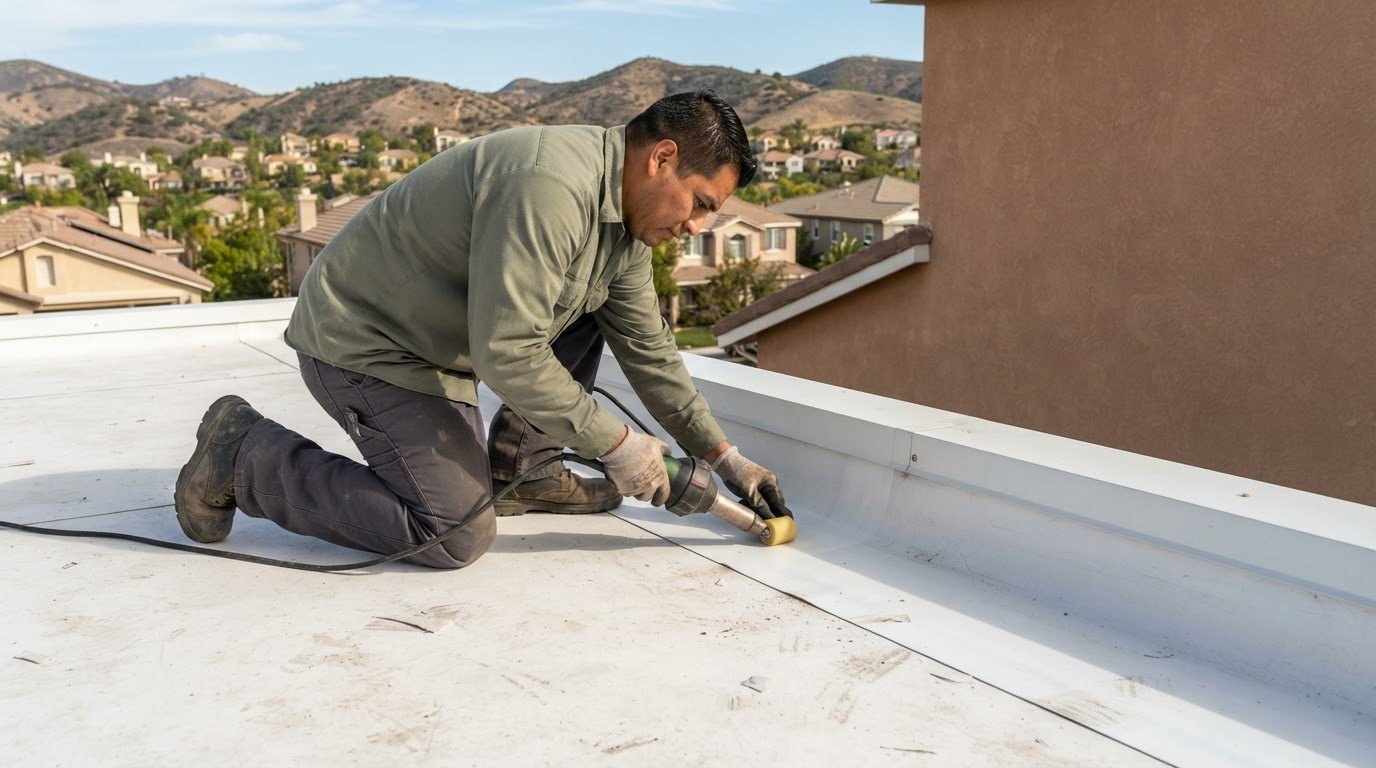
An exposed roof edge can cause a leak in Anaheim Hills. A flat roof leak specialist in Anaheim traces water beyond the indoor stain, checking edges, seams, and roof openings to find where it enters. The repair should address the source, not just the visible symptom.
A ceiling mark doesn’t always reveal where water entered. The right repair depends on the roofing material, how its sections connect, and the drainage path, all of which affect how water moves across and through the roof.
This guide covers common leak causes and repair considerations for Southern California property owners, including those in Anaheim, Orange County, Lake Elsinore, the Inland Empire, and Riverside, San Diego, Los Angeles, and San Bernardino Counties. Learn what a professional inspection examines and how its findings shape the next step.
Key Takeaways
- A ceiling stain may not sit directly below the roof entry point, so diagnosis should trace water’s path back to the source.
- Membrane seams and exposed edges need repairs suited to the roof material and the way its layers meet.
- Leaks around skylights, chimneys, and pipe boots call for close attention to flashing and drainage connections.
- The right response to an active leak depends on its entry point, the affected roofing materials, and the extent of damage.
- Residential and commercial flat roofs can require different repair approaches based on their layout and use.
Membrane and seam repairs for modified bitumen, TPO, and EPDM
A specialist traces the leak, inspects the roof membrane and seams, then matches the repair to the roofing material. The inspection establishes what needs attention, including access issues, damaged layers, and the scope of work.
Repair Scopes and Concealed Damage
A written scope should identify the leak location, affected membrane, seam or flashing, and planned repair. It should also explain how the inspection will assess concealed damage beneath the visible surface. For example, lifting a loose seam may reveal wet insulation or weakened underlayment that needs attention before the membrane is closed.
Look for a clear distinction between the visible repair and any additional work needed for concealed damage. The scope can include photographs, material transitions, and the limits of the area examined. This documentation helps property owners understand why the work may change if opening the roof reveals damage beyond the original seam.
Repair Steps and Scheduling
For a commercial roof, planning begins with access, occupied areas, and the repair zone. The roofing team can document the inspection, marked locations, materials, and completed work, giving building managers a record for maintenance planning. Defining the work area also helps coordinate roof access without treating every leak as a full replacement.
The repair sequence generally includes locating the entry point, removing compromised material where needed, preparing the surface, and restoring the seam or membrane. Repair duration depends on the size and condition of the affected area, access, and whether concealed damage changes the scope. The written record should capture any revised work.
The roofing material determines the repair method. Modified bitumen uses layered asphalt roofing, so a repair must address the affected layer and bond securely with the surrounding material. TPO and PVC are thermoplastic membranes, while EPDM is a rubber membrane. Their seams and patches require compatible materials and preparation. Applying a method across dissimilar membranes can leave a weak transition instead of a continuous seal.
EPDM deserves close seam inspection. Adhesives can dry out over 15 to 20 years as the membrane shrinks and seams pull apart. A specialist checks for separation, edge lifting, and movement around penetrations before selecting a compatible repair. On TPO or PVC, the inspection focuses on seam integrity and the condition of the membrane around the leak.
Residential roofs may combine flat sections with tile or shingle areas. A leak near that transition can involve the membrane, flashing, or underlayment, not just the visible tile or shingle. Tile replacement addresses a broken tile; felt replacement may be needed if the underlayment beneath it has deteriorated. The inspection should trace how the layers meet.
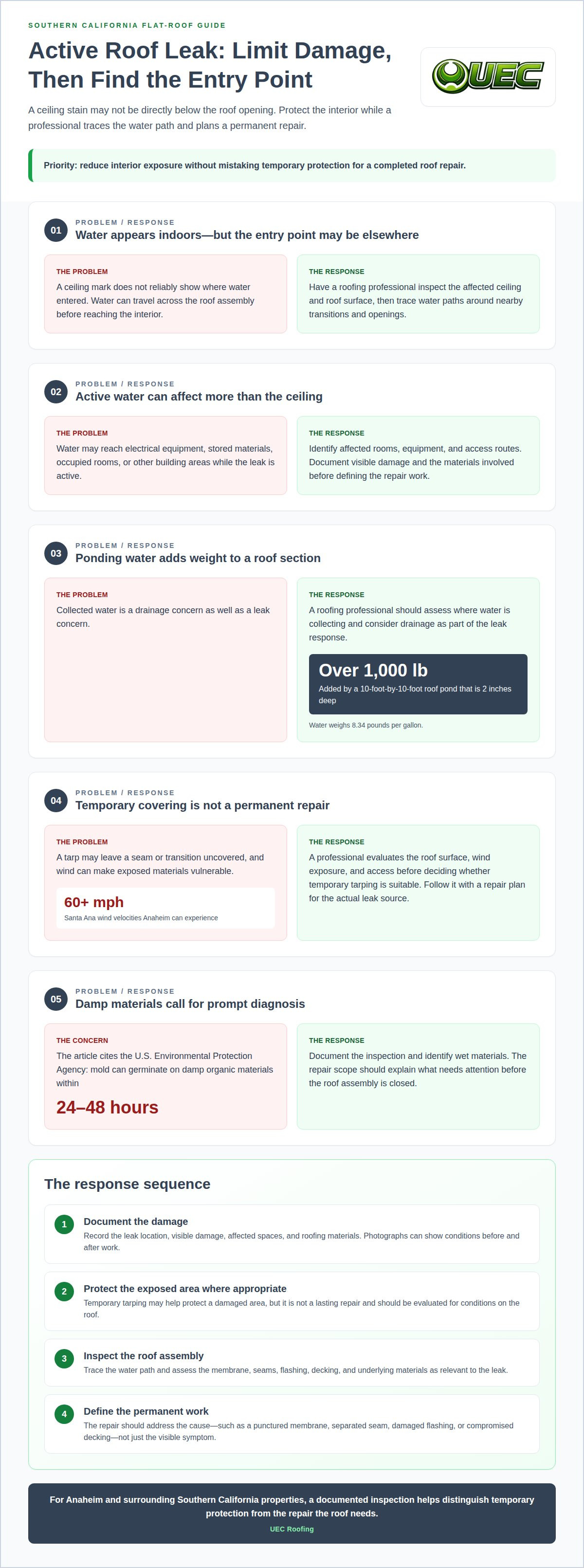
Moisture also makes prompt diagnosis important: according to the U.S. Environmental Protection Agency, mold can germinate on damp organic materials within 24 to 48 hours. A documented inspection can identify wet materials and help define what the repair must address before the roof assembly is closed.
Emergency leak response
During an active roof leak, the priority is limiting interior damage while a professional traces the entry point. In Anaheim, a flat roof leak specialist can assess the affected ceiling, roof surface, and nearby electrical equipment or stored materials. The visible leak may not line up with the roof opening, so the inspection should follow water paths and roof transitions.
For a commercial building, the assessment should also identify affected rooms, equipment, and access routes. Water weighs 8.34 pounds per gallon, and a 10-foot-by-10-foot roof pond two inches deep adds over 1,000 pounds to that roof section. These figures make drainage concerns relevant when water is collecting, not only when it is entering indoors.
Emergency roof tarping can provide temporary protection when a damaged area needs covering before permanent work. A roofing professional evaluates the surface, identifies a suitable coverage area, and secures temporary material without treating it as a lasting repair. The next step is documenting the damage and determining whether the membrane, decking, flashing, or another component needs repair.
Weather conditions affect this response. Anaheim can experience Santa Ana wind velocities of 60+ mph, which can make exposed roofing materials and temporary coverings vulnerable. A roofing professional considers wind exposure, roof access, and the surrounding surface before deciding how to protect the opening. Tarping must be followed by a repair plan that addresses the leak source.
During an inspection, a licensed roofing professional can record the leak location, visible damage, and materials involved. Photographs of the affected ceiling and roof area help document conditions before and after work. For property managers, a written record can identify spaces needing attention and repair work remaining after temporary protection.
Don’t treat a tarp as proof that the roof is watertight. It is temporary, and water may still enter through an uncovered seam or transition. The permanent repair depends on whether the cause is a punctured membrane, separated seam, damaged flashing, or compromised decking. Each requires a response suited to the affected roof assembly.
After the immediate assessment, the repair sequence is straightforward: document the damage, protect the exposed area where appropriate, inspect underlying materials, and define the permanent work. The scope should distinguish temporary measures from completed repairs. This record gives owners a clear basis for tracking the leak and planning follow-up work.
For an active leak that needs professional assessment, professional roofing support can help determine the appropriate repair response.
Can an Anaheim Hills leak start at an exposed roof edge?
Yes. An exposed edge can let water in when roofing, flashing, or fascia connections separate. Diagnosis follows the water path rather than assuming the ceiling stain marks the roof opening.
Neighborhood Leak Diagnosis
Across Anaheim Hills and other Orange County neighborhoods, roof design and nearby transitions shape the inspection. An exposed edge, a wall connection, or a change from modified bitumen to another roofing material can create a vulnerable junction. The indoor stain may appear 10 feet from the roof entry point, so the inspector traces the likely route between them.
Santa Ana winds can lift loose edge details, while intense sunshine can age exposed roofing surfaces. A photo report should show the suspected entry point, nearby fascia, material transitions, and interior staining. These images help connect visible conditions to the proposed repair and show whether the affected area extends beyond the first suspected opening.
Review records such as customer reviews describing similar roof work, written warranty terms, a California Contractors State License Board roofing contractor license, and evidence of general liability and workers’ compensation coverage.
Which Anaheim contractors specialize in flat-roof leak repair? Look for roofing contractors with documented experience in flat or low-slope systems and leak diagnosis. Ask what the inspection covers, how findings are recorded, and how the repair scope will address the identified entry point.
Before hiring, ask which roof materials the inspection covers, how photographs and concealed conditions are documented, and what could change the written scope. Also ask how the proposed repair will reconnect the membrane, edge, and drainage details, rather than simply covering the visible stain.
Flat and Low-Slope Roof Assessment
For a flat or low-slope roof, diagnosis examines seams, penetrations, drainage paths, and perimeter details. The specialist checks whether water can flow toward drains or scuppers and whether the membrane remains attached at the edges. A modified bitumen roof, for example, needs an assessment of its layered surface and perimeter connections.
Common Anaheim leak causes include separated seams, damaged membrane, failed flashing, and openings at roof edges or penetrations. Sunshine can contribute to material wear, while wind can stress exposed edges. The specific cause becomes clear by tracing the water path and examining the roof assembly, not from climate alone.
Permit requirements depend on the property and scope of work. Don’t assume that patching shingles, sealing flashing, or replacing isolated tiles is exempt from a City of Anaheim building permit; confirm with the city whether a permit is required. Structural repairs and re-roofing may also require permits and inspections, depending on the proposed work. Check applicable requirements before work begins.
California requirements depend on the repair scope and roof assembly. A photo report can pair each visible defect with its location, material, and proposed repair, giving owners a clear record for maintenance and future comparisons.
Commercial and residential flat roofs
Anaheim flat roofs need an assessment suited to their use, assembly, and drainage layout. A home addition may meet a sloped tile roof, while a commercial building may have broad membrane-covered areas and rooftop equipment. These differences affect how a roofing contractor traces water, inspects transitions, and defines a repair area. The roof’s purpose matters too: access patterns and equipment locations can influence where wear develops.
Residential inspections often trace leak evidence through rooms below the roof, then compare it with edges, penetrations, and surface transitions above. For example, a stain near an addition may correspond to a change from tile to a low-slope asphalt system. The assessment should examine how flashing and drainage paths connect. A visible tile or interior stain alone may not reveal the full cause, particularly where roof sections meet.
Commercial assessments also consider equipment, access routes, and the effect of repair work on building operations. A roofing contractor can map the affected roof section, note nearby drains and penetrations, and document the condition before work begins. This record helps distinguish a localized repair from wider deterioration. If inspection reveals structural concerns or damage beneath the surface, the scope should identify the affected area and work needed before the roofing is closed.
A low-slope roof may be designed with a fall of 1/4 inch per foot of run to direct water toward drains or scuppers, though slope requirements vary by roof assembly and design. Some guidance uses water remaining on a roof for 48 hours after a rainstorm as a description of ponding water. The inspection should identify whether drainage paths are clear and whether the roof holds water in a low area. Ponding calls for attention to both the membrane and the route water should follow.
Local heat is another factor. On scorching August afternoons, an Anaheim flat-roof membrane may reach surface temperatures exceeding 160°F, depending on conditions and materials. That exposure makes membrane condition and installation quality important parts of the assessment. The inspector should look for wear, open seams, and vulnerable transitions, then match the proposed repair to the existing roofing assembly.
Seasonal planning matters for residential and commercial buildings alike. Before winter rains, an inspection can document drainage conditions, roof edges, and penetrations while the surface is accessible. For a commercial property, the report can also show the work area and help coordinate access around rooftop equipment. A clear record makes future inspections easier to compare and helps owners track whether a repaired section remains sound.
Flashing, skylight, chimney, and pipe boot leaks
Roof openings and joints interrupt the continuous surface that keeps water outside. Flashing directs runoff around those transitions, but damaged or separated flashing can create an entry path. In Anaheim homes built before 1980, the condition of flashing around chimneys and skylights can vary, so these areas warrant inspection without assuming they are more prone to leaks. A careful inspection checks the roof surface, the junction itself, and the interior signs together.
At a skylight, the inspection follows the flashing around each side and checks where the frame meets the roofing. Water may enter at an upper corner, then travel along framing before appearing as an interior stain. A chimney creates a different junction: the inspector examines the flashing where masonry meets the roof, nearby roofing, and any visible gaps or deterioration.
Pipe boots seal around plumbing vents that pass through the roof. A cracked boot, loose connection, or opening around its base can let water reach the roof assembly. The inspection compares the boot’s condition with the membrane or shingles around it. A sound repair addresses the failed transition, rather than applying sealant only to the visible surface.
For a leak near an addition, the inspection should identify the materials and examine how flashing and drainage paths connect. A tile roof meeting a low-slope section, for example, needs attention at the junction and along the nearby drainage route. Water can follow a seam or roof layer before reaching the ceiling, so the location of interior damage alone does not establish the source.
A professional inspection records the suspected entry point, affected materials, and visible interior damage. Photographs can show the skylight perimeter, chimney flashing, pipe boot, and related ceiling marks. This makes it easier to explain how the diagnosis connects to the proposed roof repair. If opening the roof exposes concealed damage, the written scope should describe the added work and affected materials.
An estimate depends on the cause, repair extent, access, materials, and concealed damage. Replacing a pipe boot differs from correcting a broader flashing transition, so inspection findings shape the scope. The written description should identify which junction needs work, how surrounding roofing will be handled, and whether concealed damage changes the repair area.
When a stain appears near a skylight, chimney, or vent, professional leak repair can trace the path and target the failed connection. Arrange a roof leak assessment to address the flashing and surrounding roof assembly.
An assessment can clarify whether the issue is limited to the junction or involves broader roof damage. UEC Roofing’s roof repair services address leaks, damaged shingles, and structural issues. A professional roof inspection can determine whether a roof with leaks, missing shingles, or visible damage needs repair or replacement.
For urgent situations, UEC Roofing provides emergency roof repair for issues such as storm damage and leaks. This gives homeowners a clear next step after identifying a suspected entry point.
UEC Roofing: leak repair
UEC Roofing provides leak repair and roof repair for homeowners facing flat-roof leaks, separated seams, or damaged flashing. Its brick-and-mortar location in Lake Elsinore serves as a local base, and the company has completed over 2,000 successful projects in the region.
When a roof tune-up or broader roofing service fits the roof’s condition, UEC Roofing can address maintenance concerns alongside the reported leak. Inspection findings guide the repair scope and help homeowners make informed decisions about protecting their property.
Contact UEC Roofing to discuss the repair needs of your roof.
Take the next step toward a sound roof
A persistent leak is a reason to move from observation to a clear repair plan. A flat roof leak specialist in Anaheim can help turn the visible problem into a practical next step, guided by the roof’s condition and your priorities. Note when the leak appears and which interior areas are affected; those details can help frame the assessment.
UEC Roofing offers leak repair, roofing services, and roof tune-ups for homeowners dealing with an active leak or considering ongoing roof care. The appropriate service depends on the roof’s condition and the work needed to protect it. A focused conversation can clarify the next step without assuming every leak calls for the same response.
Contact UEC Roofing to discuss leak help for your roof. A clear next step can make protecting your home feel more manageable.
Frequently Asked Questions
How Do I Know Whether to Repair or Replace My Roof?
Repair is generally appropriate when inspection identifies a localized defect and the surrounding roof remains serviceable. Replacement becomes a consideration when damage is widespread, multiple areas are failing, or the underlying assembly cannot be reliably restored through targeted work. For example, one isolated opening may call for a focused repair, while recurring leaks across separate roof sections may point to broader deterioration. The roof’s condition and the repair scope guide the decision.
Do Anaheim flat roof leak specialists offer emergency or same-day service?
Do not assume emergency response or same-day arrival unless the roofing company explicitly promises it. UEC Roofing offers leak repair, but no response time is stated here. For an active leak, provide the property location, roof type, where water is appearing, and whether the leak is ongoing. These details help clarify the repair need without implying a particular arrival time.
How do roofers diagnose leaks on flat roofs, including TPO, PVC, and modified bitumen roofs?
Roofers diagnose a flat-roof leak by relating interior evidence to roof details and material condition. For TPO or PVC, the inspection can focus on membrane seams and transitions; modified bitumen calls for attention to its layered surface and roof connections. For example, compare a ceiling mark with nearby drains, penetrations, and adjoining walls. A written report can record findings and explain the proposed repair area.
When should a flat roof be repaired versus replaced in Anaheim?
Choose repair when the problem is confined to a defined area and the surrounding membrane and roof assembly remain sound. Consider replacement when inspection finds extensive deterioration or multiple failing areas that make localized work insufficient. In Anaheim, the assessment should also account for drainage and the roof’s exposure to heat and seasonal rain. The extent and location of damage, not the ceiling stain alone, should guide the decision.