
Common Tile Roof Problems: A Southern California Homeowner’s Guide
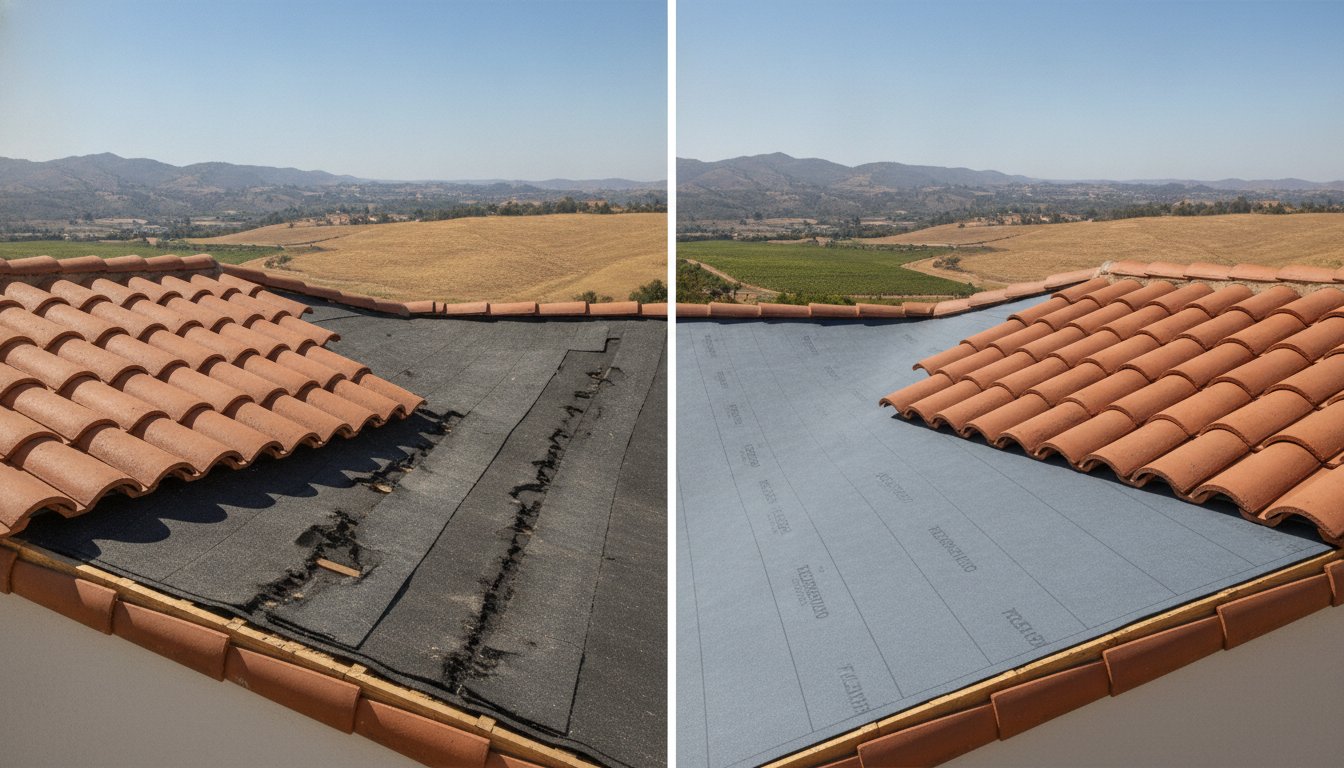
In Southern California, standard tile roof underlayment typically lasts only 20 to 30 years, even though the clay or concrete tiles themselves are often rated for a century. This massive gap in durability is why so many homeowners in the Inland Empire and Orange County face unexpected leaks. When you're dealing with common tile roof problems, the most dangerous issues are almost always the ones you can't see from the curb.
It's frustrating to see water spots on your ceiling when your roof looks perfectly intact. You likely chose tile for its longevity and the Class A fire resistance required in our local wildfire-prone zones. This guide will teach you how to identify hidden failures before they lead to expensive structural damage. We'll explain the mechanics of a watershed system and help you decide if a repair or a professional lift and relay is the best way to secure your home's future and protect your investment.
Key Takeaways
- Understand how a "watershed" system works and why the invisible underlayment is more critical for waterproofing than the tiles themselves.
- Learn why the extreme heat in Southern California causes a "20-year failure cycle" that destroys standard organic felt underlayment.
- Identify common tile roof problems like tile slippage and "walking damage" that can lead to leaks if left unaddressed.
- Discover the "Lift and Relay" process, a cost-effective solution that replaces your roof's waterproofing while reusing your existing tiles.
- Gain insights on how to protect your property value in the Inland Empire and Orange County by choosing local experts with regional experience.
Understanding the Tile Roof "Watershed" System
Many homeowners in the Inland Empire and San Diego choose tile for its classic look and incredible durability. However, there is a fundamental misunderstanding about how these roofs actually work. A tile roof is a "watershed" system, not a "watertight" one. This means the individual pieces are designed to shed water downward from one tile to the next using gravity and the slope of the roof. Unlike flat roof systems like TPO or Torch-down, which create a seamless, sealed membrane, tile roofs are comprised of thousands of separate, overlapping components.
In regions like Riverside and San Bernardino Counties, Roof tiles are preferred primarily for their Class A fire resistance. This is a critical requirement for homes located in Wildland-Urban Interface (WUI) zones. While the tiles can withstand intense heat and last for nearly a century, they aren't meant to be a hermetic seal against moisture. One of the common tile roof problems we see in Lake Elsinore is a homeowner who ignores a leak because their tiles appear to be in perfect condition. In reality, the tiles are only the first layer of a complex, two part defense system.
Why Tiles Are Not Waterproof
Water can and will move under your tiles during heavy Southern California rain events. The system relies on "headlap," which is the specific amount of overlap between the top of one tile and the bottom of the one above it. This overlap creates a natural path for water to flow safely to the gutters. Problems often arise during high wind events, such as our seasonal Santa Ana winds. These powerful winds can drive rain upward and underneath the tile edges, bypassing the watershed design entirely. Without a functional secondary barrier, that wind-driven water goes straight into your attic and framing.
The Role of the Secondary Barrier
The true waterproofing of your home happens beneath the surface. The roofing felt or synthetic underlayment acts as the secondary moisture barrier. It catches any water that manages to get past the tiles and directs it off the roof deck. If this underlayment is cracked, brittle, or improperly installed, your roof will fail even if every tile is perfectly aligned. Addressing these hidden layers is a core part of expert roof leak repair. When the "guts" of the roof fail, the watershed system can no longer protect your property from costly water damage.
The Invisible Threat: Underlayment and Felt Failure
While clay and concrete tiles are designed to last for generations, the material beneath them has a much shorter lifespan. In Southern California, we frequently observe what we call the "20-year failure cycle." Most homes built in the Inland Empire or Orange County during the late 90s and early 2000s are currently reaching a critical point where the original underlayment is simply worn out. This is one of the most frustrating common tile roof problems because the exterior of the home looks perfect, yet the interior ceilings are beginning to show water stains.
The culprit is usually the extreme attic heat. During our long, dry summers, attic temperatures can climb well above 140 degrees. This heat effectively "bakes" organic felt underlayment from the inside out. Over time, the oils in the felt evaporate, leaving behind a material that is brittle and prone to cracking. When a rare heavy rain hits San Bernardino or Riverside, the water that bypasses the tiles finds a secondary barrier that is no longer flexible. It shatters like glass, allowing water to reach the wood deck. You might notice "sliding" paper, where the felt has literally torn away from its fasteners and shifted down the roof slope, leaving the plywood completely exposed.
Organic Felt vs. Synthetic Underlayment
Traditional roofing systems in older Lake Elsinore neighborhoods typically utilize 30lb or 40lb organic felt. This material is made of paper saturated with asphalt. While it was the industry standard for decades, it is highly susceptible to "hydrostatic pressure." This is the pressure exerted by water that is trapped against the surface; on an aged roof, even a small amount of moisture can be forced through the microscopic cracks in the brittle felt. Modern synthetic underlayment, however, uses woven polymers that don't dry out or rot, providing a much more stable foundation for your tile system.
Felt Replacement: The Core of Tile Roof Longevity
Many homeowners fear that a leak means they need a completely new roof. That's a common misconception. If your tiles are in good shape, you don't need to pay for new ones. You simply need a felt replacement. This process involves carefully removing the existing tiles, replacing the failed underlayment, and then reinstalling the original tiles. At UEC Roofing, we evaluate the remaining life of your underlayment by checking for brittleness and fastener integrity. If the felt has reached its limit, a simple roof tune-up is just a temporary patch. To ensure your home is protected for another 20 to 30 years, you should contact a professional roofing contractor to discuss a comprehensive underlayment restoration. Understanding these Common Problems and Failures is the first step toward a permanent solution.

Common Surface Issues: Cracked Tiles and Slippage
The visible portion of your roof acts as a protective shield against the harsh Southern California elements. Even though the underlayment provides the final seal, surface defects are often the catalyst for total system failure. These common tile roof problems usually stem from physical impacts or regional weather patterns that stress the tile's placement and structural integrity. While the tiles themselves are heavy, they are surprisingly fragile when subjected to improper maintenance or extreme conditions.
One unique challenge for homeowners in the Inland Empire and Orange County is the seasonal Santa Ana winds. These high velocity gusts create significant uplift pressure. If tiles aren't properly secured, the wind can lift the leading edge, loosening fasteners and causing tiles to shift. Additionally, "debris dams" frequently form in roof valleys or behind chimneys. Leaves, twigs, and dirt accumulate in these areas, trapping moisture and forcing water to back up under the tiles. This constant moisture creates a stagnant environment that accelerates the decay of the underlying felt and can lead to rot in the roof's wooden structure.
The Problem with Cracked and Broken Tiles
Cracked or broken tiles are often the result of "walking damage." Many residents in Riverside or San Diego Counties don't realize that walking on a tile roof requires specific weight distribution. Heavy foot traffic from DIY repairs or satellite dish installations often leads to hairline fractures. Other common causes include:
- Fallen tree branches during heavy winter storms.
- Thermal expansion caused by extreme temperature swings between day and night.
- Impact from debris during high wind events.
Slipping Tiles and Fastener Fatigue
Tile slippage occurs when gravity wins over aging fasteners. Over decades, the constant expansion and contraction of the roof deck causes nails and clips to loosen or corrode. In coastal San Diego, salt air can accelerate this fastener fatigue. When tiles shift, they leave gaps in the "headlap," allowing rain to hit the underlayment directly. Misaligned rows are a clear signal that your roof needs a professional inspection to ensure it still meets regional wind and safety requirements. If you see tiles that look like they're sliding toward the gutter, it's time to act before a major storm causes internal damage.
Professional Solutions: From Tune-Ups to Lift and Relay
Identifying common tile roof problems is only the first step; the real value lies in choosing a solution that balances cost with long-term protection. We don't believe in a one size fits all approach. A roof that is ten years old requires a different strategy than one approaching its thirtieth year. As a local "straight shooter" in Lake Elsinore, our goal is to recommend the most ethical path forward, whether that is a minor preventative measure or a more comprehensive system restoration.
For newer systems, a Roof Tune-Up is often the best preventative choice. This service focuses on the high-stress areas of your roof, such as valleys, chimney flashings, and penetrations where debris often accumulates. We clear out "debris dams," replace any cracked tiles from walking damage, and ensure all flashings are sealed. It's a proactive way to keep your home's watershed system functioning as intended without the need for major construction.
What is a Tile Roof Lift and Relay?
When the underlying felt has failed but your tiles remain in good condition, a Lift and Relay is the most cost-effective professional solution. This process addresses the "invisible" failures discussed earlier by focusing on the roof's waterproofing layers. We carefully remove and stack your existing clay or concrete tiles, strip away the brittle organic felt, and inspect the wooden deck for rot. After installing a high-quality secondary barrier, we re-install your original tiles. Since clay tiles can last between 50 and 100 years, this process allows you to keep your durable exterior while completely resetting the clock on your roof's lifespan. It's a sustainable way to protect your Inland Empire home while saving significantly on material costs.
When to Choose Roof Rejuvenation
Roof Rejuvenation is an ideal middle ground for homeowners whose roofs show signs of aging but haven't yet suffered major leaks. This treatment involves applying specialized coatings or sealants that restore flexibility to the underlayment and protect the tiles from UV degradation. These treatments can also improve your home's energy efficiency by enhancing the solar reflectance of the roof surface, aligning with Southern California's "cool roof" standards. If your home is in a high-fire risk area in San Diego or Riverside County, rejuvenation can also help maintain the Class A fire resistance of your tile system. If you aren't sure which path is right for your property, you should schedule a professional roofing inspection to get an honest assessment of your roof's current health.
Protecting Your Southern California Home with UEC Roofing
Choosing a partner to manage your roof is a decision that affects your home's safety for decades. While identifying common tile roof problems is essential, resolving them requires a contractor who understands the unique environmental stresses of the Inland Empire and Orange County. At UEC Roofing, we don't just patch leaks. We provide long-term stability through a combination of traditional craftsmanship and modern material science. Our team has completed over 2,000 successful projects across Southern California. This track record represents thousands of families who trust us to protect their most significant investment.
We operate with a "Roofer for Life" philosophy. This means we prioritize ethical recommendations and quality workmanship over high-pressure sales or temporary fixes. We treat every home with the respect it deserves, ensuring that the protective barrier over your head is built to last. Our reputation is our most valuable asset, and we've built it one project at a time by being honest, dependable, and focused on doing the job right the first time.
Our Local Authority in Lake Elsinore and Beyond
Based in Lake Elsinore, we serve a wide region including Temecula, Riverside, and San Bernardino Counties. Our deep roots in the community give us a specialized understanding of local building codes and the specific requirements for different climate zones. Whether your home is facing the salt air of San Diego or the intense heat of the Riverside valleys, our status as a principled, brick-and-mortar business ensures we'll be here to stand by our work. We're familiar with the nuances of Los Angeles and Orange County regulations, making us a reliable guide for any roofing project.
Schedule Your Professional Roof Inspection
The best time to address a roof issue is before the first major storm of the season. During a comprehensive evaluation, a UEC Roofing expert looks for more than just broken tiles. We inspect:
- The integrity of the underlayment and evidence of "sliding" paper.
- Potential "debris dams" in valleys and around chimneys.
- Fastener fatigue and tile securement in high-wind zones.
- Attic ventilation levels to prevent heat-related underlayment damage.
Secure Your Southern California Investment Today
Your tile roof is more than just a decorative feature. It's a complex watershed system where the invisible underlayment does the heavy lifting. Understanding common tile roof problems, from heat-baked organic felt to wind-driven tile slippage, is the first step in avoiding catastrophic water damage. Whether your home needs a targeted repair or a full system restoration, choosing a solution that addresses the root cause will save you thousands in the long run.
UEC Roofing brings specialized expertise in Lift and Relay and Roof Rejuvenation to every project. We've completed over 2,000 successful projects across Southern California, maintaining a stable, brick-and-mortar presence in Lake Elsinore. We take pride in being straight shooters who only recommend the work you truly need to protect your family and property value. Protect your home from hidden leaks and contact UEC Roofing for a professional tile roof inspection today. We look forward to serving as your trusted roofing partner for life.
Frequently Asked Questions
How long does a tile roof typically last in Southern California?
A tile roof’s lifespan depends on whether you are measuring the tiles or the waterproofing layer. While clay and concrete tiles can last between 50 and 100 years, the standard underlayment in our region typically fails after 20 to 30 years. The intense heat in the Inland Empire and Orange County accelerates this deterioration, making the secondary barrier the most critical factor in your roof’s longevity.
Why is my tile roof leaking if I don’t see any broken tiles?
Leaks often occur because the underlayment beneath your tiles has become brittle, cracked, or shifted. Your tiles are designed as a watershed system to direct water away, but they are not a waterproof seal. If the underlying felt has reached the end of its functional life, moisture will bypass the tiles and enter your home through gaps in the secondary barrier that you cannot see from the ground.
Can I walk on my tile roof to clean the gutters?
You should avoid walking on your tiles because the weight of an average person can easily cause hairline fractures or "walking damage." These small cracks are among the most common tile roof problems we encounter. Once a tile is cracked, UV rays hit the underlayment directly and cause it to fail prematurely. It's always safer to use a ladder or hire a professional who understands proper weight distribution.
What is the average cost of a tile roof lift and relay in Riverside?
The cost of a lift and relay depends on several factors, including the square footage of your home, the roof’s pitch, and the condition of the wooden deck underneath. This process is a cost-effective alternative to a full replacement because we reuse your existing clay or concrete tiles. To get an accurate figure for your specific property in Riverside or San Bernardino, you should request a professional estimate that accounts for your roof's unique layout.
How often should I have my tile roof inspected for common problems?
You should have your tile roof inspected by a professional at least once every two years. In Southern California, the best time for an evaluation is in the late summer or early fall before the rainy season begins. Regular inspections help us identify common tile roof problems like debris dams or shifted tiles before they turn into expensive interior water damage or structural rot.
What are the signs that my roofing felt has failed?
The most obvious signs of felt failure are water stains on your ceiling or damp insulation in your attic. You may also notice "sliding" paper, where the underlayment has torn away from its fasteners and moved down the roof slope. If your roof is more than 20 years old and you're dealing with recurring leaks despite having intact tiles, it's a strong indicator that the felt has become too brittle to function.
Can broken tiles be repaired or do they always need replacement?
Broken tiles should always be replaced rather than patched with sealants. Adhesives tend to degrade quickly under the intense UV radiation we experience in San Diego and Los Angeles Counties. Replacing the individual tile is a straightforward process that ensures your watershed system remains intact and your underlayment stays protected from the elements. A proper replacement is the only way to maintain the roof's fire resistance and structural integrity.
Is a tile roof rejuvenation treatment worth the investment?
Rejuvenation is a smart investment for roofs that are mid-way through their lifespan and showing early signs of wear. These treatments help restore flexibility to the roofing components and can improve your home's energy efficiency by enhancing solar reflectance. It is a proactive measure that helps you avoid the higher costs of a full lift and relay while ensuring your home stays compliant with local "cool roof" standards.