
Cleaning and maintaining a tile roof in Orange: what it costs
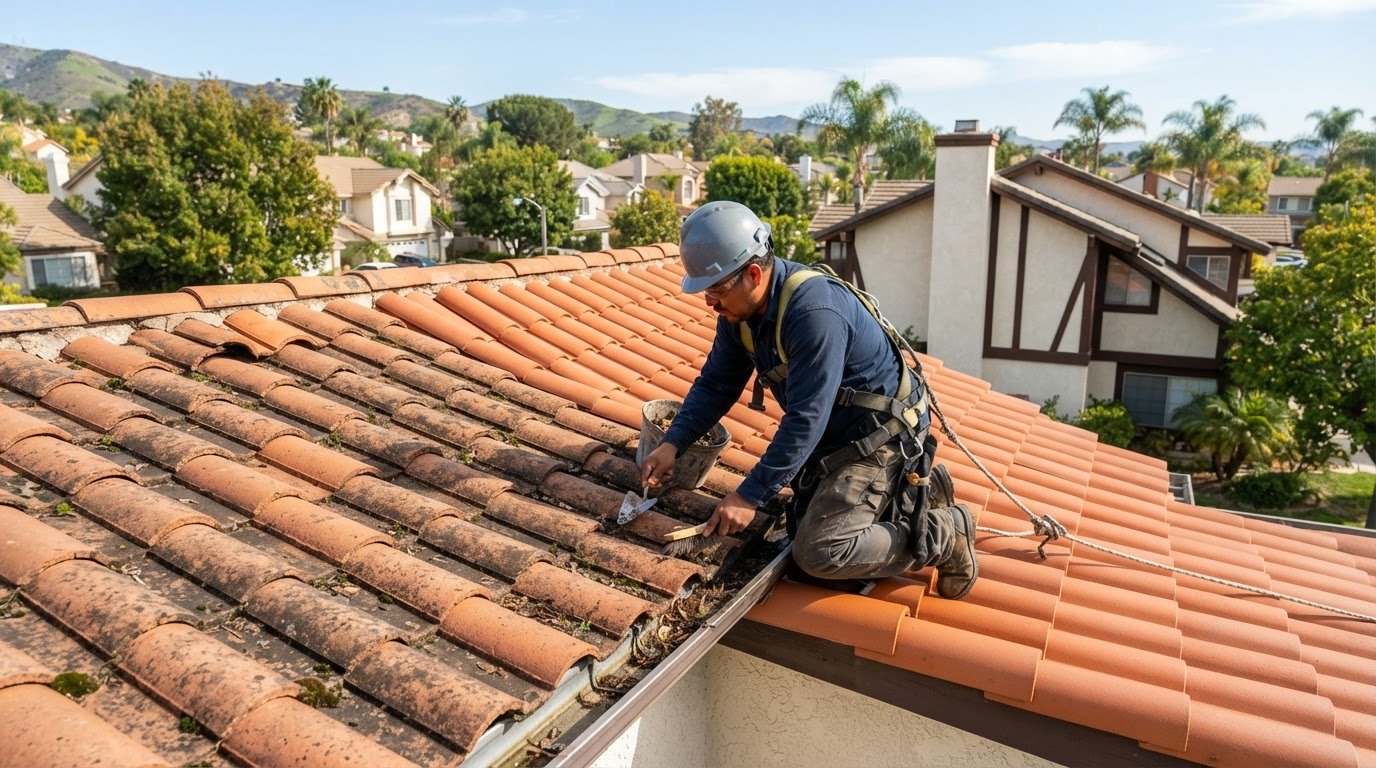
The cost of cleaning and maintaining a tile roof in Orange depends on the roof’s size, access, buildup, tile condition, and the work required; a price is provided after a quote request. For clay tile roofs, professional cleaning is recommended every 3-5 years. Cleaning isn’t always the safest first move: the right method matters as much as the result.
When cleaning and maintaining a tile roof in Orange, dark stains, algae, or moss may be the first things you notice. But moss can crack tiles and retain moisture, while dirt and debris can obstruct drainage. Aggressive washing can cause damage, so cleaning should help protect the roof, not just brighten its appearance.
This guide explains why routine care matters, how to address algae, mildew, and moss without damaging tile, and what affects cleaning and product costs. You’ll also learn which maintenance tasks protect drainage, how to spot repair needs, and when professional help is the safer choice for a tile roof in Orange.
Key Takeaways
- Avoid high-pressure washing, which can force water beneath roof layers or crack and dislodge tiles.
- Choose a cleaner compatible with the tile material, and use the most diluted solution possible when cleaning concrete tiles.
- Algae and mildew may look concerning, but moss deserves particular attention because it can damage tiles.
- Plan to inspect a residential roof at least once per year, and clean gutters at least twice per year to help maintain drainage.
- Roof access and tile fragility make safe cleaning a practical reason to consider professional help.
1. Avoiding pressure washing
A pressure washer can make an Orange tile roof look clean quickly, but a forceful spray can push water beneath tiles and roof layers. Trapped water may lead to leaks. On clay roofs, high pressure can also loosen mortar, leaving tiles more vulnerable to movement. A cracked or displaced tile can compromise the roof’s ability to shed water, even when the surface looks freshly washed.
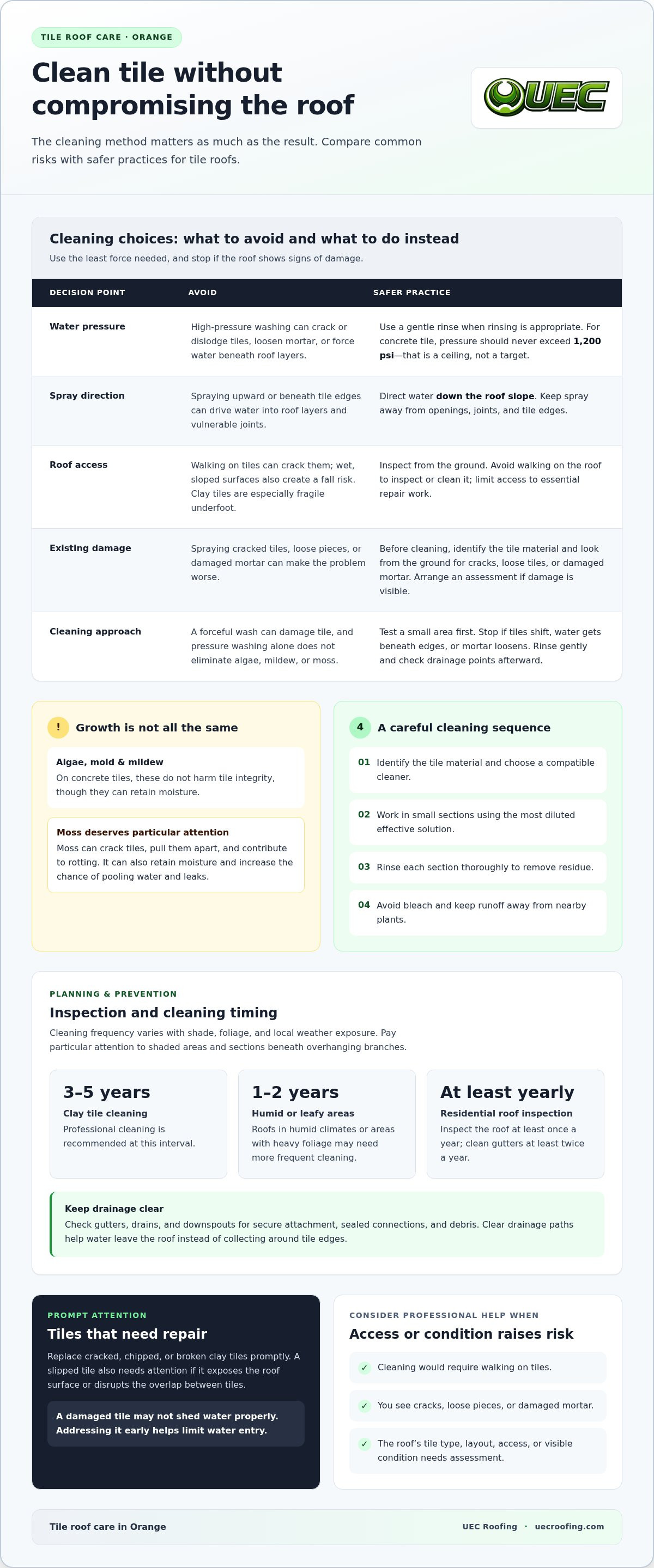
“Low pressure” doesn’t mean every washing method is safe. High-pressure washing can crack or dislodge tiles, while low-pressure cleaning is preferred when rinsing is appropriate. For concrete tile, water pressure should never exceed 1,200 pounds per square inch (psi). That ceiling is not a target: use the least force needed, and avoid directing spray beneath tile edges or into joints.
Before cleaning, identify whether the roof has concrete or clay tiles. From the ground, look for visible cracks, loose pieces, or damaged mortar. Spraying already damaged tiles can make the problem worse. Don’t walk on the roof to inspect or clean it: clay tiles are fragile underfoot, and stepping on them can break them. Roof access also creates a fall risk, especially on wet surfaces.
- Use a gentle rinse rather than a forceful jet. Direct water down the roof slope, not upward beneath tile edges.
- Test the cleaning approach on a small area first. Stop if tiles shift, water enters under the edges, or mortar appears to loosen.
- Keep spray away from openings and vulnerable roof joints. A strong stream can drive water into places ordinary rainfall may not reach.
- After rinsing, look from the ground for displaced tiles and check drainage points for debris.
Cleaning is only one part of protecting a roof. The Internal Revenue Service advises inspectors to check gutters, drains, and downspouts for secure attachment, sealed connections, and debris. Clear drainage paths help water leave the roof instead of collecting around tile edges. In Orange, inspect these areas after cleaning and storms, without climbing onto the tiles.
If you’re deciding whether to pressure wash a tile roof, follow a simple rule: don’t use high pressure. A controlled, low-pressure rinse may suit a sound roof, but take care around joints and edges. If cleaning requires walking on tiles, or if you see cracks or loose mortar, stop and arrange a roofing assessment before water or foot traffic causes further damage.
2. Cleaning roof algae, mildew, and moss
Dark streaks on Orange tile roofs may come from algae, mildew, or moss, but they don’t pose the same risk. Algae, mold, and mildew on concrete tiles don’t harm the tiles’ integrity. Moss is more concerning: it can crack tiles, pull them apart, and contribute to rotting. Moss and algae can also retain moisture, increasing the chance of pooling water and leaks.
Cleaning frequency depends on shade, foliage, and local weather exposure. Professional cleaning of clay tile roofs is recommended every 3-5 years. Roofs in humid climates or areas with heavy foliage may need cleaning every 1-2 years, while roofs in drier regions may need thorough cleaning every 3 years. In Orange, inspect shaded roof sections and areas beneath overhanging branches for recurring growth.
Choose a cleaner that is compatible with the tile material. For concrete tile, use a concrete-compatible product and the most diluted solution possible. Clean a small section at a time, then rinse thoroughly to remove residue. Avoid bleach, which can damage roof surfaces and nearby vegetation. Biodegradable, non-toxic products are a more suitable option around plants.
Replace cracked, chipped, or broken clay tiles promptly because they can’t shed water properly. A slipped tile also needs prompt attention if it exposes the roof surface or disrupts the overlap between tiles. Addressing damage early helps limit water entry.
Can homeowners walk on a tile roof? It’s best to avoid it: foot traffic can crack tiles, and wet surfaces increase the risk of slipping. Clay tiles are especially fragile underfoot, so limit roof access to essential repair work.
To remove surface growth while protecting tile and nearby landscaping, follow a careful cleaning sequence:
- Identify the tile material and select a compatible cleaner.
- Work in small sections, using the product at its most diluted effective concentration.
- Rinse each section thoroughly to remove remaining solution.
- Keep runoff from contacting nearby plants, and avoid bleach-based products.
Preventive anti-moss and algae coatings can help keep tile cleaner for longer, particularly in humid or frequently rainy areas. They don’t replace inspections or tile repairs. Check roof areas beneath trees after wet weather, since shade and foliage can encourage recurring buildup.
Pressure washing alone doesn’t eliminate mold, algae, or moss, so stains may return. Material-safe cleaning, prompt tile replacement, and periodic inspections help prevent growth from hiding roof damage.
3. Benefits of hiring a professional
A professional can assess more than visible dirt. Before cleaning and maintaining a tile roof in Orange, a roofing specialist can review the tile type, roof layout, access points, and visible condition. This helps shape a cleaning plan for the actual roof, rather than applying the same approach to every slope or tile surface.
Professional tile-roof cleaning includes an initial assessment, removal of surface growth and debris using a method suited to the material, and a final review of visible roof conditions. This review can document changes, identify areas that may need separate repairs, and give the homeowner a clearer record of the roof’s condition after cleaning.
Safety is another reason to leave roof access to trained workers. Wet surfaces and sloped roofs create fall hazards, while careless foot traffic can damage tiles. The National Institute for Occupational Safety and Health (NIOSH) identifies slips and falls, burns, and falls through roof openings as hazards in roofing work. Professional workers should use fall protection and move across tile in ways that limit damage.
How can you find a licensed, insured tile-roof cleaning contractor in Orange, CA? Choose a licensed, bonded, and insured roofing contractor with tile-roof experience. When arranging cleaning and maintaining a tile roof in Orange, tile-specific experience matters because the cleaning plan should account for the roof’s material and condition.
A professional assessment can also clarify the work’s scope. A roof with difficult access, for example, may need a different work plan from a broad, unobstructed slope. Separating cleaning from repairs helps homeowners understand which tasks address appearance and which protect the roof’s function.
- Review the roof’s tile material, layout, and access before work begins.
- Agree on which roof areas are included in the cleaning scope.
- Document visible conditions before and after the work.
- Keep cleaning and repair needs distinct in the maintenance plan.
For homeowners considering cleaning and maintaining an Orange tile roof, professional help can be especially useful when access is difficult or the roof’s condition is uncertain. A careful assessment, clearly defined scope, and safe work practices support informed decisions without treating every roof as identical.
A professional visit can also help track roof conditions over time. Routine inspections can identify cracked tiles or moss buildup before these issues become significant problems. Ask for visible findings to be noted in the assessment, then use that record to decide whether cleaning addresses the immediate concern or separate repair work is needed. A roofing professional should move across tile in a way that prevents damage, making careful movement part of the work plan.
Walking on a roof can be difficult and dangerous, and water increases those risks. Roof cleaning is not just a surface task: access and wet conditions call for careful handling by workers familiar with tile roofs. Homeowners insurance policies almost always require annual roof inspection or maintenance for roof repairs or damage-related replacement coverage. Keep inspection and maintenance needs in view alongside the cleaning scope, while distinguishing cleaning from repair work.
4. Product price and coverage
When budgeting for tile-roof cleaning, separate product costs from labor and any repair work. Product labels usually state the area a container can treat. Compare that coverage with the roof area being cleaned, not the home’s floor area. Slopes, ridges, and valleys add surface beyond the building footprint.
Start with the product label’s coverage information and the area of the roof section in scope. If only one slope needs treatment, estimate that surface instead of buying supplies for the entire roof. For a whole-roof job, account for each slope and roof feature included. The package size and stated coverage help estimate how many containers the task may require.
Coverage figures are planning guidance, not a guarantee that each container will treat the same area on every roof. Tile profile, surface condition, and application method can affect how much product is used. A roof with many hips, valleys, or other transitions may require more careful application than a broad, uninterrupted slope. Consider these details when estimating product needs.
The cost of professional cleaning depends on the roof and the work required. Factors include roof area, access, tile condition, and the extent of buildup. A quote should define the scope, including which areas are included and whether the work covers cleaning alone or other visible roof needs.
- Identify the roof sections included in the cleaning plan.
- Use the label’s coverage information to estimate product quantity.
- Account for roof features that increase the treated surface.
- Keep product costs, labor, and repair work separate in your budget.
Coverage also affects how much product remains after the job. Treating one roof slope may leave unused product, while a larger scope may require additional containers. Store or dispose of leftover product according to its label. Don’t assume an opened container will retain its condition indefinitely; follow the label’s storage guidance.
In Orange, a clear estimate starts with a defined work area and an assessment of the roof’s actual condition. Stated product coverage helps with supply planning, while access and scope shape labor needs. Keeping these factors separate makes it easier to compare estimates and understand what the cleaning budget includes.
5. Why tile roof cleaning matters
Cleaning is useful when it supports the roof’s function, not just its appearance. Dirt and debris can obstruct drainage and add stress to roofing materials. In Orange, observe how water and debris move across the roof to distinguish cosmetic concerns from maintenance issues that need attention.
Tile roofs are a long-term investment, and maintenance helps preserve their serviceable condition. Clay tile roofs can last 50 years or more when properly maintained. The California mission system also demonstrates that tile roofs can last hundreds of years with adequate repairs and maintenance. These examples make the practical takeaway clear: care for the roof over time, rather than waiting for visible problems to grow.
How often should a tile roof be cleaned and maintained in Orange, California? Residential roofs should be inspected at least once per year. Professional cleaning of clay tile roofs is recommended every 3-5 years; shade, foliage, and local weather can affect how often cleaning is needed.
For yearly upkeep, record visible changes from the ground, such as debris collecting in a valley, a new stain, or a tile that appears out of line. Note the date and location on the roof. This record helps you recognize recurring concerns and describe them accurately during a roof assessment.
What inspections and maintenance should be done on a tile roof each year? Review visible roof areas and drainage paths for debris, changes in tile alignment, and signs of water entry. Trim overhanging branches when they contribute to roof debris, and note changes after significant weather so they can be assessed.
Orange is part of a wider Southern California service area that includes Lake Elsinore and the Inland Empire, as well as Riverside, Orange, and San Diego Counties. Across these communities, keeping a clear record of roof condition helps homeowners make informed decisions about maintenance and protect the home beneath the tiles.
Do Orange County or Orange city rules require permits for tile roof repairs or cleaning? Permit requirements depend on local rules, not the cleaning method alone. Cleaning guidance doesn’t determine whether a permit applies to a specific repair.
When a roof concern moves beyond routine upkeep, the next step is addressing the condition itself. A roof repair can address damaged areas that cleaning cannot resolve. For help with a roof concern in Orange, contact UEC Roofing about roof repair.
UEC Roofing: leak repair
UEC Roofing provides leak repair and roof repair when damaged or displaced tiles leave a roof vulnerable to water entry. If you notice a ceiling stain, active leak, or broken tile after a storm, address the roof issue before cleaning the surface.
A roof tune-up can address maintenance needs before they develop into larger concerns. UEC Roofing’s roofing services help homeowners assess the roof’s condition and decide whether repair or routine upkeep is needed. Cleaning removes buildup; repairs restore damaged areas and help maintain the roof’s ability to shed water.
For tile-roof concerns in Orange, contact UEC Roofing to discuss the repairs or maintenance your roof needs.
Make roof care part of your home maintenance plan
A practical plan for cleaning and maintaining a tile roof in Orange starts with a simple roof-care record. From the ground, note visible changes such as new stains, debris collecting in one area, or an indoor ceiling mark. Add the date and a brief description. These notes help you spot patterns and explain concerns clearly during a roof assessment.
Use each observation to decide what needs attention first. A cosmetic stain may call for cleaning, while a ceiling mark or visible tile damage may point to a repair need. Keeping these needs distinct helps protect the roof and the home beneath it, rather than treating every concern as a cleaning problem.
UEC Roofing offers roof tune ups and leak repair for homeowners who need help addressing maintenance concerns or signs of water entry. For guidance on the next step for your tile roof, contact UEC Roofing about your roof. A clear record and a considered plan can make caring for your roof feel manageable.
Frequently Asked Questions
How can you safely clean a concrete or clay tile roof?
Choose a cleaning approach suited to the tile material, and avoid walking on the roof. For concrete tiles, select a compatible cleaner and follow its label directions. For clay tiles, take particular care around fragile pieces and mortar. If you see a cracked tile, loose section, or hard-to-reach buildup, stop rather than applying more force. A roof inspection can help distinguish cleaning needs from repairs.
What cleaning methods and chemicals can damage roof tiles or underlayment?
High-pressure spray can crack or dislodge tiles and force water beneath the roof covering. Bleach can damage roof surfaces and nearby vegetation. On concrete tile, an incompatible cleaner may affect the tile’s pH or etch its surface. Avoid strong mixtures and abrasive force. Don’t use concentrated chemicals or aim a forceful spray at tile joints just to remove a stubborn stain.
How do you remove moss, algae, and lichen from a tile roof?
Start by identifying the tile type and where growth is located, then use a compatible cleaner according to its label. Treat small sections and rinse thoroughly to remove residue. Moss deserves particular attention because it can damage tiles and retain moisture. Algae and mildew on concrete tiles may be mainly an appearance concern. Take a cautious, tile-safe approach to lichen, and avoid scraping or forceful washing that could harm the roof.
How does soft washing compare with pressure washing for tile roofs?
Soft washing generally means applying a cleaning solution and rinsing at low pressure, while pressure washing uses a forceful water stream. The label “soft wash” alone doesn’t mean a method is safe for every tile roof. High pressure can crack tiles or drive water beneath them. Prioritize material compatibility, controlled application, and gentle rinsing instead of choosing a method by name alone.