
Best Roofing Materials for Southern California: 2026 Guide
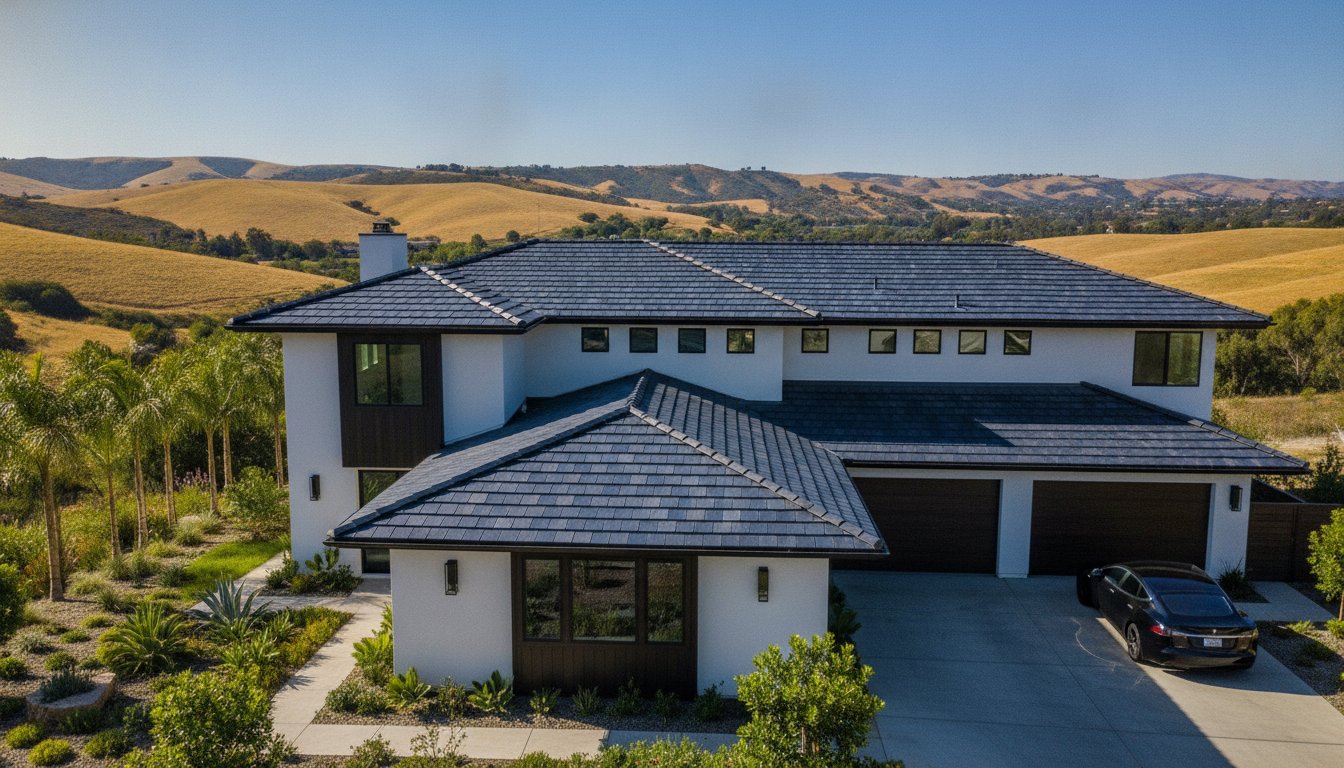
What if your roof was doing more than just keeping the rain out? In our region, a roof must act as a thermal shield and a fire barrier to truly protect your investment. Choosing the best roofing materials for southern california homes in 2026 means looking beyond aesthetics to meet strict new Title 24 energy standards and updated wildfire safety regulations. You likely already know that the intense UV exposure in the Inland Empire and San Diego County can bake standard materials until they are brittle and fail long before their time.
We understand the frustration of soaring cooling costs and the anxiety surrounding hillside fire risks. This guide will show you how to select materials that lower your energy bills through cool roof technology, meet the latest Class A fire requirements, and provide a 30 to 50 year lifespan. We will examine the top performing systems, from advanced clay tiles to durable composite shingles, specifically vetted for our unique local climate by our team in Lake Elsinore. Our goal is to ensure your home remains a safe, energy-efficient sanctuary for decades to come.
Key Takeaways
- Learn how the 2026 Title 24 updates and new wildfire safety codes impact your material choices in Riverside and San Diego Counties.
- Compare the performance and aesthetic appeal of the best roofing materials for southern california homes, from traditional clay tile to modern stone-coated steel.
- Discover how "cool roof" technology lowers attic temperatures and reduces energy bills during the intense summer heat of the Inland Empire.
- Understand why specialized maintenance like a "Lift and Relay" is essential for protecting your home's structural integrity and maximizing roof longevity.
- Gain clarity on when to choose roof rejuvenation over a full replacement to protect your family and your property value efficiently.
Why Southern California’s Climate Dictates Your Roofing Choice
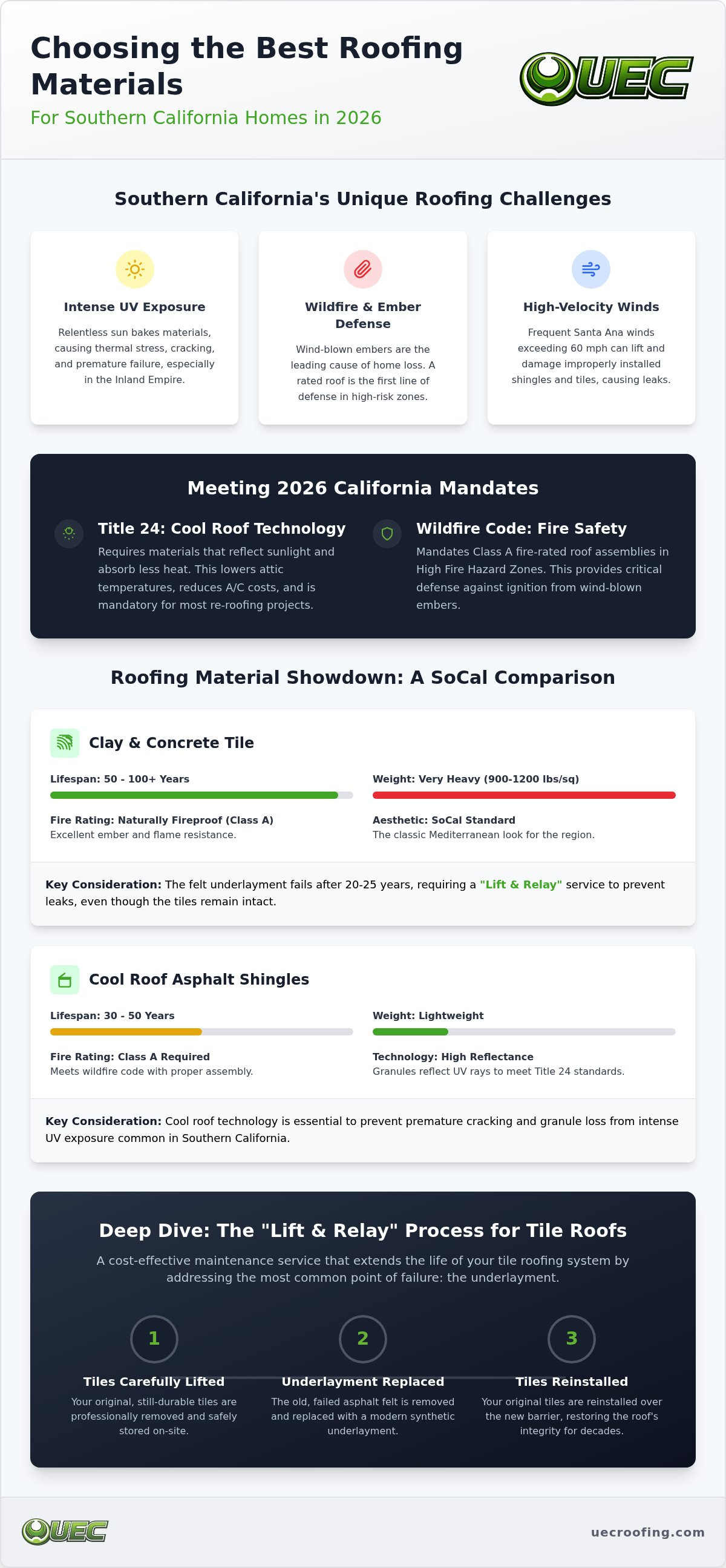
Selecting the best roofing materials for southern california homes requires a deep understanding of our regional environment. A roof designed for the mild summers or heavy snow of other states will quickly fail under the relentless sun of the Inland Empire or the coastal salt air of San Diego. In our region, three specific challenges dictate the lifespan of your roof: extreme UV radiation, persistent wildfire risks, and high-velocity Santa Ana winds. These winds can frequently exceed 60 miles per hour, putting immense pressure on every shingle and tile.
Since January 1, 2026, the updated Title 24, Part 6 standards have made energy efficiency a legal requirement for most re-roofing projects. This code focuses heavily on Cool Roof Technology, which utilizes materials designed to reflect more sunlight and absorb less heat than standard roofing. For homeowners in Riverside and Orange Counties, this technology is no longer just a luxury. It's a mandatory step in reducing the thermal load on your home and staying compliant with state law when replacing more than 50% of your roof.
Intense UV Exposure and Thermal Expansion
The Inland Empire frequently sees summer temperatures climb past 100 degrees. This heat causes roofing materials to expand during the day and contract rapidly at night. Over time, this thermal cycling creates stress fractures in brittle materials. Intense UV radiation also bakes the essential oils out of standard asphalt shingles, leading to premature granule loss and cracking. To combat this, we emphasize proper attic ventilation and high-reflectance materials that keep surface temperatures significantly lower, protecting the underlying structure from heat damage.
Wildfire Defense and Class A Fire Ratings
Fire safety is a primary concern for communities in the foothills of Los Angeles and San Bernardino Counties. Under the 2026 California Wildland-Urban Interface Code, homes in High Fire Hazard Severity Zones must utilize Class A fire-rated roof assemblies. While direct flames are a major threat, wind-blown embers are actually the leading cause of home loss during a wildfire. The best roofing materials for southern california homes are those that prevent these embers from igniting the roof deck, providing a critical layer of defense for your family and property value.
Clay and Concrete Tile: The Southern California Aesthetic Standard
Walk through any neighborhood in San Diego or Temecula, and you'll see why tile is considered the gold standard for regional architecture. Beyond the classic Mediterranean aesthetic, tile offers exceptional performance in heat management. These systems utilize thermal mass to absorb heat during the day and release it slowly at night, preventing the attic from reaching extreme temperatures. According to the EPA on Cool Roofs, managing this heat transfer is vital for reducing the urban heat island effect in densely populated areas like Orange County.
When choosing between clay and concrete, homeowners must weigh longevity against budget. Clay tiles are naturally colorfast and can last nearly a century, but they are more fragile and expensive. Concrete tiles offer a wider range of styles and are incredibly durable against impact, though their color may fade slightly over decades of intense UV exposure. Both are among the best roofing materials for southern california homes because they are naturally fireproof and rot-resistant.
The Essential 'Lift and Relay' Maintenance Service
Many homeowners believe a tile roof is a "set it and forget it" solution. This is a common misconception. While the tiles themselves might last 50 years, the asphalt-saturated felt underlayment beneath them typically fails after 20 to 25 years. If you notice slipped tiles or small leaks, you might not need a new roof. Instead, a lift and relay roofing service allows us to remove your existing tiles, replace the failed underlayment with modern synthetic materials, and reinstall the original tiles. This process saves thousands of dollars while extending the life of your roofing system.
Weight Considerations and Structural Support
Tile is significantly heavier than asphalt shingles. A standard concrete tile roof can weigh between 900 and 1,200 pounds per square. If you are transitioning from shingles to tile in an older Riverside home, a structural assessment is mandatory to ensure your rafters can handle the load. For homes that cannot support traditional tile, we often recommend lightweight alternatives or specialized tile replacement for specific damaged sections to keep the system functional without overstressing the frame. Our team in Lake Elsinore can help you determine if your current structure is ready for a tile upgrade.
Asphalt Shingles and Modern Cool Roof Technology
While tile is iconic in our region, asphalt shingles remain the most popular choice for homeowners in Corona and Anaheim. Modern composite shingles have evolved significantly from the basic products used decades ago. Today’s architectural shingles are engineered to be one of the best roofing materials for southern california homes because they balance affordability with high performance. They provide a layered, dimensional look that mimics more expensive materials while offering a reliable defense against the elements.
The real breakthrough in shingle technology is the development of highly reflective granules. These "cool shingles" are designed to bounce solar energy back into the atmosphere rather than absorbing it into your attic. This technology is a cornerstone of meeting California Title 24 roofing requirements. By keeping the roof surface cooler, these shingles reduce the strain on your air conditioning system and help prevent the material from becoming brittle due to our intense regional heat. You can expect a well-maintained architectural shingle roof to protect your home for 25 to 30 years.
Title 24 Compliance for Shingle Roofs
In 2026, compliance depends heavily on the Solar Reflectance Index (SRI). Selecting a shingle with a high SRI rating can lower your cooling costs by as much as 15% during a typical Riverside summer. It isn't just about the material; it's about the installation quality. Our team ensures every shingle is fastened to withstand the high-pressure Santa Ana winds that frequently sweep through the Inland Empire. Proper nailing patterns and high-quality sealants are non-negotiable for a roof intended to last for decades.
When to Choose Shingles Over Tile
There are practical reasons to choose shingles over heavier alternatives. Many older homes in Southern California weren't built to support the massive weight of concrete tiles. If your home has structural limitations, shingles provide a lightweight solution that doesn't require expensive framing reinforcements. They also allow for more flexibility when planning your roof replacement cost, offering a range of price points to fit different budgets. Whether you own a modern farmhouse or a traditional ranch-style home, the aesthetic versatility of modern shingles ensures a clean, professional finish that enhances your property value.
Metal and Synthetic Roofing for Maximum Longevity
Hillside communities like Fallbrook and Murrieta face unique environmental pressures that make material choice a matter of survival for the structure. Homeowners here are increasingly turning to metal as a primary defense against seasonal wildfires. Metal systems are recognized as some of the best roofing materials for southern california homes because they provide an interlocking barrier that is virtually impenetrable by wind-blown embers. Whether you prefer the sleek, modern look of standing seam or the traditional appearance of stone-coated steel, these materials offer a lifespan that often exceeds 50 years. They are also exceptionally sustainable, as most metal roofs contain significant recycled content and remain fully recyclable at the end of their service life.
Standing Seam Metal: The Ultimate Fire Defense
Standing seam is the gold standard for fire-prone regions in Riverside and San Diego Counties. It features vertical panels with concealed fasteners, creating a smooth surface that sheds debris and resists high-velocity Santa Ana winds. Contrary to popular myths, modern metal roofs are not noisy during rain when installed with proper underlayment and insulation. They don't attract lightning more than other materials, and they won't interfere with your cell service. Their high solar reflectance also helps them easily meet 2026 Title 24 standards, keeping homes in the Inland Empire significantly cooler during peak summer months.
For homeowners seeking the highest quality metal components for their exterior, national suppliers like Copper Gutter Supply Company provide expert guidance on selecting the right gutter profile to protect your investment.
Synthetic Materials for Historic and Custom Homes
For those who love the look of natural wood or heavy stone but live in "Very High Fire Hazard Severity Zones," synthetic materials are a game changer. Synthetic cedar shakes provide the rustic warmth of wood without the extreme fire liability that led to the recent prohibition of natural wood shingles in WUI zones. Composite slate offers the luxury aesthetic of traditional stone at a fraction of the weight, making it ideal for custom homes in San Bernardino and Los Angeles Counties that may not have the structural framing for heavy slate. These materials are rigorously tested to withstand SoCal's intense heat and UV cycles without warping, fading, or cracking. They offer a sophisticated alternative that maintains the architectural integrity of historic Riverside neighborhoods while providing modern safety.
If you are ready to invest in a roof that offers maximum longevity and protection, contact our team to speak with a trusted roofing contractor about your project.
Maintenance vs. Replacement: Protecting Your SoCal Investment
Even when you invest in the best roofing materials for southern california homes, the work doesn't end at installation. A roof is a critical asset that requires a strategic approach to maintenance. At UEC Roofing, we operate on the philosophy of being your "roofer for life." This means we prioritize preventative care and honest assessments over high-pressure replacement sales. Our goal is to ensure your investment protects your family for the full duration of its expected lifespan, whether you live in the Inland Empire or coastal San Diego. For those looking to address other maintenance needs like sunken walkways, RiseLock Concrete Lifting offers specialized polyurethane leveling to restore your home's concrete surfaces.
Many homeowners struggle to decide on roof rejuvenation vs replacement when they notice signs of aging. A full replacement is a significant financial commitment. In many cases, specialized maintenance can delay that cost for years. A regular roof tune up is the most effective way to identify small vulnerabilities before they turn into catastrophic leaks during a rare Southern California rainstorm. Choosing a local expert who understands regional wind patterns and heat cycles is essential for long-term support.
Extending Roof Lifespan with Rejuvenation
If your asphalt shingles are starting to lose their granules but are otherwise structurally sound, rejuvenation might be the answer. We use soy-based rejuvenation treatments that penetrate deep into the shingles to restore their original flexibility. This process replaces the essential oils baked out by the intense sun in Los Angeles and San Bernardino Counties. By choosing rejuvenation, you can save thousands of dollars and delay a full replacement by 5 to 10 years. It's also a responsible choice for the environment. It keeps usable roofing materials out of our local landfills while maintaining your home's protection.
The UEC Roofing Difference: Local Authority and Quality
Our reputation is built on a track record of over 2,000 successful projects throughout Southern California. We aren't a "storm chaser" company that disappears after the job is done. Our physical office in Lake Elsinore serves as a permanent anchor for our clients. We take immense pride in our craftsmanship, whether we're performing a complex tile lift and relay or an expert roof leak repair Riverside CA. This local presence ensures that we are always available to provide the stability and reliability your home deserves. We treat every project with the weight and respect it requires to protect your property value for decades.
Securing Your Southern California Home for the Future
Your roof is the most important defense for your home and family. Choosing the best roofing materials for southern california homes involves more than just picking a color. It requires a strategic focus on fire resistance, thermal management, and long-term durability. We've explored how modern cool roof technology and specialized tile systems allow you to meet the strict 2026 Title 24 standards while significantly lowering your summer cooling costs. In the Inland Empire and San Diego County, a properly selected and maintained roof is a vital investment in your property's future.
UEC Roofing brings the reliability of a local expert to every project we undertake. With over 2,000 successful projects completed and a permanent brick-and-mortar office in Lake Elsinore, we're a stable partner you can depend on. Our team specializes in high-value services like the tile lift and relay, ensuring your home remains protected without unnecessary expenses. We take immense pride in our craftsmanship and our commitment to being your "roofer for life." Schedule your professional roof inspection with UEC Roofing today. We look forward to helping you protect your home for decades to come.
Frequently Asked Questions
What is the most fire-resistant roofing material for Southern California?
Metal, clay tile, and concrete tile systems are the most fire-resistant options available, carrying the critical Class A fire rating. Under the 2026 California Wildland-Urban Interface Code, these materials are essential for homes in High Fire Hazard Severity Zones. They prevent wind-blown embers from igniting the structure, which is the most common cause of home loss during a wildfire.
Do I have to follow Title 24 requirements if I am only repairing my roof?
Compliance with Title 24 energy standards is generally triggered only when you replace more than 50% of the roof's surface area within a one-year period. Minor leak repairs or a simple roof tune up typically don't require these upgrades. However, if your repair is extensive, our team in Lake Elsinore ensures that the new materials meet all current reflectance and emittance codes for our region.
Is metal roofing too hot for the Southern California sun?
Modern metal roofing is actually one of the most energy-efficient choices for our climate. These systems use specialized reflective coatings that bounce solar energy away from the home rather than absorbing it. When combined with proper attic ventilation, a metal roof can keep your home cooler than traditional dark asphalt shingles, helping you manage high summer cooling costs.
How long does a concrete tile roof actually last in the Inland Empire?
A concrete tile roof can easily protect a home for 50 years or more with proper maintenance. While the tiles themselves are incredibly durable, the felt underlayment beneath them typically reaches the end of its life after 20 to 25 years. This is why we specialize in the "Lift and Relay" process to refresh the underlying system without the cost of a full replacement.
Are asphalt shingles a bad choice for hot climates?
High-quality asphalt shingles remain a durable and cost-effective choice for hot climates when they feature "cool roof" technology. These are among the best roofing materials for southern california homes because they use solar-reflective granules to prevent UV degradation. They offer a reliable balance of performance and aesthetic versatility for neighborhoods across the Inland Empire.
What is a 'Cool Roof' and why does California require it?
A "Cool Roof" is a system designed to reflect more sunlight and absorb less heat than a standard roof. California requires these materials under Title 24 to reduce the "urban heat island" effect and lower statewide energy consumption. These roofs stay significantly cooler in the sun, which extends the life of the roofing material and reduces the load on your air conditioner.
Can I install a new roof over my old one to save money?
Installing a new roof over an existing one is generally discouraged in Southern California for several reasons. The added weight can exceed the structural capacity of your home's framing, and California fire codes often require the removal of old materials to ensure a Class A fire rating. Starting with a clean deck is the only way to guarantee a long-term, leak-free installation.
How much does the average roof replacement cost in San Diego County?
The total investment for a new roof in San Diego County varies based on material selection and the structural condition of your home. While initial estimates depend on square footage, factors like the 2026 fire safety regulations and Title 24 energy requirements also impact the final scope. We provide thorough inspections to help you understand the specific requirements and investment needed for your property.