
7 Critical Signs You Need Roofing Felt Replacement: A Southern California Homeowner’s Guide
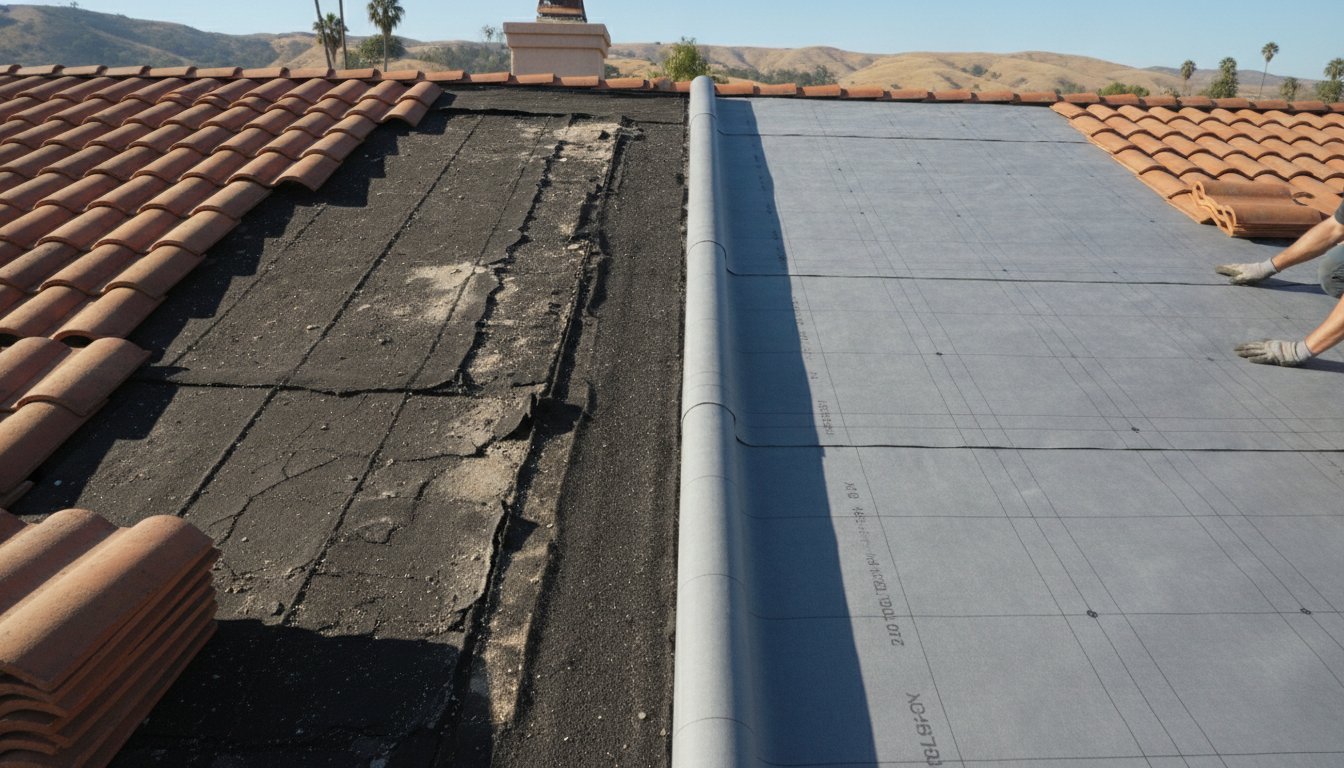
Your "lifetime" tile roof is likely failing from the inside out, even if every single tile looks perfect from the curb. In Southern California, those beautiful clay or concrete tiles are mostly a decorative shield. The real waterproof barrier is the felt underlayment hidden beneath them, and it often wears out decades before the tiles do. This reality often leads to confusion for homeowners in Riverside and San Diego who notice ceiling stains despite having a "permanent" roof. Learning the specific signs you need roofing felt replacement is the most effective way to prevent structural damage before the next storm hits the Inland Empire.
We know how stressful it feels to face potential repairs when you expected your roof to last a lifetime. You deserve a transparent partner who focuses on education rather than sales tactics. This article explores the critical role of underlayment and helps you determine if a "lift and relay" is the right choice for your home. We will provide the professional insight you need to protect your investment and find a trusted contractor in Lake Elsinore who prioritizes quality workmanship and long term stability.
Key Takeaways
- Understand that your roof tiles are primarily decorative, while the underlying felt serves as the critical waterproof membrane for your home.
- Learn to identify the seven primary signs you need roofing felt replacement, including interior water stains and visible sagging on the roof surface.
- Discover the economic benefits of a "Lift and Relay" service, which allows you to reuse durable clay or concrete tiles while installing a fresh underlayment.
- Prepare for the Southern California rainy season by scheduling a preventative roof tune-up to catch minor felt issues before they become costly leaks.
- Recognize why choosing a local expert with a brick-and-mortar presence in the Inland Empire ensures your roof meets specific regional building standards.
Understanding the Role of Roofing Felt in Southern California Homes
In the Inland Empire, your roof is more than just a collection of tiles or shingles. It's a complex system designed to withstand intense heat and seasonal rains. At the heart of this system is the underlayment. Roofing felt, also known as tar paper, serves as the critical waterproof membrane installed directly onto the roof deck. While your primary roofing material handles the bulk of the elements, the felt acts as a secondary barrier. This layer is essential for Southern California tile roofing systems because tiles are not naturally water-tight. They are water-shedding. Any moisture that slips through must be managed by the felt to prevent structural rot.
Thermal realities in Riverside and San Bernardino Counties create a harsh environment for traditional materials. During the summer, attic temperatures can soar, causing organic asphalt felt to lose its volatile oils and become brittle. Many homeowners begin looking for signs you need roofing felt replacement once they realize their organic felt has reached the end of its reliable lifespan. Modern synthetic options offer significantly better durability in 2026, yet many older homes in Lake Elsinore still rely on outdated organic layers that are prone to failure after two decades of exposure.
The "Oven Effect": How Heat Degrades SoCal Roofs
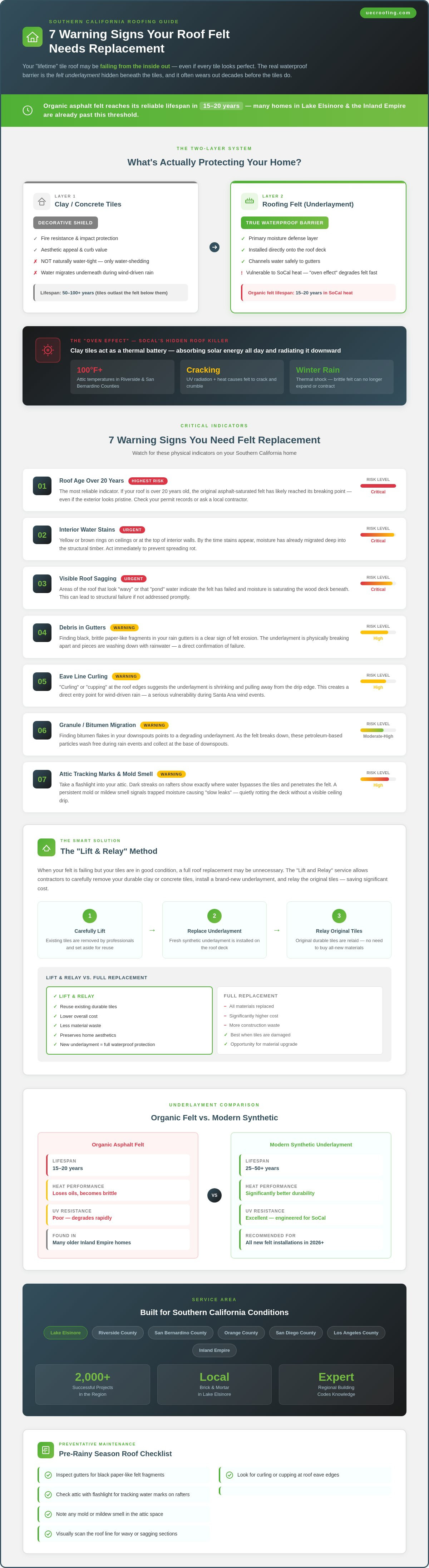
Southern California tiles act like a thermal battery. They absorb solar energy all day and radiate it downward, effectively "cooking" the underlayment in 100°F+ heat. This constant baking, combined with intense UV radiation, causes the felt to crack and crumble over time. When a heavy winter downpour finally hits, the brittle material suffers from thermal shock. It can no longer expand or contract properly, leading to the very leaks that signal you need roofing felt replacement. This cycle typically repeats over a 15-to-20-year period until the barrier is no longer functional.
Felt vs. Tiles: Which One is Actually Protecting Your Home?
It's a common misconception that clay or concrete tiles provide the primary waterproofing for your home. In reality, tiles are chosen for their fire resistance, impact protection, and aesthetic appeal. Water naturally migrates under tiles through gaps or during wind-driven rain, relying entirely on the felt to reach the gutters safely. Roofing felt is the true primary moisture barrier for Southern California residential architecture.
7 Warning Signs You Need Roofing Felt Replacement
Most homeowners in Orange County or the Inland Empire rarely think about their underlayment until a ceiling stain appears. By then, the damage has often migrated into the structural timber. Identifying the specific signs you need roofing felt replacement is the first step toward avoiding a total roof failure. In our region, the age factor is the most reliable indicator. If your roof is over 20 years old, the original asphalt-saturated felt has likely reached its breaking point. Even if the exterior looks pristine, the internal barrier is probably brittle and prone to failure during the next Santa Ana wind event or winter storm.
Keep a close watch for these physical indicators on your property:
- Interior water stains: Look for yellow or brown rings on ceilings or at the top of interior walls.
- Visible sagging: Areas of the roof that look "wavy" or "pond" water indicate that the felt has failed and moisture is saturating the wood deck.
- Debris in gutters: Finding black, brittle paper-like fragments in your rain gutters is a clear sign of felt erosion.
- Eave line curling: Evidence of "curling" or "cupping" at the roof edges suggests the underlayment is shrinking and pulling away from the drip edge.
- Granule migration: While common for shingles, finding bitumen flakes in your downspouts often points to a degrading underlayment layer.
The Interior Diagnostic: Where to Look for Hidden Leaks
Don't wait for a drip. Take a flashlight into your attic and inspect the rafters for "tracking" water marks. These dark streaks show exactly where water is bypassing the tiles and penetrating the felt. If you notice a persistent mold or mildew smell, it's a strong indicator of trapped moisture. These "slow leaks" are dangerous because they don't always result in a visible drip, yet they quietly rot the roof deck over time. If you suspect hidden damage, consulting a trusted roofing contractor in Southern California can provide the clarity you need to move forward.
The Gutter Test: Identifying Felt Erosion
Your gutters act as a diagnostic tool for your roof's health. During your next cleaning, look specifically for bitumen flakes. Unlike the small granules from shingles, these are larger, flat pieces of degraded organic felt. Healthy material is flexible and oily; failing material is dry, papery, and easily crumbled between your fingers. If your gutters are filled with this debris, your secondary barrier is effectively gone. For a professional assessment of your system's integrity, consider scheduling a comprehensive roof tune up to catch these issues early.
The Lift and Relay Solution: Saving Your Tiles, Replacing Your Felt
If your recent inspection revealed clear signs you need roofing felt replacement, you might fear the high cost of a total roof overhaul. For Southern California homeowners with tile roofs, a full replacement is often unnecessary. Since clay and concrete tiles typically have a lifespan of 50 to 75 years, they often outlast their underlayment by decades. The Lift and Relay process is the most sustainable and cost-effective solution for this common regional issue. This method allows us to preserve your existing tiles while completely refreshing the waterproof barrier underneath.
The technical process is methodical. We carefully remove and stack your existing tiles, then strip away the old, failing organic felt. Once the roof deck is exposed, we perform a thorough inspection of the wood sheathing to ensure no rot has taken hold. After any necessary deck repairs, we install a high-performance synthetic underlayment and relay your original tiles. This specialized service is a cornerstone of professional roof repair and maintenance services, ensuring your home remains protected without the waste of discarding perfectly functional tiles.
When is a Lift and Relay Possible?
A Lift and Relay is possible when your existing tiles are structurally sound and free from excessive cracking or "spalling." Homeowners in Lake Elsinore and Murrieta often choose this option because it maintains the home's original aesthetic while addressing the hidden failure of the secondary barrier. The most critical step occurs once the felt is removed. We must verify that the wood sheathing is capable of supporting the load and meeting 2026 building codes, especially if you plan to install solar panels in the future. If the tiles are brittle or the deck is severely compromised, a full replacement might be the safer path.
Upgrading to Synthetic Underlayment
During a Lift and Relay, we replace traditional 30lb or 40lb organic felt with modern high-performance synthetics. These 2026-grade materials offer vastly superior heat tolerance, which is vital for the Inland Empire's climate. Unlike asphalt-saturated paper, synthetic underlayment is highly tear-resistant and does not become brittle when exposed to the "oven effect" under your tiles. By choosing a synthetic barrier, you significantly extend the time between required maintenance and ensure your roof meets the latest fire resistance and energy efficiency standards.
Why Proactive Roof Repair and Maintenance Services are Essential
Don't wait for the ceiling to drip before thinking about your roof's health. A proactive approach is the only way to ensure long-term roof longevity in the Inland Empire. Many homeowners in Riverside and San Diego Counties fall into the trap of believing that if there's no active leak, there's no problem. This is a dangerous assumption. By the time a leak becomes visible in your living room, the signs you need roofing felt replacement have likely been present for years. Waiting for a failure turns a simple maintenance task into a high-cost emergency repair that could have been avoided with a steady, trust-building inspection schedule.
A "Roof Tune-Up" is our preferred preventative method. This service identifies slipped tiles, cracked mortar, and clogged valleys that trap moisture against your underlayment. In cities like Lake Elsinore, pine needles and leaves frequently accumulate in the channels between tiles. This debris acts like a sponge, holding water against the felt long after the rain stops. This constant moisture accelerates rot and mold growth on the secondary barrier. Regular debris removal is a critical part of preventing roof leaks and protecting your family's investment.
The Santa Ana Wind Effect
High-velocity Santa Ana winds present a unique challenge for Southern California roofing systems. These powerful gusts can lift or shift tiles without blowing them off the roof entirely. Even a small gap creates a "window" that allows UV radiation to strike the sensitive underlayment directly. This exposure rapidly dries out the asphalt, leading to the brittle and crumbling signs you need roofing felt replacement. Re-securing these slipped tiles during a routine maintenance visit is a simple fix that prevents massive future expenses. It ensures your secondary barrier remains shielded from the sun's punishing rays.
Professional Inspection vs. DIY: The Risks of Walking on Tiles
Walking on a tile roof is a job for a seasoned professional. Clay and concrete tiles are surprisingly brittle; a single misplaced step can crack multiple tiles and create new entry points for water. We've seen many well-intentioned DIY projects end with more damage than they started with. A "straight shooter" roofing professional uses specialized techniques to perform a physical inspection safely. This assessment provides you with an honest roof repair estimate. It allows for logical long-term budgeting rather than reacting to a crisis during the peak of the rainy season.
If you suspect your secondary barrier is aging, contact our team to schedule a comprehensive roof tune up before the next storm arrives.
Choosing a Trusted Roofing Contractor in Southern California
Selecting a roofing contractor is a decision that impacts your home's safety for decades. In Southern California, the market is often crowded with temporary operations that disappear once the rainy season ends. UEC Roofing takes a different approach. We're a local, brick-and-mortar business based in Lake Elsinore, deeply rooted in the Inland Empire. Our "straight shooter" philosophy means we focus on expert diagnostics rather than high-pressure sales tactics. We treat your roof as a critical investment. With a track record of over 2,000 successful projects across Riverside, Orange, and San Bernardino Counties, we've built our reputation on transparency and professional conduct.
When you identify the signs you need roofing felt replacement, you need a partner who understands the nuances of regional architecture. We don't just guess. We verify. Our team is well-versed in the specific building codes of Los Angeles and San Diego, including the 2026 Title 24 energy standards and fire resistance requirements for Wildland-Urban Interface zones. Choosing a stable, traditional professional ensures that your project meets every legal and safety standard required in our unique environment.
Local Knowledge: From Orange County to San Diego
Our expertise extends beyond traditional tile. We manage specialized systems including metal, foam, and flat roofing with the same level of craftsmanship. We also understand the strict HOA requirements common in communities across Southern California. Working with a "roofer for life" means you have a guide who understands how our specific environment, from coastal salt air to intense desert heat, affects every layer of your roofing system. This local knowledge is vital for ensuring that your new underlayment is compatible with both your primary roofing material and the regional climate.
Your Next Steps for a Secure Home
The path to a secure home begins with a comprehensive professional assessment. We perform detailed inspections that look past the surface to evaluate the true condition of your underlayment. If your home shows the signs you need roofing felt replacement, we'll provide a clear, honest recommendation. We act as a protective guide for your property value and your family's safety. Don't wait for a minor issue to become a structural crisis. Contact the UEC Roofing team today to schedule a professional assessment of your roof underlayment and secure your home for the years ahead.
Secure Your Home’s Future with Professional Underlayment Care
Your roof is a critical investment in your family's safety and your property’s value. Identifying the signs you need roofing felt replacement before the rainy season arrives is the most effective way to avoid the stress of emergency repairs. As we have discussed, the underlayment is the true waterproof barrier of your home. Solutions like the sustainable "Lift and Relay" allow you to maintain your home's aesthetic while upgrading to high-performance synthetic materials that meet 2026 standards.
UEC Roofing is your trusted partner in the Inland Empire. With over 2,000 successful Southern California projects and a permanent brick-and-mortar presence in Lake Elsinore, we are specialized "Lift and Relay" experts. We take pride in our "straight shooter" reputation, providing honest diagnostics without high-pressure tactics. Protect your home today—Contact UEC Roofing for a professional roof inspection and felt assessment. Let us help you ensure your roof remains a reliable shield for a lifetime.
Frequently Asked Questions
How much does roof felt replacement cost in Southern California?
Costs for felt replacement are determined by the roof's pitch, total square footage, and the specific material being removed. While regional averages exist for labor and materials, a professional estimate is the only way to get an accurate figure for your property. A local expert in Lake Elsinore can assess your roof's complexity to provide a transparent breakdown based on the current 2026 market conditions.
Can I replace just the felt without getting a whole new roof?
Yes, for tile roofs, this is a specialized service known as a Lift and Relay. It involves carefully removing the existing tiles, replacing the degraded underlayment, and then reinstalling the original tiles. This is a common practice in the Inland Empire to save homeowners money while ensuring the home's waterproof barrier is fully restored without the waste of new tiles.
How long does roofing felt typically last in the Inland Empire?
Traditional organic felt typically lasts between 15 and 20 years in the Inland Empire. The extreme heat in Riverside and San Bernardino Counties accelerates the degradation process. Once the asphalt in the paper dries out, the material becomes brittle and fails, making it important to watch for signs you need roofing felt replacement as your roof approaches its second decade.
What happens if I ignore signs of failing roof underlayment?
Ignoring a failing underlayment leads to extensive wood rot in the roof deck and structural rafters. Moisture penetration also creates an environment for mold and mildew growth in the attic. What starts as a simple felt replacement can quickly escalate into a full structural overhaul if left unaddressed through multiple Southern California rainy seasons.
Is synthetic underlayment better than traditional tar paper felt?
Synthetic underlayment is significantly more durable than traditional tar paper. It offers superior tear resistance and can withstand the high attic temperatures common in Southern California. Most 2026 building projects utilize synthetics because they don't become brittle over time, providing a much longer service life and better value for the entire roofing system.
Can I stay in my house during a lift and relay felt replacement?
Homeowners can typically remain in their homes during a Lift and Relay project. Since the work is performed entirely on the exterior, your daily routine is rarely disrupted. You should expect some noise during the tile removal and installation phases, but the interior of your home remains safe and accessible throughout the duration of the project.
Does a roof tune-up include felt inspection?
A professional roof tune-up always includes a thorough inspection of the secondary barrier. While the felt is hidden, an expert roofer looks for indirect indicators like slipped tiles or debris dams that compromise the underlayment. Identifying signs you need roofing felt replacement during a routine maintenance visit is the best way to prevent emergency leaks during winter storms.
How do I know if my roof leak is coming from the felt or a broken tile?
A broken tile is usually visible from the ground, whereas a felt leak is often an internal failure of the secondary barrier. If your tiles appear intact but you still see yellow water stains on your ceiling, the underlayment has likely reached the end of its life. A professional inspection involves checking the attic for water tracking to confirm if the moisture is bypassing the tiles entirely.